

This was originally posted on May 17, 2019
Carol Christ wrote about gift economy on this blog in 2013, and I am taken by her story of the woman who brought raisins or cracked nuts to the group even though she had very little. In beginning to encounter the literature on gift economy myself, I am wondering how it all works, especially wondering, perhaps outside of such a conversation if it doesn’t relate or misses the point, what someone who feels they have nothing to give can give.
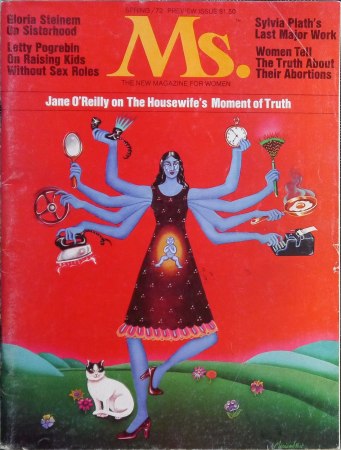
When Genevieve Vaughan wrote about gift economy in Ms. Magazine in 1991, she wrote, “where there is enough, we can abundantly nurture others. The problem is that scarcity is usually the case, artificially created in order to maintain control, so that other-orientation becomes difficult and self-depleting.”
I think we start to look for other ways of existing when we experience the brokenness of a current existence. The exchange economy under mindless capitalism does not honor equal, fair exchanges. If we could keep from manipulating and being deceptive about what a product is worth, if we could more generously assess the contribution of workers, then some of us might not be bothered. Of course, for that work which is never compensated by money, mostly women’s work, that is the other issue that might not be solved by more equal exchange, and probably more the point of Vaughn’s.
That we have unfair, unequal exchange can be observed with dealings with the earth. The earth gives and is taken from but is not compensated or tended to equally. Vaughn writes, “It is said that the earth produces enough at present time to feed everyone abundantly.” Unequal distribution and taking from the earth unnecessarily and unmindfully manifests in “empowerment of the few and the disempowerment, depletion, death, and invisibility of the many.”
There seems to be a universal law about giving and growth that my students always find paradoxical when I bring it up in class, and it has one rendition in the gospels, i.e. Mark 4:25: “Whoever has will be given more; whoever does not have, even what they have will be taken from them.”
This comes from a text that I consider having a preferential stance toward the oppressed and non-privileged. So it is not really a message to those who are already working hard and giving. I see it more as a message for myself, currently feeling miserly and negative, having stress and illness, and hopelessness all bring me down, spiraling until I won’t be able to see anything. Gift economy and this universal law can really help someone like me in my current state because I need to be doing more. For those of you who are already doing many things, well, I’m not sure what the messages help, except and unless and until the dream of Vaughn is full-filled, that is when “the powerful will lay down their arms and the rich their goods.” The message of nurturing and giving must not be the message for those who already know and practice it. I suppose this is obvious.
I’m finding it hard to write this post, to produce something, but I am inspired by these messages because even though I am in the waiting period of finding a full-time academic job, I can think about what I do have space to create. Maybe I can help out more at my campus, hold a poetry creative writing workshop or offer to do some interfaith discussion conversations. I think the messages for me tell me to be inspired and creative. Right now, I’m sitting at my house, finishing up my online classes. They have meant so much to me, and my students said their lives were transformed, so they were very successful classes, but I will look forward to returning to campus this summer. But perhaps I can go beyond just being an adjunct this summer, and even if I don’t get a full-time job this fall, I can continue to do more on campus while adjuncting. We all need time to ourselves and monetary compensation for “bread and brew” as Beatrice Eli sings on her album. I am still trying to find work-life balance, but I need more of the work part now. Work that feels honorable and honors my experience and knowledge.
I am not the powerful, so I have no arms to lay down, and I am not the rich, so I have no goods. But at this moment, I need to save myself with more work and teaching can be the gift I give and do more of. Who will save our souls, Jewel sort of asks. We will, I can only think the answer must be.
I think a true gift feels life giving. If a gift feels difficult or hard, maybe that is because it is not the gift one can give. Maybe the gift that is life giving is speaking up and being honest about working conditions. Maybe it is the gift that gives another person opportunity to help you out. Perhaps it is the gift of your truth and your honesty when you usually hide it because you don’t want to make waves.
What is a gift you can give that feels necessary and life-giving? Do you think we need to switch to a gift economy or just fix the economy of immediate exchange by making it more fair, equal exchange? What is gift economy to you, in your eyes, and what special role do women play in it?

Elisabeth S., Ph.D., graduated in 2014 from the Women and Religion program at Claremont Graduate University. She has an MA in creative writing and teaches college composition from a contemplative pedagogical approach at Oklahoma State University. She also writes poetry about food, self-exile, the balance between love + freedom, and navigating the world while female. She has a micro-chapbook on food coming out 7/9/19 from Ghost City Press.
Discover more from Feminism and Religion
Subscribe to get the latest posts sent to your email.


wow, thought provoking essay – this time around I am struck by the words ‘“where there is enough, we can abundantly nurture others’ – as Mark states when we give out of depletion we lose… So a gift economy, if there could be such a thing for western peoples seems beyond me at this point because of the direction the dominant culture is going in – the only way I have seen it practiced is by First Nation peoples in this country – and by isolated tribes throughout the world. Having lived with native peoples in the Amazon I have personal experience with this kind of community – it does work – but only if one surrenders the personal…
LikeLike