

part 1 was posted yesterday
The last sucking doctor of the Pomo
Mabel healed people with songs that spirit sang through her. Eventually, she was taught to suck. Into a sucking basket she had woven, she spat out what she had sucked out of her client. People came from all over for her healing and she traveled far to heal others. She needed singers and translators to help her when she worked. Many people came to witness.
When Mabel was raised, traditional healing was beginning to go out of fashion and even be suspect. But Mabel’s work was widely sought after by the local indigenous population from all the various tribes who worked on the farms and lived on the reservations in the area of Northern California.
Sarris describes her extracting a salamander-like creature from a woman’s eye, gallons and gallons of water from a man’s chest and an evil spirit from another.
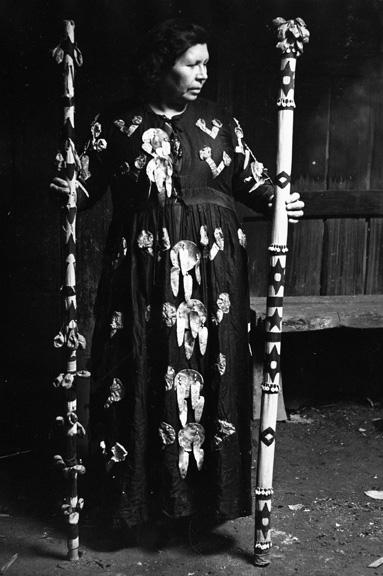
Eventually Mabel met Essie Parrish (1902-1979), a traditional healer, Prophetess and roundhouse leader from the Kashaya Pomo whose reservation was on the coast. Mabel had dreamed Essie before she met her. She and Essie worked together for a long time, leading ceremonies and dances in the Roundhouse, performing healings together and collecting materials for baskets. Essie was also a sucking doctor and she and Mabel would assist each other in ceremonial healing. With their tall Medicine Poles bearing cocoon rattles, they invited spirit to the space. They were friends for the rest of Essie’s life.
Essie told Mabel that she would die before Mabel and when she did, she was to lock the Roundhouse. She said that there was no one qualified to take over. That person would come in the far future. After Essie died, Mabel held smaller seasonal ceremonies, including the Strawberry and Acorn, outside with Essie’s family and community and continued her Doctoring for as long as she could. She taught many people basket weaving and gave public talks about her work and her people.
Pomo Baskets
Mabel McKay was a master weaver. She collected people’s names who wanted a basket and then ran her fingers down the long list asking spirit to guide her to whom she would weave for next. Once decided, she offered her hands to spirit who wove the basket through her. Her baskets were highly valued, especially her feather and miniature baskets for which she was renowned.
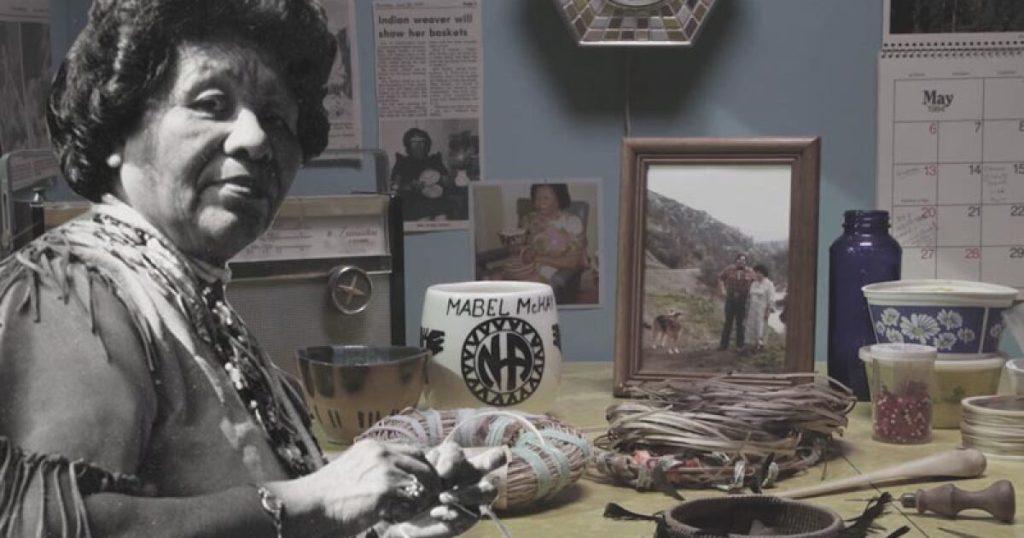
The Pomo Indians of Northern California are known as being some of the most skilled basket weavers of all the indigenous tribes. They make twined and coiled baskets out of locally foraged materials which they gather and treat: sedge and bulrush roots, redbark, and willow branches and twigs. All of this is done in specific ritual context with gathering locations that are tended to and considered sacred.
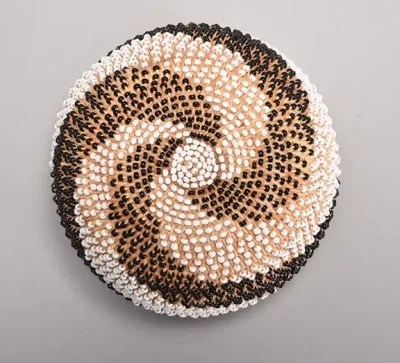
It can take months to make one basket.
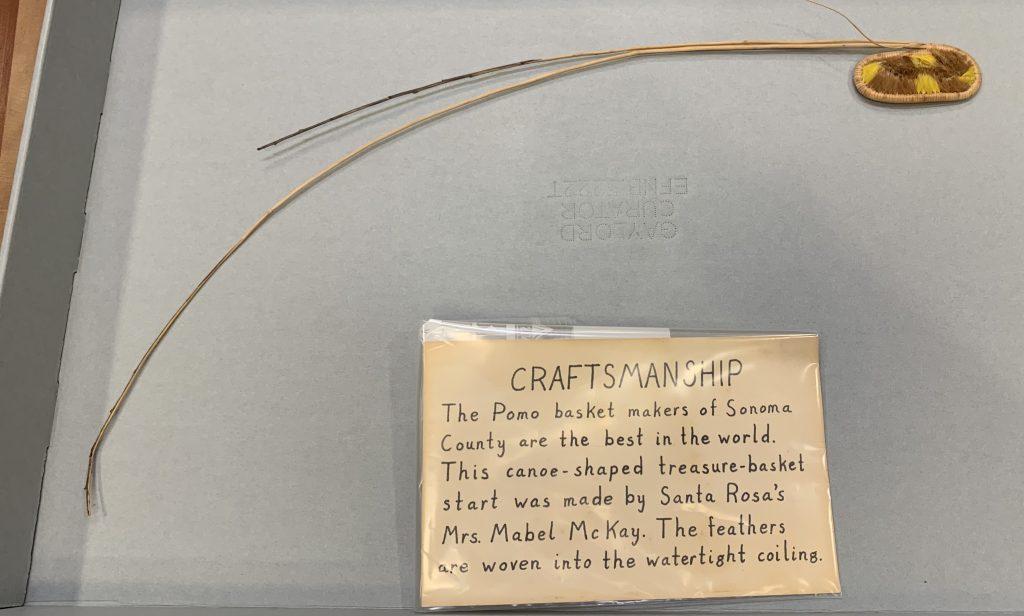
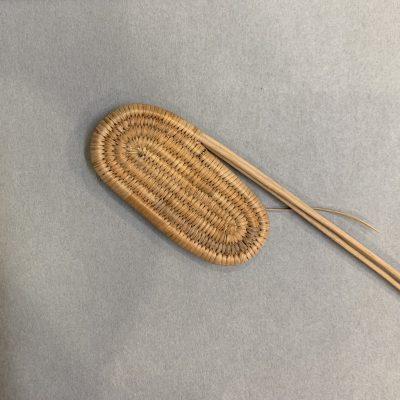
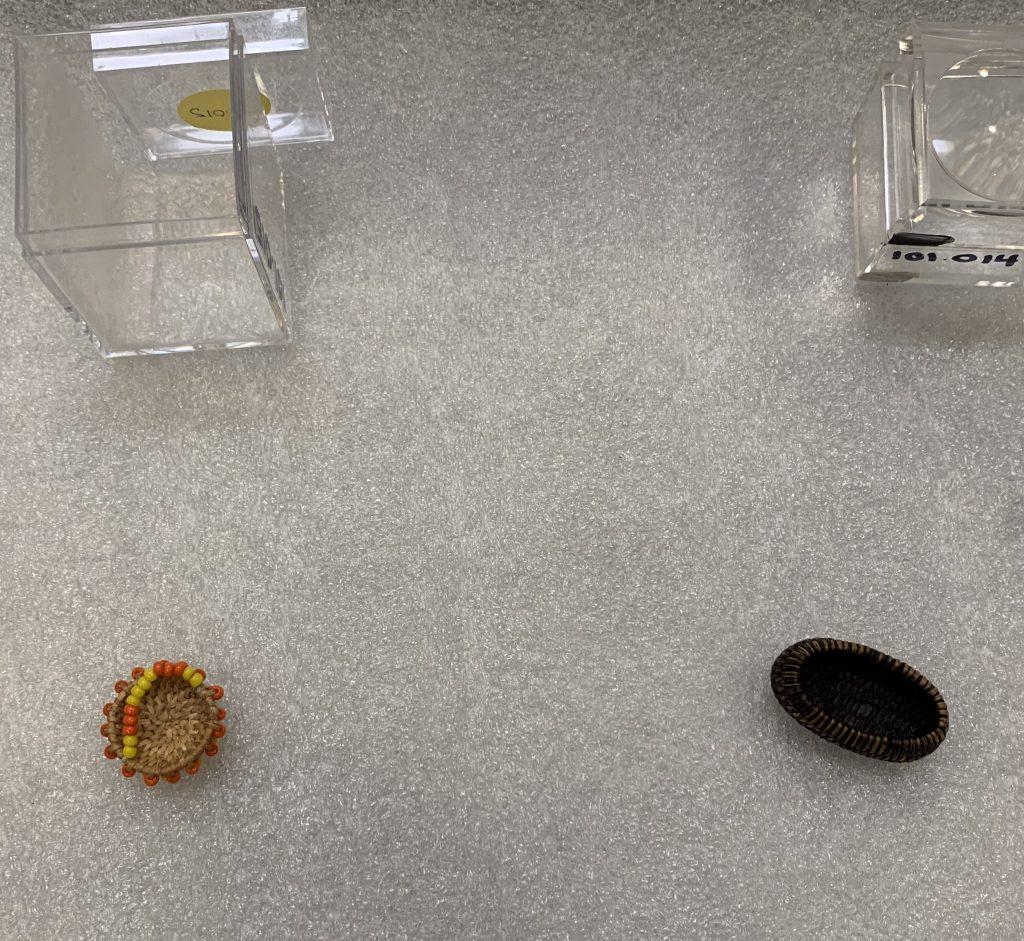
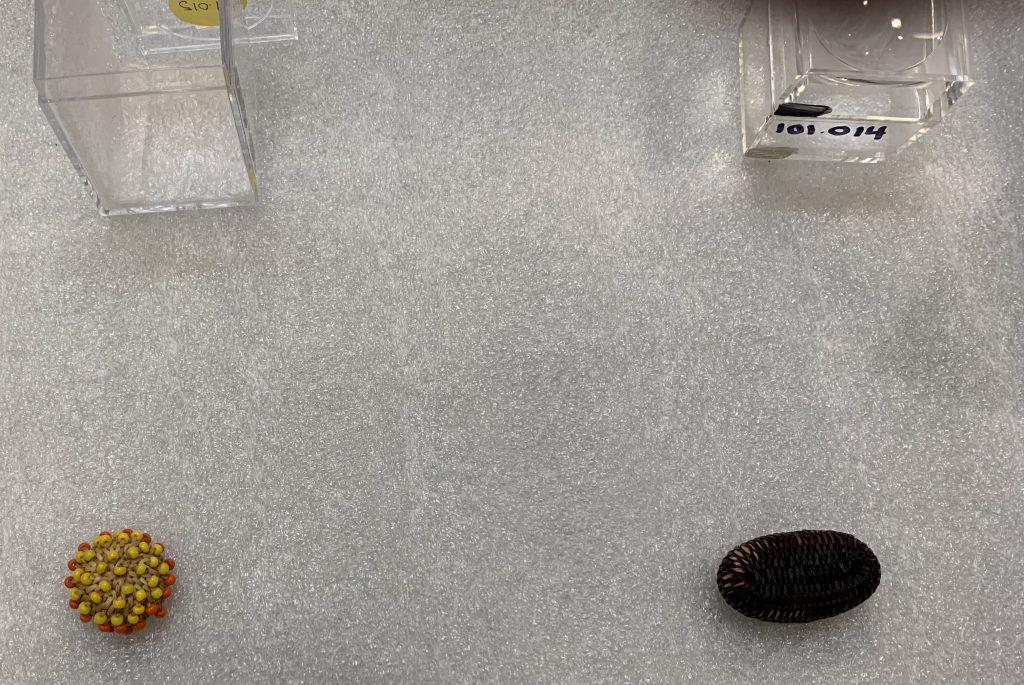
I live in Northern California. After I read the book about Mabel, I wanted to see some of her baskets. I wasn’t that lucky at finding any to look at. One of the local museums that has her baskets is closed for renovations. When I was in New York City I went the Met to see them but they were not out on display. I saw that there were some at the Santa Rosa Junior College Multicultural Museum. The museum displays a permanent Elsie Allen Pomo Basket Collection: Breaking Traditions, Saving Traditions: Elsie Allen and The Legacy of Pomo Basketry. I called them up and Rachel Minor, the Curator, informed me that none of Mabel’s baskets were on display. They only had two of her miniature baskets and the start of a feathered one, but they were all in storage. She would pull them out for me if I wished to come see them.
I was very grateful to Rachel for making the baskets available for me to see. Mabel’s miniatures had captivated my imagination when I read about them.
At the museum, Rachel brought out Mabel’s baskets and told me what she knew about Mabel’s work. She said that Mabel only made a basket when she was fasting. She wouldn’t think of touching one when she was not fasting. Even collecting the materials required fasting. That she was guided by spirit to make them. She also told me that miniatures only started after colonization. She thinks perhaps it was a way of showing off great skill as a weaver and that for Mabel, many of them were ceremonial, carried around with her Doctoring supplies. She wanted to be sure I knew that Mabel had been the last Sucking Doctor.
In the book Pomo Basketweaving: a supreme art of the weaver by Elsie Allen, Pomo weaver Allen writes:
“We fasted for many things, for example we would fast before starting work on a basket such as a red feather or woodpecker feather basket and would work as long as possible and then when we were too hungry we would eat but no longer work on the basket. The fasting was for purification so as to receive help from the Great Spirit in whatever we did”(8).
Mabel McKay never let anyone tell her who she was. She didn’t allow white people to define her and, when she gave public talks, resisted questions and comments that wanted to make her into a caricature of herself or her culture. If people didn’t understand how she talked to plants, that wasn’t her job to explain.
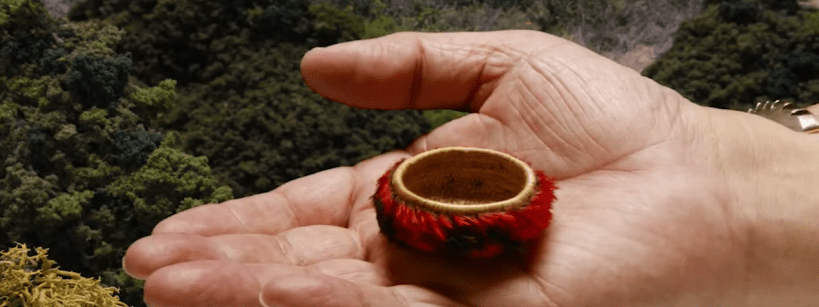
Mabel McKay was as common as she was extraordinary. This is a defining feature about her. She lived in Santa Rosa and Sebastopol, working at the Barlow apple processing plant for many years after her second husband died. There was nothing performative about her. And she wouldn’t allow herself or her work to be made into a performance. In a talk she gave, she explained that no one ever saw her make a basket. That was something to be done alone. She called it weaving by prayer.
Mabel McKay is a Nasty Woman Artist.
© Theresa C. Dintino 2024
Works Cited:
Allen, Elsie. Pomo Basketmaking: a supreme art for the weaver. Happy Camp, CA. Naturegraph Publishers, 2007.
Sarris, Greg. Mabel McKay: Weaving the Dream. University of California Press, 1994, 2013.
Discover more from Feminism and Religion
Subscribe to get the latest posts sent to your email.


This is an astonishing, informative, and well written essay that invites us into a genuine healer’s world. What we glimpse here is truth.
LikeLiked by 1 person
Thank you, Sara. I too am so moved and inspired by Mabel’s story and work.
LikeLiked by 1 person
True. This luminous tribute is such a precious gift, from you and from Mabel. Thank you Theresa.
LikeLike
” A Dreamer is owned by spirit”
LikeLike