“If All Knowledge Must be Reinterpreted, Why Not Religion?” Says Islamic Feminist

xcelina-feminismo.jpg.pagespeed.ic._RyiiQg3TR.jpg

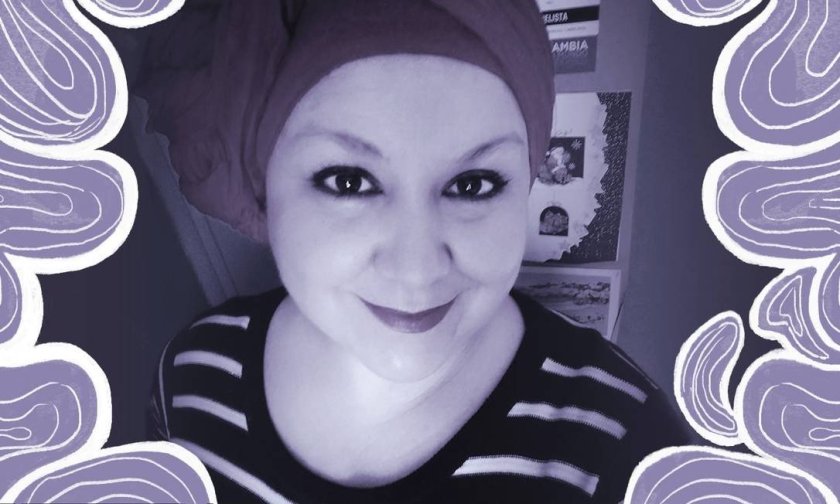
Vanessa Rivera de La Fuente is Muslim, feminist, and a human rights activist
Photo: Personal archive

Background: Journal O ‘Globo, one of the most important newspapers in Brazil, belonging to the transnational media group of the same name, published this interview with Vanessa Rivera de la Fuente on Islamic Feminism. Given its relevance to the discussion on the subject, it was translated by prominent Islamic feminist and scholar Keci Ali to share it with English-speaking readers.

The Muslim women’s movement has different agendas in accordance with the reality of each country. In Latin America, the Muslim Vanessa Rivera fights against prejudice about Islam.

by Isabela Aleixo*

Vanessa Rivera de La Fuente is Chilean and Muslim. Besides being an academic researcher, she’s also an Islamic feminist engaged with questions of gender, human rights, and social development. Vanessa has wide experience in social projects in Latin American countries.

In an interview with CELINA, she discusses the prejudices that Muslim women face in Latin America, explains the movement’s demands, destroys stereotypes, and declares: “I’m a woman and I demand to be treated as a person.”

Do you consider yourself an Islamic feminist? Why?

I consider myself a feminist woman, who lives feminism in all the distinct facets of her life: I’m Muslim; I’m a single mother; I’m a professional woman, an academic; and I’m a women’s rights activist. I’m feminist with all my life experiences. I think being a woman in male-dominated society is itself a political fact, so everything that I am as a woman can be resignified by feminism, including being Muslim. Islam is integrated into my life and my political struggle, which is intersectional. It’s based on the radical idea that all women are people and we deserve equal rights and a world free of violence.

Continue reading ““If All Knowledge Must be Reinterpreted, Why Not Religion?” Says Islamic Feminist”
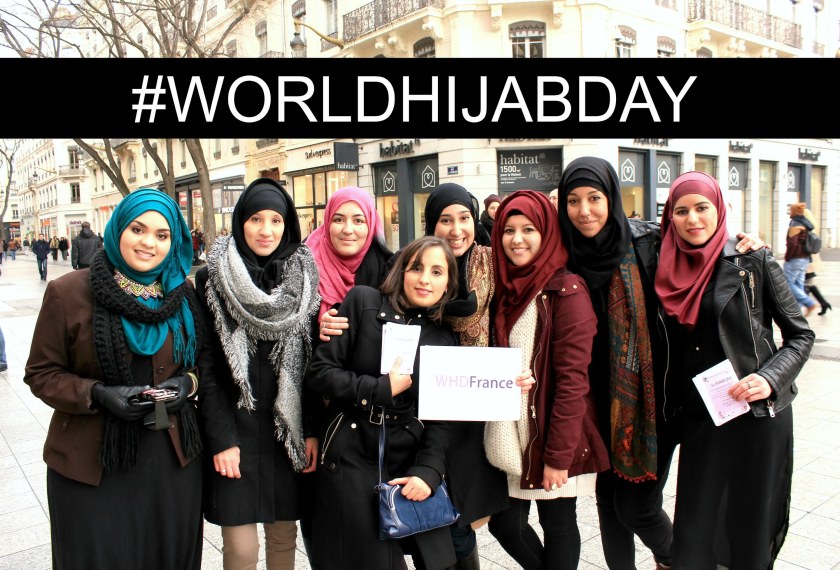
#WorldHiyabDay at Issue by Vanessa Rivera de la Fuente

1-2When World Hiyab Day (WHD) was held for the first time in 2013, I was an enthusiastic supporter. Even my friend Maria de los Angeles from Venezuela, wore a headscarf for a day in sisterhood. She went to her job and celebrated her birthday in a tropical country, fully head-covered.
I am a muslim woman who wears headscarves and turbans. I benefit widely from “Hiyab Fashion,” an opportunity I have to be creative and original with my outfits. I do assume there are good intentions and will of sisterhood behind WHB, but as years go by, I’ve got disappointed about the celebration. According to its founder, Nazma Khan, an Islamic clothing entrepreneur, the purpose of WHD is “the recognition of millions of Muslim women who choose to wear the hijab and live a life of modesty.”

Maybe I am too picky, but this statement disgusst me for its hint of sexism and slutshamming. If heardscarf is equal to modesty and modesty is equal to virtue so, I wonder: Continue reading “#WorldHiyabDay at Issue by Vanessa Rivera de la Fuente”

Religious Practice and Epistemic Justice by Vanessa Rivera de la Fuente

feeling-measured-on-faith

One of the topics that has captured my deep interest during the last year is Epistemic Justice – and its absence, epistemic injustice – a concept which I reflect on often, since it has become a backbone idea in the approach of my work, my activism, my diagnosis of the situation of women in the global south and my vision of the world in which I would like to live. These reflections that I share with you do not intend to articulate a strictly academic presentation. They are my “thinking aloud” and don´t pretend to be completely right nor to establish a truth; rather they express the progress of a personal searching.

I speak as a Muslim feminist who loves to read and write about Feminism and Islam, but is not an academic nor aspires to be recognized as such in this field, although she writes papers and offers lectures in her own capacity on that matters. I speak as a community educator and social entrepreneur, who believes in feminism and spirituality as liberation tools. Since I accepted Islam, I took the experience gained in my work for the political empowerment of grass roots women to nourish an activism in the field of religion and gender justice. Continue reading “Religious Practice and Epistemic Justice by Vanessa Rivera de la Fuente”

If this be Madness … by Vanessa Rivera de la Fuente

Shams

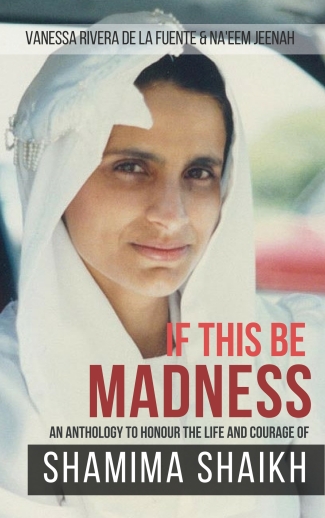
Shamima Shaikh (1960 – 1998) was South Africa’s best-known Muslim women’s rights activist. She was also a brave anti-Apartheid activist, notable Islamic feminist, community worker, journalist and devoted mother who died, 37 years old, from breast cancer. After the Holy month of Ramadan in 2016, I spoke with Islamic Feminist Shehnaz Haqqani about the new-to-me figure of Shamima. I was very excited to know about her and inspired by her fierce and at the same time compassionate moral courage. That year I wrote some pieces about her.

I asked, 18 months ago, Na’eem Jeenah, who was married to late Shamima, if there was a book about her where I could amplify my knowledge about her activism. He said, so far, there wasn´t. Later, I commented to my friend and Chilean feminist comrade, Rocio A., that the idea of an anthology book for Shamima Shaikh had arisen in me.

You must be mad, completely mad, you know? – she said

I am a feminist claiming that we women are people in a patriarchal world – I replied – of course I am mad. Continue reading “If this be Madness … by Vanessa Rivera de la Fuente”

Muslim Men and Toxic Masculinity by Vanessa Rivera de la Fuente

Diseño sin título

Excuse me, but I thought you should know your misogyny is showing.

I have read with deep interest the article written by Ayesha Fakie and Khadija Bawa entitled: Dear Indian Muslim Men: We Need To Talk published by Huffington Post South Africa on March 7th of this year. I would like to add my two cents to this conversation, one that I believe is relevant and very necessary that we address as a community with genuine sincerity and accountability.

Continue reading “Muslim Men and Toxic Masculinity by Vanessa Rivera de la Fuente”

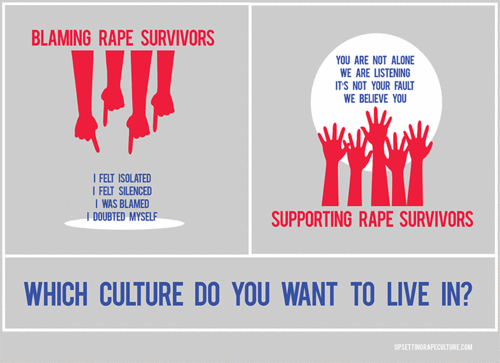
Rape Culture and Muslims by Vanessa Rivera de la Fuente

rape culture

There is no doubt that Rape Culture is installed within religions and Islam is not an exception. Lately, “honorable Islamic scholar,” Nouman Ali Khan (NAK) was exposed as sexual predator, causing a battle in social media. NAK is only one more in the list of sexual offenders operating in religious spaces, on many occasions with the support of opinions leaders, or the silence and blind eye of the community of believers.

During my months in Cape Town, as you know, I engaged in critical education in Gender and Islam through workshops with Muslim women from the Cape Flats, where the rigid dynamics of researcher-object of study, gave way to an equal interaction of “people talking.” A recurrent theme, as I said in a previous article, was sexual violence and the discursive tenets that facilitate it.

In the light of the controversy aforementioned, I want to share excerpts that I recorded during our sessions of the sincere statements of Muslim women between 25 and 60 years old from different suburbs of Cape Town on Rape Culture and religion as they live it.  Continue reading “Rape Culture and Muslims by Vanessa Rivera de la Fuente”

Who Does Islamic(s) Feminism(s) Belong To? by Vanessa Rivera de la Fuente

Who does Islamic(s) feminism(s) belong to?

The answer to this question seems obvious: Islamic feminism belongs to all Muslim women who wish to adhere to it, and feminism is for everybody, as bell hooks said.

In reality however, it is not so easy. Even the most well crafted theories must be implemented by human beings who have been socialized under the Patriarchy’s rules and practices. Lived experience reminds us that feminisms of all kinds are marked by dynamics of power, internalized misogyny, lack of intersectionality, egos, and personal interests.

In this situation I wonder: Are feminisms, and Islamic Feminisms in particular, truly for everyone?

Continue reading “Who Does Islamic(s) Feminism(s) Belong To? by Vanessa Rivera de la Fuente”

Talking Gender and Islam at the Grassroots by Vanessa Rivera de la Fuente

In my current trajectory linked to community development —  via both activism and my professional field —  I’ve learned that popular education is a very useful practice and methodology to decentralize all types of knowledge. Since I embraced Islam, part of my activity has focused on creating spaces for the production, discussion, and appropriation of religious knowledge for women at the grassroots. Religion is not separated from the daily life of believers, therefore, each of them carries knowledge that has been deliberately obliterated by hegemony.

The feminist hermeneutic of Islam is a paradigm that aims to provide Muslim women with skills and concepts that allow them to boost their agencies in their respective contexts, encouraging a transformation in the understanding of religious phenomena and its trajectory towards gender justice.  For this transformation to be possible, knowledge must be accessible in language, methodology and location.

Paulo Freire’s pedagogy of liberation is a tool I consider to be critical and necessary for feminism, including Islamic feminism, at a time when debates about decolonization are very fashionable in academia. Freire’s methodology is democratizing because it allows, on one hand, to transfer knowledge from privileged circles to the margins and, on the other, to make visible the experiential knowledge produced in the periphery — to include them in the spectrum of what we understand and as such subvert, in this way, the dynamics of power, representation and discourses.

During my time in South Africa, I have engaged with popular education on topics related to Islam and Gender with Muslim women from the Cape Flats. These women have different backgrounds, races, life trajectories, and religious journeys. They exist in the geographic, cultural and epistemological margins of the social reality of Cape Town. Their experiences as Muslims do not appear in academic journals, nor are they even “noticed” by their highly androcentric communities of belonging.

For the past 7 months, I have met with them on a regular basis to talk about Gender and Islam. “Talk” is a methodological definition that means that we are placed in equal and interchangeable positions of teacher-student during our dialog — assuming than rather than learning something new, we are facilitating for each other a way to communicate things we already know. Muslim women of the Cape Flats know, indeed. But they have been told that they do not know by a system of privilege formed for the ulemas, for academia, or for the Islamic institutions. Continue reading “Talking Gender and Islam at the Grassroots by Vanessa Rivera de la Fuente”

Women, Theology and Identity as Believer by Vanessa Rivera de la Fuente

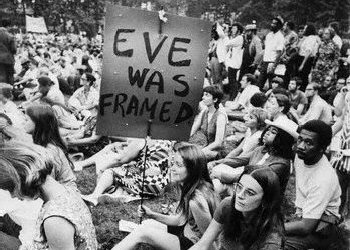
eve

Like all my reflections, this is not intended to be conclusive, but rather, to share some impressions about theology and the way in which women are created or given an identity as believers.

In the androcentric and misogynist narratives of religious traditions lies the root of much violence against women. This is not new, since the same diagnosis has already been raised by the theologian José Luis Tamayo when he says that although women are the majority presence of religious communities and those most involved in the transmission and practice of traditions “they are the biggest losers” for all the exclusion and violence exercised against them in the name of religion.

The influence of religion on the lives of women goes beyond the realm of religion itself. From theology comes the gender discourses that impact our lives as political subjects. In all the most obvious (sociological, historical, economics) causes of the weak status of women, we can find theological roots or argument religion-based. These  roots are discursive. What is said about women from religions, as well as from the social and exact sciences, institutions and the media, are stories, narratives that are the product of the interaction of mechanisms of power, enunciation authority and historical accumulation of performative actions. Continue reading “Women, Theology and Identity as Believer by Vanessa Rivera de la Fuente”

Progressive Islam: A Critical View from Latin Muslim Feminists by Vanessa Rivera de la Fuente & Eren Cervantes-Altamirano

Progressive Islam(s) in the West, particularly in Canada and the US, have been defined as movements that primarily encompass Islamic feminism(s), LGBTQI affirming movements, anti-Conservative theologies, feminist theologies, women-centered liturgies, etc. From within this umbrella, we have seen calls to embrace women-led prayers, women-only spaces, LGBTIQ inclusive and affirming mosques and practices like ijtihad, which are said to be useful in breaking away from Conservative understandings of Islam. All in all, Progressive movements often depict themselves as “reformers” within a paradigm that is usually conceived to be dominated by Orthodox theologies and attitudes mainly driven by Saudi Arabia and Iran.

However, to what degree are Progressive movements truly inclusive? Are they as “radical” as they have been made out to be? Are Progressive spaces any safer for women and trans-women? Are Progressives free of misogyny and violence? Continue reading “Progressive Islam: A Critical View from Latin Muslim Feminists by Vanessa Rivera de la Fuente & Eren Cervantes-Altamirano”