Legacy of Carol P. Christ: Do White Feminists Have Ancestors?

This post was originally published on Aug. 12th, 2011

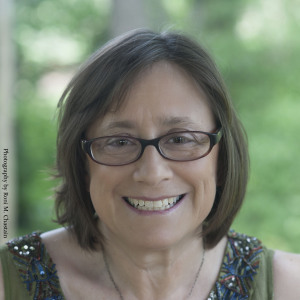
Carol P. Christ is a founding mother in the study of women and religion, feminist theology, women’s spirituality, and the Goddess movement.  She teaches in the Women’s Spirituality program at CIIS and through Ariadne Institute offers Goddess Pilgrimages to Crete. Her books include She Who Changes and Rebirth of the Goddess and the widely used anthologies Womanspirit Rising and Weaving the Visions.

Some years ago when I was speaking on ecofeminism, womanist theologian Karen Baker-Fletcher posed a question that went something like this:  What I am missing in your presentation is reference to ancestors.  For black women, this issue is critical.

Baker-Fletcher’s question provoked a process of thinking that continues to this day.  For example, I began to notice that when black women spoke at the American Academy of Religion, they often began by thanking their foremothers Delores Williams and Katie Cannon for beginning the womanist dialogue.  It is far rarer to hear a white woman thank Valerie Saiving, Mary Daly, Rosemary Radford Ruether, or Marija Gimbutas before her talk.

To the contrary, many white women take great pains to distance themselves from feminist foresisters.  I once heard a white woman Biblical scholar tell women students to do work on women in the Bible or other areas of religion without using the word feminist or placing their work in a female or feminist train of thought– if they wanted to get it published.  She was very proud that she had used this method and succeeded.  In other words, she was following in the footsteps of Mary Daly, Phyllis Trible, and Elisabeth Schüssler Fiorenza but acting as if she had invented the study of women and the Bible herself.  The reason for this, she freely admitted, was that male scholars who held power in her field would not respect her work if she used the “f” word. Continue reading “Legacy of Carol P. Christ: Do White Feminists Have Ancestors?”

Is the Divine the Unknowable Unknown? A Feminist Take by Ivy Helman

I attended a number of High Holy Days services (online) over the past couple of weeks. In one of them, one of the rabbis said that the divine is the unknowable unknown. I cannot remember what the Rabbi said to contextualize or explain their train of thought; I think I was too intrigued by the idea that I got lost in my own thoughts. In fact, I have been thinking about the unknowable unknown ever since.  

As I write this, I’ve come to this conclusion: if the divine is present among us and the world around us, then there is much we can intuit. In addition, there is much that we can experience the more we interact with other humans and nature.  On the other hand, if the divine is understood as a detached, distant being of a completely different essence than humanity, of course, what can we really know about such a divinity?  How would we even know if that divinity even existed? We probably wouldn’t.  Here is the difference between a  feminist understanding of the divine as this-worldly and empowering and a patriarchal conception of a distant divinity wielding power-over. Yet, interestingly, even the most patriarchal image of the divine has insisted on being relatable to human beings. Nonetheless, how we imagine the divine does matter.

In her book, Models of God: Theology for an Ecological, Nuclear Age, Sallie McFague argues that the words and ideas we use to describe the divine are important. She advocates for the use of metaphors to describe the divine, stating that we can only describe what the divine is like, not what divinity actually is. In fact, she warns the reader of long-lasting models for the divine as these can lead to idolatry, an understanding that limits divinity and, because of this, is essentially untrue. She writes on page 99 that, “[i]f we use only the male pronoun [for the divine], we fall into idolatry, forgetting that God is beyond male and female…” In other words, we are limiting the divine and furthermore speaking an untruth.  

This talk makes we wonder if she too is of the camp that we cannot understand divinity; that the divine is quite different from us. I mean if we cannot and should not have any long-standing model for the divine but only use shaky fleeting metaphors, our understanding of the divinity is genuinely limited and amorphous. Yet, there is a difference between some knowledge and experience of the divine and the idea of the divine as the unknowable unknown, isn’t there?

That being said, I find much of what she has to say extremely helpful when it comes to traditional understandings of divinity.  In her book, she implicates as problematic the long-standing models of divinity as Father and King, among others.  These out-dated models move us further and further away from the divine because they are thought to definitively explain who the divine is in relation to us.  

Let us look at Yom Kippur, the Day of Atonement, as an example of this in Judaism.  Here, we have a day in which we are highly vulnerable as we reflect on the ways in which we have not always treated ourselves, others, the world around us, and the divine as we should (had hoped to). Yet, we enter the synagogue and repeatedly address the divine as Avinu Malkeinu (Our Father, Our King).  Why is the understanding of divinity that we approach one of judge, strict parent, and ruler over us?  Does that not drive a wedge of sorts between divinity and humanity? Does that not make being inscribed in the book of life seemingly impossible unless we are non-human-like?

Contrary to what we often hear in shul, Judaism recognizes some 70 diverse understandings, or names for the divine. These names range from Hashem (the Name) and Shalom (Peace) to Shechinah (the in-dwelling) and Kadosh Israel (the Holy One of Israel). And there are many, many more.  

Returning to our example again, instead of the umpteen rounds of Avinu Malkeinu, what would it be like on Yom Kippur if we approached the divine as Shaddai (Comforter), Hamakon (the Present One, literally the Place), or YHWH-Rapha (The One Who Heals)? These understandings seem to offer the compassion we need on a most vulnerable day.  How much easier would it be to connect to divinity that understands us?  Perhaps we could learn a little more about divinity in that case, and we could in the process become much closer to the holy?  And, isn’t that the point of Judaism? To be holy like the divine is holy?  I think so. 

From a feminist perspective, how we understand the divine has real-life consequences which can shape how we understand ourselves and the world around us. Just imagine what Yom Kippur would feel like, if we called on the divine that day as the comforter, the present one, and the one who heals. It would feel totally different, and for very good reasons.

Who would have thought that some three weeks ago or so, I would have heard a phrase about the divine that still has me in a quandary? I mean, in the end, I suppose there are ways in which the divine is unknowable. Importantly, though, that does not make the divine wholly unknown. Rather, it is often the language we use about the divine that puts distance between us and divinity, that makes divinity less and less known.

Ivy Helman, Ph.D.: A feminist scholar and faculty member at Charles University in Prague, Czech Republic where she teaches a variety of Jewish Studies, Feminist and Ecofeminist courses.  

What Gender is God Anyway? by Janet Maika’i Rudolph

Adult Daughter (“AD”): Hi Mom, Alex said to tell you “hi.”

Me: That’s nice. How is she?

AD: How are “they?” Alex uses “they,” mom.

Me: Oh right, sorry. I am having some trouble wrapping my head around using “they” and “them.”

AD: Well mom, that is something you’re going to just have to get over.

Using “they” to refer to one person short circuits my long life of grammar training. I found my mind resisting the plural no matter how many times I reminded myself that Alex uses plural pronouns. As I considered my brain’s resistance to “they/them,” I realized that singular gendered pronouns are truly a cultural construct. I went on to muse that maybe Alex was on to something bigger than themselves. I began to think about the Bible, arguably the foundational document of our patriarchal society, and how it uses a plural form while referring to a singular or one God.

Continue reading “What Gender is God Anyway? by Janet Maika’i Rudolph”

Small Victories by Sara Frykenberg

Last year was a hard year. I wrote about this difficulty—vaguely eluding to challenges of environment, home, and work—in my last post. In this blog, which was a copy of my reflection for our last faculty meeting of the year, I asked my colleagues and myself: should I take the year apart or find thoughts that will help us put ourselves back together again in the fall? I am pretty good at taking things apart. But returning to school in less than a week, I find myself most concerned with the latter question: have I put myself back together again? Have I found these thoughts?

I have slept more, but am I rested?

I have taken space, but am I ready to be close again?

I don’t know. But I am beginning to find the answers, the fragments of thought, in my small victories.

Bringing my panic to ‘get it together’ before school starts to my brother, he said to me: “You have a stubborn Taurus heart.” He’s right. My Taurus moon, which tends towards obstinacy, perfectly suits my Libra (in)decisiveness. I might have a lot of trouble coming to a decision, but once I have, you better believe that I am going to hold onto that decision—particularly in matters of the heart. I tend to hold onto anger too, problematically. I once lived an entire year in perpetual rage. But, I eventually had to let it go to learn how to breathe again (literally and figuratively). This summer has also been a practice in breathing; and the process feels at best, incomplete. Continue reading “Small Victories by Sara Frykenberg”

Woman Is Not Anonymous by Vanessa Rivera de la Fuente

Vanessa Rivera Virginia Woolf

Lately I have been reflecting on this quote of Virginia Woolf: “For most of history, Anonymous was a woman.” Here she points out the deliberate invisibilization of women’s contribution in all areas of human endeavors.

Patriarchy always takes these contributions for granted. For centuries, domestic labor has been invisible and not considered work. It has put beauty over intelligence, even with women of outstanding intelligence. And in terms of knowledge and intellectual production, patriarchy has appropriated women’s ideas and in presenting them as “anonymous,” presents them as it’s own.

Thanks to the feminist reclaiming of history, and proving the accuracy of the premise that “Anonymous is woman,” we have learned of the long list of inventions that were made possible due to women’s ideas who were kept invisible, unnamed, unquoted,  and erased;  after all, she was “just” a “woman.” Continue reading “Woman Is Not Anonymous by Vanessa Rivera de la Fuente”

Normativity, Naming, and the Divine Image by Natalie Weaver

Natalie Weaver editedOver the past two days, I have been considering the challenges and competing perspectives on Carol Christ’s post, “Who is Gender Queer?”  I’d like to weigh in with some thoughts on normativity, naming, and the divine image.

I do not identify as genderqueer.  But, like Carol describes in her post, I have often felt misfit or misnamed.  As we all do, I internalized categories of masculine and feminine in childhood and somehow felt myself to be “masculine” in my physicality, my dark eyebrows (which people – frequently strangers – felt regularly inclined to describe, critique, and even molest in bathrooms, checkout lines, and salons), my hairy legs (which seemed hairier than my girlfriends’ legs in grade school), my interests, even the way I thought.  My sense of my sexual self felt somehow masculine because I never experienced my body passively.  I climbed and jumped and ran more than my female classmates, and I had much smaller breasts than the women in my family.  The real proof for me, though, was that I never had a period on a 28-day cycle.  I grew up thinking I was defective and generally not a very good female.  All of this, of course, I now know merely reflects the onslaught of normative messages I unwittingly accepted in my formation about the experience, presentation, and performance of physical sex and gender.   Continue reading “Normativity, Naming, and the Divine Image by Natalie Weaver”

A MEDITATION ON A MIDRASH: “ABRAHAM’S DAUGHTER” BY ARCADE FIRE by Sara Frykenberg

The wages of the sin of sacrificing our children is their death, whether the sacrifice is to some supposed higher order, to absolute obedience or to appear to be the “good Christians” we are “supposed to be”…

Maybe its because I enjoyed the books more, or because of my sister’s all too expectation-garnering reviews or even, because I’d seen this theme before, in an amazing yet gruesome Japanese movie, Battle Royal, I left the theater unsatisfied after watching The Hunger Games. I did however, LOVE the song that played at the end of the movie, which I downloaded before we left the theater.  I listened to it in the car on the way home.  I listened to it the next day, the day after that and for days after that… I listened and listened, and I found surprise, power, anger, sorrow and a channel for grieving that I had needed in the Midrash “Abraham’s Daughter” by Arcade Fire. 

Abraham took Isaac’s hand and led him to the lonesome hill

While his daughter hid and watched, she dare not breathe

She was so still.

I discovered the practice and potential power of Midrash from my teachers in graduate school.  The idea of an “extra-biblical” story that might help to expound upon Biblical passages that are all too often unexplained or unsatisfactory to (my) feminist consciousness was very appealing to me—and it is still appealing to me.  But I have to admit that the feminist Midrash I read in my classes seemed too positive and did not resonate with me.  The pieces were too much like a tender hug or a mother hen covering my wounds with her wings.  I wanted to hear a story of Bible that could help me make sense of the violence I’d discovered in my childhood religion.  I needed a story of Bible that honored my violent struggle to counter the abuse within it and within me.

Like Isaac, I was too intimate with my abuser: unable to avoid walking hand and hand with him when pushed to do so.  Asked to create a prayer or Midrash for a class once, I wrote about the way I would turn the radio in my car up when I started to hear ‘God’ speak to me.  I didn’t know how to listen and tune out the abusive maxims that played over and over again in my head (maxims that surfaced every time I even thought about the divine).  Continue reading “A MEDITATION ON A MIDRASH: “ABRAHAM’S DAUGHTER” BY ARCADE FIRE by Sara Frykenberg”

Do White Feminists Have Ancestors? By Carol P. Christ

Carol P. Christ is a founding mother in the study of women and religion, feminist theology, women’s spirituality, and the Goddess movement.  She teaches in the Women’s Spirituality program at CIIS and through Ariadne Institute offers Goddess Pilgrimages to Crete. Her books include She Who Changes and Rebirth of the Goddess and the widely used anthologies Womanspirit Rising and Weaving the Visions.

Some years ago when I was speaking on ecofeminism, womanist theologian Karen Baker-Fletcher posed a question that went something like this:  What I am missing in your presentation is reference to ancestors.  For black women, this issue is critical.

Baker-Fletcher’s question provoked a process of thinking that continues to this day.  For example, I began to notice that when black women spoke at the American Academy of Religion, they often began by thanking their foremothers Delores Williams and Katie Cannon for beginning the womanist dialogue.  It is far rarer to hear a white woman thank Valerie Saiving, Mary Daly, Rosemary Radford Ruether, or Marija Gimbutas before her talk.

To the contrary, many white women take great pains to distance themselves from feminist foresisters.  I once heard a white woman Biblical scholar tell women students to do work on women in the Bible or other areas of religion without using the word feminist or placing their work in a female or feminist train of thought– if they wanted to get it published.  She was very proud that she had used this method and succeeded.  In other words, she was following in the footsteps of Mary Daly, Phyllis Trible, and Elisabeth Schüssler Fiorenza but acting as if she had invented the study of women and the Bible herself.  The reason for this, she freely admitted, was that male scholars who held power in her field would not respect her work if she used the “f” word. Continue reading “Do White Feminists Have Ancestors? By Carol P. Christ”