Of Waterfalls and Wonder by Beth Bartlett

“A child’s world is fresh and new and beautiful, full of wonder . . . . If I had influence with the good fairy who is supposed to preside over the christening of all children I should ask that her gift to each child in the world be a sense of wonder so indestructible that it would last throughout life . . . .”[i]   – Rachel Carson

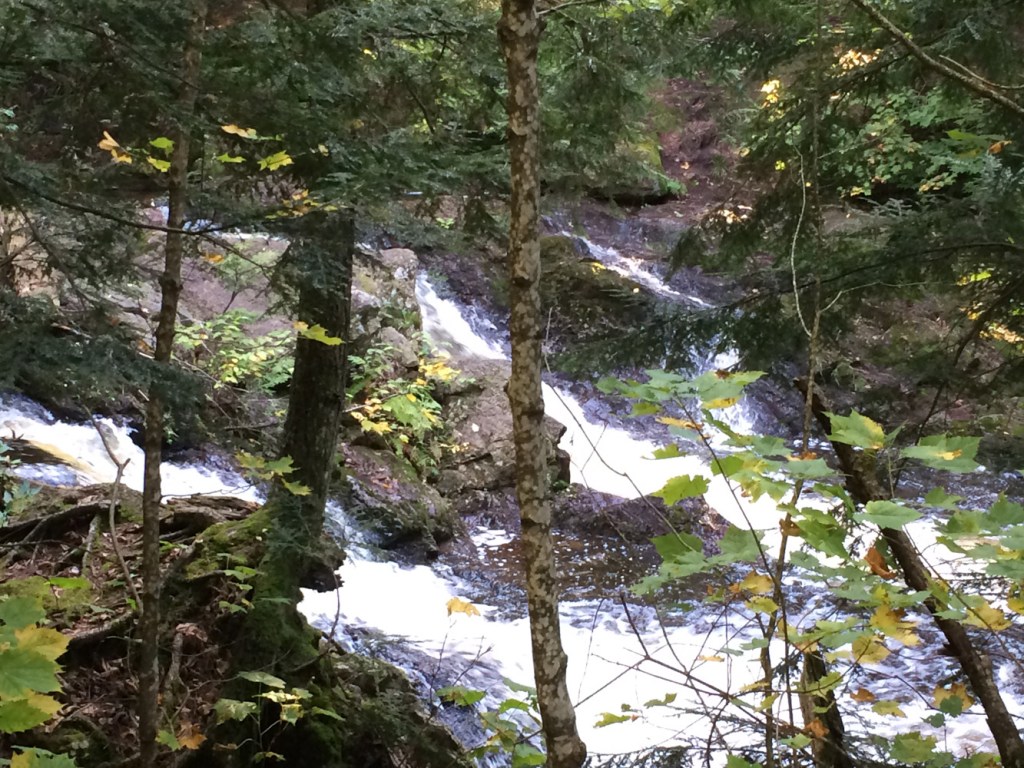
When I flipped my wall calendar on May 1st, the accompanying photo was of a waterfall.  My two-year-old grandson noticed it immediately, and said “waterfall!” I asked him if wanted to go see waterfalls, and ever since then we’ve been hiking local trails along rivers and streams in search of waterfalls.  Fortunately, we live in a city and surrounding area with a wealth of waterfalls, many within a few minutes of our home.  Each one is unique and changes with the volume of water as it varies from day to day.

I was lucky enough to be raised by parents with a love of waterfalls, so they were a staple of my childhood. We lived near waterfalls on the Cuyahoga River, where we would sometimes go for picnics and hikes, and our family vacations when I was young were often to visit waterfalls – Bridal Veil Falls in Yosemite, Tahquamenon Falls in the UP of Michigan, and of course, Niagara Falls.

Continue reading “Of Waterfalls and Wonder by Beth Bartlett”

Legacy of Carol P. Christ: “Calling All Women” to Save the Earth, signed and shared by Carol P. Christ

This was originally posted on April 1, 2019

I contend therefore that we have allowed these chemicals to be used with little or no advanced investigation of their effect on soil, water, wildlife and man himself. Future generations are unlikely to condone our lack of prudent concern for the integrity of the natural world that supports all life. Rachel Carson, Silent Spring

Today we are faced with a challenge that calls for a shift in our thinking, so that humanity stops threatening its life-support system. We are called to assist the Earth to heal her wounds and in the process heal our own – indeed to embrace the whole of creation in all its diversity, beauty and wonder. Wangari Maathai

I want you to feel the fear I feel every day. And then I want you to act. Greta Thunberg
We are calling all women and our allies to come together to save the earth that sustains us all. Is it any wonder that from Rachel Carson to Wangari Maathai to the emerging young leader Greta Thunberg, women have been in the forefront of environmental movements for a century? As daughters, sisters, mothers, grandmothers, and aunts, we have long cared and advocated for the most vulnerable among us, the very young, the very old, the disabled, those who are the first to suffer the consequences of climate catastrophe and the many kinds of pollution that are poisoning the earth we share.

Continue reading “Legacy of Carol P. Christ: “Calling All Women” to Save the Earth, signed and shared by Carol P. Christ”

Carol P. Christ’s Legacy: Women And Weeding, The First 10,000 Years* by Carol P. Christ

Moderator’s Note: We here at FAR have been so fortunate to work along side Carol Christ for many years. She died from cancer in July, 2021. Her work continues through her non-profit foundation, the Ariadne Institute for the Study of Myth and Ritual and the Goddess Pilgrimage to Crete. To honor her legacy, as well as allow as many people as possible to read her thought-provoking and important blogs, we are pleased to offer this new column to highlight her work. We will be picking out special blogs for reposting. This blog was originally posted February 10, 2014. You can read it long with its original comments here.

Mary, Mary, quite contrary, how does your garden grow? With silver bells and cockle shells, and pretty little maids all in a row.

From the beginning of horticulture about 8000 BCE or earlier to the present day, weeding has been women’s work. Women, who were the gatherers and preparers of food in traditional nomadic societies, no doubt were the first to discover that seeds dropped at a campsite one year sometimes sprung up as plants the next year. When this discovery was systematized, agriculture was invented, and human beings began to settle down in the first villages and towns.

Continue reading “Carol P. Christ’s Legacy: Women And Weeding, The First 10,000 Years* by Carol P. Christ”

“Calling All Women” to Save the Earth, signed and shared by Carol P. Christ

I contend therefore that we have allowed these chemicals to be used with little or no advanced investigation of their effect on soil, water, wildlife and man himself. Future generations are unlikely to condone our lack of prudent concern for the integrity of the natural world that supports all life. Rachel Carson, Silent Spring

Today we are faced with a challenge that calls for a shift in our thinking, so that humanity stops threatening its life-support system. We are called to assist the Earth to heal her wounds and in the process heal our own – indeed to embrace the whole of creation in all its diversity, beauty and wonder. Wangari Maathai

I want you to feel the fear I feel every day. And then I want you to act. Greta Thunberg

We are calling all women and our allies to come together to save the earth that sustains us all. Is it any wonder that from Rachel Carson to Wangari Maathai to the emerging young leader Greta Thunberg, women have been in the forefront of environmental movements for a century? As daughters, sisters, mothers, grandmothers, and aunts, we have long cared and advocated for the most vulnerable among us, the very young, the very old, the disabled, those who are the first to suffer the consequences of climate catastrophe and the many kinds of pollution that are poisoning the earth we share.

As cooks, gardeners, and small farmers providing sustenance for our families throughout the world, we speak for the soil and the water, the air and the crops that feed us. As Congresswomen, diplomats, lawyers, doctors, CEOs, artists and scientists we are calling for fair and equitable public policies that address the crises we are facing together. As those who create homes and maintain households, we are speaking out for our first and only home, the planet earth we share.

Today as never before we are witnessing the destruction of the intricate and delicate balance, the miraculous conditions on earth on which all life depends. At this moment as a drastically changing climate and a deluge of poisonous substances, from plastic to coal to pesticides threaten the habitats of living creatures world wide, we are confronted by unprecedented loss of species, what some are calling “the sixth extinction,” a tragic loss reflected in the epidemic of disease in our families and communities.

Like indigenous communities and people of color, because women are so often marginalized, as outsiders we have a crucial perspective including valuable insights into what has caused the frightening and destructive events we are witnessing. We see a world too often governed by ruthless attempts to dominate and win, placing profit above every other value, framed by a world view that describes nature as inferior, lacking in intelligence or the inviolable integrity that all living beings possess. In response we call for an ethic of peaceful cooperation with nature and between nations.

Faced with the consequences of heedless, ignorant and ultimately violent policies that threaten our lives and all we love, wild fires burning our forests and homes, floods and mudslides destroying our towns, fierce storms battering our coastline, lakes and rivers becoming too toxic to drink, as our oceans and the fish that swim in them are choked with plastic, as our air becomes heavy with particles that threaten human health, we are calling for women to unite in an effort to recognize and respond to the failures of political, economic and moral vision behind these crises.

As nurses, teachers, waitresses, secretaries, wives, partners, those who respect and nurture life, we understand we are all dependent on each other and every other living being on earth. And we know too that together we have the creative vision to stop the advance of climate change and the sixth extinction, to put an end to the poisoning of our earth, to build societies that, taking inspiration from indigenous cultures, respect nature’s rights and learn from nature’s wisdom. In this light we urge you now to speak out, organize, rally, protest and step up in every way you can to protect the future of life on earth.

Susan Griffin, Vandana Shiva, Alice Walker, Alice Waters, Vijaya Nagarajan, Maxine Hong Kingston, Deirdre English, Ayelet Waldman, Jane Hirshfield, Arlie Hochschild, Joanna Macy, Jodie Evans, Medea Benjamin, Claire Greensfelder, Belvie Rooks, Jennifer Berezan, Ruth Rosen, Elizabeth Rosner, Joyce Jenkins, Nancy Shelby, Anita Barrows, Rebecca Foust, Joan Miura, Carol P. Christ

Here are some actions you can take and organizations you can join and support:

Learn about the environmental issues in your own neighborhood. Educate your community and organize to while demanding an end to pollution and the emission of CO2 in every form. Work to empower our communities to allow us to make decisions that protect the environment and our families and all lives Ask your senators and representatives to support The Green New Deal. Call for and support public transportation. Ask the businesses in your communities and chains such as Trader Joe’s to adopt practices that support the environment and cease those that are destructive, such as the use of plastic. Take action to ban poisons such as Glyphosate found in Monsanto’s Round Up from our communities. Boycott Monsanto and companies that fail to adopt green policies. Ask your governments to stop exporting environmental destruction, in every form including dumping waste, mining, drilling for oil, selling pesticides, altering and patenting seeds, internationally. Oppose war and investments in warfare. As the largest source of pollution on the planet, armed conflict and the manufacture and storage of weapons cause irreparable and vast damage all over the earth.

Below is a list just a few of the organizations working to save our planet that can support your efforts and which you can join and support.

350.org, Bioneers, Black Belt Citizens, Greenpeace, Mothers out Front, Rain Forest Action, Seed Sovereignty, The Nature Conservancy, The Southern Environmental Law Center, Women Earth and Climate Action Network (WECAN), Women’s Environmental Network (WEN), Women’s Environmental Action, Women’s Voices for the Earth, Collaborative on Health and the Environment, CODEPINK.

Call: written by Susan Griffin with Vandana Shiva

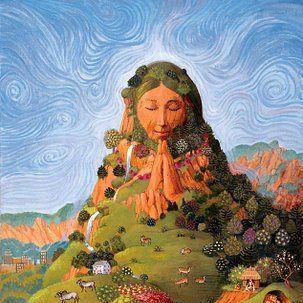
Painting: Mother Earth by Jennifer Cortez-Perlmutter

Note from Carol P. Christ: “Women’s knowledge” that we are part of the earth stems from women’s work: caring for the weak and the vulnerable in all cultures and caring for plants and trees in horticultural and forest-cultural societies. This knowledge is available to men as well but only if they are willing to challenge long-standing cultural assumptions about “manhood” based in the separation of men from women and nature.


Carol P. Christ is an internationally known feminist writer, activist, and educator living in Lasithi, Crete. Carol’s recent book written with Judith Plaskow, Goddess and God in the World: Conversations in Embodied Theology, is on Amazon. A Serpentine Path: Mysteries of the Goddess is on sale for $9.99 on Amazon. Carol  has been leading Goddess Pilgrimage to Crete for over twenty years: join her in Crete. Carol’s photo by Michael Honneger.

Listen to Carol’s a-mazing interview with Mary Hynes on CBC’s Tapestry recorded in conjunction with her keynote address to the Parliament of World’s Religions.

 

WOMEN AND WEEDING, THE FIRST 10,000 YEARS* by Carol P. Christ

carol-christMary, Mary, quite contrary, how does your garden grow? With silver bells and cockle shells, and pretty little maids all in a row.

From the beginning of horticulture about 8000 BCE or earlier to the present day, weeding has been women’s work. Women, who were the gatherers and preparers of food in traditional nomadic societies, no doubt were the first to discover that seeds dropped at a campsite one year sometimes sprung up as plants the next year. When this discovery was systematized, agriculture was invented, and human beings began to settle down in the first villages and towns.

In the early days of horticulture (the name for the earliest stage of agriculture before the plow was developed), the cycles of planting and harvest and all the stages in between were understood to have been given to mothers by the Great Mother, the Source of Life.  The secrets of planting, seed collection, harvest, and food preparation and preservation were all perceived to be “mysteries” connected to the ongoing cycles of birth, death, and regeneration in the universe.

My grandmother Lena Marie Searing who was born on a farm in Michigan must have learned agricultural secrets from her mother, for she not only created a beautiful garden, she also farmed an orchard and preserved its fruits in glass jars that lined her pantry.  It was she who taught me and my brothers and cousins to love nature.  My mother learned to garden from her mother, but she did not harvest food crops. I think of both of them whenever I work in my garden.

The past few days I have been weeding my garden after heavy rains that left the soil clumpy and moist.  I have weeded before, but I have never enjoyed it so much.  My garden has matured over the past seven years, and now the weeds are more “under control.”  There aren’t so many of them, and as I have now been weeding them out over the years, their roots are shallow.

As I slide a trowel into the earth the weeds lift up and with my fingers I gently pull the plants with their roots from the soil.  The weeds are familiar, though I don’t know all of their names. The “sticky weed” has many tough roots, the clover has many fine ones—both are hard to eradicate. Other weeds are easy to pull up and do not reappear again until the next year.

wild chamomile blooming among "weeds"
wild chamomile blooming among “weeds”

I am discovering that weeding is a delicate process. Sometimes the roots of plants I want in the garden are entangled with those of the weeds. I work carefully choosing the ones to save and the ones to discard.** I leave poppies, chamomile, yellow daisies, and marigolds where I find them, as I consider them to be wildflowers that will provide beauty in my garden when they bloom in spring. I also take care to “keep the soil in good heart” by not discarding too much of it along with the weeds.

As I weed, I think of the women in my village who harvest greens from the fields, feeling certain that some of the weeds I discard are edible.  I marvel at all of the knowledge women have shared and passed down over the past 10,000 years and more, as I realize how little of it I know. My suspicion that some of my weeds could be food is validated when a friend and I order boiled “greens from the mountains” for lunch at a local taverna and are served one of the plants I had thrown into the garbage can.

As I weed, I am reminded of an essay called “Keeping the Soil in Good Heart: Women Weeders, the Environment, and Ecofeminism” by Candice Bradley which was published in Karen J. Warren’s EcofeminismBradley writes that weeding is women’s work in almost all cultures.  As I work, I understand that this is so because weeding is delicate work that requires concentration and patience and that must be repeated. Bradley says that in many cultures men disparage weeding as they disparage housework—not considering either to be “real” work.

Horticulture is the most environmentally friendly form of farming, according to Bradley, because it does the least harm to the soil, and because the weeds that are not eaten are burned or composted and turned back into the earth to replenish it.

While weeding by hand has been considered work for women and children, men have generally controlled the plow and its recent successor, the tractor. However, as Bradly states, the plow and the tractor do not eliminate the need for hand-weeding.  In many cases they encourage the weeds to regenerate. Women and children still weed.

The chemical gardening and farming industry (“round it up”) is based on the premise that weeds can and must be eradicated. Rachel Carson warned us of the danger this approach to agriculture presents to human and all other forms of life.  A by-product of chemical agriculture is that the careful work of women weeders is further discounted.

I do not use chemicals or pesticides in my garden, and I will be out there weeding on a regular basis in the next months.  As I put my hands in the earth, I will think of all the women before me who have weeded and planted, weeded and harvested, and weeded again. Blessed be.

*The title of this essay is an homage to Elizabeth Wayland Barber’s Women’s Work: The First 20,000 Years which discusses and celebrates women and weaving.

**I am aware that no plant was born a “weed” and that the designation of some plants as weeds is a by-product of human digestive systems, human taste, agriculture, and the creation of gardens for the celebration of beauty.

Carol P. Christ created a newly released new website for the Goddess Pilgrimage to Crete which she leads through Ariadne Institute.  Early bird special for the spring pilgrimage available until February 15.  Carol can be heard on a WATER Teleconference.  Carol’s books include She Who Changes and Rebirth of the Goddess and the widely-used anthologies Womanspirit Rising and Weaving the Visions