With the Winter Moon waxing on nights when stars are falling from the sky and the winter solstice passage, I am much aware of the healing and dwelling place that I inhabit that also characterizes these dark months of the year.
Unfortunately, even those who acknowledge our seasonal turnings rarely honor the dark as sacred. At the winter solstice the emphasis is still on light.
Yesterday I learned (NPR) that a third of the oak trees in this country will be dead within 50 years; I also read that our sugary harbingers of spring, the Maples, are dying confirming my own observations. I try to imagine what fall will be like without fire on the mountain.
When I heard that pink dolphins, those denizens of the fresh waters of the Amazon are going extinct, I remembered their gift to me, grateful that I had been present as a receiver. On the last day of a three – year research journey (early 90’s) I was with my guide returning to a place on the river that I loved. It was absolutely calm; my guide and I drifted along a serpentine tributary curtained and dripping with scarlet passionflowers, when a circle of pink dolphins surrounded the dugout.
“I love you,” I repeated the words over and over in a trance-like state glued to the rippling brown water.
Round and round they came surfacing inches away from the side of the boat. Flippers splashing shades of pink and gray.
The Circle of Life was being inscribed in the water.
Now, many years later I am saying goodbye to an enduring friendship with a species I adored…
Around the world, and especially here in the ‘United’ (?) States the virus continues to spike and another strain has been identified, more contagious than the first. Two million people are dead…
This morning I was kneeling in front of my new wood stove kindling a fire from hot coals when I felt the presence of the Greek Goddess Hestia, Lady of the Hearth moving through the house. The goddess manifests as a crackling wood fire, and when I kneel before my wood stove to coax coals into flames I feel as if I am paying homage to her.
I have spent two winters without a wood stove, and have missed this ritual fall lighting of the fire, and the knowing that I am participating in ancient practice that extends back far beyond the Patriarchal Greeks to the dawn of humankind. Continue reading “Paying Homage to Hestia by Sara Wright”
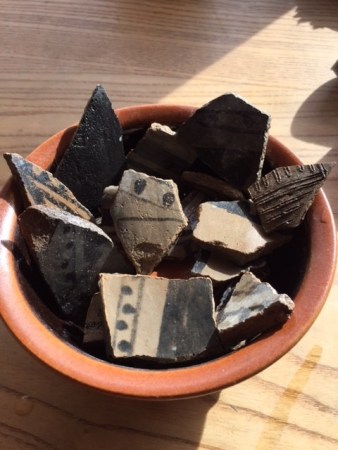
The potshard in the center seems to have a “face”… although I bring some of these artifacts home for closer inspection it is part of my spiritual practice to return them to the land.
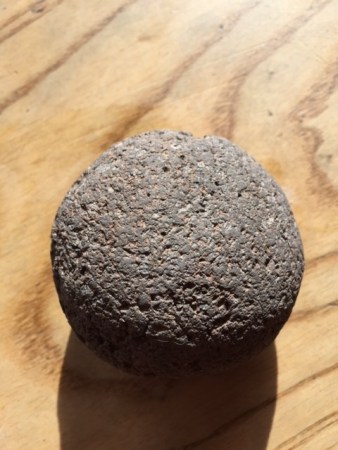
Mano
Avanyu, spirit of the waters
The storied land
Another view of the stones that tell stories.
A couple of days ago I was climbing a mesa with a friend who is “a guide to the wild places” – those places off the beaten track where stories are told by the stones and the Earth that supports them. Continue reading “Stories the Stones Tell by Sara Wright”
“The body is a nation I have not known.
The pure joy of air: the moment between leaping
from a cliff into the wall of blue below.”*
Oh, the pure joy of being weightless – I leapt to the stars, flung myself with abandon into the deep until the fire started burning and I was forced to surface for air…
I was a stranger to my body, escaping messy feelings by living through my mind. I dressed her, made her behave – learning that I must have control at any cost. I cultivated a winning smile to cover anguish I could not name. Buried all fear. This last one backfired during infancy. I lived pure terror. I had no Voice. It was years before I realized who stole it. Continue reading “The Body is a Nation by Sara Wright”
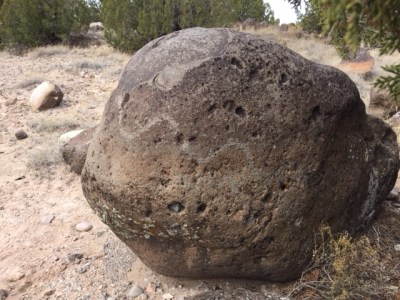
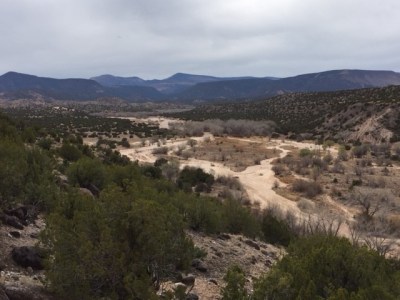
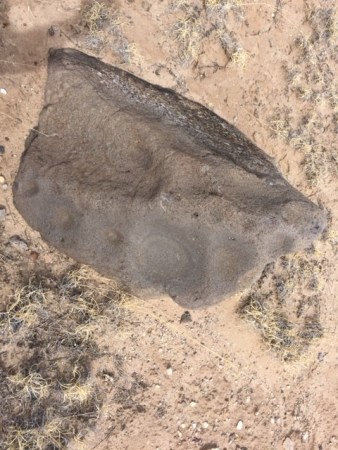
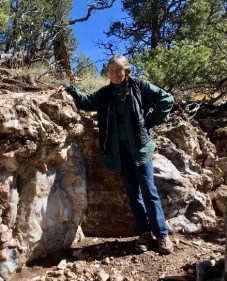
She climbed steep hills
and rubble to reach the meadow.
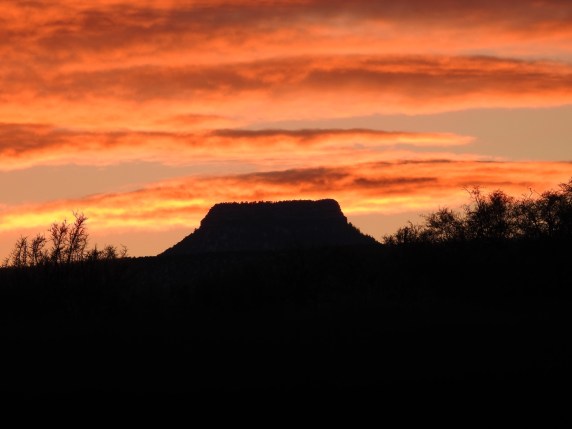
The flat – topped mountain peered down
at the woman
gathering stones
as if they were diamonds.
Amber, moss, pearl white,
rose red and orange,
gray and ebony – a luminescence
emanated from each,
almost as if the moon had
infused each flake and boulder
with her translucent light.
The Pedernal absorbed
her child-like wonder
and gifted her
with stones
that told a story
of a sea of shells and plants
that once lived there
before people.
Stones speak to
those who love them.
Notes on the Pedernal:
In Abiquiu, New Mexico there is a flat – topped mountain that is called the Pedernal that can be seen from most directions and has been painted and photographed from every angle. Indigenous peoples considered this mountain to be sacred. The mythical (Navajo) Changing Woman was born on this mountain, and it is said that she lives there still. Each year she is born in the spring, emerges as a young woman during the summer, becomes a mother in the fall, and turns into an old woman during the winter season, only to be born again. In the East she is Earth Woman, in the South Mountain Woman, in the West she is Water Woman and in the North she is Corn Woman. Changing Woman embodies Nature’s as a whole and since the Navajo trace their lineage through a matrilineal line she is the Mother of all the People.
The first way Changing Woman saves the world is by birthing the twins, the male aspects of herself. This embodied female/male energy is capable of taking action on behalf of all the people, ridding the world of monsters. It is important to note that the twins require the help of Spider Grandmother’s wisdom, guidance and protection because Spider Grandmother is Changing Woman’s older wisdom aspect, a continuation of her mother – line.
The second and most critical way Changing Woman saves the world from “monsters” is because she secures the matrilineal line for the People. The matrilineal system traces descent through maternal roots. Men who marry move to the wife’s residence (matrilocal) and become part of the maternal family. Mothers, aunts, and grandmothers bring up the children, protecting, guiding, and teaching the children the ancestral family stories. This system unites Navajo society and creates the social structure of the culture connecting generations through kinship.
Although in present day Navajo culture Patriarchy has eroded women’s power the four tenets (harmony, beauty, balance, peace) remain part of the judicial system of the Navajo people.
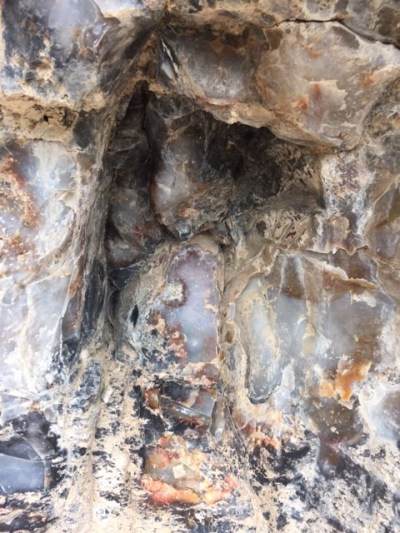
The multicolored stone called chert and its darker twin, flint, are structural (quartz) parts of this mountain. These stones were once collected to craft the finest arrowheads for hunting.
This collection of chert fragments lies on my desk along with a vessel made by an Indigenous woman. These stones remind me of the power of Changing Woman and how she continues to work through my life even as I return to the North, my homeland.
The mountain absorbed
her child-like wonder
with pleasure,
and gifted one
who climbed to her summit
with a stone
that told a story
of a sea of shells and plants
that once lived here.
Stones speak to
those who love them.
In the myth Changing Woman never dies; she grows old and young again with the seasons. In the East she is Earth Woman, in the South Mountain Woman, in the West she is Water Woman and in the North she is Corn Woman.
Changing Woman embodies Nature’s as a whole and since the Navajo trace their lineage through a matrilineal line she is the Mother of all the People.
According to Navajo mythology the first way Changing Woman saves the world is by birthing the twins, the male aspects of herself. This embodied female/male energy is capable of taking action on behalf of all the people, ridding the world of monsters. It is important to note that the twins require the help of Spider Grandmother’s wisdom, guidance and protection because Spider Grandmother is Changing Woman’s older wisdom aspect, a continuation of her mother – line.
The second and most critical way Changing Woman saves the world from “monsters” is because she secures the matrilineal line for the People. The matrilineal system traces descent through maternal roots. Men who marry move to the wife’s residence (matrilocal) and become part of the maternal family. Mothers, aunts, and grandmothers bring up the children, protecting, guiding, and teaching the children the ancestral family stories. This system unites Navajo society and creates the social structure of the culture connecting generations through kinship.
Although in present day Navajo culture Patriarchy has eroded women’s power the four tenets (harmony, beauty, balance, peace) remain part of the judicial system of the Navajo people.
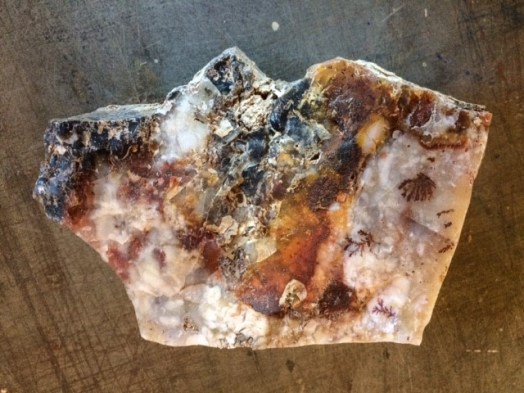
Above photo of plant and shell fossils in the chert was taken by Iren Schio
Working notes:
In Abiquiu, New Mexico the flat – topped mountain we call the Pedernal can be seen from most directions and has been painted and photographed from every angle. Indigenous peoples considered this mountain to be sacred. The mythical (Navajo) Changing Woman was born on this mountain, and it is said that she lives there still. Each year she is born in the spring, emerges as a young woman during the summer, becomes a mother in the fall, and turns into an old woman during the winter season, only to be born again. The multicolored stone called chert and its darker twin, flint, are structural (quartz) parts of this mountain. These stones were once collected to craft the finest arrowheads for hunting.
I have a passion for all stones but especially chert because of its colors. Chert and flint are microcrystalline varieties of quartz. Their crystals are so tiny that chert and flint fracture more like glass than quartz crystals. Skilled Native peoples chipped chert and flint pieces into arrowheads, spear points, scrapers, and other tools. The only difference between chert and flint is color: flint is black or nearly black, while chert tends to be white, gray, pink, or red and can be plain, banded, or preserve fossil traces.
Sara is a naturalist, ethologist ( a person who studies animals in their natural habitats) (former) Jungian Pattern Analyst, and a writer. She publishes her work regularly in a number of different venues and is presently living in Maine.
Four years ago I made a trip to New Mexico to spend the winter and returned for three more winters in a row. A true Night Journey through the Desert. I hadn’t been there three weeks before a Great Horned owl appeared at my door. My dead mother (with whom I had had a devastating relationship and who loved owls) was surfacing as a threat…and I just did not want to believe it.
After a few months I was thrilled to make what I believed to be a genuine woman friend. Ironically, I met her at a feminist gathering. Oh, at last! Up until that point the only woman I currently had a close relationship with was a woman who was a former editor that became a virtual friend. I had only met her once (caveat–watch out for FB friends). My dearest friend Lise (we were thirty years strong) lived too far away for us to see each other although we talked and argued periodically! I was so lonely for a real woman friend that I could see regularly, and share my feelings with honestly … When this woman sought me out I could hardly contain myself. I was that excited. Continue reading “Coyote Woman Unmasked….by Sara Wright”
Once she believed that
it was her fault
they came on to her,
that she owed them something…
They owned her?
Secretly the
girl was pleased
because any kind of attention
was better than none,
or being so “different” –
stitched into an Indian skin.
She was a pretty shell,
an abandoned spiral
worn down by waves –
assaulted from within
by the pornographic gaze.
How she hated being young.
One concrete way of accomplishing this change is to submerge ourselves in the rest of Nature and stay open to the appearance of animals, birds, plants, etc., and by paying close attention to images and words, nudges, synchronicities, dreams, and fantasies. Especially while caregiving, perhaps the most exhausting job of all. S/he provides us with a means to deal with the crisis of Covid 19 by staying in the present moment as much as we possibly can. Debra’s flowers/ four-leaf clovers, owls, stars, all speak to the importance of the presence of nature in different ways.
It is hard to miss the change of expression on Everywoman’s face. Held by the bear, her eyes are focused and there is a sense of peace that permeates the woman’s countenance. Clearly, Everywoman is able to be present to what is. This woman has once again found home.
To the right and below the moon there is a small leaf-like image that seems to be drifting. When I asked Debra what the image was she responded that the leaf was a simplified four-leaf clover. It symbolized the role that luck plays in the spread of an impersonal virus, but memories of being with her grandfather on Sunday afternoons searching for four-leaf clovers, and the way the two were connected with nature were also part of the reason she included this image. Once again we see the archetypal and the personal intersecting in Debra’s work. On an archetypal level, the impersonal presence of luck/trickster/fool determines viral outcomes, on a personal level this symbol attaches Debra to nature and her love for family.
When I asked Debra about this circle she said “the circle around the eye is symbolic of the moon, a nightly ritual of seeing the moon.” Curiously, women as ‘seers’ have an intimate relationship with the moon. Both eyes seem to be able to stare directly through the mask. The woman’s lips are parted; she is breathing but there is no sense that she is about to speak.
The length of the woman’s neck is accentuated by its distinct slate blue tones. This neck seems especially vulnerable – stretched perhaps to endurance. Suddenly it occurs to me that it is also a neck, like a chicken’s neck, that is ready for the chopping block. Has this woman lost her voice? Her ability to breathe? Is there a threat of being separated from her body? The suggestion of a body ends at the woman’s shoulders so we are left wondering…
Since our feelings and emotions reside in our bodies the suggestion here is that this woman may be without access to her body on an instinctual level. If so she is unable to protect herself. Blue is a color that is sometimes associated with death. In some Native traditions, like that of the Zuni and the Lakota Sioux blue is the color of the Underworld. Particularly touching is the pale four petaled flower to the lower right of the left half of the relief, a flower without a stem or root, or is this a wheel of some kind, one that is in motion – whirling – chaos? To my mind a number of aspects of this portrayal speak to the presence of death. Continue reading “The Mask and the Mirror – Part 2 by Sara Wright”


 With the Winter Moon waxing on nights when stars are falling from the sky and the winter solstice passage, I am much aware of the healing and dwelling place that I inhabit that also characterizes these dark months of the year.
 Yesterday I learned (NPR) that a third of the oak trees in this country will be dead within 50 years; I also read that our sugary harbingers of spring, the Maples, are dying confirming my own observations. I try to imagine what fall will be like without fire on the mountain.
 This morning I was kneeling in front of my new wood stove kindling a fire from hot coals when I felt the presence of the Greek Goddess Hestia, Lady of the Hearth moving through the house. The goddess manifests as a crackling wood fire, and when I kneel before my wood stove to coax coals into flames I feel as if I am paying homage to her.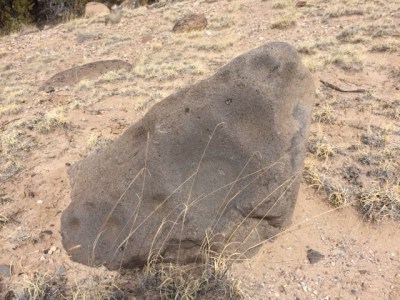
 She climbed steep hills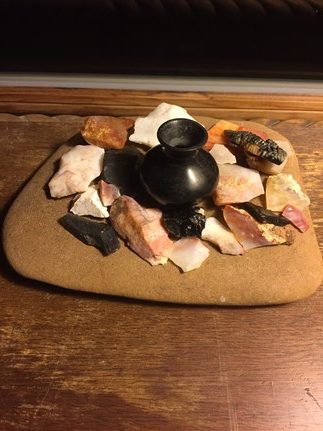
 Four years ago I made a trip to New Mexico to spend the winter and returned for three more winters in a row. A true Night Journey through the Desert. I hadn’t been there three weeks before a Great Horned owl appeared at my door. My dead mother (with whom I had had a devastating relationship and who loved owls) was surfacing as a threat…and I just did not want to believe it.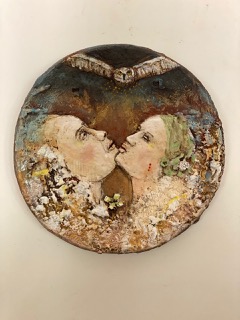

 Feminism and Religion