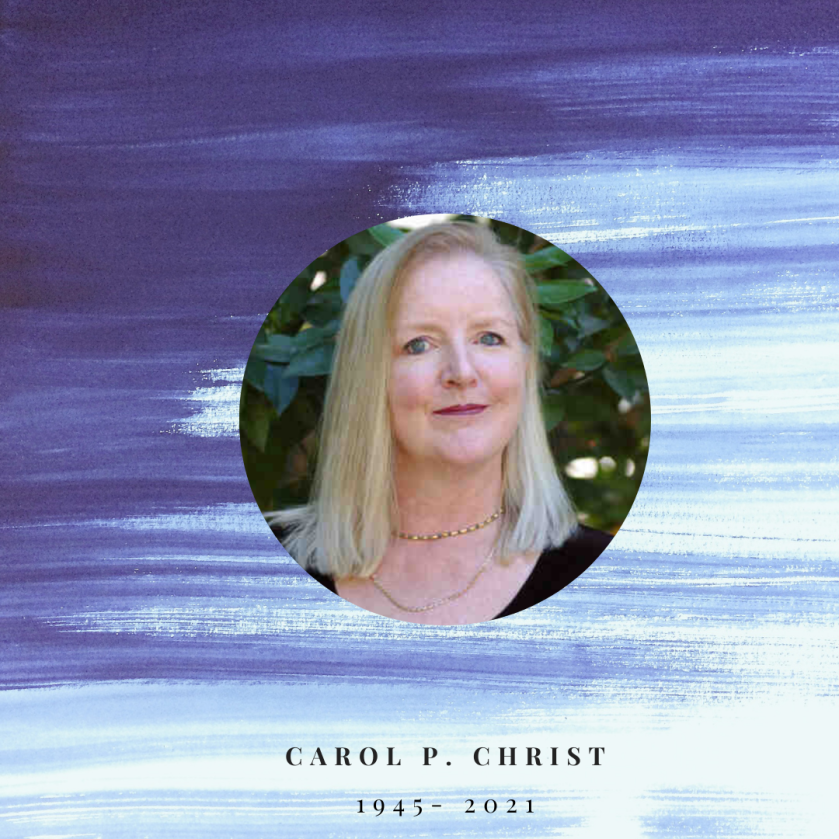
Legacy of Carol P. Christ: Is ‘Having To Have’ One Of The Roots Of Suffering?

Carol P. ChristThis post was originally published on Aug. 6th, 2012

There is a strong thread of fatalism in modern Greek culture that has been a powerfully healing antidote to my American upbringing in the culture of “I think I can, I can.”  When confronted with an obstacle, many Greeks throw up their hands, raise their eyebrows, and say, “What can we do?” This phrase is not an opening toward change, but a closing–an acknowledgment that there are many things in life that are not under our control.

In American culture we are taught that if we work hard enough, we can achieve our goals. This view can bring a light of possibility into fatalistic cultures. The truth, however, lies somewhere in the middle–between fatalism and belief in the power of individual or collective will.

In American culture the belief that we can “have it all” if only we work hard enough is the root of much personal suffering.  If things don’t turn out as we imagined they should have, we often blame ourselves. Continue reading “Legacy of Carol P. Christ: Is ‘Having To Have’ One Of The Roots Of Suffering?”

Hope Is Giving Birth in the Face of the Dragon by Beth Bartlett

Syrian Baby

The image of the baby born under the rubble of the earthquake in Syria has been haunting me. So has the image in my mind of her mother, giving birth to her baby while trapped after the building, where she, her husband, and their children were sleeping, collapsed.  The baby’s uncle, when digging through the debris hoping to reach his brother and family, found the baby alive, her umbilical cord still attached to her mother. When he cut the cord, the baby let out a cry.  Tragically, her mother had died after giving birth, as had her father and siblings.

Continue reading “Hope Is Giving Birth in the Face of the Dragon by Beth Bartlett”

Legacy of Carol P. Christ: Speak the Truth about Conflict, Pain, and Suffering: It Is Not All Love and Light

This was originally posted on July 23, 2018

Nurture life.
Walk in love and beauty.
Trust the knowledge that comes through the body.
Speak the truth about conflict, pain, and suffering.
Take only what you need.
Think about the consequences of your actions for seven generations.
Approach the taking of life with great restraint.
Practice great generosity.
Repair the web

Continue reading “Legacy of Carol P. Christ: Speak the Truth about Conflict, Pain, and Suffering: It Is Not All Love and Light”

Authenticity by Beth Bartlett

The leaves have finally begun to turn. I’ve been longing for the trees to reveal their true beauty in all their colorful array, and am glad for this beginning. Soon the woods will be filled with the golden, amber, scarlet, and orange glow of the maples, aspen, birch, and oaks of the northern forest.

Hawk Ridge

It is the time of year I would take my Women and Spirituality students to a sacred spot on a ridge high above Lake Superior to explore their spiritual connections with the earth. They would share a particular way they felt a connection to the natural world – often a lake, or a place from their childhood, a tree they loved to climb, their dog, or a stone they carried.   We would circle the large pine and invoke Starhawk’s “Open-Eyed Grounding” practice.[i] They would read and comment on their favorite passages from the readings – selections from Susan Griffin’s Woman and Nature and Carol Christ’s “Rethinking Theology and Nature.”[ii] Then they would disperse across the ridge for their solo encounters with nature, before gathering together again, each returning with something they had discovered during that time.  Then we would talk about the changing colors of the leaves surrounding us and talk about how these were the true colors of the leaves, finally emerging now that the chlorophyll that had disguised them in green was beginning to wane. Taking our cue from the leaves, we would talk about authenticity – about their coming into their own true colors. For that is the work of spiritual growth and transformation — to emerge as our own true selves. Yet, how often our unique and precious beings are taught to mask our true color, blend in — be “green” like everyone else.  What a vivid and beautiful world when we come into our own and share our unique gifts and being with the world.

Continue reading “Authenticity by Beth Bartlett”

Mary Daly and Simone de Beauvoir: Sister Diagnosticians by Xochitl Alvizo

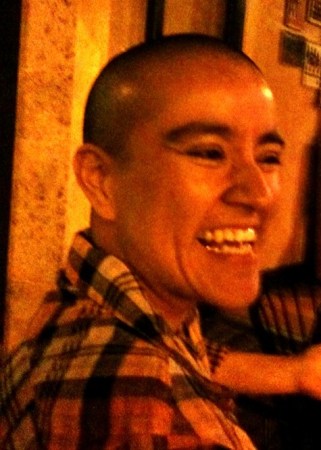
Xochitl Alvizo; Photo by http://www.chrispinkham.com/

Mary Daly still causes me awe. I think about the way she was so keenly able to diagnose the Catholic Church’s collusion in creating, sustaining, the oppressive structures that directly impact women (and men, as she always affirmed). Mary Daly knew that the situation of women’s second-class status, outlined at the time most powerfully by Simone de Beauvoir in her book The Second Sex,[1] was in great part made possible by the Catholic Church. The church used Christianity to justify the creation of gender hierarchies (for it can be used otherwise), and regarded a category of humans as having greater value and worth than others by default. So much so that it comes to be understood as “god ordained” or “natural” – the right order of things.

At the time of her early writing, Mary Daly still identified as part of the Catholic Church – but she did not hesitate to call out her church. Building on the work of existentialist philosopher Simone de Beauvoir, Daly made a powerful case against the church. She described the antagonism between the Catholic Church and women as based on the fact that the Church’s teachings perpetuated a “traditional view of woman” that both “pretends to put woman on a pedestal but which in reality prevents her from genuine self-fulfillment and from active, adult-size participation in society.”[2] She drew on insights from de Beauvoir to make her case and wrote her book The Church and the Second Sex with the conviction that there were “harmful distortions of doctrine and practice” in the Catholic Church. Continue reading “Mary Daly and Simone de Beauvoir: Sister Diagnosticians by Xochitl Alvizo”

IS ‘HAVING TO HAVE’ ONE OF THE ROOTS OF SUFFERING? by Carol P. Christ

There is a strong thread of fatalism in modern Greek culture that has been a powerfully healing antidote to my American upbringing in the culture of “I think I can, I can.”  When confronted with an obstacle, many Greeks throw up their hands, raise their eyebrows, and say, “What can we do?” This phrase is not an opening toward change, but a closing–an acknowledgment that there are many things in life that are not under our control.

In American culture we are taught that if we work hard enough, we can achieve our goals. This view can bring a light of possibility into fatalistic cultures. The truth, however, lies somewhere in the middle–between fatalism and belief in the power of individual or collective will.

In American culture the belief that we can “have it all” if only we work hard enough is the root of much personal suffering.  If things don’t turn out as we imagined they should have, we often blame ourselves. Continue reading “IS ‘HAVING TO HAVE’ ONE OF THE ROOTS OF SUFFERING? by Carol P. Christ”