Common Ground: Part Two:  On Enclosure, the Commons, and Awe by Beth Bartlett

Can we rise to ourselves and see what is in the nature of the soul to see – that we exist on this common ground together?” – Susan Griffin

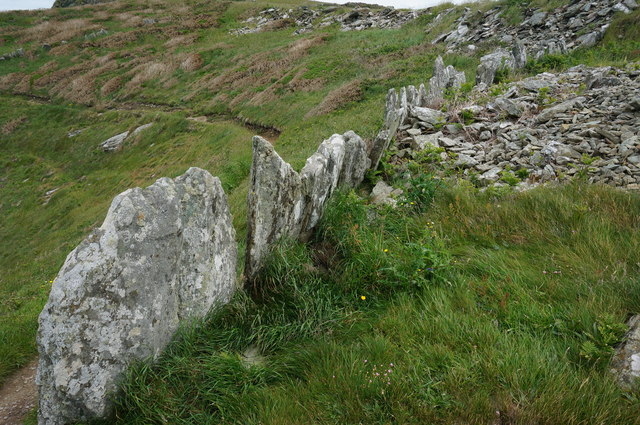
The ideology, discussed in Part One, that land that is not being cultivated, mined, lumbered, or otherwise used to create goods and capital is ‘waste” continues its devastating effects to this day in mountaintop removal, destruction of old growth forests, fracking and drilling and mining of once pristine lands, plowing the plains into dust and spreading herbicides and pesticides over the land. Devastate – from the Latin devastare, meaning to “lay waste, ravage, make desolate.” Devastate – to de-vast – is to destroy the vastness. And so has the vastness of lands around the world been plundered, laid waste, so as not to “waste” it.

Continue reading “Common Ground: Part Two:  On Enclosure, the Commons, and Awe by Beth Bartlett”

Common Ground: Part One:  On Enclosure, the Commons, and Awe by Beth Bartlett

I spent the first half of my academic career studying and teaching the history of Western political philosophy – the works of Plato, Aristotle, Augustine, Aquinas, Hobbes, Locke, and Rousseau to name a few.  It gave me the best possible grounding in understanding the foundations of patriarchy.  In more recent years, I have used these works to explain the Western paradigm of thought to my ecofeminism students so they could better understand how women, colonized others, and the earth have been defined and dominated based on these assumptions.

Continue reading “Common Ground: Part One:  On Enclosure, the Commons, and Awe by Beth Bartlett”

Legacy of Carol P. Christ: Maternal Gift Economy: Webinar Gifts

This was originally posted December 7, 2020

In the 1960s and 1970s, American-born Genevieve Vaughan was living in Rome with her husband, philosopher Ferruccio Rossi-Landi, and their three daughters. When Rossi-Landi, using Marxist models, began to write about language as a form of “exchange,” Vaughan was inspired to articulate her alternative theory based on the idea that language was developed and is learned through the gifts of the mother to the child. From that beginning, Vaughn developed an alternative theory of culture based on what she calls the “gift economy.”

Continue reading “Legacy of Carol P. Christ: Maternal Gift Economy: Webinar Gifts”

Seeds of Hope: Part Two by Beth Bartlett

You can read part 1 here.

The patenting of seeds[i] has made the thousands-year-old practice of seed saving illegal, as is the sharing of seeds from farmer to farmer. The most notorious case is that of Canadian farmer Percy Schmeiser, whose canola crops were contaminated with Roundup Ready canola pollen blown into his fields from neighboring corporate farms. When Monsanto trespassed onto his fields, took samples, and found Roundup Ready canola plants mixed in with Schmeiser’s own canola plants, they sued him for violation of patents. Ultimately, the Canadian Supreme Court ruled in favor of Monsanto, but also ruled that Schmeiser owed Monsanto nothing.

In my own city, seed sharing became an issue when in 2013 our local library decided to start a seed library. The project was begun with great hopes that patrons could check out seeds for their home gardens, with the understanding that they would save a portion of their seeds and return these to the library for next year’s use. [ii] Project leaders hoped this would preserve locally adapted seed varieties. Unfortunately, after the seed library came to the public’s attention, the Minnesota Department of Agriculture informed the library that they were in violation of a Minnesota statute that prohibited the exchange of non-commercial seeds. [iii] Library Manager Carla Powers commented, “ . . . the law went so far as to make it illegal for gardeners to exchange a handful of seeds with one another.”[iv] But this did not end the library’s efforts.  Several ally organizations[v] stepped up to create an amendment to the statute that exempted the exchange of non-commercial seeds from testing, labeling and licensing laws. This inspired a state-wide effort to change the law, which was successfully accomplished in that year’s legislative session.[vi]

Continue reading “Seeds of Hope: Part Two by Beth Bartlett”

Seeds of Hope: Part One by Beth Bartlett

Author’s Note: This piece was inspired by Janet Maika’i Rudolph’s wonderful FAR post of December 15th, 2022, “Ode to Seeds.”

“. . . I know, yes, there is renewal, /because this is what the seeds ask of us/ with their own songs/ when we listen to their small bundle of creation,/ of a future rising from the ground . . .” – Linda Hogan

The first seed catalogs started arriving in the mail even before the turn of the new year.  In an annual ritual of hope, in the depths of winter we turn our thoughts and dreams to growing things – seeds of heirloom tomatoes, cucumbers, squash, carrots, and beans that will feed us and grace our tables in the summer and fall, and colorful marigolds, nasturtiums, and zinnias that will delight all summer long with their beauty. Is this the invincible summer of which Camus wrote?[i] 

Continue reading “Seeds of Hope: Part One by Beth Bartlett”

Legacy of Carol P. Christ: Tree-Hugging Is About Trees and So Much More Than Trees

This was originally posted March 11, 2019

Not too long ago I heard someone deride members of a seminar who were building labyrinths in the olive groves of Greece as “a bunch of tree-huggers.”  I bristled! I probably first heard of the Chipko tree-hugging movement which is led by women in the 1970s and 1980s. Because I love nature, I naturally assumed hugging trees is a good thing. Originally, I had no idea that the tree-hugging movement was about much more than saving trees from being felled in the interests of short-term profit.

I did not know that the deeper purpose of the movement is to save a way of life based on forest-culture that is being threatened by the imposition of western ideas and practices promoted by colonialism and its successor, the green revolution. Nor did I know that the traditional forest-culture of India is the provenance of women: more than 4000 years of observing and experimenting created a “women’s knowledge” passed down from mother to daughter.

Continue reading “Legacy of Carol P. Christ: Tree-Hugging Is About Trees and So Much More Than Trees”

Legacy of Carol P. Christ: “Calling All Women” to Save the Earth, signed and shared by Carol P. Christ

This was originally posted on April 1, 2019

I contend therefore that we have allowed these chemicals to be used with little or no advanced investigation of their effect on soil, water, wildlife and man himself. Future generations are unlikely to condone our lack of prudent concern for the integrity of the natural world that supports all life. Rachel Carson, Silent Spring

Today we are faced with a challenge that calls for a shift in our thinking, so that humanity stops threatening its life-support system. We are called to assist the Earth to heal her wounds and in the process heal our own – indeed to embrace the whole of creation in all its diversity, beauty and wonder. Wangari Maathai

I want you to feel the fear I feel every day. And then I want you to act. Greta Thunberg

We are calling all women and our allies to come together to save the earth that sustains us all. Is it any wonder that from Rachel Carson to Wangari Maathai to the emerging young leader Greta Thunberg, women have been in the forefront of environmental movements for a century? As daughters, sisters, mothers, grandmothers, and aunts, we have long cared and advocated for the most vulnerable among us, the very young, the very old, the disabled, those who are the first to suffer the consequences of climate catastrophe and the many kinds of pollution that are poisoning the earth we share.

Continue reading “Legacy of Carol P. Christ: “Calling All Women” to Save the Earth, signed and shared by Carol P. Christ”

Maternal Gift Economy: Webinar Gifts by Carol P. Christ

In the 1960s and 1970s, American-born Genevieve Vaughan was living in Rome with her husband, philosopher Ferruccio Rossi-Landi, and their three daughters. When Rossi-Landi, using Marxist models, began to write about language as a form of “exchange,” Vaughan was inspired to articulate her alternative theory based on the idea that language was developed and is learned through the gifts of the mother to the child. From that beginning, Vaughn developed an alternative theory of culture based on what she calls the “gift economy.”
We are born into a Gift Economy practiced by those who mother us, enabling us to survive. The economy of exchange, quid pro quo, separates us from each other and makes us adversarial, while gift giving and receiving creates mutuality and trust.

According to Vaughan, the “exchange economy” is based in the gift economy, while at the same time it denies the gifts it has received from mothers and mothering figures and disparages mothers and their work. Mothers rear children who enter into the exchange economy, but these children would not be alive to enter the exchange economy unless they had first been nurtured by the freely given gifts of mother. Vaughan writes that prior to patriarchy, cultures and societies valued the gifts of mothers and were organized around the principle of gift-giving. Vaughan states that gift-giving economies are based in the idea of meeting the needs of others, while exchange economies are focused on the enrichment of the individual self. She believes that re-valuing and re-instating the gift economy is the only path to creating and restoring peace and justice in the world. Continue reading “Maternal Gift Economy: Webinar Gifts by Carol P. Christ”

Coronavirus: The Villain Is Not Mother Nature: It Is Ourselves by  Carol P. Christ

Over the past few weeks of lockdown in Greece, I have asked myself numerous times: if we can shut down the world economy because of a virus, why don’t we shut everything down until we end war or find real solutions to global climate change? In my mind the horrors of war are much worse than the horrors of disease and dying and the threat and reality of global extinctions pose a much greater threat to humanity (not to mention nature) than the Coronavirus.

Why is it that we are willing to take extreme measures to defeat the Coronavirus but we are not willing to take extreme measures to end war or to stop global climate change? A thought keeps creeping into the back of my mind: the fight against disease and death is (understood to be) a fight against Mother Nature and (sadly) we are well used to fighting against Her. If we recognized that human beings have brought the Coronavirus upon ourselves, we would have to face up to our responsibility for it. Continue reading “Coronavirus: The Villain Is Not Mother Nature: It Is Ourselves by  Carol P. Christ”

Plant Trees, Trees, and More Trees by Carol P. Christ

I dream that all of us who are suffering burn-out because of national and world politics come together to plant and nurture trees. Scientists say that planting ONE TRILLION TREES would neutralize two-thirds of carbon emissions and reverse climate change. Yes, we need to march, to organize, and to vote. But it is also important to embody our commitment to life and the living. Putting our hands in the soil, tenderly teasing the roots of the trees we plant as we nestle them into the earth, we move from our heads to our bodies, re-membering the interdependence of life.

This has already begun to happen in India—a country where what Vandana Shiva named “maldevelopment” has produced massive deforestation. At the Paris climate change conference India pledged to “make India green again” by reforesting 235 million acres of land. The government allotted 6.2 billion dollars to support the plan. What was not expected was the overwhelming enthusiasm of those who volunteered to plant trees. Continue reading “Plant Trees, Trees, and More Trees by Carol P. Christ”