From Kavanaugh to Hell by Sara Wright

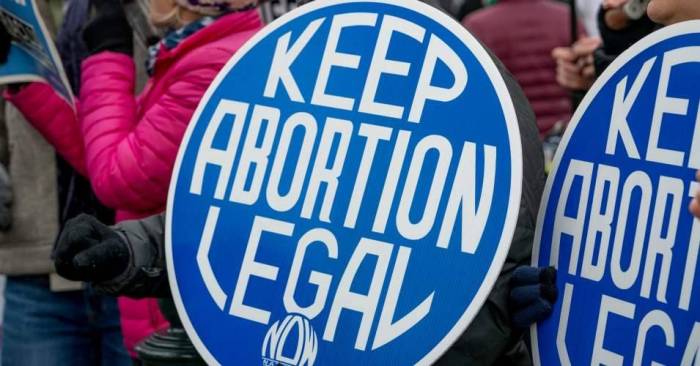
The glorious blue and gold summer day permeated by the scent of wild roses faded as the ominous words swirled around my head trying to get in. Roe overturned.

For a moment rebellion – disbelief, NO, something screamed in silent anguish. NO. Then mind flooded with poison… Pure hatred rose in a frightening swell that threatened to overpower my instincts.  But I heard the words: “Go parallel with your hatred –do not give in.” Words that brought me back to my body, to my senses.

My hair caught fire. How did they get away with it again? First Kavanaugh, a credibly accused rapist elected to the Supreme Court – a few years in between and now Roe overturned. Men deciding how women should behave, men insisting that women support ‘life’ at their own expense – rape doesn’t count. Women have lost their most basic human right – the right to have control over their own bodies.

Continue reading “From Kavanaugh to Hell by Sara Wright”

Inspired by Carol P. Christ: Patriarchy Rules the Supreme Court by Janet Maika’i Rudolph

Along with the words of Justices Sotomayer, Breyer and Kagan.

The Supreme Court ruling overturning Roe was expected, but there was nothing that could prepare me (nor likely anyone else) for the devastation of the actual decision. My gut is reeling. I thought it would be useful to survey the landscape through the lens of patriarchy. Thanks to Carol Christ for having always written insightful comments about the roles of patriarchy. This is inspired by her work.

The dissenting judges were quite eloquent, so I will work off their words.

  • “Whatever the exact scope of the coming laws, one result of today’s decision is certain: the curtailment of women’s rights, and of their status as free and equal citizens.”
  • “After today, young women will come of age with fewer rights than their mothers and grandmothers had. The majority accomplishes that result without so much as considering how women have relied on the right to choose or what it means to take that right away. The majority’s refusal even to consider the life-altering consequences of reversing Roe and Casey is a stunning indictment of its decision.”

My Commentary: Through the eyes of patriarchy here is no need to consider life-altering consequences because it only recognizes two roles for women: madonna or whore. We are never seen as full humans with civil and independent rights. Patriarchy doesn’t just hate the sexual freedom of women, it has spent millennia trying to quash it, make it into something dirty, control it. It’s a love/hate relationship with sex. Rape is really OK (look how hard it is to prosecute). Pedophilia OK too (look at the church). But a woman making her own sexual, reproductive choices . . . a bridge too far. Patriarchy will always force us to pay a price for having sex, for being alluring, for being female.

Continue reading “Inspired by Carol P. Christ: Patriarchy Rules the Supreme Court by Janet Maika’i Rudolph”

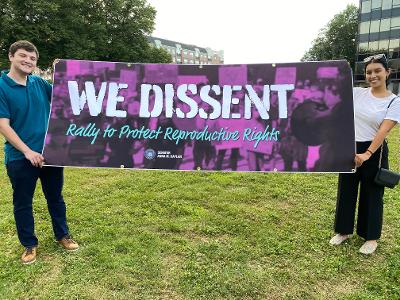
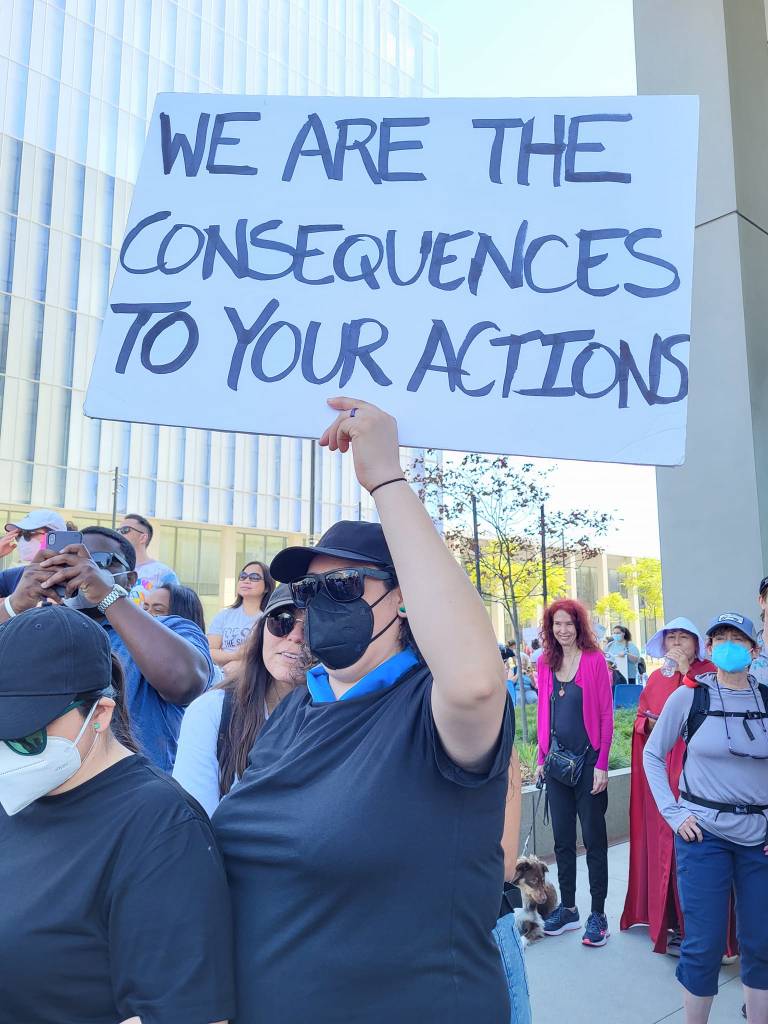
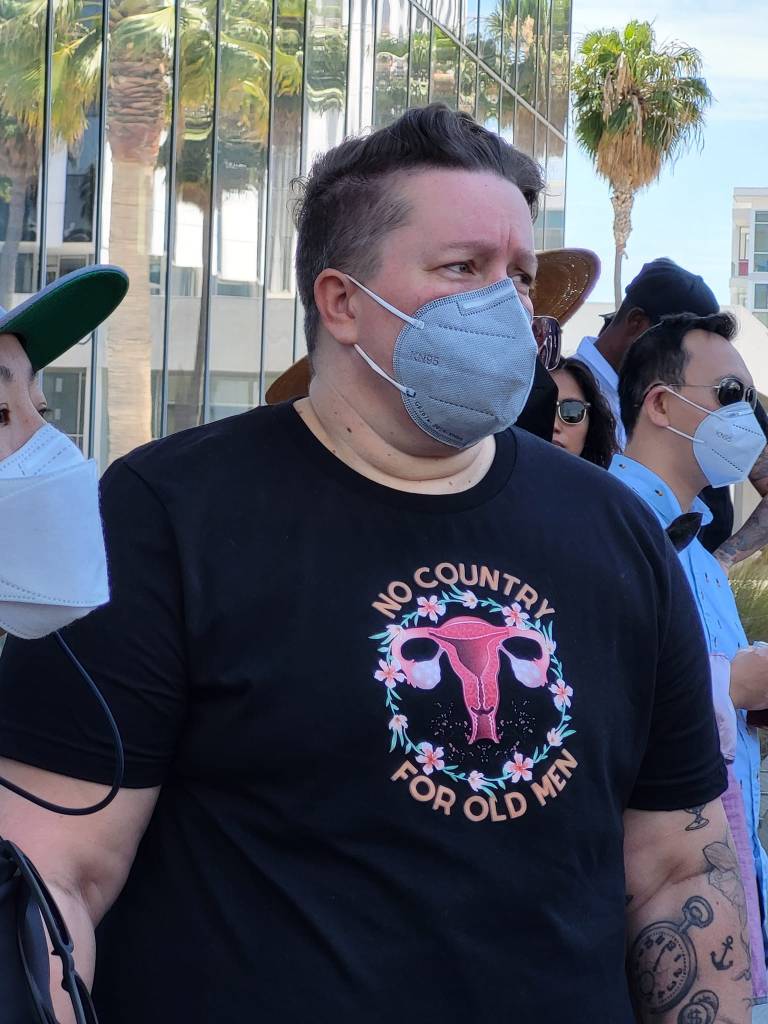
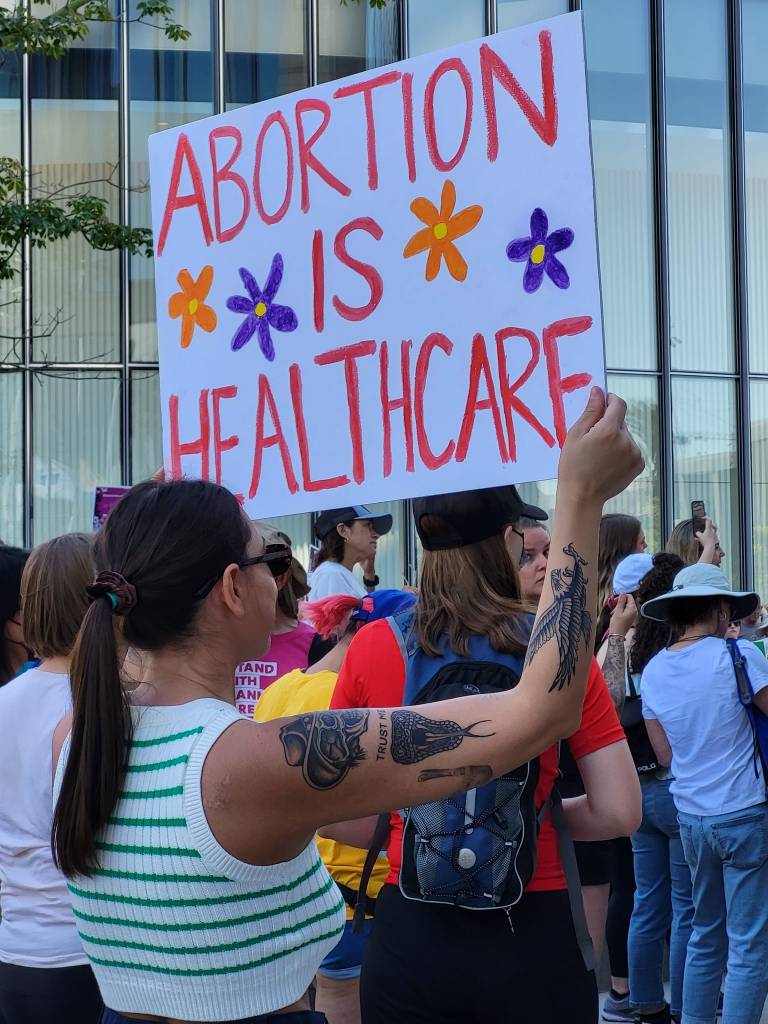
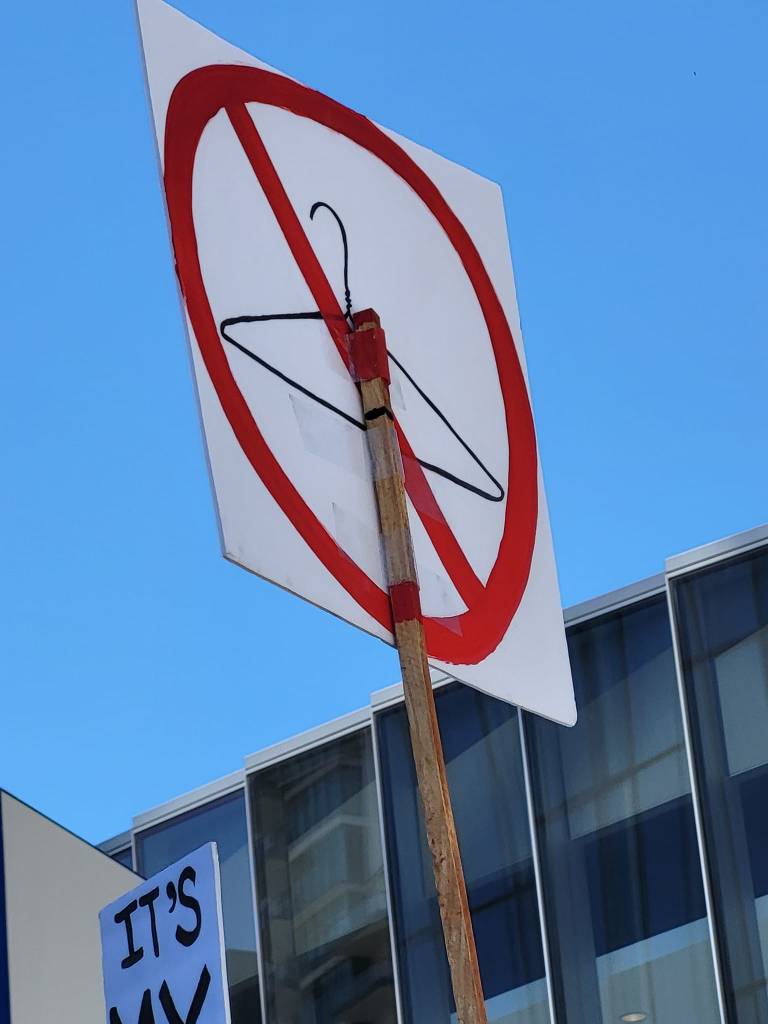
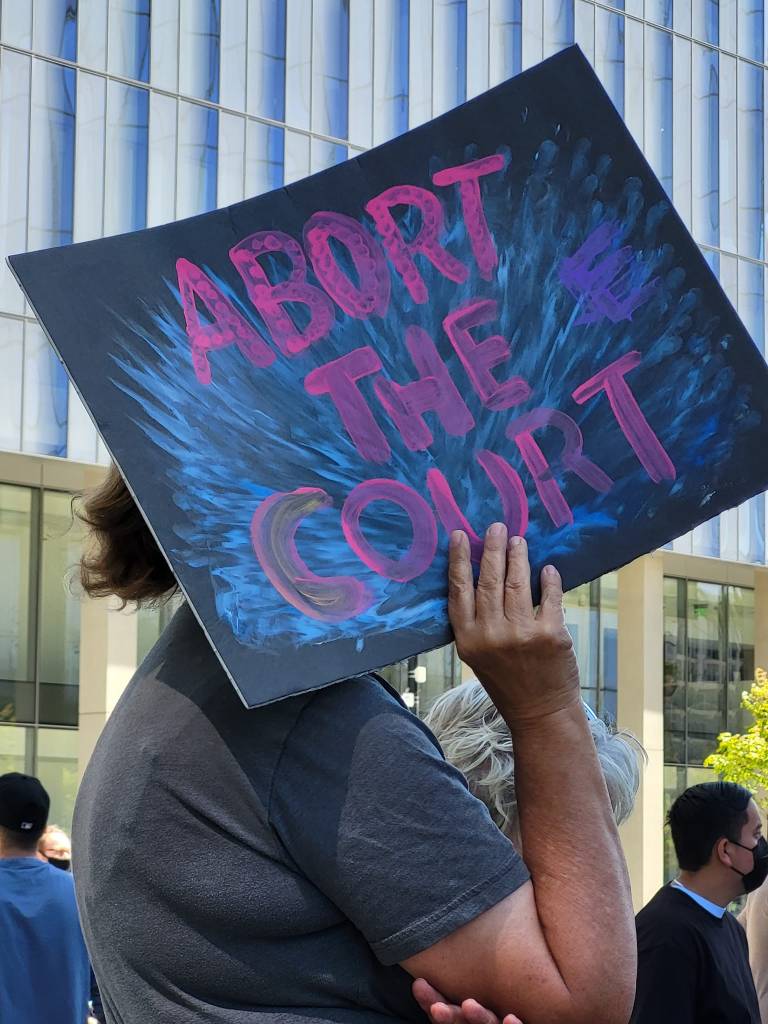
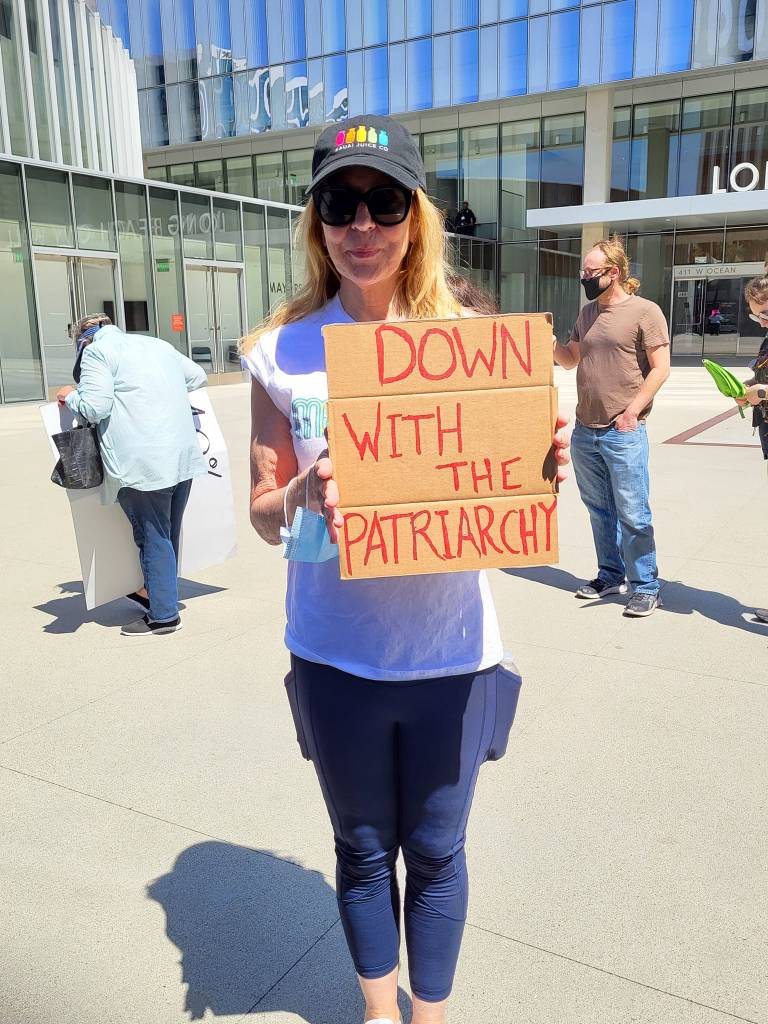
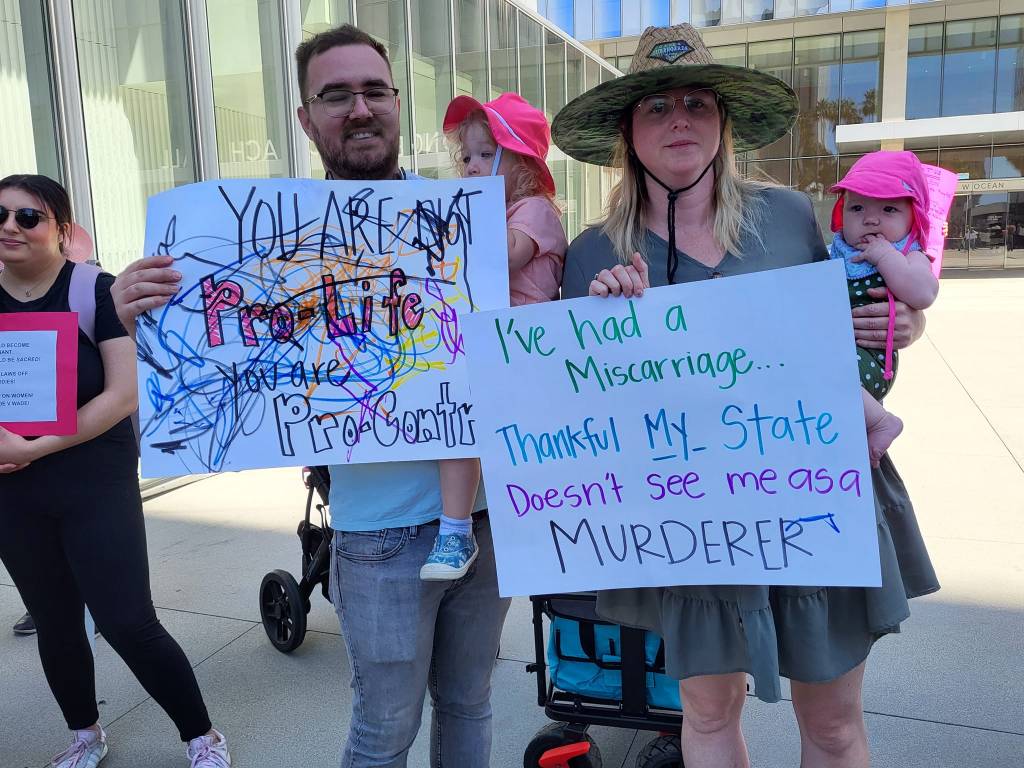
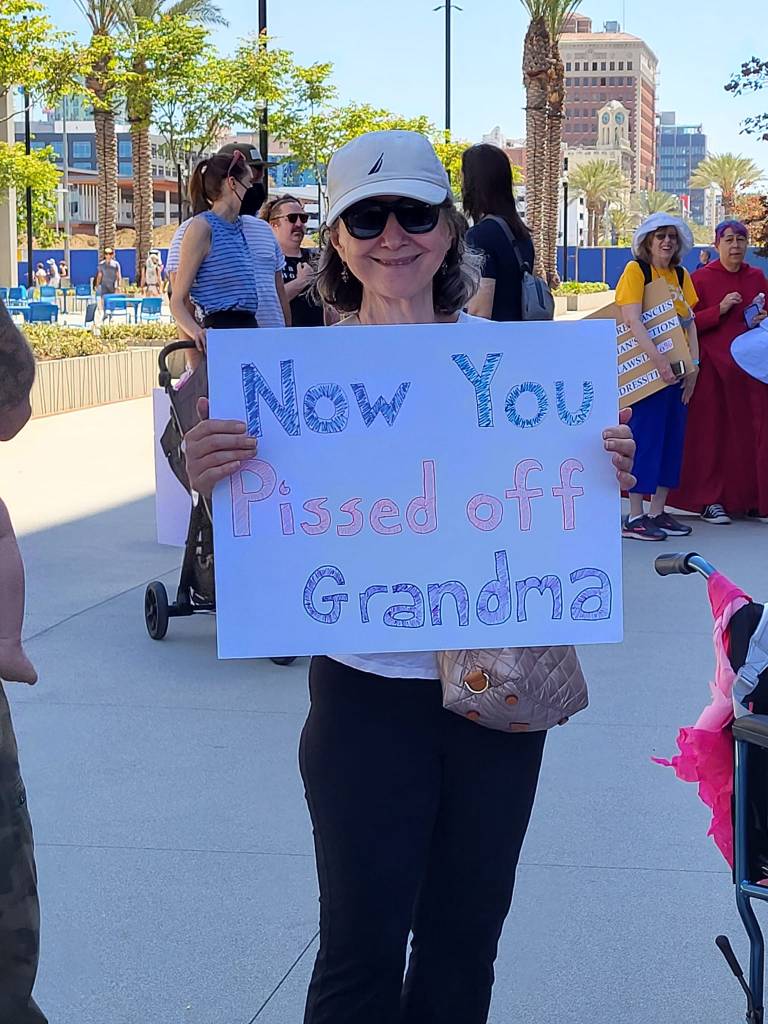
photo essay, part 2: bans off our bodies rally by Marie Cartier

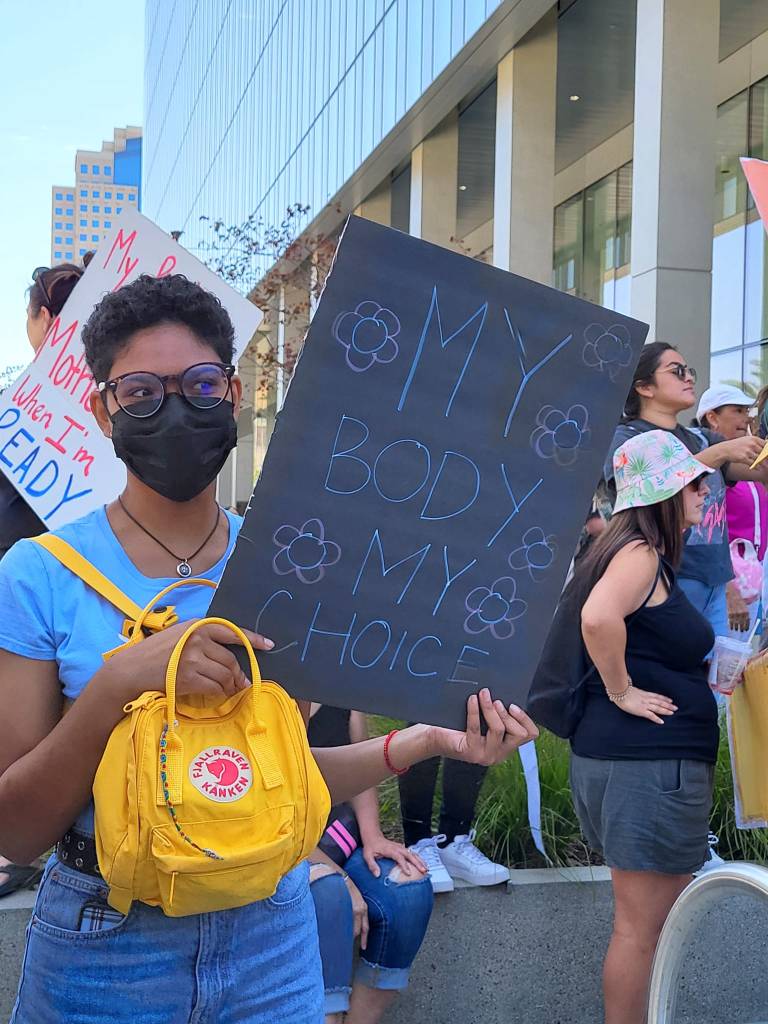
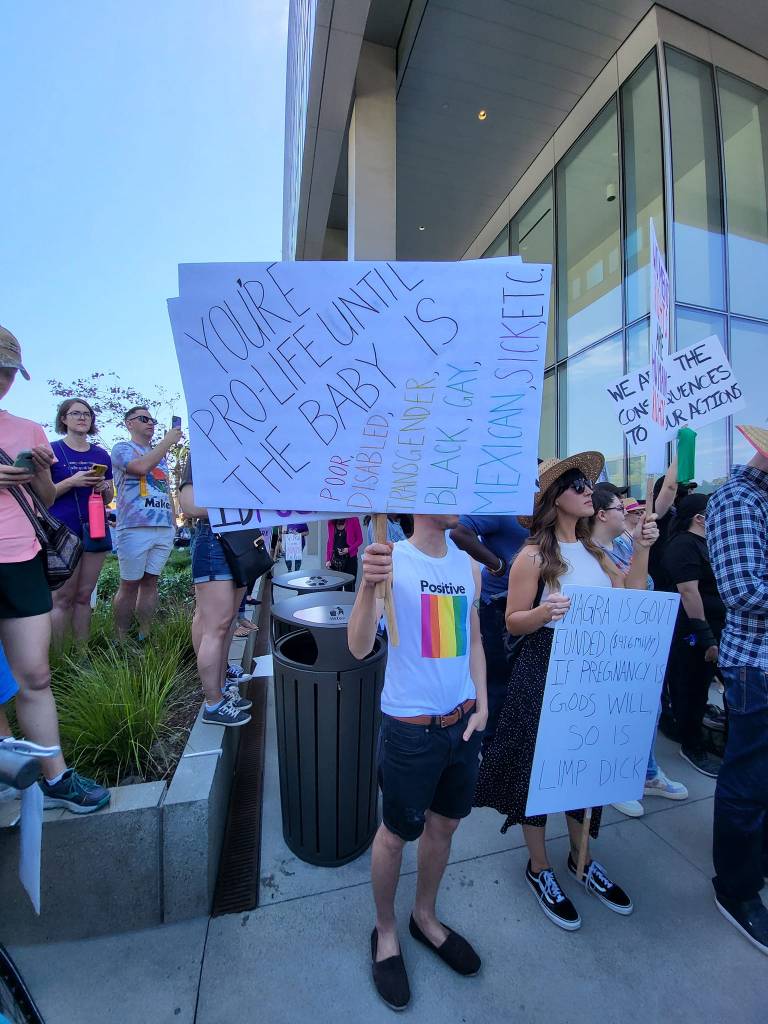
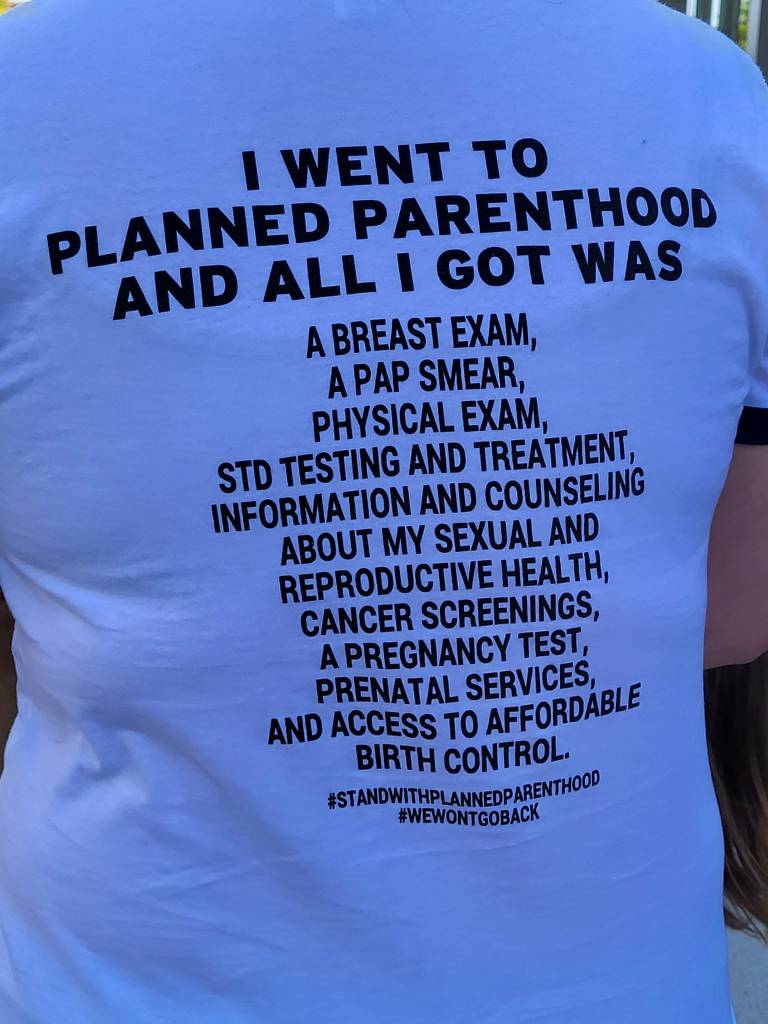
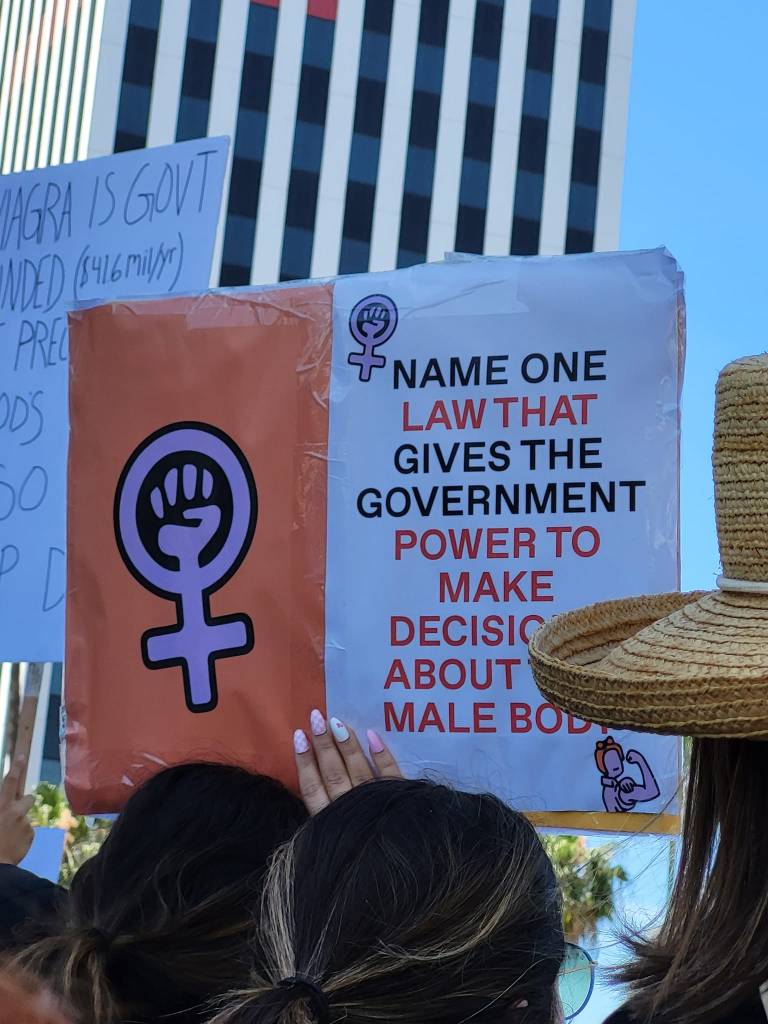
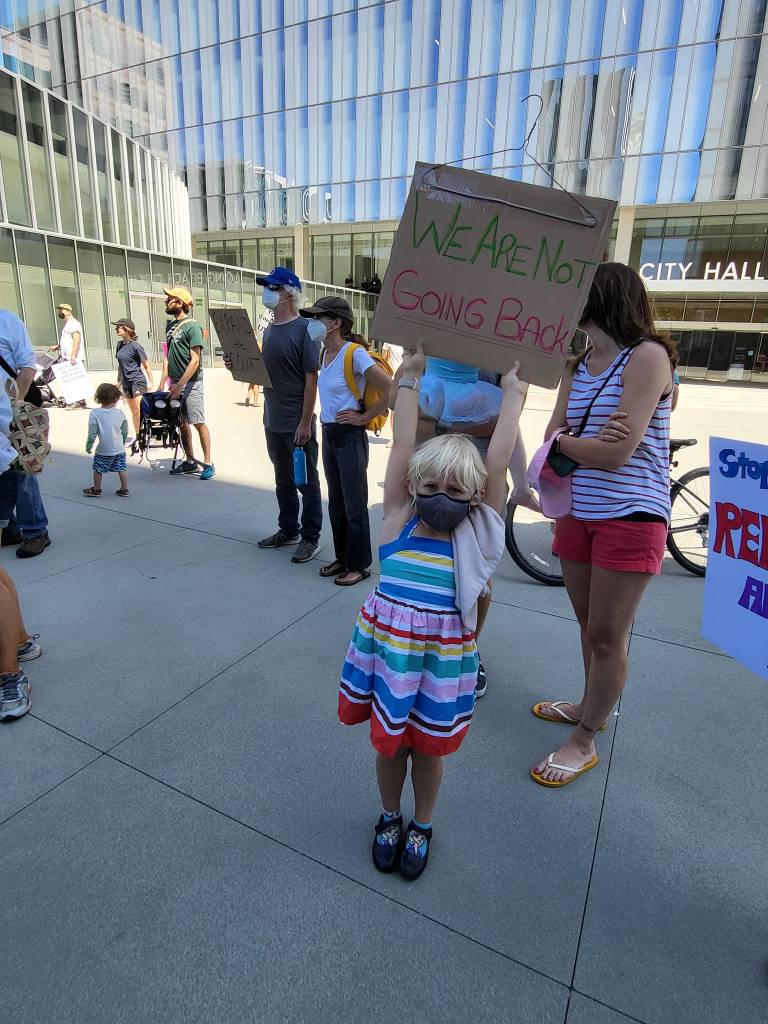
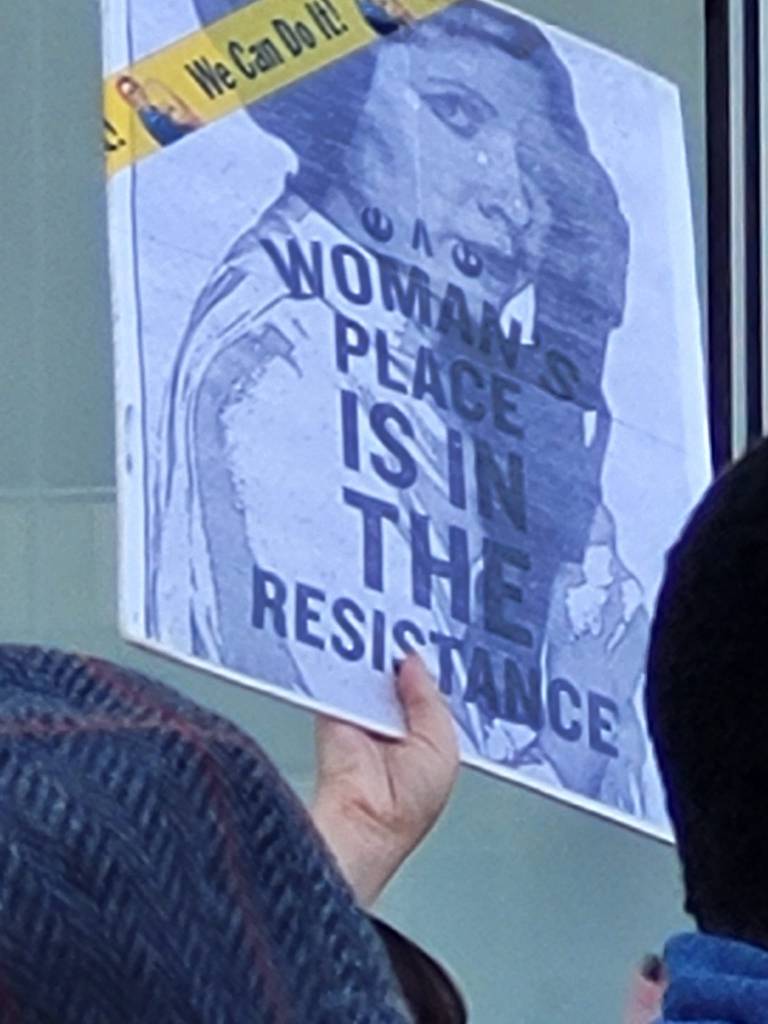
photos from bans off our bodies rally, long beach ca may 14, 2022

all photos by: marie cartier

BIO: Marie Cartier is a teacher, poet, writer, healer, artist, and scholar. She holds a BA in Communications from the University of New Hampshire; an MA in English/Poetry from Colorado State University; an MFA in Theatre Arts (Playwriting) from UCLA; an MFA in Film and TV (Screenwriting) from UCLA; an MFA in Visual Art (Painting/Sculpture) from Claremont Graduate University; and a Ph.D. in Religion with an emphasis on Women and Religion from Claremont Graduate University.

Moderator’s note: This is the 2nd of the two part series. Part 1 was posted yesterday.

Continue reading “photo essay, part 2: bans off our bodies rally by Marie Cartier”

photo essay, part 1: bans off our bodies rally by Marie Cartier

photos from bans off our bodies rally, long beach ca may 14, 2022

all photos by: marie cartier

BIO: Marie Cartier is a teacher, poet, writer, healer, artist, and scholar. She holds a BA in Communications from the University of New Hampshire; an MA in English/Poetry from Colorado State University; an MFA in Theatre Arts (Playwriting) from UCLA; an MFA in Film and TV (Screenwriting) from UCLA; an MFA in Visual Art (Painting/Sculpture) from Claremont Graduate University; and a Ph.D. in Religion with an emphasis on Women and Religion from Claremont Graduate University.

moderator’s note: There are so many powerful photos that they will be posted in two parts, today and tomorrow.

Continue reading “photo essay, part 1: bans off our bodies rally by Marie Cartier”

Hear Me by Winifred Nathan

image1.png

I found the confirmation hearings of now Justice Kavanaugh deeply disturbing. I have ideas for preventing a replay.

First, secret keeping doesn’t work. For too long girls/women have suffered in silence with their secret while boys/men move along often without any sense of guilt about  their “fun”. When the victim/survivor keeps her secret, the perpetrator remains in control.  An important  step for the victim to regain control is to tell her story.  Then the next step … she needs to be heard.   Dr. Blasey Ford spoke, but her distracters did not hear her.  They questioned her credibility. She was criticized for her years of silence, and her lack of memory of details.  What I learned from this is that the victim/survivor must be prepared to speak, and that this preparation must start well before it occurs.

Continue reading “Hear Me by Winifred Nathan”

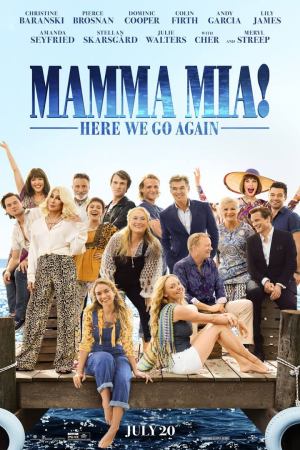
Mamma Mia and the Mother-Daughter Connection by Katie M. Deaver

A couple of weeks ago I went to see the new Mamma Mia: Here We Go Again! movie.  In addition to being a fan of movies inspired by musicals I also loved the emphasis that was placed on the mother/daughter relationship in the first Mamma Mia and had heard that this new installment would continue to focus on that relationship.  It definitely didn’t disappoint!

This second movie takes place five years after the original Mamma Mia, and roughly a year after the death of Donna Sheridan, with Donna’s daughter Sophie preparing for the grand reopening of the Hotel Bella Donna.  This second movie also features lots of flashbacks where we are able to see a young Donna arrive at the island of Kalokairi as well as see how she first meets Sam, Bill, and Harry, her daughter Sophie’s three possible fathers.

As one might imagine, even if you aren’t familiar with the movie there is a lot going on, but the part that I found most intriguing was the very end of the movie.  At this point Sophie has given birth to her own baby and is bringing the child to the church to be baptized.  During the ceremony Donna’s spirit is there at the font with her daughter and new grandchild and you could feel this amazing sense of connection and love between not only three generations but across the lines of physical and spiritual presence and space.

Continue reading “Mamma Mia and the Mother-Daughter Connection by Katie M. Deaver”

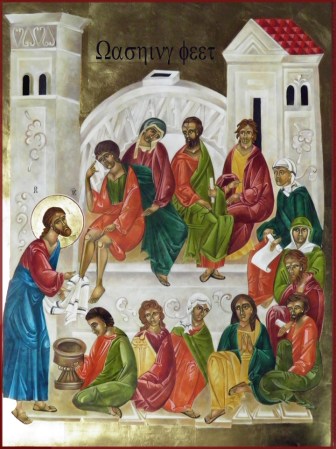
In Light of Women by Mary Jane Miller

Why are so few women mentioned in the great feast days like Pentecost, the Last Supper, the Baptism of Christ, etc.? God made no commandment that they not be included.
Inquisitive women like myself have always been around Christ listening to His message. There they were, cooking and cleaning at the Last Supper, at the wedding at Canon and when He fed the five thousand. When Christ invited the children to come to him, you can be sure the mothers were there, too.
Beginning as early as the fourth century the dominant Christian leaders, all men, twisted and distorted Holy Scriptures to thwart the ascendant positions for women within the religious hierarchy and in christian societies in general. Yet, the underlying teachings of Jesus Christ, the Apostle Paul, Moses and the prophets, – all call for the proper and equitable treatment of God’s children. Without a doubt, God and Christ love all of humankind with no gender bias. When women listen to scripture we naturally fill in the gap, or adjust the gap knowing in our hearts and souls, we are not inferior to men.

Continue reading “In Light of Women by Mary Jane Miller”

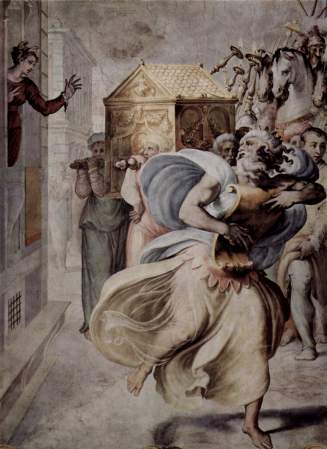
Michal the Priestess: Midrash, Multiplicity, and the Tales of King David by Jill Hammer

When I was in my late teens, I discovered midrash: the Jewish exegetical process by which commentators weave creative and additive interpretations into the sacred text.  Midrash comes from the word “to ask,” “to seek,” or “to divine.” For example, the tale in which a well follows the prophetess Miriam through the wilderness is an ancient midrash. The story in which God stops the angels from singing as the Egyptians drown in the Sea of Reeds is a midrash. Each of these stories derives from a particular close reading of text, whether a Torah text or a verse elsewhere in the Bible.  Each of them allows a new generation to add its own perspectives to the tradition.

Contemporary feminists, and many other contemporary artists, writers, and exegetes, have used a modern form of midrash to add liberatory perspectives to Jewish tradition and to biblical lore.  From Miriam to Vashti, female biblical characters shine in the creative interpretations of feminist midrashists.  Judith Plaskow’s “The Coming of Lilith” made a huge impact on the reading of the story of Eve and the legend of Lilith. Anita Diamant’s The Red Tent changed the conversation on Dinah forever. Alicia Ostriker, Norma Rosen, Veronica Golos, and many others have joined in this creative play which highlights marginalized voices within the text.  Wilda Gafney has made contributions to a Christian and womanist form of midrash.  Voices like Andrew Ramer and Joy Ladin have invited us to see queer and trans themes in the text. And of course many others, from poet Yehuda Amichai to bibliodramatist Peter Pitzele, have added to this rich tapestry.

Continue reading “Michal the Priestess: Midrash, Multiplicity, and the Tales of King David by Jill Hammer”

What If…She’s Stronger than She Knows…by Molly Remer

“When I dare to be powerful–to use my strength in the service of my vision–then it becomes less and less important whether I am afraid.”

Audre Lorde

“The purpose of life is not to maintain personal comfort; it’s to grow the soul.”

–Christina Baldwin

When teaching childbirth classes, I would speak to my clients about shifting the common fear-based “what if” cultural dialog of birth to “positive” anticipation rather than fears, encouraging them to ask themselves questions like: “what if I give birth and it is one of the most powerful, thrilling moments of my life?” While I stand by this practice, I also think about the what ifs that crawl out of our dark places and lodge in our hearts. The what ifs that snake around the edges of our consciousness in the early hours of the morning. The what ifs we try to push down, down, down and away. The what ifs that stalk us. The what ifs so very awful that we fear in giving voice to them, we might give life to them as well.

We may feel guilty, ashamed, negative, and apologetic about our deepest “what ifs.” We worry that if we speak of them, they might come true. We worry that in voicing them, we might make ourselves, our families, our communities, our work, or philosophies, our faiths, or whatever look bad. We want to be positive. We want to be blissfully empowered, confident, and courageous. And, guess what? We are. Sometimes that courage comes from looking the “what ifs” right in the eye. Sometimes it comes from living through them. My most powerful gift from my pregnancy with my daughter, my pregnancy-after-loss baby, was to watch myself feel the fear and do it anyway. I was brave. And, it changed me to learn that.

What if we can learn more from our shadows than we ever thought possible? There is power in thinking what if I can’t do this and then discovering that you CAN.

Continue reading “What If…She’s Stronger than She Knows…by Molly Remer”

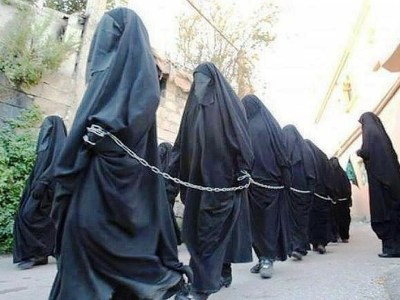
Have You Seen These Muslim Women? by Vanessa Rivera de la Fuente

Shia Women AshuraThe photo that accompanies this article, or others similar, have been posted, shared and commented through social networks as expression of the inherent misogyny of Islam, with descriptions such as “DAESH taking women to sell in the concubine’s market” or “Muslim women being carried to forced marriages”. I’ve also seen this picture being used by some feminists in academic conferences to illustrate their presentations on the “Status of Women in Islam.”

This photo has been misused. This image is taken from a religious event which is celebrated for Shiite Muslims to describe the terrible events that took place in Karbala 1,200 years ago. This act recalls the occasion when the family of the Prophet Muhammad, formed mostly by women, was taken prisoner, including children and forced to walk chained. History records and praises the courage of women who bear this painful pilgrimage instead of submit themselves to their captors.

 “Muslim Women” is a Hoax Continue reading “Have You Seen These Muslim Women? by Vanessa Rivera de la Fuente”