

You can read part 1 here.
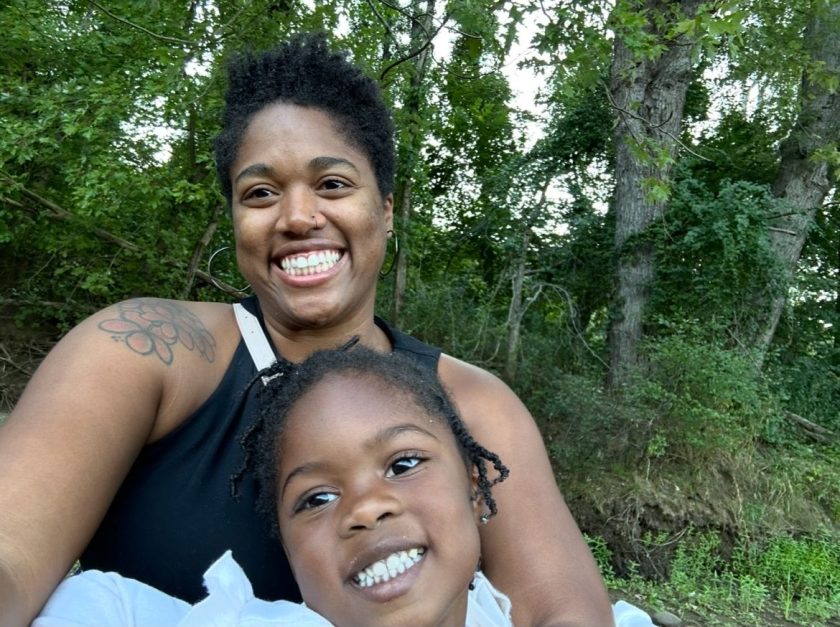
I remember confessing to a kindred spirit, also a therapist, heart heavy with a therapist’s sight: my daughter, a child of divorce. And I, who knew the long, shadowed roads— the substances, the destructive turns children take to bury unaddressed grief, hurt, and pain— this knowledge terrified me.
My friend, in turn, spoke of her own adopted daughter, of sudden, tearful storms for a birth family unseen. “This is her journey,” she said softly, “You cannot control the currents of her life. All you can do is stand with her, and teach her to navigate with a healthy heart.”
Until that moment, my fierce, unspoken goal was to shield my daughter from a therapist’s couch in twenty years’ time. But then, my friend’s truth cut through: “There is no perfect parent, and she will likely find her way to therapy no matter what you do. Just do your best and TRUST that she will be ok.”
This truth allowed me to soften, to release. Now, my purpose unfurls: to forge a bond with her, a healthy and vibrant connection that stretches through the wholeness of our days. I want her to know, beyond all shadow of doubt, that she can depend wholly on her mother, a steadfast harbor in every storm.
“You’re a good mommy,” she tells me, her voice a balm. “When I grow up, I want to be a good mommy like you.” A sweet paradox, this. Funny how the deepest spring of affirmation of my mothering comes from the one who I am mothering. I, too, spoke of motherhood from a tender age, only to be hushed, deemed “fast” in that Southern Bible Belt, Black American lore— a path, they feared, to teenage pregnancies.
Another paradox, for it means I am doing my work and actualizing my vision of motherhood. I am embodying motherhood in a way she can appreciate and cherish at 4 years old. No doubt, her own vision will surely shift as she grows, adopting her own values, her own dreams of motherhood, should that be the journey she chooses. If so, I pledge to be her fiercest champion, and for my grandchildren, a pillar beyond her partner. I vow to teach her everything she wishes to know from my perspective. Indeed, I plan to be a badass, fierce, dependable ancestor for my lineage, even after I am gone. I am building for them now. I am their pillar. I will always be there. I am realizing more and more that motherhood is not an 18 year job but a lifetime commitment.
“We learn about love in childhood. Whether our homes are happy, troubled, our families functional or dysfunctional, it’s the original school of love.” —bell hooks, All About Love
A truth my daughter’s father, though he kneels to idols of money, shoes, and gilded watches, inadvertently revealed: without love, there is nothing. A hollow echo of the very faith he claims— a biblical truth he has always neglected, yet speaks.
“Severe separation in early life leaves emotional scars on the brain because they assault the essential human connection: The [parent-child] bond which teaches us that we are lovable. The [parent-child] bond which teaches us how to love. We cannot be whole human beings—indeed, we may find it hard to be human—without the sustenance of the first attachment.” —Judith Viorst
I will wrap my body and soul around her so that she may know love despite her early life circumstances and the circumstances to come.
Somatic / Nervous System-Based Reasons for Constipation in Children of Divorce
Children often internalize stress somatically, especially before they have the language to express emotions.
1. Chronic Tension or Fear
- Holding in bowel movements can be a protective response to stress, fear, or a sense of lack of safety — especially during big life changes (e.g. starting daycare, family tension).
- Their parasympathetic nervous system (the “rest and digest” mode) might be underactive due to chronic alertness or overstimulation.
“My body doesn’t feel safe to release.”
Spiritual / Energetic Perspectives
In many holistic systems (e.g., Ayurveda, Traditional Chinese Medicine, energy medicine), the bowels are closely tied to emotional processing, boundaries, and letting go.
2. Fear of Letting Go
- Spiritually, constipation can reflect an energetic resistance to release — not just waste, but emotions, fears, or control.
- Children may be absorbing emotions from caregivers and holding them inside without knowing how to process them.
“I don’t know how to let this go, so I hold it.”
4. Blocked Root Chakra (Muladhara)
- The root chakra governs safety, survival, and elimination. When this chakra is blocked or underactive, it can manifest physically as constipation.
- Related themes: insecurity, family instability, moving homes, parental anxiety, or disconnection from the earth/body.
Practices like gentle grounding, barefoot walking, belly massage, and affirmations like “I am safe to let go” can support this chakra.
❤️ Parental Reflection Prompts
- Am I or my child holding onto emotions we don’t know how to process?
- Is my child experiencing too much pressure (potty training, school, performance)?
- Is there emotional tension in the home that could be felt but unspoken?
- Do they feel safe in their body and in their routines?
Ancestors, ancient and fresh in memory,
Great Spirit, Source of All,
Black Infinity,
Yemaya, Mother of All
Empower me.
Grant me the strength to keep weaving safe spaces where my daughter can process, release, and reset.
Wholeness, in the deepest sense of well-being, is her birthright. It is her sacred resistance.
Discover more from Feminism and Religion
Subscribe to get the latest posts sent to your email.

 Feminism and Religion
Thank you for both these beautiful, honest posts. Truth spoken here!
LikeLike