Embodied Theology: Goddess and God in the World by Carol P. Christ and Judith Plaskow

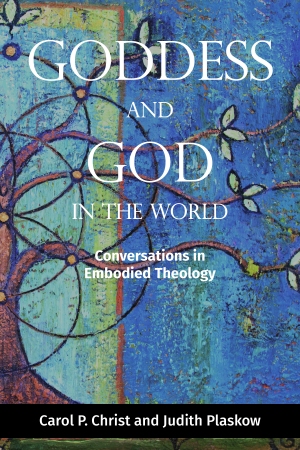
Goddess and God in the World final cover designToday is the official release date for Goddess and God in the World: Conversations in Embodied Theology. It just so happens that August 1 is also a day for celebrating the harvest. An excerpt from the Introduction introduces the embodied theological method” we hope will turn the field of theology upside down.

People who reject the popular image of God as an old white man who rules the world from outside it often find themselves at a loss for words when they try to articulate new meanings and images of divinity. Speaking about God or Goddess is no as longer simple as it once was. Given the variety of spiritual paths and practices people follow today, theological discussions do not always begin with shared assumptions about the nature of ultimate reality. In the United States, the intrusion of religion into politics has led many people to avoid the subject of religion altogether. In families and among friends, discussions of religion often culminate in judgment, anger, or tears. Sometimes the conversation is halted before it even begins when someone voices the opinion that anyone who is interested in religion or spirituality is naïve, unthinking, or backward—or, alternatively, that religious views are a matter of personal preference and not worth discussing at all.

Talking about divinity is also surprisingly intimate. Continue reading “Embodied Theology: Goddess and God in the World by Carol P. Christ and Judith Plaskow”

The Emergence of Feminist Theology: Remembering our Roots by Judith Plaskow and Carol P. Christ

Goddess and God in the World final cover designThis blog is an excerpt from our new book Goddess and God in the World which will be published by Fortress Press in just one week — on August 1. As we look forward to its release, we remember the critical works that started us on a journey of discovery that continues to unfold. In a jointly written chapter, we describe the beginnings of feminist theology.

Feminism was welling up from under during [the late 1960s]. We became feminists early in graduate school but did not discover feminist theology until we were preparing for our comprehensive exams. As Judith was later to write, feminism placed a question mark over absolutely everything for us: the maleness of God, the male authorship of the Bible, and the male perspectives from which virtually all theologies had been written. Three key essays set the stage for future work in the field, including our own. We have already mentioned these essays, but it is important to address the challenges they posed to traditional theology, and our own responses to them, in more detail here. Continue reading “The Emergence of Feminist Theology: Remembering our Roots by Judith Plaskow and Carol P. Christ”

“All Children Are Our Children” by Carol P. Christ

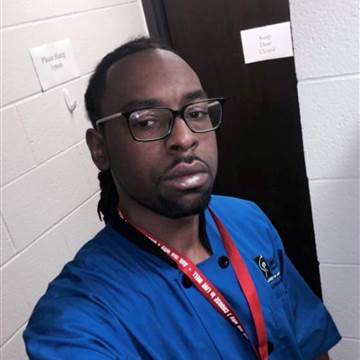
Carol P. Christ by Michael Bakas high resoultion“All children are our children.” As I was posting my recent blog about the shooting of black men by the police, these words came into my mind with the force of revelation. At the time I was looking at a photograph of Philando Castile, taken at his place of work. Yes, I thought, my heart opening: “he is my child too.” This widening of the heart is at the center of the maternal values of ancient and contemporary matriarchal cultures around the world. It is a feeling some of us who were mothered well enough or who mothered children—including children not our own—carry within us. Is this the healing balm our world needs today?

Maternal  values?  So many of us turn up our noses at such a “gendered” term. Perhaps we were not mothered enough in our families of origin. Perhaps we still feel un-mothered. Perhaps we don’t want to be told that we have to become mothers. Perhaps we fear that if we become mothers, we will be only mothers—all of our other ambitions and desires will have to take second place.

The last is the reason I did not have children during the years when I put my career first. Continue reading ““All Children Are Our Children” by Carol P. Christ”

Dealing with Despair by Carol P. Christ

Philando Castile, school cafeteria worker, killed driving while black

In a state of shock after the police shootings of Alton Sterling and Philando Castile, I turned to my Facebook feed, looking for community in my grief and hoping to make sense of what had happened. The statement, “He would not have been shot if he had been white,” referring to Philando Castile, appeared several times. The first time I saw it, I responded, “He would not even have been stopped if he had been white.” Think about it if you are white: how many times have you been pulled over by the police?

I can answer that question: in the United States, only once, and that was because I made a second illegal U-turn at the same stop-lighted intersection as a teenager.  The policeman issued me two tickets, stating that he had been willing to let the first offence go. This is what white privilege means. Continue reading “Dealing with Despair by Carol P. Christ”

Elie Wiesel’s Stories: Still the Dialogue by Carol P. Christ

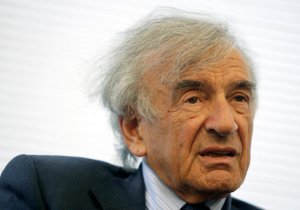
Elie Weisel is interviewed by Bob Edwards in New York, Wednesday, June 20, 2007. (AP Photo/Seth Wenig)

This blog is dedicated to Elie Wiesel, September 30, 1928-July 2, 2016

During the summer following my second year [as a graduate student] at Yale, I read Elie Wiesel’s The Gates of the Forest[1], which someone had recommended as a book in theology and literature. Elie Wiesel was not well-known, and I had not heard of him. I was totally unprepared to enter into his world. I had heard about the concentration camps and had read Anne Frank’s The Diary of a Young Girl, but I had not faced the reality that was the Holocaust, nor had I connected what happened to the Jews to my belief in the God of the Old Testament.

Reading The Gates of the Forest challenged my theology to the core. I believed God was powerful, loving, and good, and I believed that He had a special relationship with the Jews. Continue reading “Elie Wiesel’s Stories: Still the Dialogue by Carol P. Christ”

A Servant of God or a Lover of Life? by Carol P. Christ

Carol Molivos by Andrea Sarris 2Thus through an enormous network of mythological narrative, every aspect of culture is cloaked in the relationship of ruler and ruled, creator and created. . . . [Sumerian] legend endows the Sumerian ruler-gods with creative power; their subjects are recreated as servants. . . . [This new narrative was] deployed with the purpose of conditioning the mind anew.(20, italics added)

This provocative statement is found in a chapter titled “The First Major Sexual Rupture” in a collation of the writings titled Liberating Life: The Women’s Revolution by imprisoned Kurdish leader Abdullah Ocalan (pronounced Oh-cha-lan). According to Ocalan, who clearly had been reading authors like James Mellaart, Marija Gimbutas, and Heidi Goettner-Abendroth, the values of the societies that preceded Sumer in the Near East were entirely different. Continue reading “A Servant of God or a Lover of Life? by Carol P. Christ”

Toxic Masculinity: “Masculinity Must Be Killed” by Carol P. Christ

Carol Molivos by Andrea Sarris 2A few days ago I watched the movie An Unfinished Life starring Morgan Freeman, Robert Redford, and Jennifer Lopez. Though it was recommended as a sensitive psychological drama, and though on the surface level it criticizes (male) violence against women and animals, on a deeper level, it confirms the association of masculinity with violence, suggesting that violence is the way men resolve their problems with each other.

At the beginning of the film, Robert Redford, who lives on a ranch in Montana, picks up his rifle with the intention of shooting a bear who mauled his friend Morgan Freeman. This act of violence is stopped by local authorities who arrive to capture the bear. However, the bear is not removed to a more remote area, but rather is given to a local make-shift zoo where it is kept in a small cage. At the end of the movie, Redford frees the bear after Freeman realizes that it should not be punished for injuring him. The bear is last seen crossing a mountain ridge in the distance.

Redford is grieving the death of his only son who died in an automobile accident while his son’s wife (played by Jennifer Lopez) was driving. After being beaten by her current boyfriend, Jennifer Lopez escapes with her daughter and ends up on Redford’s doorstep, announcing that her daughter is Redford’s granddaughter.  Redford, who believes Lopez is responsible for his son’s death, grudgingly allows them to stay.

When Lopez’s boyfriend tracks her down in Montana, Redford drives him out of town, threatening to kill him with his rifle. When the boyfriend comes back, Redford shoots out the tires of his car, smashes the car’s windows with his rifle, and beats the boyfriend bloody before putting him on a bus out of town.

The movie asks us to condemn the boyfriend’s violence against Lopez and Redford’s desire to kill the bear, but it also asks us to condone and even to celebrate Redford’s violent acts against the boyfriend. After all, in this case, justice is done. Right?  Continue reading “Toxic Masculinity: “Masculinity Must Be Killed” by Carol P. Christ”

Sisterhood is . . . (Well) Complicated by Carol P. Christ

When I wasCarol Molivos by Andrea Sarris 2 a girl, the women in the neighborhood looked out for each other, and my mother had a wide circle of women friends. My grandmother lived nearby, and she and my mother spoke on the telephone nearly every day. My mother and I had a close relationship cemented by caring together for my baby brother.

In graduate school when I was one of a few women in a male-dominated field in a hostile environment, I discovered that “sisterhood is powerful” when I joined a group of women who came together to share experiences and change our lives. Having grown up in a community in which women supported each other, I found it relatively easy to support and seek support from women in a feminist environment.

At the same time, my newfound feminist identity deepened a rift that had opened in my relationship with my mother when I decided to go to graduate school. Continue reading “Sisterhood is . . . (Well) Complicated by Carol P. Christ”

Interpretations, Interpretations, Interpretation by Carol P. Christ

Carol Molivos by Andrea Sarris 1The Pope’s call for a new study of the possibility of ordaining women as deacons in the Roman Catholic Church and the impasse in the United Methodist Church over homosexuality and abortion, once again ask us to recognize that theories about interpretation and interpretations underlie each of these hotly contested issues. It is not only that individual texts and traditions are subject to conflicting interpretations about their meaning in their own times or in ours. The decision to cite a particular text or tradition, is itself based on an interpretation about which texts and traditions are important or reliable enough to be cited.

The Pope may be convinced that Jesus chose only twelve male disciples, and he may cite certain texts in the Bible, centuries of tradition, and recent church decisions. But others would counter that there is evidence that Jesus had many more than twelve disciples, and that Mary Magdalene was among them. Those arguing that United Methodists should not ordain homosexuals as clergy or permit the sanctifying of homosexual marriage may feel they are on firm ground when they cite Leviticus 18:22 in support of their view that the practice of homosexuality is contrary to Christian teaching. But those on the other side ask why this particular passage is held to be binding on today’s Christian communities, while (for example) the many others affirming a man’s right to have more than one wife are not.

When traditionalists cite the Bible or traditional church teachings as definitive, others may counter that their alternative reading is the “true” interpretation of these same texts or traditions. What is often lost is the fact that all interpretations of texts and traditions are situated. Although it may not be easy to convince traditionalists that the widely accepted theory of situated interpretation is true, at minimum, we should not forget it as feminists.

Thus, if we hope to change inherited traditions, feminists have two tasks. One is to bring forward texts, traditions, and interpretations that have been ignored by those who support traditional (male dominant, anti-homosexual, anti-abortion) positions. But, in doing so, we should not succumb to the temptation to conclude that our new interpretations are unequivocally “true.”

To do so would be to ignore the feminist “first principle” that all interpretations of texts and traditions are situated. If we wish to argue that traditional teachings on the priesthood, abortion, and homosexuality are situated in standpoints we might call “patriarchal” or “anti-queer,” then we must also acknowledge the relativity of our own positions as well.

When this is recognized the ground beneath us shifts. We are no longer arguing about the “true” meaning of inherited traditions. We are no longer asking: “What does the Bible say?” or “What does God say?” Instead we are asking a more nuanced question that begins with the recognition that there is not only more than one interpretation of the meaning of a text, but also more than one interpretation of which texts should be considered central to the meaning of a particular tradition. It is in recognition of the principle that every interpretation is situated that Biblical scholar Elisabeth Schüssler Fiorenza always insists that the idea that Mary Magdalene was among the disciples of Jesus is true from the perspective of women (or wo/men) seeking liberation.

When we recognize the relativity of all standpoints including our own, we recognize that the right question is not “what God has revealed,” but rather, what kind of communities we wish to create and transmit to future generations.  It is our responsibility, individually, and as communities, to answer this question.  If we wish to create communities that are more inclusive than those we have inherited, then we can choose as “true from our perspective” and even as “divinely inspired in our experience and understanding” those interpretations of texts and traditions that support the kinds of inclusive communities we believe Goddess or God calls us to create.

As feminists, we must present new interpretations of texts and traditions. But this is the beginning not the end of the task before us. We must also insist loudly and clearly that all interpretations are situated. The interpretations we advocate are not any more “objectively true” than the interpretations of our adversaries. We cannot avoid naming and examining our standpoints and justifying our interpretations in relation to them.

Recognizing that all interpretations are situated does not mean that all interpretations are equal. We can and must justify our interpretations on linguistic and historical and other grounds. We can and must reflect upon our standpoints, asking what kind of communities and worlds are justified and envisioned from the perspectives of our own standpoints and those of others. And we can and must discuss contested questions about the meaning of traditions and the nature of divinity.

Though I have been speaking about interpretations of Christian tradition, the principles discussed here apply to every religion, including those newly discovered or created. Recently I have been noticing a tendency among some contemporary Neo-pagans to assume that mythic traditions are “true” and to make definitive statements that begin with the phrase “our tradition teaches.”  But there is no reason to believe that pagan traditions are inevitably true–especially since many of them reflect patriarchal points of view–or that they are not subject to a variety of interpretations. While we can learn from traditions, we inevitably interpret them from our own standpoints. We can and must take responsibility for our standpoints and for our interpretations of every tradition.

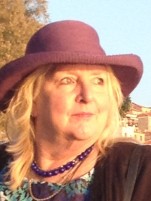
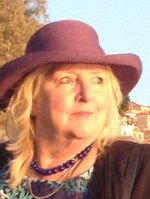
Carol P. Christ is author or editor of eight books in Women and Religion and is one of the Foremothers of the Women’s Spirituality Movement. She leads the Goddess Pilgrimage to Crete in Spring and Fall: Sign up now for spring tour and save $100. Follow Carol on Twitter @CarolP.Christ, Facebook Goddess Pilgrimage, and Facebook Carol P. Christ.  Carol speaks in depth about the Goddess Pilgrimage to Crete in an illustrated interview with Kaalii Cargill. Photo of Carol by Andrea Sarris.

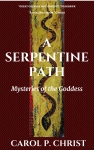
A Serpentine Path Cover with snakeskin backgroundA Serpentine Path: Mysteries of the GoddessGoddess and God in the World final cover design will be published by Far Press in 2016. A journey from despair to the joy of life.
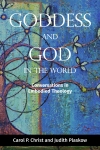
Goddess and God in the World: Conversations in Embodied Theology with Judith Plaskow will be published by Fortress Press in August 2016. Exploring the connections of theology and autobiography and alternatives to the transcendent, omnipotent male God.

What Does Mother’s Day Mean in a Patriarchal and Matricidal Culture? by Carol P. Christ

Carol Molivos by Andrea Sarris 2When we seek immortality or spiritual “rebirth,” are we not saying that there is something wrong with the “birth” that was given to us through the body of our mothers? In She Who Changes and in “Reading Plato’s Allegory of the Cave as Matricide and Theacide,” I asserted that our culture is “matricidal” because it is based on the assumption that life in the body in this world “just isn’t good enough.”

What is so wrong with the life that our mothers gave us that we must reject it in the name of a “higher” spiritual life? The answer of course death.

Can we love life without accepting death?

Can we love our mothers if we do not accept a life that ends in death? Continue reading “What Does Mother’s Day Mean in a Patriarchal and Matricidal Culture? by Carol P. Christ”