Black Madonna Transforms into Vodou’s Lesbian Defender by Kittredge Cherry

Kittredge Cherry
Kittredge Cherry

One of the most famous Catholic icons is the model for a Haitian Vodou goddess who protects lesbians.

Traditional images of Erzulie Dantor, the Vodou defender of lesbians, are based on the Black Madonna of Czestochowa.  They even share the same two scars on the dark skin of the right cheek.

Every year more than 100,000 people view the original Black Madonna of Czestochowa icon in Poland at one of the most popular Catholic shrines on the planet. John Paul II, the Polish pope, was devoted to her. Few suspect that the revered icon of the Blessed Virgin Mary has a lesbian connection. Continue reading “Black Madonna Transforms into Vodou’s Lesbian Defender by Kittredge Cherry”

Settling into God during the Demise of Gender Neutral Language by Dirk von der Horst

DirkAs my life ambles along, some things change, some things are surprisingly persistent.  As a young person, the last thing I would have predicted about my future would have been developing even a mild interest in sports, but now I have a mild interest in sports.  Mild, but there.  So, that’s a surprise element in my life story.  But while developments arise, I’ve found that in the growth of my faith, the word “God” has settled into all the movements of my being, taken root in my bones, provides many well-worn neural pathways that make the day go on.  It sometimes seems like it would be easier to let the word go for the sake of communicating with a culture that turns more and more to science for cultural coherence, but the word “God” is as there in my psyche the laptop is there beneath my fingers.

While the word God has settled and made itself at home, I’m less and less sure – and it becomes less and less important – what the word means.  I look across history and the word becomes muddled.  Is what the author of Judges meant by “God” what Aquinas meant by “God?”  I’m hard-pressed to find a common referent behind the word when I encounter it in those very different perspectives.  I’ve come on a minimal definition – “the appropriate object of worship” – that lets the theological critique of idolatry work its relativizing acid on various God images and God concepts. Continue reading “Settling into God during the Demise of Gender Neutral Language by Dirk von der Horst”

Philogyny: Women Supporting Women by Ellen Boneparth

ellen boneparthWhen I set out two years ago to create a nonprofit, based on a small, unexpected inheritance, I thought a lot about the role of giving — both to grantees and to myself as a prime donor. My overall goal was to empower women and girls in the developing world through new projects dealing with their health and education.

I was uncomfortable with the word “philanthropy.” I knew from speaking Modern Greek that “anthropos” means “person” or “man” but what I wanted to do was completely woman-centered. So, I created the word “philogyny” or “loving and caring for women” as a way to draw attention to the impact that support for women can have.

Why women, especially women in developing countries? First, we know from years of research that women are the main caretakers and caregivers in their families and communities. When a woman in a developing country has income, she is likely to spend 95 percent on her own family while a man will typically spend a third to a half of his income on family, the rest, on himself. Secondly, contributions to women’s and girls’ education and health have a significant impact on a community resulting in higher employment, lower fertility rates, and healthier populations.
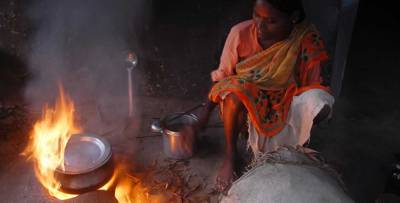
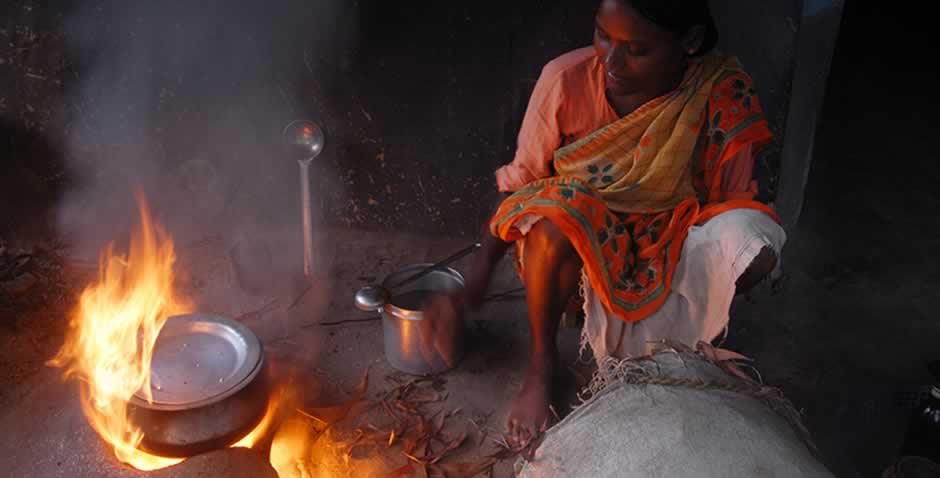
LightMyFireHPAs a new philogynist, I also needed a name for my nonprofit. I wanted to avoid the words most often used in such endeavors — gender, sex, development, empowerment, etc. — and to come up with something memorable that captured the lives of women in the developing world. Thus, LIGHT MY FIRE was born, an image that captures the lives of the two billion women globally who light a fire every day or evening to cook for their families.

What has Light My Fire accomplished in two years? We have given small grants, usually around $5000, to women’s and community organizations in Africa, Asia, Central and South America, and the Middle East. We believe a small grant goes a long way in a resource-poor country. Our total over two years is about $100,000 to 28 programs with some grants made to the same program in both years.

Rather than list all our projects, let me provide an idea of the range of our activities. We have supported programs dealing with: sexual abuse of children in Bolivia; production by women of soya oil in Malawi; girls’ education in Nepal, India and Kenya; health training of Bedouin and Palestinian women and Guatemalan girls; agricultural training of Kenyan women; financial literacy of Ugandan women; employment training for Haitian single mothers. And there is a lot more.

Clearly, Light My Fire seeks practical outcomes. At the same time, however, philogyny has a strongly spiritual element. Giving to women all over the world offers a sense of connection to our planet. We don’t just talk about global sisterhood, we do it. Philogyny also connects the donor to live-giving and life-saving efforts. It is a practice that touches the soul more deeply than the checkbook. To put it simply, giving to women has made me feel good, in fact, better than in any other life work I have done. The gift of philogyny is giving to women and also giving oneself a spiritual boost.

Anyone interested in joining our community of philogynists is welcome to join us: making a donation will make you feel good! Even the smallest amounts can make a big difference in the developing world– our global sisters and our circle at Light My Fire will be deeply grateful.


Ellen Boneparth has enjoyed a range of careers from academia to diplomacy to work in nonprofits dealings with women’s issues. Currently, she is the Director of Light My Fire, a nonprofit promoting women’s and girls’ health and education in developing countries. Her passion for writing has generated 7 novels and 2 memoirs. Her most recent novels, available on Amazon or at Author House, include DO NOT HURRY THE JOURNEY, a love story revolving around Alzheimer’s, and POSITIVE WOMEN, a tale about HIV-positive women in Africa and the obstacles raised by Pharma.

“We Knocked” :: A Review of Mormon Feminism by Caryn D. Riswold

caryn2Mormon feminists experience what most feminists of faith have heard at some point. Utter dismissal of the possibility of their existence.

We know several variations:

You can’t be Christian and feminist.

There’s no such thing as a Catholic feminist.

You can’t seriously be Jewish and feminist.

You can’t possibly be Muslim and feminist.

To be Mormon and feminist? Preposterous.

In response, scholars, activists, and writers within each tradition have had to document their history, make their theological case, and engage their scriptures as robustly as any conservative traditionalist would. In order to achieve meaningful institutional change, unimpeachable work and confident testimony is required. Continue reading ““We Knocked” :: A Review of Mormon Feminism by Caryn D. Riswold”

I am mad by Mama Donna Henes

Donna Henes, Urban Shaman, Queen of my self, crones,

I am mad. So very mad. No, that doesn’t begin to describe it. I am pissed. I am angry. I am irate. I am incensed. I am outraged. I am enraged. I am livid. I am GODDESS DAMN FURIOUS.

“All men are created equal,” states the Declaration of Independence. From the very beginning, women were denied equality in this country. It has taken over two centuries for women to win the right to vote, to have alleged protection under the law, to earn as much as 68 and 77 cents on the dollar (depending on our skin color) that men are paid, and to gain control over our own bodies and destinies.

And now, nearly 250 years later, we are seeing our rights, our freedoms, our health care being stripped away, one by one, by mean spirited, misogynistic, right wing religious uber-conservatives. In 2015 there is still no Equal Rights Amendment. Women are still not equal under the law. Continue reading “I am mad by Mama Donna Henes”

Covenanting Justice. Covenanting Joy. by Margot Van Sluytman

MargotJustice as a lived and living experience is a poem. Is a song. And as a song it is filled with all manner of rhythm, of texture, and of sound via melody and lyric which affects us in an infinity of ways. The voice of poetry is the voice of The Song of Songs. It is a voice of invitation. Chapter Two of The Song of Songs is an invitation to strangers to Scripture. Strangers who want to feel a rhythm of joy, of loving embrace of tender and generous welcome. The gravity of the language is its graceful invitation to be seen, to be gazed at, to be heard.
My own vocation as a Sawbonna/Restorative Justice practitioner and a Therapeutic Writing facilitator, has blessed me with the opportunity to share words, via Word, in many different places and spaces around the Globe. The word that I use for justice as a lived and living experience is: Sawbonna. Sawbonna is a Zulu greeting that means I see you. You see me. I hear you. You hear me. Sawbonna contextualizes Restorative Justice in the crucible of our connectedness. Sawbonna, which is the essence of Chapter Two of The Song of Songs, clears the way for engagement, via words, with Word. Continue reading “Covenanting Justice. Covenanting Joy. by Margot Van Sluytman”

Francis: My Holy Conundrum by Linda Pinto

Linda PintoChicago enjoys a long history of women whose voices echo a call for dignity and equality.

Jane Addams was a pioneer American-settlement social worker, public philosopher, sociologist, author, and leader in women’s suffrage movement. In an era when presidents such as Theodore Roosevelt and Woodrow Wilson identified themselves as social activists, Addams outshined them as one of the most prominent reformers of the Progressive Era.

Ida Bell Wells was an African-American journalist and newspaper editor, a sociologist, and an early leader in the women’s as well as civil rights movement. Notably and disturbingly, she courageously documented lynching in the United States, showing that it was often used as a way to control or punish blacks who competed with whites.

Frances Xavier Cabrini was an Italian nun, who founded the Missionary Sisters of the Sacred Heart, serving the Italian immigrant population in Chicago. Despite the lack of support by bishops and clergy alike, her groundbreaking outreach to the poor and marginalized, earned her the privilege of being the first naturalized citizen of the United States to be canonized by the Roman Catholic Church.

More contemporary Chicago feminist prophets include Tina Fey, Jennifer Hudson and Chaka Kahn. And, I would be remiss not to invoke the names of the Holy Trinity of contemporary Chicago women saints….Hillary Clinton, Michele Obama and Oprah Winfrey.

So, now we focus on Francis, who I call my Holy Conundrum.

His words are, indeed, impressive….listen to what he says…..

The best wines come from every person who risks everything on love.

Things have a price and can be for sale, but people have a dignity which is priceless.

Let the church always be a place of mercy and hope where everyone is welcomed, loved and forgiven.

It is vital that government leaders and financial leaders take heed and broaden their horizons working to make sure that all citizens have dignified work, education and healthcare.

Finally,

Let us not be afraid to say it: we want change, real change, structural change. We want change in our lives, in our neighborhoods, in our everyday reality. We want a change which can affect the entire world, since global interdependence calls for global answers to local problems. The globalization of hope, a hope which springs up from peoples and takes root among the poor, must replace the globalization of exclusion and indifference!

Makes one wonder….

Does Francis truly intend to inspire the church to become the open window of John XXIII, letting in the fresh air of the Spirit or does he represent an institutional dose of air freshener; hoping we would smell the roses rather than the stench of a clerical system which, at best isolates women and at worst, renders them invisible? Continue reading “Francis: My Holy Conundrum by Linda Pinto”

A Day of Peace: On the Anniversary of Michael Brown’s Death by Qumyka Rasheeda Howell

Q Howell

I remember when I heard of the death of Michael Brown who was shot by a Ferguson, Missouri Police Officer exactly one year ago today. His bloody body laid in the middle of the street for four hours before receiving help. I wondered if Michael Brown would still be alive today if he hadn’t been shot and left for dead. I remember looking at my beautiful black sons that night as they slept. I wept until my knees gave way. I do not think I have stopped weeping as I continue to be imbued with reports of black and brown bodies dying at the hands of police officers month after month.

One year later, I am still grieving and praying. I am still tired. I am now joined into a call with my sisters who work alongside me in the anti-violence movement. We held each other as we listened over the phone.  Then my friend Corine Reed gets our attention. She says it’s time for peace. That word, peace, was the divine pause I needed. I think it is what the world needs right now – PEACE. Continue reading “A Day of Peace: On the Anniversary of Michael Brown’s Death by Qumyka Rasheeda Howell”

The Wonder that is Being Born: How to Live Out Loud? Sacrilegious or Evolution? by Karen Moon

Karen 2006Yesterday, I went to a Women’s Circle, the description follows:

Our next circle will honor this journey of Venus or Innana as she was known by the ancient Sumerians. We will gather on Sunday, July 26th at 3 PM at my house. We will celebrate the divine feminine energy of Innana/Venus through meditation, song and dance. I encourage you to dress as your inner goddess, embracing your personal divine feminine energy. We will have our usual potluck munchies afterward.

I had spoken to the host on the phone previously and know her via Social Media.  My husband gave his helpful advice to be sure that it was not a “cult,” and yes, I do think any time you find things via social media, a big dose of common sense is needed.  Continue reading “The Wonder that is Being Born: How to Live Out Loud? Sacrilegious or Evolution? by Karen Moon”

Satirists as Public Theologians by Melissa James

Melissa James Profile photo

Why satirists have become our public theologians (or why I am doubling down on feminist theological ethics as public theology)…

Did you see the Daily Show last night? I’m sure it was all over your Facebook feed and Twitter. The show just nailed the response to. . .fill in the blank. From Ferguson to pay inequality, from racism to culture wars the satirists have had quite the run lately. From political cartoons to the Onion to late night cable “news” shows, satire plays an important role in society. What satirists are excellent at is holding up a magnifying mirror to our society to show us areas of absurdity, oppression, and hypocrisy. The mix of political commentary and humor allows satirists to push further than many other interlocutors in public discourse.

Part of their success stems from our deep need and longing for collective moral reflection and humor allows us to do so in a way that feels safe enough to engage. What makes good satirists effective is their ability to do deep, critical analysis of society. They use sociology. The better they employ their analysis the better their satire. The better the satire the more they reflect to us what we need to hear. And many satirists have played that role really well. Continue reading “Satirists as Public Theologians by Melissa James”