Feminazi is an image and narrative created by patriarchy to control the liberation and recognition of women as autonomous political subjects, and to serve as a warning to thwart these processes.
It is a label used for male supremacy to name the fearless woman. Fear is a control mechanism used to keep us living in terror of: expressing opinions, gaining weight, walking on the street, being raped, ridiculed, or lonely, not being married, being rejected, or dismissed, having too much cellulite, going to hell, traveling alone, being beaten, believing in ourselves, etc.
Feminazi is a modern myth designed to make us believe that there are good and bad feminists, and that it is possible to exclude and ignore all feminists through labels and stereotypes. A woman’s transition toward liberation can be seen as threatening to others when it is assumed that “someone else” outside the woman herself, has the privilege to define which feminisms are acceptable, or which processes of liberation and searching for autonomy are legitimate, or not.
Please be warned, this post details violence against women.
A new March 8.
Another year protesting
Another evening taking the streets of our cities around the world
In Rome, in Lima and Santander
A new slogan, a new banner, for the same rage
A decent man, one of those who define himself as a good citizen and father stands in front of me asking: “Why are you so angry? …. Why are feminists so angry? I am asking you: Why are you so fucking angry?”
Why are you angry?
Because my friend went to the police to put a complaint that her husband beat her and they did not take the complaint. When she returned home, her husband hit her again.
Why are you angry?
Because I am 16 years old and every day after school, older men shout sexual things to me in the street, they even follow me and when I get upset and tell them not to do it they say that I am being rude … I am afraid to walk in the street. Continue reading “Why Are You So Angry? by Vanessa Rivera de la Fuente”
Aasiya Zubair Hassan was an architect and business woman of Pakistani origin, resident in the United States, motivated to contribute to the end of cultural stereotypes about Muslims and to a better coexistence in post-9-11 American society. For this reason, together with her husband Muzzamil Hassan, she decided to found Bridges TV in 2004, a satellite channel to connect the life of Muslim communities with American society.
The couple had been married for 9 years and had two children. But the reality between Aasiya and Muzzamil was not exactly that of an ideal marriage, as of those in novels and TV series. Aasiya Zubair lived between her career, community activism, the TV channel and the spiral of domestic violence. On February 12, 2009 her body was found beheaded in New York State, after his own husband informed the police where to find it.
Prosecutors argued that Hassan was abusing his wife and planned to attack her in a Bridges TV hallway. He was arrested in 2009 after he entered a police station in the city of Buffalo, in the state of New York, and told officers that his wife was dead. Muzzamil was found guilty and sentenced on February 7, 2011 to 25 years to life in prison.
In February 2010, and while Hassan was waiting to be sentenced, American Muslim women began the Purple Hijab Day, that since 2011 has become international, commemorated in Canada, England and Libya. It is a day of remembrance and support for victims of domestic violence and femicide, but it is more than that: it is a struggle to eradicate violence against women in Muslim communities and to challenge the patriarchal religious narratives that support it.
The date is commemorated each year between the 12th and the 16th of the month with different activities such as prevention talks, vigils, community education days, and cyberactivism through social networks such as Facebook or Twitter. It is a tradition to wear the hijab or Islamic headscarf in purple, but it is also possible to wear any purple garment.
Prevention of domestic violence is just as important as denouncing misogynistic narratives that enable it, because as Amina Wadud says:“To define religion is to have power in it.” One of the most widespread and disastrous stereotypes that exists about Islam is that which holds that religion legitimizes violence against women and authorizes husbands to punish their wives and dispose of the lives of the women in their households.
While these prejudices are held by voices outside of Islam and part of the narrative of Islamophobia, it is no less true that there are some currents within Islam that encourage men to punish their wives and for many Muslim men these interpretations are believed to be an almost un-appealable form of justification for the abuses they commit against women.
Memory is important when it comes to counting women. Not only because our presence has been historically invisible, but also because language that erases our lives still exists. Every act of violence that has a woman as a target is treated as an isolated event and the victim as anonymous. “A woman was found dead” is the recurring headlines in the news of the world. The reality is that we women do not appear dead, we are murdered. And, although society treats us as serialized and replaceable elements, our unique subjectivity is summed up in our names. Speaking our names is to make visible our struggles, hopes, and pains.
“Aasiya Zubair, a career woman, community’s value and mother was murdered by Muzzamil Hassan” and almost 10 years later there is still outrage and sadness because every day somewhere in the world, another Aaziya adds her name to the list.
The International Purple Hijab Day is an initiative started by Muslim women, but it does not belong only to them. It belongs to all women and everyone who is in the side of women rights. It is a day of activism and memory, an opportunity to find new ways to end gender violence in a context of its acceleration and increase in all parts of the world, because no civilization has the exclusive privilege of misogyny.
Vanessa Rivera de la Fuente is a specialist in training and community outreach in Gender, Communication and Interculturality. She’s also a learning and social projects designer and a qualitative researcher; an awarded activist for women’s rights who too does independent scholarship in Religion, Gender and Social Discourses. Nomadic writer. A woman with stories and geographies, lover of books, cats and spicy Chai.
Have you heard about, applied or received the Feminist-O-Meter lately?
The Feminist-O-Meter is a tool that often appears in feminisms and women rights activisms, fostering power struggles, cliques, jealousies and -if that is not enough – encouraging the reproduction of mainstream socialization that fosters competition and alienation among women.
It can be summed in the expression:
“Not my way to see Feminism? Then, that’s NOT Feminism”
I see feminisms as revolutions of subjectivities based on the radical idea that women are people … and it turns out that people are diverse, we are the result of our experience and the way we interpret them.
So, I do not understand why there is so much drama, judgment, outrage and social punishment in feminist spaces when those involved are undertaking the process of discovery, of claiming back our personhood by legitimizing our different ways of thinking, our understandings of liberation, and our acknowledgment of what makes us happy and makes us feel feminist.
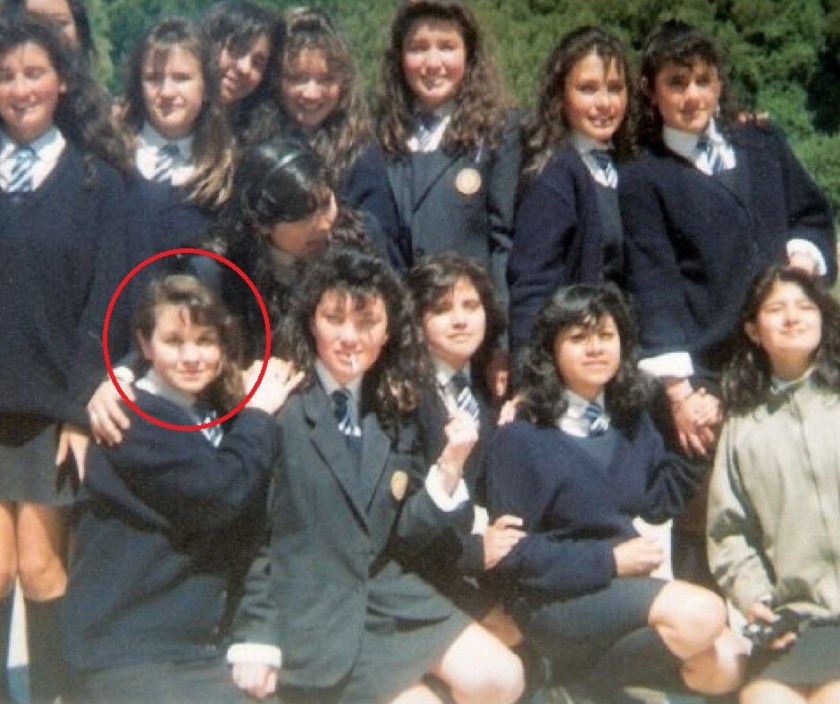
My first memory as an activist is of attending my first political public meeting to listen leaders of the resistance talking against the Dictatorship, marching holding a sign that read “Democracy Now,” and taking my first dose of tear gas. It was 1988. I was 13 years old. My first menstrual period had come six weeks before. At that time, I didn’t know what feminism was; there were many books forbidden. Social Sciences such as Anthropology, Philosophy, and Sociology were banned in most universities.
But lack of theories could never prevent experience from happening and leaving its imprint. In 1990, at 15, I was gender conscious without recognizing my actions as feminism.
How do you start to put the pieces together? For me, it was imperative to keep a space to express emotions without self-censorship or self-prejudice, to identify exactly what was hurting me. It was not the What, but the How. A split is always sad, but part of life. I could have been the “ungrateful” partner.
What aches …
Well, just to mention some, it was not the obstacles of a relationship between two people used to singleness, with different cultural backgrounds and family styles, but the neglecting, insults, and public belittling, leading to my progressive invisibility and objectification in the daily life. It was not his one night stand a few years ago with an Islamic feminist I know. Every adult has a sexual past, that is not a problem, but discovering that past was quite current (thanks Whatssap) is the problem. Someone decided I was not smart enough to understand it, so triangulation and lies were employed, with the consequent mind games, an emotional roller coaster that included gaslighting and violation of trust.
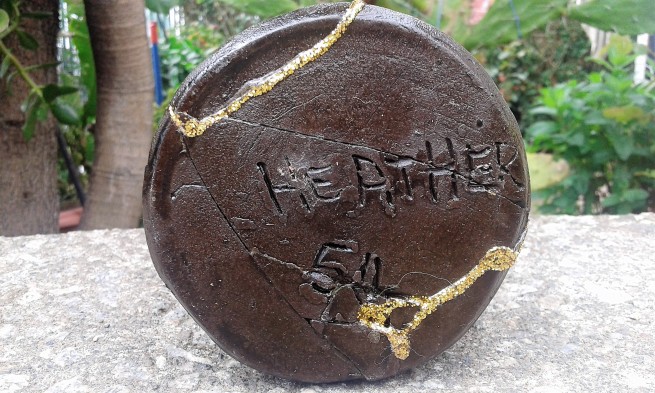
Kintsugi is a Japanese art technique that consists of repairing broken porcelain or pottery with resin varnish dusted or mixed with gold, silver or platinum powder. It is the art of fixing what has been broken with a precious metal that gives a greater value than that which the piece originally had. Kintsugi makes objects become a testimony of a particular journey.
In September 2015, in Cape Town, my fiance and I went to have lunch and listen to a concert at the Waterfront. Walking through the artisan market, we were struck by a stand where simple mugs of clay and pottery were displayed. Each one of them had been made by a woman survivor of some type of violence or trauma, which put her name and the imprint of her hands. Mugs had no handle, the way to take it was to put your hands in the hands of the woman. So, she connected with you and became part of your daily journey. Moved by the deep transcendence of the initiative, we got a pair. Mine was made by Heather, 54 years old. Continue reading “Kintsugi for the Soul – Part I – by Vanessa Rivera de la Fuente”
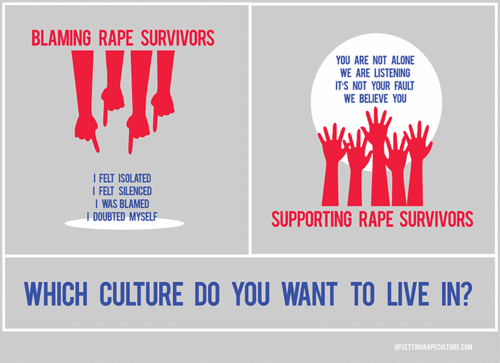
During my months in Cape Town, as you know, I engaged in critical education in Gender and Islam through workshops with Muslim women from the Cape Flats, where the rigid dynamics of researcher-object of study, gave way to an equal interaction of “people talking.” A recurrent theme, as I said in a previous article, was sexual violence and the discursive tenets that facilitate it.
In the light of the controversy aforementioned, I want to share excerpts that I recorded during our sessions of the sincere statements of Muslim women between 25 and 60 years old from different suburbs of Cape Town on Rape Culture and religion as they live it. Continue reading “Rape Culture and Muslims by Vanessa Rivera de la Fuente”
Some time ago, trans-activist F. was the target of bullying and harassment via social networks that lasted months and included defamation on Twitter and Facebook, articles in feminist blogs and web sites, and letters to women’s organizations and public institutions to request they ban the presence of F. from feminists spaces. Who did this? Feminists who had been F. friends. Why? For a disagreement with F.
In fact, F. was obliterated from women’s movements and even lost job opportunities. The most serious, perhaps, was the deep depression that affected her and the loneliness in which she had to live this experience.
Cases like these are examples of a behavior that is not strange, but instead is pitiful and very harmful — the destructive socialization of females to please patriarchy and to reproduce patriarchy and oppression at the expense of our integrity as women.
Women fight with the guns of patriarchy
We have been domesticated, trained to obtain the approval of a man and of the patriarchal system at any cost, to do whatever it takes to have a place at his side. We are the result of centuries of pedagogy that creates mistrust between women, and the validation and reproduction of our oppression and conditioning towards mutual competition. This is the root of our inability to deal with conflicts between us in a constructive and non-dehumanizing way. We can only give of what we have and as long as we have an identity as objects instead of individual people, women will be expert agents of misogyny.
The answer to this question seems obvious: Islamic feminism belongs to all Muslim women who wish to adhere to it, and feminism is for everybody, as bell hooks said.
In reality however, it is not so easy. Even the most well crafted theories must be implemented by human beings who have been socialized under the Patriarchy’s rules and practices. Lived experience reminds us that feminisms of all kinds are marked by dynamics of power, internalized misogyny, lack of intersectionality, egos, and personal interests.
In this situation I wonder: Are feminisms, and Islamic Feminisms in particular, truly for everyone?





 Feminism and Religion