 Along with others, I have felt relief, sorrow, and frustration watching hundreds of “me, too” posts and narratives flood my feed. Relief that our society is paying attention to the epidemic of misogynist violence in a new way, that we are having crucial conversations about how bad it is and what to do about it. Sorrow at the amount of suffering and oppression it highlights (I will not say reveals… anyone who bothered to look would know the scope and severity of this nightmare). Frustration that it seems no matter how many media campaigns emerge – #VDay, #YesAllWomen, etc – I cannot tell whether we are making any progress at all. It does not seem to me that my daughters are any safer today than they were ten years ago. If anything, it seems that our culture has begun accepting open, flagrant misogyny in new and unprecedented ways and degrees.
However, it does seem that more and more people are pointing out that in order to stop most rape and harassment, we must teach boys and men not to rape and harass people, especially not girls and women who are the main victims of abuse. Various types of pledges, apologies, question prompts, confessions, and other statements from male allies have emerged on social media. In addition, there’s the usual round of women criticizing each of these responses from male allies. As usual, the Left loves to eat its own.
I view allies on a spectrum, and I try to recognize where different men are on this spectrum, and how to help them move forward to the next level. If we truly want to heal rape culture, if we truly want to build a world that is safer for each generation, we must put down our egos, our need to win every argument, our smugly satisfied self-righteousness, and adopt effective strategies that will actually do what we claim to want to do. Continue reading “Me, Too: How do we heal rape culture? — Part 1 by Trelawney Grenfell-Muir”


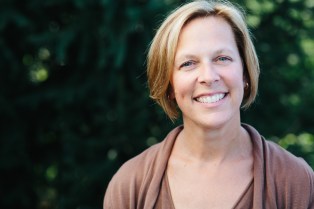 My “me too” went out for all to see way before Facebook existed, way before there were hash tags and internet pages for unveiling our secrets to the world. In all the years that have passed since I first spoke publicly and published about my experiences with sexual violence, there has been a steady stream of people (mostly, but not all, women) who have come to me with their #metoo.
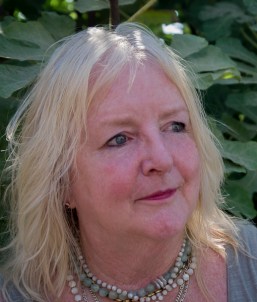 I was at a dinner party for twelve lovingly prepared by two ex-pat friends, when the subject of Woody Allen’s most recent film came up. I don’t remember which one of them it was, because, as I said at the time, “I vowed never to see a Woody Allen film again as my response to the way he treats women in his films and in his personal life.” I was immediately challenged by–it seemed to me at the time–everyone else at the table.
 One in three women worldwide experience Domestic Abuse at some point in their lives; I am one of them. There are many terms to describe what we experience: Gender Based Violence (GBV); Domestic Violence (DV); Wife Battering; Violence Against Women and Girls (VAWG); I’ve opted to use the term Domestic Abuse because it covers many of the behaviours women, and men, experience. Firstly, domestic describes the running of the home, or family relations, and is synonymous with private; private or intimate relationships are the grounds for this abuse.
 In
In  My father died on July 6, 2017, 98 years, 4 months, 12 days. The last time I saw him was in the spring of 2004. During that visit, he gave me “the silent treatment” (refused to look at me or speak to me) when I stepped over an invisible line. That was not the first time, but it would be the last. When I gave lectures in California in 2008 and 2010, I agonized and yet made the decision not to visit him. I did not want to give him the chance to hurt me again.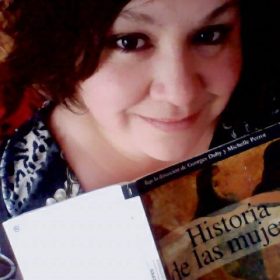

 Recently when I was feeling low and a little devoid of hope, a friend of mine paid me a fabulous compliment: “Things will get better. You’re a very strong person.” I know it was a real compliment and not an underhanded cutting remark. You may be surprised as to why I am referring at all to the latter. After all, it’s straight forward – having strength and fortitude are admirable qualities and how could one possibly even think otherwise. But you may be equally surprised to know that there are very special circumstances under which the word “strong” gets to acquire extended meanings of: “devoid of feelings,” “someone who needs zero support,” “a social insult.”
 Feminism and Religion