Moderator’s Note: This was originally posted on February 24, 2013. Sadly Mama Donna died on Sept. 21, 2024. You can read FAR’s post that honored her life here.
The Queen paradigm promotes a new understanding of what it might mean to be a middle-aged woman today who accepts complete responsibility for and to her self, and it celebrates the physical, emotional, and spiritual rewards of doing so.
Although I have been passionately devoted to the Many Splendored Goddess in Her complex multiplicity for more than thirty years now, I am not a believer in the Triple Goddess paradigm. It has never resonated with me because it belies what I believe to be the true nature of nature. The Triple Goddess in Her tripartite phases is widely understood to represent the complete cyclical wholeness of life. She who is Three is likened to the moon, the tides and the seasons, whose mutability She mirrors. And therein, lies the rub.
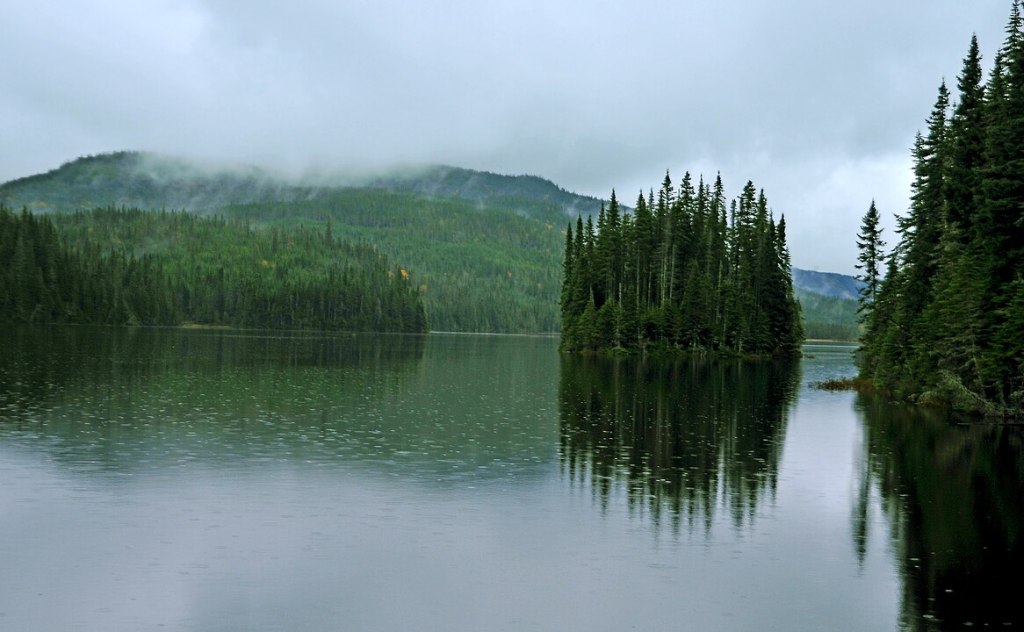
Water is mighty. Water was the birthplace of all life on our planet. Water regulates the world’s climate cycles and makes it possible for the matrix of life to exist. Twenty-thousand years ago, ice moved across the Earth creating the planet’s landscape of mountains, lakes, rivers, lakes and oceans that bring us awe in their majestic beauty.
Water is also fragile. Water evaporates and disappears from our sight during the laziest summer day. Frozen water, ice, can shatter into shards at the slightest tap. With just a few degrees of extra warmth even great glaciers disintegrate and slide into the ocean. Water is elemental to much of our species and planet’s fragility, whether there is too much of it in a flood, or not enough in a drought. In just a couple of centuries, humans have endangered water all over the globe through pollution and other actions.
Unfortunately, an inner darkness has been with me all fall hiding in the corners of my mind and disturbing my body creating headaches and stomach troubles during the day. Although I attempt to protect myself from a culture that I cannot control by not listening to news, watching television, movies or perusing social media I am painfully aware of the fact that politicians on an international level cannot even agree to discuss what to do about climate change – this after 30 years of doing absolutely nothing – creating in me a mindless fury that leaves me in black despair. The time of acting locally and thinking globally is long past. Thinking and doing must occur on a global level. Novelist Richard Powers states the obvious: “People can better imagine the end of the end of the world before the end of Capitalism”. Then we can move to the moon.
I have also been forced to acknowledge how difficult this year has been on a personal level. Aging is affecting my energy level, increasing the severity of depressed states, my sense of inner and outer balance. I am vulnerable and know it although I do my best to begin each day with gratitude as I first peer out at my beloved trees, a little nuthatch or chickadee, gaze at a silver crescent, or celebrate a pale pink dawning.
In feminism becoming a ‘wise’ crone is acknowledged (it is certainly true that experience brings insight), but the vulnerabilities associated with aging remain hidden. I wonder how much of this silence has to do with shame? Does our culture’s obsession with youth keep us quiet? If so this attitude isolates women from one another when older women need each other’s support more than ever. Lately, I find myself keenly aware that I need to write about the changes that are occurring in my own life so that I remain visible to myself if not to others.
When it comes to the challenges of aging the silence is deafening.
Turn, Turn, Turn
It’s May Day. At dawn I scoop water from the brook, first pouring some on the earth and then, returning to the house, I bless the floor of the log cabin that is my home. I light candles for intentions… Too sensitive to light (phototrophic) I am acutely aware that the wheel is turning her face towards the harsh white glare of summer.
This winter has been most challenging on every level.
I am exhausted, emotionally and physically. Most of my hair has turned gray. I have become an old woman who needs to be in touch with her limitations.
On December 31st I broke my foot at three in the morning when a horrible crash awakened me to a blocked front door. I shoveled pure ice for an hour. Frantic with anxiety, I didn’t even realize that I had broken my foot until the crisis was over and the door could be opened again.
We are hard-wired to frame our experience in stories. Almost anything we endure, no matter how painful, can take on a deeper meaning if we see it as one chapter in an overarching narrative. Stories give coherence and meaning to our often fragmented and chaotic lives.
Georgia O’Keeffe lived way beyond Act One!
We live in a youth-obsessed culture. The cosmetic industry pushes wrinkle creams and hair dye on us while celebrities resort to fillers and surgery to preserve an illusion of eternal girlhood. Advancing age, once a mark of honour, has become a source of shame. Popular fiction, literary classics, television, and movies celebrate young heroines, from Elizabeth Bennett to Katniss Everdeen. But where are the stories about older women and why do we all need to hear them?
We live longer than ever before. Women’s lives don’t play out in one act, even though our culture programs us to think that way. It almost seems a travesty to imagine an older Elizabeth Bennett grown bored of Darcy and yearning to reinvent herself and embrace some new adventure.
Old-school male authors were really big on killing off their young heroines so they couldn’t even dream about maturing into women with agency. Shakespeare merrily committed femicide on Juliet, Ophelia, and Desdemona, to name just a few of his hapless heroines.
Ophelia drowning. Don’t try this at home.
Why have so many authors, past and present, refused to let their heroines age? Why this reluctance to write about seasoned female protagonists who have been around the block more than once? Perhaps because too many people, even today, consider experienced women threatening. Since the time of witch burnings and scold’s bridles, male-dominated culture has been petrified of older woman who seize their power. That’s why stories about young women with a certain cut-off date are much cosier and less threatening.
But coming-of-age stories can only take us so far. We need to imagine lives beyond Act One, beyond a vague glimmering on the horizon. We need signposts to help us navigate our long and unavoidably complicated modern lives. We live in an age of divorce, blended families, and many of us pursue several careers and many paths of discovery over the course of a single lifetime. Contrary to cultural expectations, women do have exciting, juicy lives after forty and beyond. Contemporary fiction should explore and celebrate this.
Yes, there have been break-out books about older women—Elizabeth Strout’s Olive Kitteridge, and even literary classics, such as Virginia Woolf’s Mrs. Dalloway—but these are the exceptions that prove the rule. In the publishing marketplace, stories about older women remain a hard sell. Which is bitterly ironic, considering that most fiction is purchased by women over the age of forty.
Yet it’s not just an older audience that needs to read about older heroines. I would argue that girls and young women are in even greater need of literary role models to guide them way beyond a self-limiting Act One.
As a teenager, I was hungry for such stories. Some proof that I had something to look forward to beyond the awfulness of high school (not the best years of my life). Like Holden Caulfield, I was caught in a web of angsty adolescent nihilism which cast everyone from the cheerleaders to the teachers as a chorus of fakes and phonies. I needed a gutsy female role model to pull me out of this miasma.
Eventually I found my heroine, not in the pages of a novel, but in Blackberry Winter, Margaret Mead’s memoir. I was electrified by this strong woman who didn’t give a fuck about preening for the male gaze and yet still had an amazing love life. Born in 1901, in an era when women were programmed for domesticity, she became a pioneering anthropologist and feminist icon. Her memoir, subtitled “My Earlier Years,” is not cut off at Act One, but only ends when she becomes a grandmother. Well into old age, Mead remained a mesmerizing and magnetic presence for being authentically herself.
Mead’s memoir is a rare jewel of female self-confidence in an ocean of women’s self-censorship and self-effacement. In Writing a Woman’s Life, Carolyn G. Heilbrun observes how both biographers and autobiographers have suppressed the truth about lived female experience to force it to conform to society’s script of how a woman’s life should be.
Heilbrun then discusses the Mother of All Female Memoirs, the first to appear in the English language. The Book of Margery Kempe (c. 1436–38) reveals the escapades of a woman mystic who wasn’t enclosed in a cell, but was literally all over the map. Kempe’s call to adventure unfolded amid the bitter disillusionment of midlife. She was forty, a desperate housewife, a failed business woman, a mother of fourteen children, and trapped in an abusive marriage. Marital rape was her lived reality—a fifteenth child might have killed her.
Her story completely exploded my every stereotype of medieval womanhood. Her life choices seem absolutely radical by the standards of our time as well as hers.
Since divorce was not an option, she seized back control by setting off on the perilous pilgrim’s path to Rome, Jerusalem, and Santiago de Compostela. She literally walked away from her unhappy marriage and blazed her trail across Europe and the Near East in an age when very few women traveled, even in the company of their husbands.
Alas, Kempe’s independence and eccentricities drew suspicion. When she returned to England, she found herself on trial for heresy. A guilty verdict would have seen her burned at the stake, yet she kept her spirits high by regaling the Archbishop of York with a parable of a defecating bear and a priest.
Most significantly, the spiritual mentor who stood by Kempe as she made her unorthodox choices was a woman in her seventies, the anchoress Julian of Norwich. Before leaving on her monumental pilgrimage, Kempe sought Julian’s counsel. This was an exceedingly vulnerable time in Kempe’s life. In leaving her husband and children, she had broken all the rules and was filled with self-doubt and uncertainty. Julian’s advice to trust her inner calling and not worry too much about what other people thought seemed to have a profoundly empowering impact on her. While Julian had chosen to wall herself into a cell and live as a religious recluse, she gave Kempe her blessing to wander the wide world.
Kempe’s story would have been lost to history if she hadn’t recorded it in her autobiography, a tremendous act of foresight and courage that made her a literary pioneer. She dictated her story to a priest, who copied it down for her and whose ecclesiastical authority gave gravitas to her narrative.
We are hard-wired to frame our experience in stories. Almost anything we endure, no matter how painful, can take on a deeper meaning if we see it as one chapter in an overarching narrative. Stories give coherence and meaning to our often fragmented and chaotic lives.
Margery Kempe’s story proves that even in the Middle Ages, women had the power to re-invent themselves in midlife and beyond. If Act One disappoints, time to dive feet first into Act Two. We can continually re-vision our own narrative.
Our culture likes to pit women against each other. Divide and conquer. Popular tropes cast young women and older women as rivals or even enemies. In fairy tales a young maiden’s coming of age involves going out into the wild forest to encounter the scary old witch who acts as a foil to the maiden’s youth and innocence.
But if we look past the patriarchal smokescreen, we see that youth and aging are mirrors reflecting one another. The maiden and the witch are not enemies. The true coming of age unfolds when the maiden seeks out the witch who ultimately empowers her. Who teaches her to be fierce and not suffer fools.
As we mature, we are gifted with the superpower of seeing through the false scripts that consumer society hands us. We can see just how absurd it is to kill ourselves to emulate airbrushed fashion models. We understand that the greatest lover in the world can’t fulfill us until we are at peace with ourselves. And so we can let ourselves go, whatever our age. Paint the pictures we’ve always longed to paint. Learn French and travel the world. Dance under the stars and see visions. Offer our own song to the vast symphony of life.
We need stories that honor the entire sweep of womanhood, not just Act One. What would our literary canon and popular culture look like if it truly reflected the depths and breadth of our authentic, lived experience as women and girls today?
This essay was originally published in Literary Hub.
Mary Sharratt is on a mission to write women back into history. Her acclaimed novel Illuminations, drawn from the dramatic life of Hildegard von Bingen, is published by Mariner.Her new novelRevelations, about the mystical pilgrim Margery Kempe and her friendship with Julian of Norwich, is now available and will be released in paperback in April. Visit her website.
, elders are people who have illuminated my path, inspired me to see my own potential. To open my eyes, all my senses, even those I did not know I had. Elders show bravery and model for us how to be strong.
What is an Elder?
The word elder comes from an Old English word which also meant ancestor or chief. A lot can change in a thousand years and many of us no longer honor older people or seek out them out for advice.
In my experience, elders are people who have illuminated my path, inspired me to see my own potential. To open my eyes, all my senses, even those I did not know I had. Elders show bravery and model for us how to be strong.
My first wise woman teachings came from my family. My mother, and her mother, taught me to be myself, to love being outdoors and the importance of having a garden. Feeling the joy of flowers, cooking with fresh herbs, planting a tree to honor the dead. These are a few ancient traditions of my ancestors that have survived even in a modernized and urban setting.
As I rediscover my connection with the earth, my eco-consciousness inspires me to transform. As I go back to nature, I re-awaken my ancient cellular memories of living in harmony with the earth. I feel called to dance barefoot, play drums, make offerings, bathe in moonlight, harvest with my own hands. As I move forward on a path which is both new and old, it is my beloved elders who have shown me how to find my way.
What is an Elder?
The word elder comes from an Old English word which also meant ancestor or chief. A lot can change in a thousand years and many of us no longer honor older people or seek out them out for advice.
In my experience, elders are people who have illuminated my path, inspired me to see my own potential. To open my eyes, all my senses, even those I did not know I had. Elders show bravery and model for us how to be strong.
My first wise woman teachings came from my family. My mother, and her mother, taught me to be myself, to love being outdoors and the importance of having a garden. Feeling the joy of flowers, cooking with fresh herbs, planting a tree to honor the dead. These are a few ancient traditions of my ancestors that have survived even in a modernized and urban setting.
At the outset let me state that this post is mostly a collection of musings, rather than having a definite thesis statement.
I’m currently in India. I had to think hard before coming here for many reasons as you can guess. I finally decided to take the risk especially since there’s no telling how long this situation is going to last. After all, I’ve canceled twice and my parents aren’t getting any younger.
My father is 89, mum 79. When you visit on a yearly basis, that which eludes the daily eye becomes quite obvious in terms of reminding one of parents’ mortality. Wrinkles, aches, pains that develop over months and years seem shocking to the interim visitor, and in recent years, I’ve always left with the hope that I get to see them again.
As I have gotten older, I find I am drawn more to non-anthropomorphic, inexpressable-in-words, nature, and everyday focused visions of the Divine. Whereas before my spiritual practice involved more rituals and circles, unusually indoors, with others, now I more often engage in solo quiet contemplation, outside in the wild when I can. I think more about ways of being rather than ways of doing and more about the small messages I want to leave to generations to come instead of major accomplishments. I feel as if I am contracting in towards the center of the spiral of my spiritual journey.
Like so many others, I learned this jingle, actually the opening of a lovely poem by Joseph Parry, during a brief stint in the Girl Scouts when I was nine or ten. I’m not sure I understood it then—what was wine, after all? what did it mean for it to “mellow and refine”?—but the words stayed with me, echoing unbidden through the years and shaping many of my choices.
Make new friends, but keep the old;
Those are silver, these are gold.
New-made friendships, like new wine,
Age will mellow and refine.
Like so many others, I learned this little jingle, actually the opening of a lovely poem by Joseph Parry, during a brief stint in the Girl Scouts when I was nine or ten. I’m not sure I understood it then—what was wine, after all? what did it mean for it to “mellow and refine”?—but the words stayed with me, echoing unbidden through the years and shaping many of my choices.
I’m sure it was thanks to these words that, three years ago, I found myself dancing at the wedding of my childhood best friend. Deb lives in Southern California; I live in New York. Yet I never had the slightest hesitation about saying “yes,” I’d attend. This was to be her second marriage, after a painfully failed first. For years she’d sworn she would never remarry; the wonderful man she’d been living with for two decades finally persuaded her. Clearly, a moment to celebrate. And although we’d missed all the other milestones in each other’s lives, I knew I had to be there for this one.
At Deb’s San Diego wedding, 2018
I’ve known Deb since we were seven; we’re now both in our seventies. For nearly forty years we had no contact—different cities, different lifestyles, different choices. But when Deb sought me out after Hurricane Katrina (I’d been living in New Orleans and somehow she knew that); when she came to see me in New York and we revisited our childhood haunts; when she took to phoning me regularly on Jewish holidays—I was irresistibly drawn back into this relationship that linked me not only with her but with my own self over time. (“For ’mid old friends, tried and true / Once more we our youth renew.”)







 Feminism and Religion