Likewise, Christianity has been significantly impacted by the work of feminist theology. While some branches continue to refuse leadership roles to women, many others have acknowledged that every person embodies the spirit of Christ and have embraced the ordination of women. In 2006 the Episcopalian Church ordained its first woman bishop, the highest office in the church. Inclusive language has found its way into the prayers and rituals of many churches and feminist commentaries have shifted thinking on scriptural interpretations. Dialogue within and across branches of Christianity are expanding borders, and movements like Woman Church and online feminist spaces have created opportunities for women to claim agency and participate in roles that have been traditionally withheld.
In the long road to Islamic feminism, women have sometimes lacked agency to define either Islam or feminism. Traditional definitions of these words which operate as a constraint on work within Islam towards justice, equality and dignity; feminism was connected to Western imperialism and invasion into Muslim-majority nation states, and centuries of patriarchal control and interpretation stifled women’s efforts to claim Islam for themselves. This is changing, aided by campaigns such as the 2009 launching of the Musawah movement for equality and justice in Muslim family law. A new freedom is emerging that allows Muslim women the dignity and honor of defining Islam and feminism for themselves—no matter how little they might know of global discourses and historical traditions. All that was necessary was to, identify as a believer and expect a life of justice within that belief. Islam has also witnessed women-led prayers and a move toward inclusive prayer spaces.
The profound changes feminists have inspired and worked for do not mean that all problems have been solved and that women’s subordination is a thing of the past; there is plenty of work for a new generation. The difficulties with overcoming the glass ceiling and balancing work and life that women within the larger society face also bedevil women in all three religious communities. Panels, boards, and publications often exclude women’s voices completely or have only token female participation. Ordained women in Judaism are paid less than their male counterparts and rarely become senior rabbis in large or prestigious congregations. If women “choose” to serve smaller synagogues —the explanation often tendered to explain these gaps—that is partly because the expectations surrounding the rabbinate have not kept pace with its changing demographic, and women who want to combine rabbinic work with raising a family face considerable obstacles. Christian ordained women face similar obstacles within the priesthood and continue to be denied leadership roles in some branches, including Catholicism and Mormonism. Similarly, Muslim women are often excluded from panels at religious conferences and are underrepresented on the boards of religious institutions. The idea of women leading Muslim prayers remains controversial. And too often, discussions about women’s role in Islam still revolve around the issue of hijab, or covering.
The challenge for feminists today is passing on feminist insights and gains to the next generation. Is women’s history being incorporated into elementary and high school texts, or are students being taught the same parade of male names and faces? More particularly for Jews, Christians, and Muslims, when a girl or woman wants to mark some nontraditional ritual occasion, is it clear where to turn for resources? Do most Jews, Christians, and Muslims even know that it is possible to create new rituals that feel deeply meaningful and religiously authentic?
Finally, when teachers—and parents—talk about God, how is God imagined? Are children still growing up thinking about God as a distant male figure, or are they offered a range of images, and emboldened to create their own? Are children being encouraged to talk about and challenge passages in and interpretations of the Torah, Bible, and Qur’an that are misogynist or otherwise unethical? Are they developing critical tools that will allow them to engage with and transform difficult parts of tradition?
The next generation of feminists should consider a move beyond rhetoric and terminology towards substance and personal affirmation. Identifying as feminists of faith helps forge global alliances towards meaningful dialogue across difference—even the differences within. It is only when these deeper levels of change are addressed that the question, “Why stay?” will cease to be relevant.
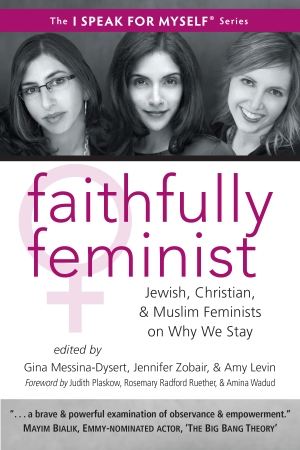 This essay is the Foreword for Faithfully Feminist: Jewish, Christian, and Muslim Feminists on Why We Stay edited by Gina Messina-Dysert, Jennifer Zobair, and Amy Levin.
For more on Faithfully Feministclick here.
Join the conversation on Twitter using the hashtags #FaithfullyFeminist and #WhyIStay.
Related Articles:
9 Badass Feminists of Faith You Should Know
Mayim Bialik Endorses Faithfully Feminist
Why We Stay
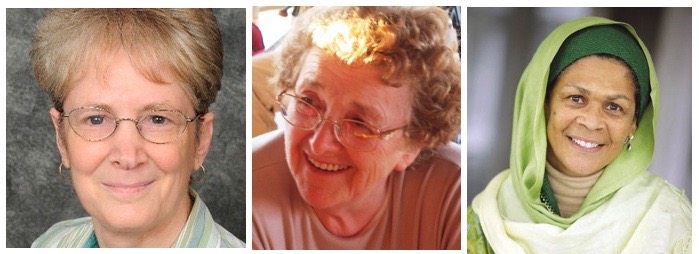
Judith Plaskow is Professor Emerita of Religious Studies at Manhattan College and a Jewish feminist theologian. Co-founder and co-editor of the Journal of Feminist Studies in Religion, she is co-editor of Womanspirit Rising and Weaving the Visions and author of Standing Again at Sinai: Judaism from a Feminist Perspective and The Coming of Lilith: Essays on Feminism, Judaism, and Sexual Ethics 1972-2003.
Rosemary Radford Ruether, Ph.D. is Professor of Feminist Theology at Claremont Graduate University and Claremont School of Theology. She is also the Carpenter Emerita Professor of Feminist Theology at Pacific School of Religion and the GTU, as well as the Georgia Harkness Emerita Professor of Applied Theology at Garrett Evangelical Theological Seminary. Rosemary has enjoyed a long and distinguished career as a scholar, teacher, and activist in the Roman Catholic Church, and is well known as a groundbreaking figure in Christian feminist theology. Ruether is the author of multiple articles and books including Sexism and God-Talk, Gaia and God, Women Healing Earth and The Wrath of Jonah: The Crisis of Religious Nationalism in the Israeli-Palestinian Conflict. Her most recent books include Catholic Does Not Equal the Vatican: A Vision for Progressive Catholicism(2008), Many Forms of Madness: A Family’s Struggle with Mental Illness(2010), and Women and Redemption: A Theological History, 2nd ed.(2011).
amina wadud is Professor Emerita of Islamic Studies, now traveling the world over seeking answers to the questions that move many of us through our lives. Author of Qur’an and Woman: Rereading the Sacred Text from a Woman’s Perspective and Inside the Gender Jihad, she will blog on her life journey and anything that moves her about Islam, gender, and justice, especially as these intersect with the rest of the universe.


 Since beginning her posts for FAR four years ago, Elizabeth has featured an excerpt from my chronicles each July in honor of my feast day on the 22nd. At least I thought it was my Feast day. It has been brought to our attention that Pope Francis only recently elevated the 22nd to the status of a Feast. Before that, it was merely a Memorial of me as a saint, whether optional or obligatory I am not sure. The only thing more elevated than a Feast day is a Solemnity. (Needless to say my mother-in-law, aka the Blessed Virgin Mary, has one of those.)
 “Why do you stay?” It is a question I am often asked when I reveal my Catholic feminist identity. It is not lost on me that such a question is one that is often posed to women in abusive relationships. First, let me say, I don’t ever think it is appropriate to pose such a question to women experiencing domestic violence. This said, I also want to be clear that I in no way view my relationship with my faith as abusive.
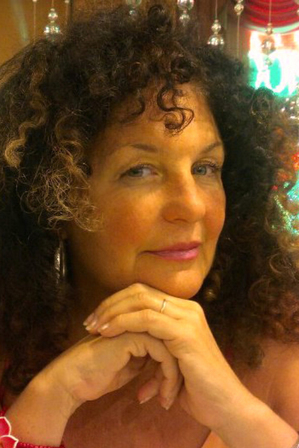 My mother-in-law is currently in hospice and expected to cross over any time now. My wife is with her. Those two sentences alone—since I am a woman writing this blog—signify historic/herstoric change. I am a woman and I am writing about my mother in law and I am writing that my wife is with her. We are in a sea change regarding gay marriage. I will be allowed bereavement to go with my wife, when the time comes, for the services.
 Earlier this week I went to hear
  In addition to teaching Gender and Women’s Studies, I have also been the screenwriting professor at University of California Irvine since 1992. I have used the screenplay for this movie (adapted from Prejean’s book and direct interviews) almost since it was published. It’s a great example of how research, interview, and authenticity can make a movie work—rather than “making it up.” Even the title was new to most of America- “Dead man walking!” refers to the last walk an inmate makes as he (or she) walks to his (or her) death.
 Feminism and Religion