Embodiment as Positive Resistance

I nearly cancelled my recent trip to the United States. The political climate felt tense, the global atmosphere uncertain, and travelling across the Atlantic seemed questionable for several reasons.

Friends encouraged me to go anyway, suggesting that meeting people in person would offer a different perspective from the one shaped by media narratives. And of course, it wasn’t headlines I was meeting, but people, in a human reality that persists beneath larger systems. Thankfully, my trust in relational experience outweighed my hesitation, and I returned from my travels with renewed inspiration.

I’m writing this essay because many people I met spoke with an apologetic tone about being American. They expressed disbelief, embarrassment or anger about their conspicuous yellow haired chief. I just want to acknowledge the warmth, generosity, care and humanity I encountered wherever I went.

The entire experience confirmed what I have long sensed in my work with movement, ritual and community: that embodied presence, especially in uncertain times, is such a remedy for heart and soul. What I encountered was meaningful human contact, even in a politically divided country.

Continue reading “Embodiment as Positive Resistance”
Micro Joys by Xochitl Alvizo

“Micro joys helps us deal with macro sadness,” Ana Navarro. 

Ana Navarro, a political commentator, spoke those words when trying to explain the significance of the Bad Bunny Half Time show for Latin American people in the U.S. (the show which was also affectionately called “The Benito Bowl,” Benito being Bad Bunny’s first name). It’s a statement that captures the experience I witnessed among my extended Puerto Rican family regarding the meaningfulness of the Bad Bunny performance during the Super Bowl’s Half Time Show. (Mind you, we were only tuned in to catch the Benito Bowl, not the football game).    

It would be hard to overstate the significance and meaningfulness of the performance for Boricuas. Every single detail of the show means something and represents important aspects of Puerto Rican life, culture, and history. I encourage you to read a few articles or posts on the show if you are not already familiar in order to help you understand all that was involved and included in the performance. 

Continue reading “Micro Joys by Xochitl Alvizo”

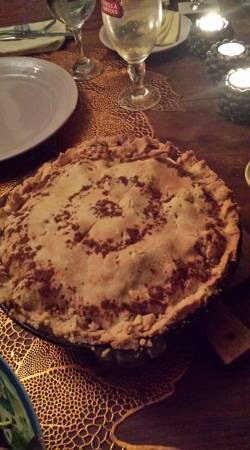
From the Archives: And the Pies! Ongoing Grateful Thanks for Tradition by Marie Cartier

This post was originally published November 24, 2018.

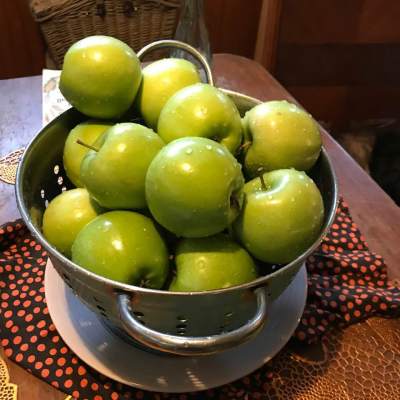
In November 2017 I wrote about pie baking. 

And in November 2015 I also wrote about pie baking.

Photo by Lisa Hartouni

In November 2016, I was destroyed by the “election” and wrote a post in November of that year “For Strong Women” just to help many of us keep going.

Continue reading “From the Archives: And the Pies! Ongoing Grateful Thanks for Tradition by Marie Cartier”

Lessons in Community at the Lily Pond by Carolyn Lee Boyd

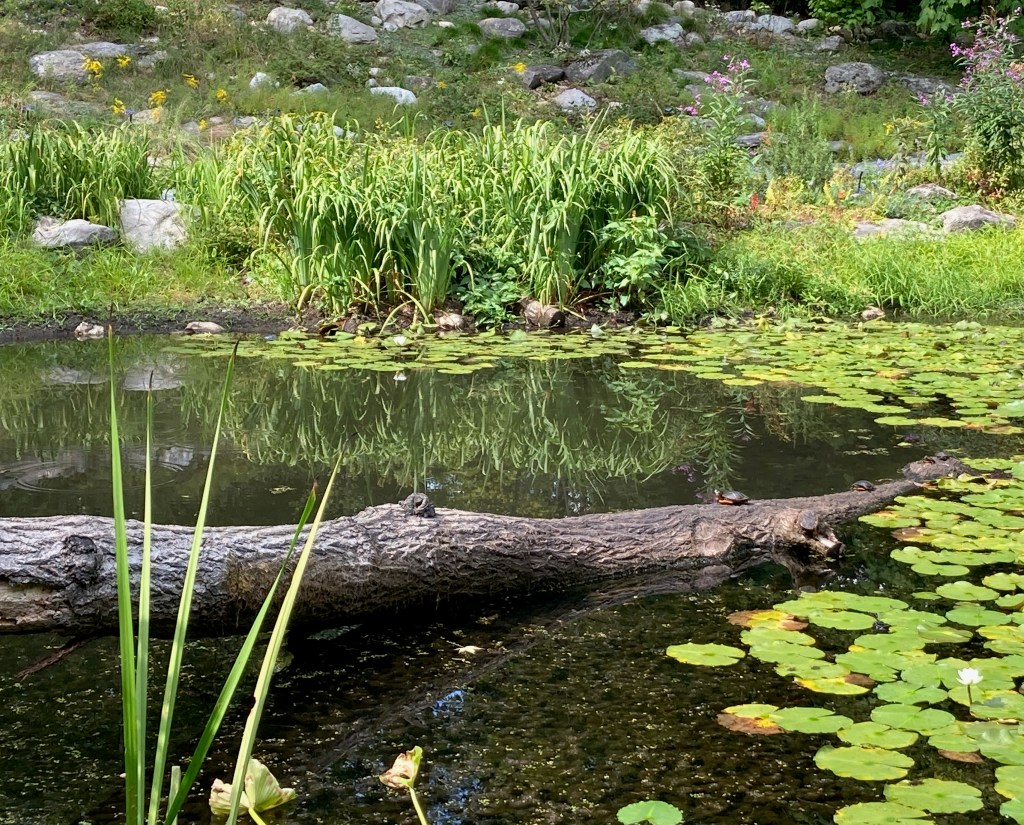
Turtle family on a log
Frog on a lily pad

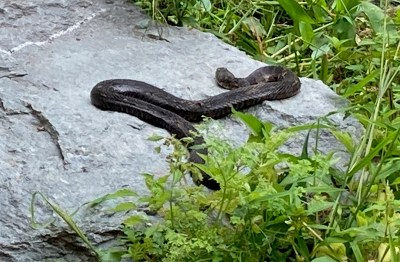
On a recent tranquil Sunday afternoon I was wandering around a lily pond in a nearby botanical garden, fully immersed in that liminal time between summer’s outbursts of nature’s abundance and the peaceful contentment of fall. The late goldenrod and delicate white wood asters danced a hued duet in the wind among the turtleheads and cardinal flowers, while hydrangeas shifted from white to the vibrancy of their last red passion. The lilies in the pond poked their heads above the water while frogs lay in repose on the pads. They were joined on nearby logs by a family of turtles, parents on one side and two babies on the other, close enough for security but far enough to enjoy some independence. A long dark brown watersnake was curled up unmoving on a boulder. All seemed to be basking in the sun, napping now and then. Around the pond were wanderers like me and human caretakers, silently tending to wildflowers and trees and occasionally stopping to watch if one of the beyond-human inhabitants plopped into the water for a little late afternoon swim. 

watersnake on a rock

Of course, I also knew that the peacefulness of this snapshot moment would not last forever because what do watersnakes eat? Frogs, fish and other beings that live around ponds. And what do frogs and fish eat? Insects, snails, and other beings, and so on up and down the food chain. But even this is part of the wholeness of the pond, as each being fulfills its place in the cycle of birth, life, death, and rebirth so that all of us can, in our own time, enjoy these short times of contentment living on the face of our magnificent planet.

Continue reading “Lessons in Community at the Lily Pond by Carolyn Lee Boyd”

NO Kings Day Protest – Lakewood, CA by Marie Cartier 

Note – usually we have a Carol Christ Legacy post on Mondays. Today we have a post in the spirit of the elections taking place this week across the United States.

October 18, 2025

Largest single day protest in US history- over 7 million people- 2700 + gatherings

P.s. That’s my wife in the inflatable bear costume– NO KINGS and YES ON 50!

Continue reading “NO Kings Day Protest – Lakewood, CA by Marie Cartier “

NO KINGS Day June 14, 2025 by Marie Cartier

#nokings #nokingsday 
Many actions took place in Southern California. I participated in one which was so unusual and historic I want to share it with you all on FAR.

My wife and I and friends stood and protested in Seal Beach, CA and then drove through 1000s and 1000sof people lining both sides of Pacific Coast Highway for 30 miles from Seal Beach to Dana Point. I was up through the moon roof screaming “NO KINGS!” for hours!

Continue reading “NO KINGS Day June 14, 2025 by Marie Cartier”

Census in Times of Fear by Xochitl Alvizo 

I received a notice from the U.S. Census Bureau recently that I was randomly selected to complete the “American Community Survey.” It came as a letter at first with instructions to complete the survey online. A few days later I received another letter saying “A few days ago, you should have received a letter from the U.S. Census Bureau asking me to complete the American Community Survey,” with big bolded letters that my “response is required by law.” I have since then received follow-up post-card reminders, a physical form survey with the same bolded message, and another post-card that they have sent repeated requests to complete the survey.

Continue reading “Census in Times of Fear by Xochitl Alvizo “

Be A Friend:  A Conversation on Self-Care by Mary Gelfand & Rev. Bernadette Hickman Maynard

Mary:
Like many of you, I struggle to balance spiritual, emotional, and physical well-being in these chaotic times. As women, we’re conditioned to prioritize others—family, work, community—while systemic injustices demand our energy daily. It’s like Sisyphus pushing his boulder: exhausting, endless. But rediscovering the FRIEND acronym, created by Reverend Bernadette Hickman Maynard, helped me reframe self-care and I wanted to share this with my FAR community. Bernadette, how did this concept come to you?

Bernadette:
In December 2023, I was the pastor of a church, deputy director of a community organizing nonprofit, mom to four kids, and a wife. My body rebelled and I had pain in five areas, dizziness, heart palpitations, panic attacks. I’d cry uncontrollably. I was burned out. Finally, I took six weeks off from everything. During that time, I realized I couldn’t fight for others’ liberation while sacrificing my own. So I created FRIEND—six practices to reclaim my joy – and determined to “be a FRIEND to myself” every day.

Mary:
Your story resonates deeply. We’re rarely taught to prioritize ourselves and pay attention to our physical and emotional needs.  There’s always another task that seems to take priority over self-care and it’s easy to burn-out. How does Be A FRIEND work?

Continue reading “Be A Friend:  A Conversation on Self-Care by Mary Gelfand & Rev. Bernadette Hickman Maynard”

Long Live Queer Nightlife! by Amin Ghaziani – Book Review by Marie Cartier

I was invited to be on a panel for the Pacific Sociological Association (PSA) in San Francisco this past March for a new book by Amin Ghaziani, Long Live Queer Night life (Princeton University Press, 2024).

Since I wrote Baby, You Are My Religion – Women, Gay Bars, and Theology Before Stonewall and have discussed aspects of this work here I thought the FAR family would also enjoy this conversation on where queer nightlife is now.

The book is interspersed with visits to club nights, something Ghaziani says helps widen the possibilities for communities—different communities can have their own nights and these chapters where he visits these various hot spots are exciting and first person.

Continue reading “Long Live Queer Nightlife! by Amin Ghaziani – Book Review by Marie Cartier”

#SHARE THEIR STORIES by Janet Maika’i Rudolph

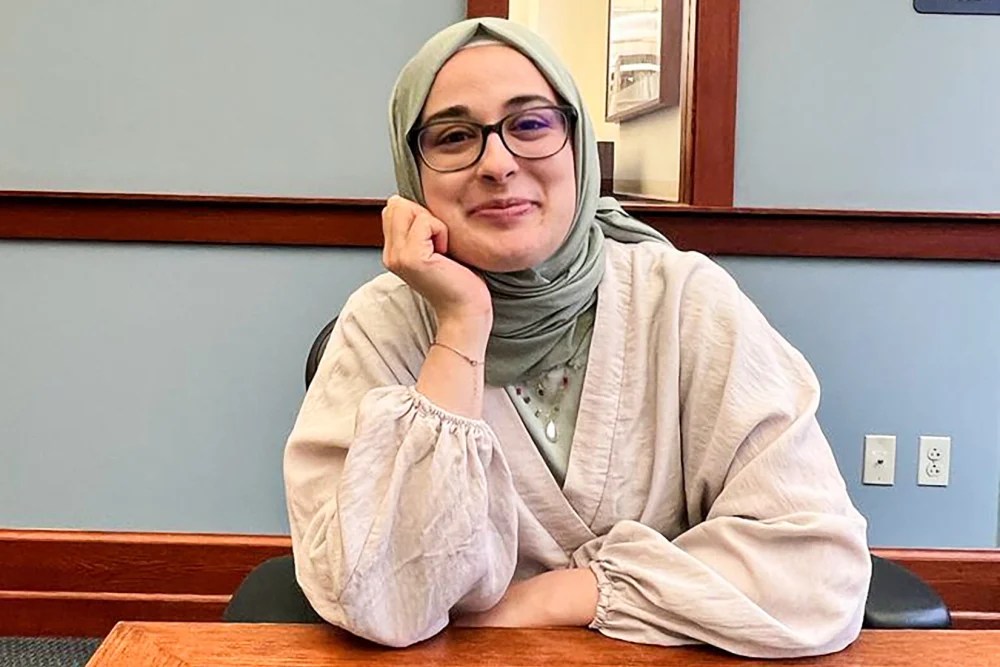
I was walking along the street the other day thinking about the comforts I find at home, my favorite tee-shirt, the three or four books I’m reading at a time, photos of loved ones. Around that time, I heard the news that Rümeysa Öztürk, a Turkish PhD student at Tufts who was whisked off the street by ICE agents in Massachusetts. She disappeared into the system until she showed up in detention in Louisiana. This is the facility that has been called “a black hole” by civil rights groups. So many have been swept off the street, how do we keep track? Ozturk had a valid student visa until the State department revoked it without notice nor telling her. She was on her way to break her Ramadan fast with friends. After her arrest she asked for food, not having eaten for 13 hours. She was given snacks. She still hadn’t eaten a meal by the next day and was feeling faint. She was given more snacks.

I began thinking, who are her friends? What was she going to eat? In fact, what are her favorite foods? In other words, who is she as a person. Her name is foreign, she comes from another country so it might be too easy to dismiss her as one of many. But if we know her story, if we humanize her, her story becomes harder to dismiss. The first step in the authoritarian playbook is to dehumanize people for some feature of who they are. When someone is dehumanized, it is far easier to do hateful things.

The antidote is to know their stories, share their stories, speak their stories.

Continue reading “#SHARE THEIR STORIES by Janet Maika’i Rudolph”