We Are All Earthings: Speciesism and Feminist Responsibility Toward Animals by Amy Levin

Amy2“earth’ling: n. One who inhabits the earth.” – Earthlings, 2006

“We need another and a wiser and perhaps a more mystical concept of animals. Remote from universal nature, and living by complicated artifice, man in civilization surveys the creatures through the glass of his knowledge and sees thereby a feather magnified and the whole image in distortion.” -Henry Beston, The Outermost House

I was passing out leaflets at Columbia University a couple weeks back, when a passerby who took a pamphlet on veganism and the cruel uses of animals turned back around to approach me. He said, “I am a vegetarian, so I understand not eating meat. But what is wrong with some of the uses of these animals? What is wrong with seeing eye dogs?”  A valid question indeed, and one I had to pause for a moment to answer. I mustered up something along the lines of the ways that many of the seeing eye dogs in the industry are unfairly treated or neglected. “Oh, he said.” He seemed content with an answer he could relate to – suffering. In my experience leafleting and participating in animal rights advocacy, I receive a number of questions, many of them wanting to know the same thing, what is WRONG with the horse-drawn carriages at Central Park? And each time I (and I presume many other activists) offer similar answers, the suffering answer. But there is another layer, beyond the quick, violent spark of imagination that connects physical pain with empathy. And it has to do with power and structural inequality, and the use of one group for the benefit of another. And it has everything to do with feminism. Continue reading “We Are All Earthings: Speciesism and Feminist Responsibility Toward Animals by Amy Levin”

No-Gift Birthday Parties by Grace Yia-Hei Kao

Continue reading “No-Gift Birthday Parties by Grace Yia-Hei Kao”

Alcohol is a Feminist Issue Too. By Ivy Helman

Sex sells.  The sexual objectification of women is used in advertising to sell anything from auto parts to cologne to alcohol.  Despite the myriads of feminist critiques of women’s sexual objectification to sell products, it still exists.  Open a Vogue Magazine or walk into an Abercrombie and Fitch store.  Women are posed half, to almost totally, nude in sexually suggestive ways trying to entice the generic person in patriarchal society, the “average” male (usually white, middle-class and heterosexual) to buy the product. Sometimes that same sexually suggestive pose is meant to also sell a product to the “average” woman as well with the mistaken notion that she will look as attractive and satisfied as the model if only she own the product too.

One of my part-time jobs is as a clerk at a liquor store where there are a good number of sexually explicit ads for alcohol.  I also have three other part-time jobs teaching in the Women’s and Gender Studies Program at Boston College, in the Religious and Theological Studies Department at Merrimack College and in my shul’s religious school.  My combined income from the four jobs barely covers rent, food and bills and some months when I don’t get paid from teaching I use the little savings I have to make ends meet.

Recently I have noticed how silenced my feminist voice has become in the liquor store because of my precarious financial situation.  I am hesitant to speak up about the sexist ads for fear of losing my job.  This muted feminist voice is a class issue within feminism.  Specifically, classism affects one’s ability to stand up for one’s self when one’s livelihood is on the line.  Often, I find myself thinking about this as I sell customers vodka or beer.

But I also spend a lot of time at the liquor store thinking about religion.  Continue reading “Alcohol is a Feminist Issue Too. By Ivy Helman”

Appealing to Values and Interests in Consumer Choices by Grace Yia-Hei Kao

“What the report also makes clear is that sweatshop labor is highly gendered. Between 71-85%…are women, the majority of whom are also under the age of 35.”

I was recently drawn into a facebook discussion about the ethics and efficacy of refusing to eat at Chick-Fil-A on account of its president’s public “we are inviting God’s judgment on our nation” opposition to same-sex marriage as well as the chain’s financial support of socially conservative groups.

I noted that consumers who boycott businesses generally do so because they believe that (1) continuing to patronize a place would be at odds with their core values, or that (2) their actions will “make a difference” by exerting financial pressure on the company to amend their ways. These two reasons could be related, though they often are not. People can act in accordance with their conscience without believing that they have accordingly instigated social change (n.b., just think of the earlier 2004 decision by the Presbyterian Church U.S.A. to selectively divest from certain companies in Israel), just as companies can be compelled to alter their policies by other means than by their clientele taking their business elsewhere.

Continue reading “Appealing to Values and Interests in Consumer Choices by Grace Yia-Hei Kao”

Discrimination, the Catholic Bishops, and Chick-fil-A by Michele Stopera Freyhauf

You may be tired of the controversy about Chick-fil-A, but the events of the last few weeks revealed a big issue in the organization – that of discrimination and the illusion of religious freedom.  However discrimination exists beyond the LGBTIQ community, it applies to Catholics and those “outside” their strict fundamentalist belief system.  However, the hierarchy in the Catholic Church seems to be embracing many of the beliefs put forth by Evangelical Fundamentalists in the political arena.

When it was time for my eldest daughter to get her first job, she applied and was hired to work at Chick-fil-A.  Knowing they were a  Christian organization, I felt that she would be well treated and we could still have family time on Sundays.  Everything started out o.k. but the longer she worked there, problems developed.  First, when I stopped through the drive-thru to show my support as her mother, I received apocalyptic material in my bag talking about the end times, where my soul would go, and inviting me to their church.  I found the material offensive and never returned. Despite the organization’s community support and “Christian” values, I was still fairly naive about their discriminatory practices that many experience on a daily basis.

Continue reading “Discrimination, the Catholic Bishops, and Chick-fil-A by Michele Stopera Freyhauf”

What I Learned (and Found) Dumpster Diving, Part II, by Grace Yia-Hei Kao

“I had known that dumpster diving is subversive….What I hadn’t considered previously is its arguable feminist and biblical precedents.”


The following is a continuation of a two-part blog. Read part I for what prompted me to go dumpster diving, what freeganism is, and what three things surprised me the most about dumpstering beyond the sad and shocking reality of tremendous waste. 

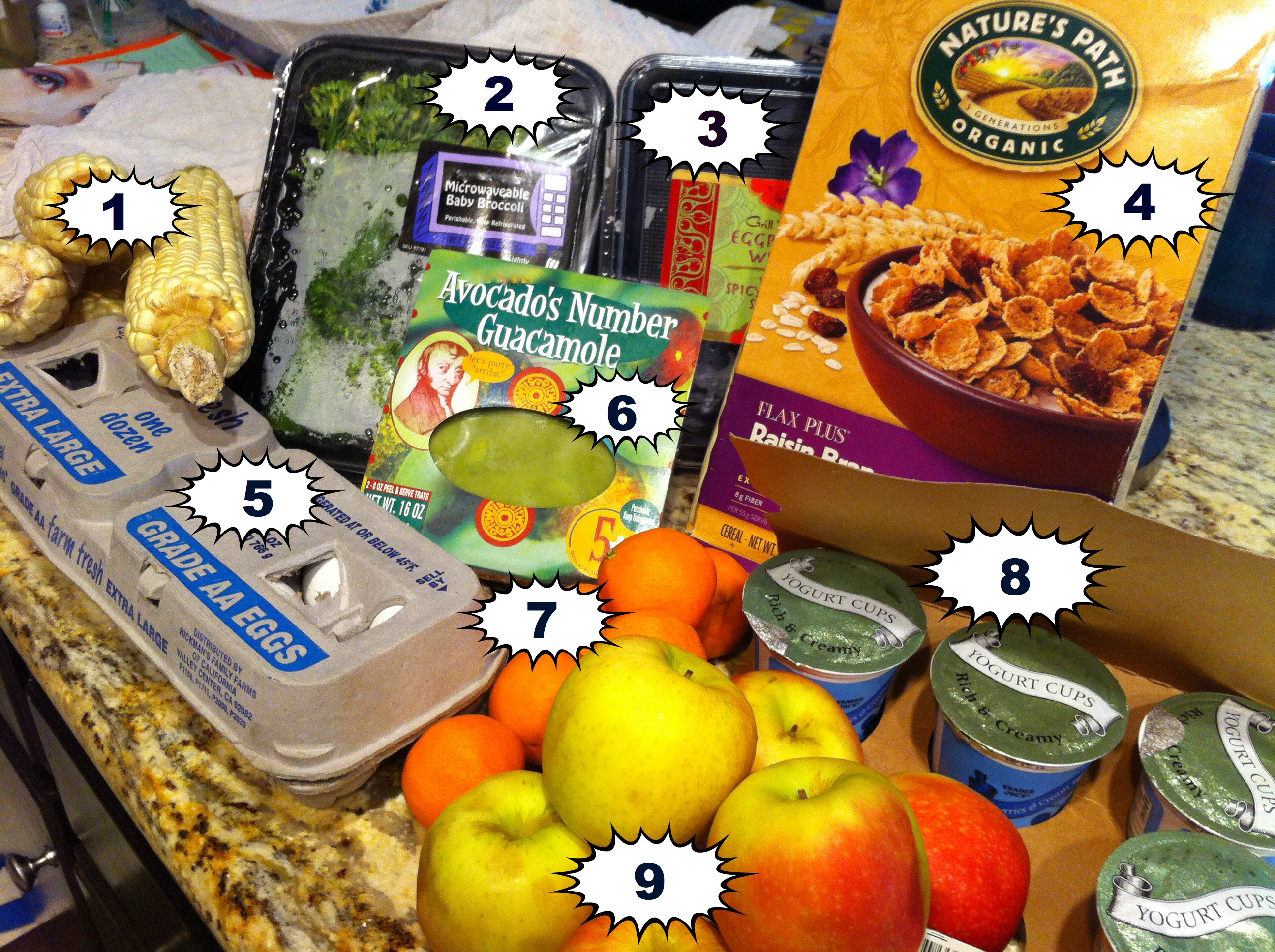
My Dumpster Dive Haul

After sorting through several trash bags of edible food in the approximately 10 minutes that we spent at one site in my first ever urban scavenging trip, this is what I ultimately brought home.


(Reminder: As explained in part I, I have intentionally photoshopped out the store’s name and the use-by/best by dates).

Continue reading “What I Learned (and Found) Dumpster Diving, Part II, by Grace Yia-Hei Kao”

What I Learned (and Found) Dumpster Diving, Part I, by Grace Yia-Hei Kao

“I get that consumers generally prefer to buy produce that looks a certain way, but can the routine act of trashing whole bags of clementines, apples, or tomatoes because of a few imperfections be justified in a world that is full of hungry and malnourished people?”


Renowned climate change activist and author Bill McKibben spoke at our graduation earlier this year. Among the charges he gave to all of us in attendance (i.e., not just the graduates) was for us older folks to be willing to bear more of the possible “costs” of political activism. His reasoning was that being a 20-something with an arrest record was not a particularly good thing for young job-seekers today.

I was inspired. I thought to myself, “I have tenure, I work with colleagues who champion prophetic civil disobedience, and my class privilege would allow me to post bail if arrested.”

When chatting with a graduate that afternoon, I told him that I’d like to make good on something we once discussed in class during a session on the ethics of consumption—I’d like to go dumpster diving with him.

Mind you, I don’t fit the stereotypical urban scavenger profile (although middle class dumpster diving is on the rise). I grew up in a gated community, once brought my portable curling iron on a junior high church group camping trip, and today am more bourgeois than Bohemian. So what interest did I have in electively digging through garbage?

Continue reading “What I Learned (and Found) Dumpster Diving, Part I, by Grace Yia-Hei Kao”

They Are Trying to Trick You by Xochitl Alvizo

These chocolates embody a truth — the truth that resources are valuable, that living ethically is not ‘cheap,’ and that cheap is an illusion…

Information is everywhere and is being collected about each one of us every minute of every day. If you are reading this post on your computer you have just fed the information gathering machine new information about yourself, your interests, your trends – and if you click on any of the links embedded within this post – all the more so. Welcome to the 21st Century.

In a way it sounds terribly “Big Brother-ish.” And maybe so, but I don’t think of it that way as that would be terribly overwhelming and perhaps even paralyzing. Instead, I simply see it as capitalism in full force. Capitalism depends on a consumer economy – the more we buy the more profit a small percentage of people make. And the consumption of goods is heavily reliant on marketing, which nowadays is being streamlined more and more so that it can to be targeted and personalized for each individual. In order to do this the powers that be need information about us – detailed information and lots of it! Here enter Google and Facebook – the great gatherers of all the personal information we freely give them. They gather information and share it with corporations so that these may in turn more effectively market products to us that we are more likely to buy. We are now in what is called the Google Age, the great servant of capitalism and our consumer economy.

So what does a feminist do in the face of such an overwhelming reality? I have a few suggestions of course. First, you remember that they are trying to trick you. Seriously, they are! Continue reading “They Are Trying to Trick You by Xochitl Alvizo”

“Eating Our Words” Decoupling Women’s Eating Habits from the Language of Sin: Part 2 by Stefanie Goyette

This post is the second part of a two-part series. Read Part I here.

In my previous discussion of the language associated with women’s eating habits, I mostly left aside the problem of weight. Weight, and certainly obesity, was hardly a concern in the Middle Ages, whereas I do not think that it would be controversial to suggest that fatness in the modern era is viewed as nothing less than a moral weakness, a failure of self-control. This viewpoint that is emphasized by weight-loss programs on television, in magazines, etc. But this is another matter that deserves a full discussion, which I cannot offer today. Rather, I would like to suggest that gluttony as a moral concern has shifted in meaning between the Middle Ages and the modern era, building on the fact that in medieval Europe, gluttony was an explicitly religious problem, a cardinal sin, even when separated from the related issues of libido and lust.

Despite the intense moralization of alimentary behavior in the Middle Ages, medieval writers often refused constrictive, moralized models of food and eating. Hildegard of Bingen, in her manual of natural medicine, the Physica (twelfth century), recommends different foods that help feed and diminish sexual desire, in order to balance the body rather than to suppress its needs. Continue reading ““Eating Our Words” Decoupling Women’s Eating Habits from the Language of Sin: Part 2 by Stefanie Goyette”

“Eating Our Words” Decoupling Women’s Eating Habits from the Language of Sin: Part 1 by Stefanie Goyette

Any woman who has eaten a big holiday meal with her family or had a weekend brunch with girlfriends has probably heard the following words: “I’m so bad, but I’m going to order…” or “I shouldn’t, but…” or “I’m being good; I skipped dessert.” Foods and the recipes in cookbooks marketed towards women are described as “sinfully delicious,” especially if they are low-carb, or low-fat, or low-sugar. “Sinfully delicious” diet food can be enjoyed “without the guilt.” Further marking the matrix of food, women, and “bad” behavior or sin, is the intimate relationship between food, women, and sex. Recent Carl’s Jr./Hardee’s commercials feature swimsuit model Kate Upton making out with – nearly making love to – a hamburger. This love scene takes place in a convertible, at a drive-in, the classic site of American, teenage, illicit sex. The take-out bag is used as a prop to conceal Upton’s vagina, as she spreads her legs for the camera. Another commercial, for Lay’s potato chips, features a women biting her lip while she slowly peels open the bag, set to Al Green’s “Let’s Stay Together.”

A seeming contradiction emerges between these two discourses: one that persists within and between women, who are expected to be on a diet and who speak, and are spoken to, about food in terms of morality, “good” and “bad.” At the same time, women eating, especially eating greasy, fatty, comfort food, as long as these women are thin and attractive, has become a quintessential symbol for sex, and is used most particularly to market food to men. Continue reading ““Eating Our Words” Decoupling Women’s Eating Habits from the Language of Sin: Part 1 by Stefanie Goyette”