This short paper was part of a series of assessment pieces for university where we had to imagine ourselves as people living in a number of ancient cultures. It addresses a very direct question: “Imagine you are in Ancient Greece sometime during the 5th century BCE and a family member is preparing to be initiated into the Mystery Rites at Eleusis. You have come to support them and join in the festival. Briefly describe your experience?”
It is the month of Boedromion (Late September/Early October) and the sixth day of the Eleusinian festivities held annually in the great city of Athens. I travelled some distance to take part in the nine-day festival held in honour of the ‘Greater Mysteries’ for which my niece prepared as an initiate. The city is alive with women, men and children from near and far. Many have come to take part and fulfil the countless functionary roles associated with the festival, along with the great crowd of initiates who have spent the past three days fasting and ritually preparing. Continue reading “Demeter – Mother of Creative Potential”
From our very beginnings, women have danced with time. Our bodies’ moon cycles have always been a human calendar. As the first agriculturists, we partnered with the seasons to feed our families and communities. When we served as midwives and carers for the dead, we ushered our species into and out of their Earthly lives.
Time is also embedded in the stories of goddesses worldwide. Like human gatekeepers of birth and death, goddesses are often the stewards of fate. The Greek Moirai spun the thread of life and cut it at death’s proper time. The Balkan Laima , the ancient Arabian Menat, and the Etruscan Nortia are other among many fate goddesses. Some goddesses oversee change, the physical manifestation of time, including Anna Perenna, goddess of the circle of the year as well as all the seasonal goddesses. Kali, Rhea Kronia, and other Creator/Destroyer goddesses rule over time itself.*
Now, however, time is often a weapon of oppression against women. Women overburdened with an unfair share of daily life’s tasks were never able to create millions of paintings, symphonies, and inventions, make scientific discoveries, or engage in other endeavors at great loss to themselves and the world. After just a few years of maturity, we are cast aside as being “old.” How many lives have been cut short by violence, human-made disease, poverty, and war? For how many centuries have we been told to wait for equality and freedom until another war or crisis is over or we die and go to heaven? Continue reading “Time for Change: What Do the Goddesses Say? by Carolyn Lee Boyd”
Sophia was the first Holy Women Icon with a folk feminist twist I ever painted. A church gallery was hosting a Lenten triptych exhibition with the theme of “The Many Faces of Jesus.” I knew immediately that the face of Jesus I wanted to portray was Sophia wisdom. Sophia is the Greek feminine word for wisdom in the New Testament. Her characteristics are similar to the Hebrew hokhma, but expand in early Christian theology as she is understood as a divine attribute, or part of the trinity. In these ways, sophia is portrayed as a hypostasis of God’s wisdom, or a part of God’s substance. Accordingly, early Trinitarian formulas reference God the father, Jesus the son, and Sophia the spirit. A female spirit was undeniably an early part of the trinity.
It is worth noting that such an early understanding of the trinity, and of an unequivocally feminine spirit, was once normative. The Spirit was understood as and spoken of as a “she.” April DeConick highlights the difficulty of such an understanding today: “[W]hat must be realized is that Judaism and Christianity are the products of centuries of religious developments. So what might have been considered ‘orthodox’ at an early time, a few centuries later might be considered ‘heretical’ because the tradition and practices had drastically changed by then (April DeConick, Holy Misogyny, 7).” What was once orthodox—a female sophia spirit—has slowly, yet intentionally been overshadowed by patriarchal understandings of the trinity and the spirit. Continue reading “Painting Sophia by Angela Yarber”
In 2014 I wrote about the passing of my dear Pop and the painting that burst forth when I was told very clearly that Pachamama had come to accompany him on his return. It is with a very heavy heart that I now write with news of the recent passing of my dear Nanna. The anchors of our family now both gone. When I was told of her passing, I envisioned her being carried by angels; at peace and free of pain.
The last time I saw her she told me the spirits had been visiting. “I’m not scared,” she declared. This was not surprising for Nan always had a close relationship with spirit. I remember her telling me of a ghostly experience she had many years ago. It was very late one night and someone had come knocking at the door. Out of bed she got and answered it only to be greeted by her brother who had died many years before. He asked her to come with him and she told him it wasn’t time yet. Nan swore it wasn’t a dream. It had really happened. This is just one of many otherworldly encounters she told me about over the years.
Much of my childhood and early adulthood was spent at Nanna’s house so there are plenty of fond and funny memories of her. Her obsession with ghost and horror stories stands out as one of them. When we were children, she would get my sister and me to stay up late with her and watch all kinds of mystery murder shows. I remember watching The Hounds of Baskerville with her and being scared witless. The bonus however was getting to cuddle up in bed with her for the night.
Reading was one of her greatest passions, and she read everything from Shakespeare to Stephen King. I believe it was Nanna who inspired my love of history and over the years we swapped and shared numerous historical books. Her knowledge of Old Britain was astounding, and I remember many a discussion over the fate of Mary Queen of Scots – Nanna was always a bit anti-English, and we often wondered how history may have unfolded if Mary hadn’t been de-throned and exiled. In fact the last book she sent for me to read was another about her.
Stargazing was another one of her loves and is something she will be dearly remembered for. Many evenings were spent out on the deck looking to the night sky. Nan knew where all the constellations and zodiac signs were and she rarely missed an astronomical event. Whenever I have looked to the stars I have thought of Nanna, but now when I look to them, she is one of them. Shining down on us brighter than ever.
I dedicated my latest painting to Nanna. For me, painting is how I can process my thoughts and feelings and is also a way to find clarity and understanding on matters such as the nature of life and death. From the moment I made the first marks on the canvas I kept hearing “your ancestors are behind you.” I knew I was being guided by them and tried my hardest to connect in with Nanna’s spirit to see and feel who guided her home. Nanna had strong ancestral ties so it was only fitting to feel them so strongly here. The two younger women standing in front are the gatekeepers, standing at the threshold to the other side. The woman in the centre came with the message that Nanna is at peace – she is peace. She is pictured smelling the roses that were one of Nanna’s favourite flowers to grow. The firebird symbolizes transformation and the flight of her spirit that is seen to the left leaving, heading back to the cosmos from whence she came.
“Suddenly all my ancestors are behind me. Be still they say. Watch & listen. You are the result of the love of thousands.” She is at Peace, by Jassy Watson
Death is surreal and it still hasn’t quite sunk in that I will never see her again. Nanna was a strong and caring woman who loved her family deeply. Her legacy is one of love, and while the circle feels broken in the sense that she is no longer physically here, it remains unbroken for her spirit lives on forever in our hearts.
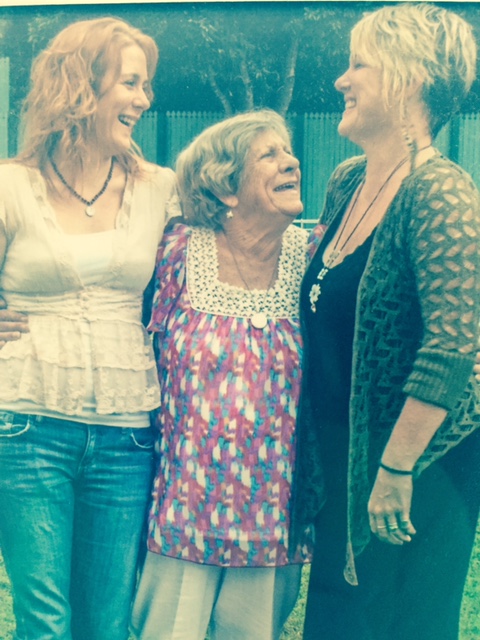
I am the daughter of Ramona Cherise Lane, the granddaughter of Ailsa Aileen Rollings and the great granddaughter of Ruth Harrison. I come from a long line of beautiful, strong and capable women stretching back to the dawn of humankind. I honor them and give thanks for all that they have taught and shown me.
Nanna taught me about my ancestors.
She taught me about the importance of storytelling.
She taught me about mystery and history.
She taught me to love books.
She showed me how to crochet and knit.
She showed me how to play cards.
She showed me spirit.
In life and death Nanna has taught me of unconditional love and acceptance.
“Death leaves a heartache no one can heal, love leaves a memory no one can steal”
(Irish Headstone)
My sister Carissa, Nanna (Ailsa) and me
Jassy Watson, who lives on the sub-tropical coast of Queensland Australia, is a Mother of four, passionate organic gardener, Intuitive/Visionary & Community Artist, Teacher, Intentional Creativity Coach and a student of Ancient History and Religion at Macquarie University, Sydney. She is the Creatress of Goddesses Garden, Studio & Gallery; a school for the Sacred Creative Arts. Jassy teaches regular painting workshops in person, nationally and internationally, and online based around themes that explore myth, history, earth connection and the Goddess. Regular creative events and presentations are also held that have included visits from international scholars, artists and musicians. Visit http://www.goddessesgardenandstudio.com to read more about her and the work she creates.
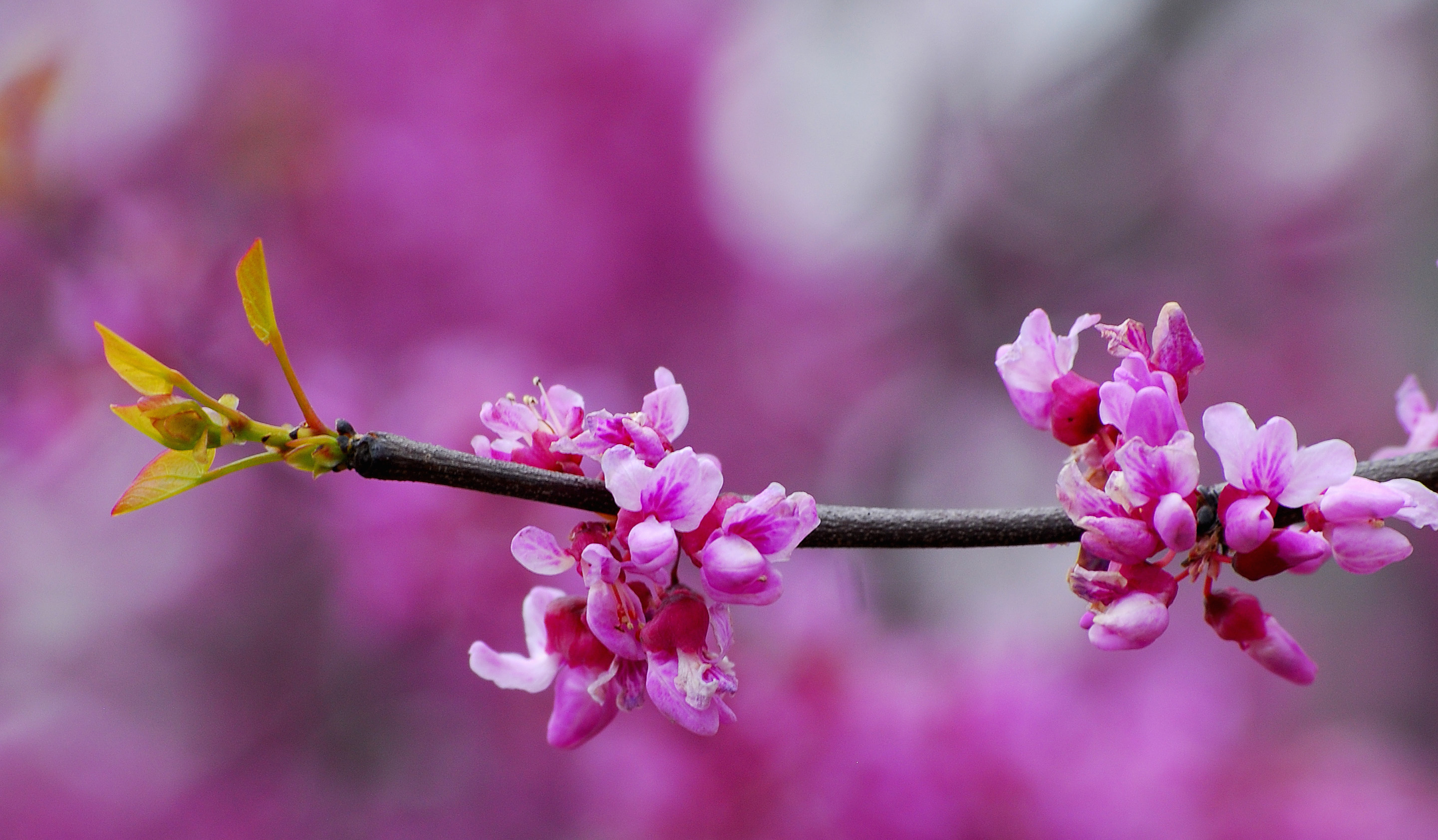
We celebrate the Spring Equinox as a reflection of the birthing time of the year. We have made it through the winter’s cold and ice, experienced the warming of the Earth and the flood waters that prepared for the birth of all that is new. Seeds are germinating and beginning to sprout. We see that around us, depending on where we live. Here in Texas the red buds are in bloom and some of the trees have their fresh green leaves opening up at the tips. Just seeing these indicators, brings an internal feeling of birth. My heart expands in joy when I see my first red bud tree in bloom – the first buttercup opening to the sun!
This is the time that the Goddess makes herself known by birthing all into existence. She first creates day and night and on this day they are equal, only to rise and fall as the year changes. Then She creates the stars, the heavens, the green things upon the earth, the animals and us – all Her children. All of us glistening in Her birth waters, ready to dance in Her rhythms.
I see the creation of day and night in equal portions coming first, as a lesson for all that follows; balance, a moment of equilibrium, manifesting everything else. We attempt to have that place of balance in our lives, but know from experience it never stays exactly in the center. All we can do is hope to bring it back as we move between states. It is like the pendulum, swinging back and forth from one side to the center then to the other side, but always seeking center.Continue reading “Spring by Deanne Quarrie”
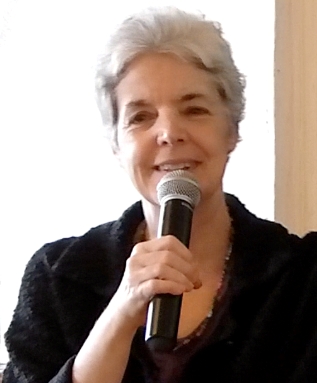
News of Karen Brown’s recent death came via email from a mutual friend of ours, Christine Downing.
There are many things that can be said about Karen’s life and career, including that she won prizes for her life’s work Mama Lola in scholarly associations in the fields of religion and anthropology, that her work has been influential in bringing the study of Vodou into the scholarly mainstream, and that it has been inspiring to women of color.
Here I will focus on the years when our friendship provided crucial support for our audacious scholarly work. I first met Karen through the New York Feminist Scholars in Religion, a group Anne Barstow and I organized in 1974 that nurtured work on women and religion for many of us, including besides me and Karen, Judith Plaskow, Naomi Goldenberg, Ellen Umansky, Lynn Gottlieb, Beverly Harrison, Nelle Morton, Elisabeth Schussler Fiorenza.
My friendship with Karen was sparked by the explosion that occurred in the New York feminist scholars group when Anne Barstow and I spoke in the fall of 1976 about our attractions to the Goddess. Our presentations evoked a great conflagration, which I remember as coalescing around Beverly Harrison’s authoritative and authoritarian statement that there can be no ethics in Goddess religion because ethics comes from a transcendent source—not from nature. Karen was among those who responded tentatively that she was not so sure Beverly was right.
In the discussions that continued over the academic year, Karen and I exchanged meaningful glances, supported each others’ comments, and finally met for a few longer conversations shortly before I left New York to take up a new teaching position in California. Karen was then in the process of leaving her husband and moving into the magnificently quirky loft apartment that she would decorate with Haitian art in Tribeca on the lower west side of New York City.
I offered to do a house blessing for Karen’s new apartment, and she agreed. We blessed the thresholds and the corners of each room with salt and water and incense, and Karen spoke of the new life she hoped to begin in her new home. Later Karen told me that Alourdres (Mama Lola) insisted on blessing the house again and that the rituals were nearly the same.
During the years Karen lived in the Lower West Side from 1977 to 2001 or 2002, I stayed with her several times a year when conferences and lectures brought me to and through New York and on my way back and forth from teaching in Greece in the summers. During that time we had many long and intimate conversations in which the details of our lives were interwoven with the details of our work.
Carol Christ & Karen Brown 1985
Our friendship was important to both of us, not only because we were pioneers in the study of women and religion, but also because within it we were becoming a minority within a minority as our work took us outside an increasingly Christian-dominated field. Our conversations ranged fluidly around many subjects including: leaving Christianity; the importance of female symbolism for divinity; whether we need male Gods of war or not; religions that focus on the divine and human connection to nature; similarities and differences between Goddess and Vodou rituals and altars; healing; female leadership styles; the experience of living between cultures; and our common struggles to find a voice in which to write about what we were discovering.
Karen and I were in the process of rejecting the dispassionate voice of scholarly objectivity and searching for a way to write that combined scholarly research with the passion to know the world more deeply and to think about it clearly that inspired our work. Our conversations with each other were a lifeline, as we had no role models for the personal paths we were exploring or for the new ways of writing our scholarship with which we were experimenting. We quite literally “heard each other into speech” to quote the phrase Nelle Morton used to name the importance of our female conversations.
I happened to visit Karen shortly after she underwent her initiation into Vodou, which was at about the same time that I experienced what felt to me like revelation at the temple of Aphrodite in Lesbos. We both felt that we must incorporate these moments into our writings, but we also were afraid to do so because we feared that others would call us heretics and dismiss our writing as unscholarly. Karen and I spoke publicly of these experiences on a panel organized by Rita Gross at the American Academy of Religion in 1985 that was published in Journal of Feminist Studies in Religion 3/1 (1987).
Karen received more scholarly recognition for her transgressions than I have. This is in part due to a greater interest in difference among anthropologists than among theologians. However, Karen often told me that scholarly recognition is not the only way to judge the importance of feminist contributions and reminded me that my work has had a major impact within and outside the academy.
One day Karen and I were discussing whether she could fully embrace Haitian culture and whether I would become Greek. Invoking the Vodou concept of living “between the worlds” of the spirit and ordinary reality, she said that this was how she understood herself: she could never be nor would she want to be Haitian, but neither would she ever be fully American or Christian again. She added that one of the reasons she felt comfortable living between worlds was that she had never felt comfortable in her own culture.
In the intervening years, I have thought about this conversation many times. While there was once a time when I wanted to become Greek and leave my American culture behind, I have come to realize that this is not possible. Like Karen, I live between worlds and find my greatest comfort in belonging to two worlds and to neither. This insight is only one of the many gifts I gained though my friendship with Karen McCarthy Brown.
Remembering Karen, let us bless the Source of Life, and the cycles of birth, death, and regeneration.
When I first began to think about female language and images for God I imagined that changing God-He to God-She and speaking of God as Mother some of the time would be a widespread practice in churches and synagogues by now. I was more worried about whether or not images of God as a dominating Other would remain intact. Would God-She be imaged as a Queen or a Woman of War who at Her whim or will could wreak havoc on Her own people?
Forty years later, very little progress has been made on the question of female imagery for God. I suspect that most people in the pews today have never even had to confront prayers to Sophia, God the Mother, or God-She. Most people consider the issue of female language in the churches to have been resolved with inclusive language liturgies and translations of the Bible that use gender neutral rather than female inclusive language.
“Loving, knowing, and respecting our bodies is a powerful and invincible act of rebellion in this society.”
~ Inga Muscio
I do not remember the first time I ever saw her, but I do know that I have loved the Goddess of Willendorf sculpture for many years. When someone uses the phrase, “Great Goddess” or “Great Mother,” she’s the figure I see. To me, she honors the female form. I love her full-figure and the fact that she is not “perfect” or beautiful. I love that she is not pregnant* and what I like best is that she is complete unto herself. She is a complete form, not just a headless pregnant belly. She represents a deep, ancient power to me.
In a past post for FAR, I wrote:
I have a strong emotional connection to ancient Paleolithic and Neolithic goddess sculptures. I do not find that I feel as personally connected to later goddess imagery, but very ancient figures call to something deep and powerful within me. I have a sculpture of the Goddess of Willendorf at a central point on my altar. Sometimes I hold her and wonder and muse about who carved the original. I almost feel a thread that reaches out and continues to connect us to that nearly lost past—all the culture and society and how very much we don’t know about early human history. There is such a solid power to these early figures and to me they speak of the numinous, non-personified, Great Goddess weaving her way throughout time and space.
Water is the daily necessity for earth’s creatures.
When the Continental Celts were looking for a new homeland, they ventured west from the known river valleys of the great landmass we call Eurasia. Just beyond the great mountains, the Alps, they discovered sweet and abundant water, fertile soil, expansive woodlands, and the plentiful fish, game, berries, grasses, fungi and broad-leafed plants necessary to support their tribe.
We know that Celtic spirituality was, in its roots, animistic (spirit was alive in every living thing), non-anthropomorphic (the source of life and death was water, land, plant and animal-life), tribe-specific (in France alone there is evidence of several hundred deities) and a spirituality of place, of the major landforms that defined the world (rivers, springs, forests, animals, heavenly bodies). To the extent that Celtic spirituality was theistic, the creator/sustainer/destroyer of life was typically a goddess. Continue reading “Sequana and Blessed Water by Deanne Quarrie”
My mother-in-law is currently in hospice and expected to cross over any time now. My wife is with her. Those two sentences alone—since I am a woman writing this blog—signify historic/herstoric change. I am a woman and I am writing about my mother in law and I am writing that my wife is with her. We are in a sea change regarding gay marriage. I will be allowed bereavement to go with my wife, when the time comes, for the services.
What has not changed in my life is my dependence on traditional prayer. Although I am a witch/Wiccan, have done all kinds of meditation from Transcendental Meditation, and Buddhist chanting, to visualization, spell work, and New Age affirmation—when push comes to shove as they say, I get out the Rosary.


 This short paper was part of a series of assessment pieces for university where we had to imagine ourselves as people living in a number of ancient cultures. It addresses a very direct question: “Imagine you are in Ancient Greece sometime during the 5th century BCE and a family member is preparing to be initiated into the Mystery Rites at Eleusis. You have come to support them and join in the festival. Briefly describe your experience?”
 From our very beginnings, women have danced with time. Our bodies’ moon cycles have always been a human calendar. As the first agriculturists, we partnered with the seasons to feed our families and communities. When we served as midwives and carers for the dead, we ushered our species into and out of their Earthly lives.
 Sophia was the first


 My mother-in-law is currently in hospice and expected to cross over any time now. My wife is with her. Those two sentences alone—since I am a woman writing this blog—signify historic/herstoric change. I am a woman and I am writing about my mother in law and I am writing that my wife is with her. We are in a sea change regarding gay marriage. I will be allowed bereavement to go with my wife, when the time comes, for the services.
 Feminism and Religion