Sandhill Cranes – a Nation of Women with Wings by Sara Wright

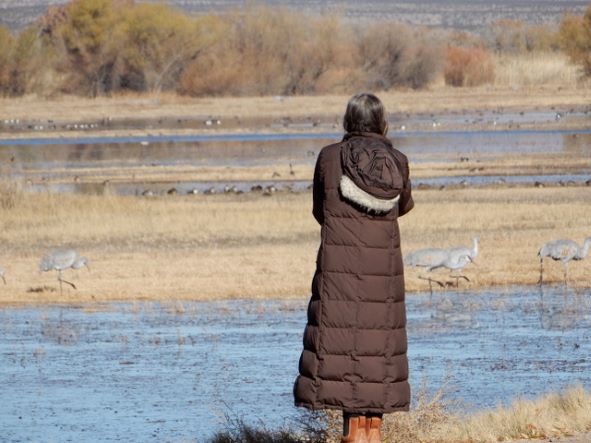
Historically they used the Eastern flyway but were extirpated by hunting… a slow recovery is in process and the stately Sandhill cranes are once again returning to breed in Maine… so far only birders have been keeping track of their numbers but these majestic pre-historic birds have haunting cries that are often described as bugles, rattles, croaks and trumpets and can be heard 2 -3 miles away. They also utter sounds that combine a kind of brrring in unison. Their impending arrival next month calls up a chant I love…

There’s a river of birds in migration, a nation of women with wings.
There’s a river of birds in migration, a nation of warriors with wings.”

I remember the chill that crawled up my spine as those words seeped into my body all those years ago… I wept, not knowing why.

Continue reading “Sandhill Cranes – a Nation of Women with Wings by Sara Wright”

Magic Seed Moon Meanderings by Sara Wright

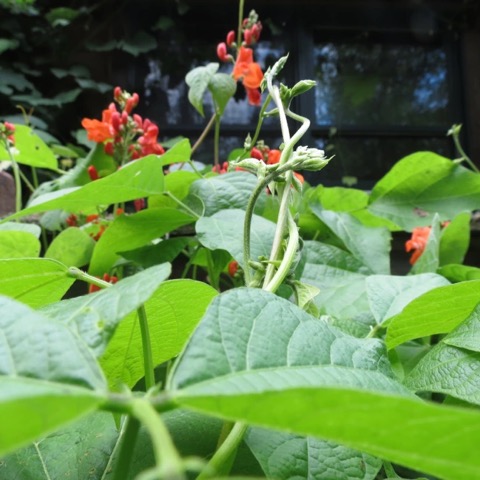
Without thinking I threw the old seed into a bag of moist liverworts that I would be looking at under a powerful microscope with my scientist friend Al in a couple of days. I have no idea why I added the seed. The scarlet runner was one I kept in a winter bouquet that I had recently dismantled. The purple and rose bean had to be four or five years old. It would not germinate now …

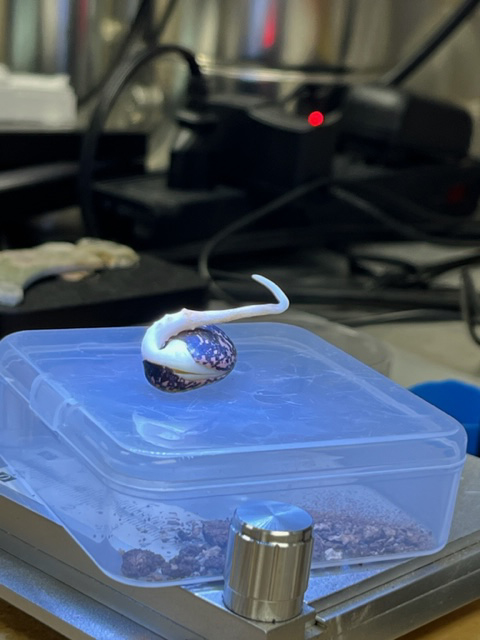
Imagine my astonishment when I opened the bag in the lab. The bean had sprouted! The fat twisted root was hunting for earth. Carefully I re – wrapped the bean and put it in a little container until I could get home and plant it, but not before we looked at it under the microscope. More about that later.

Continue reading “Magic Seed Moon Meanderings by Sara Wright”

The Mighty Oak or Acorn? by Sara Wright

Most of us are familiar with the mythology around oak trees. They are considered oracular beings in many traditions. The Druids considered  them to be sacred, the Greeks associated oaks with Zeus –( patriarchy strikes as the ‘ king’ of trees). In Britain there was a goddess of oak trees….but in general oaks are considered to be male beings though they bear seeds and flowers on one tree.

 Mighty male trees ? Nothing could be further from the truth in terms of behavior because oaks are found all over the world and in this country they are what is considered to be a keystone species. What this means is that oaks support and nurture an incredible amount of animals, insects and birds. A ‘ Mother ‘Tree in every way. We have four species in this country, one of which clones itself and behaves like a bush. It is believed to be about 1300 years old ( found in the west).Throughout the world oaks are also considered to be keystone species.

Continue reading “The Mighty Oak or Acorn? by Sara Wright”

Aging and Kinship by Sara Wright

When I moved to the mountains my children were grown and gone…

Finally I had land of ‘my’ own with a brook and mountains that was surrounded by forests. I felt protected by something I could not name. I was living on the edge of wilderness and a hunger I had been carrying for all of my adult life was finally appeased.

Although I had a vegetable and flower garden I felt a deep reluctance to cut trees and eventually lost most of my field to pines. When I finally built my log cabin, I did plant fruit trees, but every action was predicated on my need to give back to nature what she had given to me.

Continue reading “Aging and Kinship by Sara Wright”

Seeding Up by Sara Wright

Every spring it’s the same… the hunger to begin starting seeds. As a woman and an eco -feminist I am convinced that this need to work with seeds and soil is an ancient pattern that stretches back to our egalitarian matriarchal beginnings.

Some of us like me come from a family of gardeners so there is something to say about the influence of our ancestors directing this process on a personal level. Both patterning and ancestral influences seem to work together. Another “both and”.

After I broke my foot last year I was forced to cease gardening altogether out of necessity because I could no longer use a shovel. If I am really honest I can say I was more than ready to let go. I have grown both vegetables and flowers since I was a child, then while raising a family. At mid – life when I moved to the mountains I made (what seems today) a radical decision. I decided to plant trees, plants and flowers primarily for non – humans in a small area around my house. Nature determined what grew and thrived on the rest of my land. Today people call this re-wilding but then my intention was simple. I wanted to give back to nature what S/he had given to me. I wanted nature to be the receiver.

Continue reading “Seeding Up by Sara Wright”

Seeds of Hope: Part Two by Beth Bartlett

You can read part 1 here.

The patenting of seeds[i] has made the thousands-year-old practice of seed saving illegal, as is the sharing of seeds from farmer to farmer. The most notorious case is that of Canadian farmer Percy Schmeiser, whose canola crops were contaminated with Roundup Ready canola pollen blown into his fields from neighboring corporate farms. When Monsanto trespassed onto his fields, took samples, and found Roundup Ready canola plants mixed in with Schmeiser’s own canola plants, they sued him for violation of patents. Ultimately, the Canadian Supreme Court ruled in favor of Monsanto, but also ruled that Schmeiser owed Monsanto nothing.

In my own city, seed sharing became an issue when in 2013 our local library decided to start a seed library. The project was begun with great hopes that patrons could check out seeds for their home gardens, with the understanding that they would save a portion of their seeds and return these to the library for next year’s use. [ii] Project leaders hoped this would preserve locally adapted seed varieties. Unfortunately, after the seed library came to the public’s attention, the Minnesota Department of Agriculture informed the library that they were in violation of a Minnesota statute that prohibited the exchange of non-commercial seeds. [iii] Library Manager Carla Powers commented, “ . . . the law went so far as to make it illegal for gardeners to exchange a handful of seeds with one another.”[iv] But this did not end the library’s efforts.  Several ally organizations[v] stepped up to create an amendment to the statute that exempted the exchange of non-commercial seeds from testing, labeling and licensing laws. This inspired a state-wide effort to change the law, which was successfully accomplished in that year’s legislative session.[vi]

Continue reading “Seeds of Hope: Part Two by Beth Bartlett”

Seeds of Hope: Part One by Beth Bartlett

Author’s Note: This piece was inspired by Janet Maika’i Rudolph’s wonderful FAR post of December 15th, 2022, “Ode to Seeds.”

“. . . I know, yes, there is renewal, /because this is what the seeds ask of us/ with their own songs/ when we listen to their small bundle of creation,/ of a future rising from the ground . . .” – Linda Hogan

The first seed catalogs started arriving in the mail even before the turn of the new year.  In an annual ritual of hope, in the depths of winter we turn our thoughts and dreams to growing things – seeds of heirloom tomatoes, cucumbers, squash, carrots, and beans that will feed us and grace our tables in the summer and fall, and colorful marigolds, nasturtiums, and zinnias that will delight all summer long with their beauty. Is this the invincible summer of which Camus wrote?[i] 

Continue reading “Seeds of Hope: Part One by Beth Bartlett”

A Womanist’s Perspective by Sara Wright

Last night I was listening to plant scientist Monica Gagliano who is pushing the boundaries of what we know about plants. She proved that plants respond to the sound of water by moving toward it and cannot be tricked. Bio-acoustics is the study of sound and Monica is researching other ways that plants communicate. We know they use chemical messengers to warn each other above ground and below through the mycelial network thanks to the work of Suzanne Simard who I shall discuss in a moment. We have learned that plants emit electrical impulses. But Monica is studying another way that plants communicate. She says they listen to all the plants around them and learn from each other so that they do not have to re-invent the wheel with each generation. In one amazing memory experiment mimosa plants taught her that plants remember what happened to them previously and don’t repeat their mistakes. The Mind of Plants was her first book. She also studied with Indigenous healers in the Amazon and discusses this mysterious and compelling journey in her latest book Thus Spoke the Plants.

Continue reading “A Womanist’s Perspective by Sara Wright”

Legacy of Carol P. Christ: Mountain Mother, I Hear You Calling

This was originally posted on July 7, 2014

The mountaintop shrines of Mount Juctas in Archanes, Crete are situated on twin peaks, which may have symbolized breasts. Ancient shrines on the northern peak date from 2200 BCE until at least the end of the Ariadnian (Minoan) period in 1450 BCE. A crevice in the rock was filled with offerings of pottery, clay images of women and men in ritual dress, diseased bodies and body parts, sheep and cattle, and other objects. Excavations to a depth of 13 meters did not reach the bottom layers. Many offerings had been burned, suggesting that the objects were first thrown into fire and then dropped into the crevice. People who climbed the mountain for the festivals would have spilled over both peaks and there may have been shrines as well as fires on both of them.

Continue reading “Legacy of Carol P. Christ: Mountain Mother, I Hear You Calling”

Answering a Call by Sara Wright

“Shamans bridge the night flow…” the first lines from a poem I wrote long ago keep coming into my mind. Frustrated because I can no longer access the poem, I accept that the first line is what I need… ‘bridging the night flow’ of intrusive negative feelings/actions on the part of others (as well as myself) is precisely the edge I am on. Even smoke – filled rooms remind me that I need personal protection.

 An Indigenous healer and impeccable scientist and naturalist friend of mine reminds me of what I know, spiritual forces are moving. When I told him of my dream his response was to focus on protection, create the intention, and let it go… I tried to do this in my mind with limited success but apparently our discussion around this subject opened a door for me or we both did as I remembered how important it is for me to ground my intentions in something concrete. How had I forgotten?

Continue reading “Answering a Call by Sara Wright”