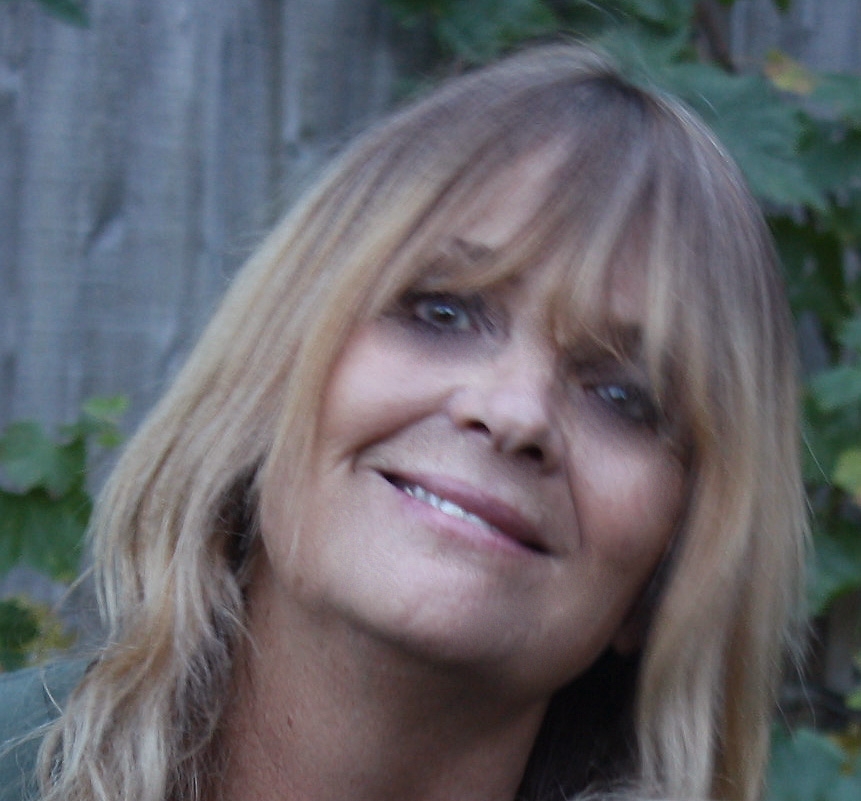
Why Should We Care About Birds? By Carol P. Christ

I believe that we should we care about birds because it is right to do so.  If we do not, we will contribute to extinction of species, and we will leave a diminished world to those who come after us. We must not give up hope that we can save the world for birds, for other wildlife, and for our children’s children.

On February 2, 2012, the International Day for Wetlands, the Greek government signed into law a Presidental Directive mandating protection of the small wetlands of the Greek islands.  There is no assurance that this law will be enforced.  There are still no measures in effect to protect most of the larger wetlands in Greece, even though this is required by the European law Natura 2000, which requires all of the countries in the European Union to protect bird and wildlife habitats.

When I became a birdwatcher, I could not have told you what a wetland is.  Now I know that wetlands are fragile bodies of water shallow enough for wading birds from flamingoes to sandpipers to stand in “without getting their bottoms wet” while feeding on shrimp, small fish, frogs, and other watery treats.  Wetlands often take the form of pools near the sea, but they also include the deltas at river mouths and seasonally flooded fields.  In the twentieth century and today many wetlands were designated “swamps” and drained. Continue reading “Why Should We Care About Birds? By Carol P. Christ”

When the Bough Breaks, the Cradle will Fall: Ecofeminism and the Problem of Population Density By Ben Siegel

This  post is written in conjunction with the Feminist Ethics Course Dialogue project sponsored by Claremont School of Theology in the Claremont Lincoln University Consortium,  Claremont Graduate University, and directed by Grace Yia-Hei Kao.

Ben Siegel is a 2nd year graduate student at the Claremont School of Theology, working on his M.A. in Religion, Hebrew Bible and Ancient Near Eastern Studies. He is a loud-mouthed native New Yorker, a Jewish atheist, a passionate feminist, an unapologetic tree-hugger, a raging comic book nerd and long-time lover of punk rock music.

According to the U.S. Census Bureau’s World Population Clock,* the earth sustains the lives of approximately 6,976,289,710 human beings and counting. Unfortunately, the carrying capacity of our planet is anything but unlimited. Unmanaged population growth will demand, among other things, encroachment into more hitherto unindustrialized regions, meaning further despeciation and environmental degradation. A globalized capitalist economy, seemingly undaunted by such paltry concerns as labor laws and emissions standards – with its preference for monocultural farming techniques and yields – threatens to eliminate biodiversity in the pursuit of a broader profit margin. This begs the question: are we demanding too much of Mother Earth?  Continue reading “When the Bough Breaks, the Cradle will Fall: Ecofeminism and the Problem of Population Density By Ben Siegel”

Is the Prophetic Vision of Social and Ecojustice the Fruit of the Poisonous Tree? By Carol P. Christ

Carol P. Christ earned her BA from Stanford University and her Ph.D. from Yale University.  She is a founding mother in the study of women and religion, feminist theology, women’s spirituality, and the Goddess movement and work has revolutionized the field of feminism and religion.  She has been active in anti-racist, anti-war, feminist, and anti-nuclear causes for many years.  Since 2001 she has been working with Friends of Green Lesbos to save the wetlands of her home island.  She drafted a massive complaint to the European Commission charging failure to protect Natura wetlands in Lesbos.  In 2010 she ran for office in Lesbos and helped to elect the first Green Party representative to the Regional Council of the North Aegean.  She helped to organize Lesbos Go Green, which is working on recycling in Lesbos.

My hope for the new blog on Feminism and Religion is that it can become a place for real discussion with mutual respect of feminist issues in religion and spirituality.

I agree with Rosemary Radford Ruether who argued in a recent blog “The Biblical Vision of Ecojustice” that the prophets viewed the covenant with Israel and Judah as inclusive of nature. Indeed in my senior thesis at Stanford University on “Nature Imagery in Hosea and Second Isaiah,” in which I worked with the Hebrew texts, I argued that too. I also agree that the dualism Rosemary has so accurately diagnosed as one of the main sources of sexism and other forms of domination comes from the Greeks not the Hebrews. I agree that Carolyn Merchant is right that nature was viewed as a living being in Christian thought up until the modern scientific revolution. I agree with Rosemary that it is a good thing for Christians to use sources within tradition to create an ecojustice ethic. I am happy that there are Christians like Rosemary who are working to transform Christianity.  Finally, I am pleased to admit that I have learned a great deal from her.

Continue reading “Is the Prophetic Vision of Social and Ecojustice the Fruit of the Poisonous Tree? By Carol P. Christ”

The Biblical Vision of Ecojustice By Rosemary Radford Ruether

“The earth mourns and withers, the world languishes and withers, the heavens languish together with the earth. The earth lies polluted under its inhabitants, for   they have transgressed the laws, violated the statutes,  broken the everlasting covenants. Therefore a curse devours the earth and its inhabitants suffer for their guilt.” Isaiah 24: 4-6a.

“They shall not hurt or destroy in all my holy mountain for the earth shall be full of  knowledge of the Lord,” Isaiah 11: 9.

The 1970’s until today has been a time of an increasing recognition that the western industrial style of industrial development is unsustainable, although this has yet to be acknowledged by leaders of corporate growth. This system of development, based on an affluent minority using a disproportionate share of the world’s natural resources, is fast depleting the base upon which it rests. To expand this type of industrialization is accelerating the coming debacle. We need an entirely new way of organizing human production and consumption in relation to natural resources, one that both distributes the means of life more justly among all earth’s people and also uses resources in a way that renews them from generation to generation.  Continue reading “The Biblical Vision of Ecojustice By Rosemary Radford Ruether”