My daughter Joy, in so many ways, is like my mother Vera–competent, feisty, determined, smart, no-nonsense, generous, gracious, and loving. Many of her mannerisms mimic Vera’s as well, yet Joy barely knew my mother. She died soon after Joy’s fifth birthday. Unlike both my mother and me, though, Joy came into the world wired with a feminist vision. Comfortable in her own skin from the “get-go,” she did not shrink from asserting her right (quietly–she’s an introvert) to participate in whatever caught her fancy “out there.” She always had a strong sense of autonomy and resists, along with other feminists, when men (or to be more accurate–the patriarchal social system that informs us) attempt to shape public policy based on (primarily) men’s experiences and political agendas.
It took some time for me to understand the structured (and toxic) nature of gender inequality within our society, and even more time to learn to “speak that truth to power.” During Joy’s formative years, I tried my best to instill into her what I had been taught–women were created primarily to be “help-meets” for their husbands and by extension, men. Joy never bought into that “truth.” I could tell by the way she lived. For example, Joy liked to cook. When she prepared a dish, she balked if (when) family members just helped themselves to the fruits of her labor. She insisted they first ask to partake of the food she prepared. She would not be taken for granted. Continue reading “My Tribute to Joy and Vera by Esther Nelson”
My sister once said about me, “One thing you have to understand about Elise—she takes the ritual of whole thing very seriously.” My sister was right and her words helped me see this quality about myself. What ritual was she talking about me taking so seriously? Happy hour on Fridays.
It was a different season of my life when she said this. I don’t have Friday happy hours regularly anymore, although I did gather with my friends nearly every week for food and drinks for many years throughout my 20s and 30s. It was often on Fridays, but at one point it was Wednesdays and then, for about a year, it was Thursday nights after a late shift at work.
More recently, I would meet a friend for crepes at the farmers’ market on Saturday mornings. Although the day and the time and specifics of these gatherings would vary, the act of setting aside a weekly time to connect with people dear to me and relax as we indulged in good food or drink was a ritual to me.
Last year a friend of mine who is also a professor, a professor of Philosophy, initiated an email conversation with me to casually dialogue and ask some questions about feminism, a topic about which he had only limited knowledge. During this conversation, he asked a particularly pointed question which I will paraphrase here:
“Sara, do you think that ‘popular feminism’ or the kind of feminism we see in social media, particular political organizations or popular culture ends up getting to define feminism for larger society (and isn’t this representation a bit limited or behind what feminism has actually become)?”
His question stayed with me for quite some time and was echoed by members of the Women’s Caucus at the 2014 meeting of the American Academy of Religion, Western Religion (AAR/WR). Who defines feminism for society today? Who is defining what feminism is becoming? Who wants to be a feminist? Who ‘gets’ to be a feminist now?
Reflecting on these questions personally last year, I found myself a little lost… My daily exposure to feminism via social media sometimes felt like I was watching a constant battle between those who identified as feminists and those who found feminism wanting, inadequate, harmful or even hateful. Yet, much of my professional experience working with feminism, at the same time, also involved the opposite: purposeful coalition building, training and discussions about allied relationships, and efforts to create inclusive, if agonistic community.
Teaming up to address this issue of representation, power, naming and justice-making, the Queer Caucus and the Women’s Caucus of the AAR/WR co-hosted a panel and groups discussion at the 2015 regional conference this year in March. We asked the panelists to consider the question: “Who ‘gets’ to be a feminist,” encouraging each panelist to directly engage her, his or their own social location, institution and activism when addressing the workshop theme.
By now most, if not all, readers of FAR have read or watched the disturbing YouTube video of University of Oklahoma Sigma Alpha Epsilon (SAE) Fraternity sing their racist chant. The two male SAE members who led the “song” were swiftly expelled by President David Boren, with the National Chapter of SAE shutting down the OU chapter of SAE. Student outcry denouncing the racist behavior ranged from hurt and anger from white students to how are you surprised by black students. At the very minimum the incident was and is occasion for important race dialogue on all college campuses.
The level of comfort and familiarity with the lyrics sung by those on the bus horrified me. The students, both male and female, were dressed in formal attire on their way to an unspecified date function. I flipped between MSNBC and CNN commentaries as the video replayed and the subsequent fallouts unfolded. Yet what I missed was commentary on the complicit nature of acceptance by the other students on that bus; and for the purpose of this post, the young women who gleefully followed along.
I immediately reflected on the writings of Mary Daly and her seminal work, Gyn-Ecology: The MetaEthics of Radical Feminism in which Daly challenges the multiple manifestations of patriarchy’s far-reach on the lives of women as well as female complicity in patriarchy. Daly identifies the practice of Indian Suttee or female foot-binding as one of many examples of Sado-Ritual Syndrome in which she argues, “The history of the footbound women of China provides us with a vivid and accurate image of the way in which women have been coerced into ‘participating’ in the phallocratic processions. The footbound daughter was bound to repeat the same procedure of mutilation upon her own daughter, and the daughter upon her daughter” (41-42). While the literal practice of food-binding has been erased, Daly reminds us patriarchy continues with “insidious forms of mindbinding and spiritbinding in every nation of this colonized planet”(42).
The culpability of the young women (and men) and their Sin of Silence brought swift judgment from me. How I thought, could they so easily participate in something so wrong? Then the related YouTube surfaced of University of Oklahoma SAE House Mom rapping the N-word in the same unconscionable manner as the SAE fraternity’s use of the N-word. I basked in my indignation until I recalled a not-so-distant time when I remained silent in the face of what Daly might call the phallocratic mutilation of women.
The occasion was the appearance of comedian Bill Maher on the campus of Loyola Marymount University during the presidential campaign of the 2008 election. As a political pundit I expected Maher’s material to cover the upcoming election as well as the candidates, one of which was Hilary Clinton. From the start Maher used abusive verbiage associated with female genitalia as a means of contesting her politics. When speaking of the male candidates, his insults/jokes were framed around the substance of their platform and not their bodies. The distinction was not lost on me, or the roar of laughter from the predominately student body.
I recall turning to my female co-workers repeating, “This is wrong, this is not funny! We need to walk-out right now!” “What?” they responded, “Walk out on Maher, you know he’ll make a mockery of us and our bodies if we do such a thing.” They were right. I sat in complete fear trying to find the courage to match my moral outrage with the action of walking out. I recall imagining what horrible names related to the female anatomy he would hurl at me, affirming my deepest body-image sensitivities. So like so many other women when confronted with the repercussions of ugly misogyny I remained silent and in my seat, seething with shame and disappointment by my in-action.
At the time I did not have Daly’s language of female complicity in patriarchy, although this is exactly what occurred. While I self-identified as a feminist, I did not understand the repercussions and reach of a patriarchal system that so easily silences women to their own demise. The seductive nature of this complicity takes form whenever I/we remain silent to its deceptive and phallocratic ways. But speaking up is risky and dare I say, exhausting when you are the lone voice who objects to the tentacles of misogyny, especially when the pushback comes from other women. I have discovered once you leave the safety of your feminist tribe and speak out against misogyny or speak in favor of women from a feminist stance, you are open game for all kinds of insults–with many coming from other women. During these encounters I find my voice softening to a safe whisper. I know my silence can be complicity in and with patriarchy, but the alternative engagement outside of academia leaves me with battle fatigue.
While I continue to hold those on the University of Oklahoma SAE bus accountable for participating in the racist rant, I wonder how the binding of the daughters by the bound mothers facilitated the participation in the phallocratic processions.
Cynthia Garrity-Bond is a feminist theologian and social ethicist, is completing her doctorate at Claremont Graduate University in women studies in religion with a secondary focus in theology, ethics and culture. For the past six years Cynthia has been teaching in the department of theological studies at Loyola Marymount University where she completed both her BA and MA in Theology. Her research interests includes feminist sexual theology, historical theology with particular emphasis on religious movements of women, agency and resistance to ecclesial authority, embodiment, Mariology and transnational feminisms. Having recently returned from Southern Africa, Cynthia is researching the decriminalization of prostitution from a theological perspective.
Reading the story of the Levite’s pîlegeš – found in the Hebrew Bible, Judges 19:1-20:7 – is unlike any other scholastic endeavor I have undertaken.1 The narrative is of a woman who leaves her husband’s house, only to be retrieved by her husband, gang raped on her way to his home, and dismembered upon arrival. This intense violence then escalates to the abduction and rape of more than 400 virgins and the death of many more (Judges 20-21).
The first time I encountered this narrative was while reading Phyllis Trible’s Texts of Terror as an undergrad student. While at the time I did not fully understand the textual nuances Trible points out, I did understand this story was sacred in a way I could not articulate. It was not until years later that I realized I was not truly listening to the story because I had not read it from the pîlegeš’ perspective and was yet to be affected by the horror of it.
An explanation is needed when one calls a story of violence sacred. To clarify, it is the telling of the story that makes it sacred, not the violence. In much of the world today, violence done to women is taboo.2 Not only are the violent acts ignored, but the victim and her retelling of the acts are also often ignored. Perhaps this is because our society is biased towards the perpetrator. Perhaps it is because our faith communities have self-identified as loving and to acknowledge violence is to acknowledge failure. But perhaps it is mostly because violence is hard to process, especially when the violent act is committed against a loved one, and we prefer not to struggle with the presence of violence all around us. Continue reading “Painting Women from Judges – Part 3: The Sacred Account of the Levite’s Pîlegeš by Melinda Bielas”
Last week, Supreme Court Justice Ruth Bader Ginsburg was in the news again, but not for reasons you would expect. She, along with Rabbi Lauren Holtzblatt, penned a feminist essay about the Exodus title “The Heroic and Visionary Women of Passover.” Finding this story was exciting, especially because I am so drawn to the Exodus story (the intrigue and curiosity of which caused me to return to school and study, as one of my main areas of focus, Hebrew Scriptures – along with Archaeology and Ancient Near Eastern History). Now women’s roles in this story are being elevated thanks to Justice Ruth Bader Ginsburg and Rabbi Holtzblatt.
Before I discuss the message and the importance this message brings, I think it is important to know an important fact about Justice Ginsburg. Ginsburg is not observant, but does embrace her Jewish identity. When her mother died, she was excluded from the mourner’s minyan because she was a woman; an event in Judaism that is meant to comfort the mourner, brings a sense of community, and is considered obligatory – a means of honoring our mother/father. This important event left an impression and sent a loud message that inspired and influenced her career path – she did not count – she had no voice – she had no authority to speak. No wonder her life and career focuses so much on women’s rights and equality.
As many of us know, the story of Exodus is focused on two things 1) Moses and 2) liberation from the bonds of servitude and enslavement; women are rarely discussed. In the essay co-authored by Ginsberg, women are described as playing a crucial role in defying the orders of Pharaoh and helping to bring light to a world in darkness. In the Exodus event, God had partners – five brave women are the first among them, according to Ginsburg and Holtzblatt. These women are: Continue reading “Passover and the Exodus: A Feminist Reflection on Action, Hope, and Legacy by Michele Stopera Freyhauf”
News of Karen Brown’s recent death came via email from a mutual friend of ours, Christine Downing.
There are many things that can be said about Karen’s life and career, including that she won prizes for her life’s work Mama Lola in scholarly associations in the fields of religion and anthropology, that her work has been influential in bringing the study of Vodou into the scholarly mainstream, and that it has been inspiring to women of color.
Here I will focus on the years when our friendship provided crucial support for our audacious scholarly work. I first met Karen through the New York Feminist Scholars in Religion, a group Anne Barstow and I organized in 1974 that nurtured work on women and religion for many of us, including besides me and Karen, Judith Plaskow, Naomi Goldenberg, Ellen Umansky, Lynn Gottlieb, Beverly Harrison, Nelle Morton, Elisabeth Schussler Fiorenza.
My friendship with Karen was sparked by the explosion that occurred in the New York feminist scholars group when Anne Barstow and I spoke in the fall of 1976 about our attractions to the Goddess. Our presentations evoked a great conflagration, which I remember as coalescing around Beverly Harrison’s authoritative and authoritarian statement that there can be no ethics in Goddess religion because ethics comes from a transcendent source—not from nature. Karen was among those who responded tentatively that she was not so sure Beverly was right.
In the discussions that continued over the academic year, Karen and I exchanged meaningful glances, supported each others’ comments, and finally met for a few longer conversations shortly before I left New York to take up a new teaching position in California. Karen was then in the process of leaving her husband and moving into the magnificently quirky loft apartment that she would decorate with Haitian art in Tribeca on the lower west side of New York City.
I offered to do a house blessing for Karen’s new apartment, and she agreed. We blessed the thresholds and the corners of each room with salt and water and incense, and Karen spoke of the new life she hoped to begin in her new home. Later Karen told me that Alourdres (Mama Lola) insisted on blessing the house again and that the rituals were nearly the same.
During the years Karen lived in the Lower West Side from 1977 to 2001 or 2002, I stayed with her several times a year when conferences and lectures brought me to and through New York and on my way back and forth from teaching in Greece in the summers. During that time we had many long and intimate conversations in which the details of our lives were interwoven with the details of our work.
Carol Christ & Karen Brown 1985
Our friendship was important to both of us, not only because we were pioneers in the study of women and religion, but also because within it we were becoming a minority within a minority as our work took us outside an increasingly Christian-dominated field. Our conversations ranged fluidly around many subjects including: leaving Christianity; the importance of female symbolism for divinity; whether we need male Gods of war or not; religions that focus on the divine and human connection to nature; similarities and differences between Goddess and Vodou rituals and altars; healing; female leadership styles; the experience of living between cultures; and our common struggles to find a voice in which to write about what we were discovering.
Karen and I were in the process of rejecting the dispassionate voice of scholarly objectivity and searching for a way to write that combined scholarly research with the passion to know the world more deeply and to think about it clearly that inspired our work. Our conversations with each other were a lifeline, as we had no role models for the personal paths we were exploring or for the new ways of writing our scholarship with which we were experimenting. We quite literally “heard each other into speech” to quote the phrase Nelle Morton used to name the importance of our female conversations.
I happened to visit Karen shortly after she underwent her initiation into Vodou, which was at about the same time that I experienced what felt to me like revelation at the temple of Aphrodite in Lesbos. We both felt that we must incorporate these moments into our writings, but we also were afraid to do so because we feared that others would call us heretics and dismiss our writing as unscholarly. Karen and I spoke publicly of these experiences on a panel organized by Rita Gross at the American Academy of Religion in 1985 that was published in Journal of Feminist Studies in Religion 3/1 (1987).
Karen received more scholarly recognition for her transgressions than I have. This is in part due to a greater interest in difference among anthropologists than among theologians. However, Karen often told me that scholarly recognition is not the only way to judge the importance of feminist contributions and reminded me that my work has had a major impact within and outside the academy.
One day Karen and I were discussing whether she could fully embrace Haitian culture and whether I would become Greek. Invoking the Vodou concept of living “between the worlds” of the spirit and ordinary reality, she said that this was how she understood herself: she could never be nor would she want to be Haitian, but neither would she ever be fully American or Christian again. She added that one of the reasons she felt comfortable living between worlds was that she had never felt comfortable in her own culture.
In the intervening years, I have thought about this conversation many times. While there was once a time when I wanted to become Greek and leave my American culture behind, I have come to realize that this is not possible. Like Karen, I live between worlds and find my greatest comfort in belonging to two worlds and to neither. This insight is only one of the many gifts I gained though my friendship with Karen McCarthy Brown.
Remembering Karen, let us bless the Source of Life, and the cycles of birth, death, and regeneration.
“I stood in the authenticity of my being: Black, preacher, Baptist, woman. For the same God who made me a preacher made me a woman, and I am convinced that God was not confused on either account.”
– Reverend Dr. Prathia Hall
These words came across my Facebook feed on Sunday in celebration of International Women’s Day. Reconciling Ministries Network put the statement on its Facebook page, along with a picture of Prathia Hall preaching from the pulpit, in remembrance and honor of women leaders who contributed to the US Civil Rights Movement. This past Sunday, March 8, when the quote was displayed, marked the 50th anniversary of Selma’s Bloody Sunday. Prathia Hall was a leader in the Student Non-Violent Coordinating Committee (SNCC) and one of the activists on the Edmund Pettus Bridge who were attacked as they began to march from Selma to Montgomery, Alabama. Later in her life, she became an ordained minister, professor, and womanist theologian.
For me, this past weekend was about remembrance through many forms. While there were many events commemorating Selma and the important events that unfolded there 50 years ago, my family and I were focused on a more intimate form of remembrance. On Saturday, we held a dinner and informal memorial service for my godfather who passed away last month. I got the news of his death on a day when I’d been doing some deep soul-searching and reflecting about the image I present to the world and its correspondence with who I am and desire to be. Just a few days prior, I’d spoken to my godfather about his health and subsequently, I had been questioning how I might be more connected to him. We lived several states apart, and I wondered how I could be a good goddaughter to him despite the distance. Those questions are left unanswered in the wake of his death. Continue reading “Role Play: In Search of the Authenticity of My Being by Elise Edwards”
We live in a youth-obsessed culture. The cosmetic industry pushes wrinkle creams and hair dye on us while celebrities resort to Botox and surgery to preserve an illusion of eternal girlhood. We live longer than ever before, yet advancing age, once a mark of honour, has become a source of shame.
But what happens when women embrace midlife as an inner awakening and call to power?
One such woman was Saint Hildegard von Bingen (1098-1179), powerfrau and late bloomer par excellence.
Her youth was dire. Offered to the Church at the age of eight, she was entombed in an anchorage. Though she had been haunted by luminous visions since earliest childhood, she didn’t dare speak of them. Her entire existence was bent on silent submission to her superior, Jutta von Sponheim, an ascetic whose regime of fasting and mortification of the flesh eventually killed her.
Only after Jutta’s demise could Hildegard step out of the shadows and carve out a spiritual life based not on suffering but on celebrating life in all its burgeoning green beauty. Even so she might have remained obscure, lost to history.
But when she was forty-two, everything changed.
“When I was forty-two years and seven months old,” she wrote, “Heaven was opened and a fiery light of exceeding brilliance came and permeated my whole brain, and inflamed my whole heart and my whole breast, not like a burning but like a warming flame, as the sun warms anything its rays touch.”
Dazzling visionary experiences descended upon Hildegard, along with the divine summons to write and speak of her revelations. Reluctantly at first she embarked on her first book of theology, Scivias, or Know the Ways. After putting quill to parchment, she could never go back.
Hildegard went on to found two monasteries, go on four preaching tours, compose an entire corpus of sacred music, and write nine books on subjects as diverse as cosmology, botany, medicine, and human sexuality, thus leaving her indelible mark on history.
Most of us believe we live in a more enlightened age than Hildegard’s—after all, children are no longer offered as tithes to monasteries. Yet many young women find themselves in modern and secular forms of servitude—dead end relationships, soul-crippling jobs, credit card debt, a life of junk food and junk television—all the sadness and waste of an unexamined life.
We don’t need to be visionaries to break free. We just need to remember who we are, that we all serve some higher purpose. Each of us has our own unique gift to give the world.
In youth, it’s easy to be beguiled by the glamour of the surface of things—if we get the right job, the right partner, the right clothes we’ll be happy forever.
But in midlife we are gifted with the maturity to see through the false scripts consumer society hands to us. After a certain age we can see just how absurd it is to kill ourselves to emulate airbrushed supermodels. We realize that the greatest lover in the world can’t fulfill us until we are at peace with ourselves. And so we can let ourselves go. Paint the pictures we’ve always longed to paint. Learn French and travel the world. Dance under the stars. Play the saxophone. Offer our own song to the vast symphony of life.
Remember, it’s never too early or too late to embrace your inner powerfrau.
Mary Sharratt’s book Illuminations: A Novel of Hildegard von Bingenwon the 2013 Nautilus Gold Award: Better Books for a Better World and was a 2012 Kirkus Book of the Year. Her forthcoming novel, The Dark Lady’s Mask, will be published by Houghton MIfflin Harcourt in Spring 2016. Visit her website.
Poppaea Sabina as portrayed on a Roman coin minted 62-65 CE.
As suggested in my first post on Poppaea it is likely she knew one or more of the women Paul refers to in Romans. Of particular interest is the woman Paul refers to as his ‘mother’ (Romans 16:13). If Poppaea knew her she surely knew about Paul. If that was the case, then it seems all but certain Poppaea was among those members of the imperial household to whom Paul refers at Philippians 4:22. Corroboration of that may have been in the source(s) of an anecdote Saint John Chrysostom tells, attributing Paul’s incarceration and execution to Nero’s anger at his interaction with a woman with whom Nero was erotically involved.
Though it is difficult to place much reliance on Chrysostom’s anecdote without more knowledge about his source(s), in the aggregate the evidence for Poppaea knowing about or even meeting with Paul is relatively strong, especially when compared to the sort of evidentiary problems with which ancient historians regularly grapple. Furthermore, it is easy to spot the issue Poppaea would have focused on (that precisely because it relates to sexuality could have led in antiquity to the sort of distortion or misunderstanding of her motivation in meeting with Paul) that may underlie Chrysostom’s anecdote: circumcision. The problem with understanding that issue today, however, ironically relates to modern perceptions of no relevance whatsoever to the ancient evidence. Continue reading “Poppaea & Paul: Was This About A Female Challenge To Male Privilege? by Stuart Dean”



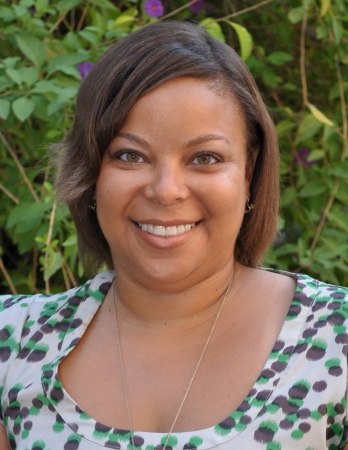 My sister once said about me, “One thing you have to understand about Elise—she takes the ritual of whole thing very seriously.” My sister was right and her words helped me see this quality about myself. What ritual was she talking about me taking so seriously? Happy hour on Fridays.
 By now most, if not all, readers of FAR have read or watched the disturbing
  Reading the story of the Levite’s pîlegeš – found in the Hebrew Bible, Judges 19:1-20:7 – is unlike any other scholastic endeavor I have undertaken.1 The narrative is of a woman who leaves her husband’s house, only to be retrieved by her husband, gang raped on her way to his home, and dismembered upon arrival. This intense violence then escalates to the abduction and rape of more than 400 virgins and the death of many more (Judges 20-21).
 Last week, Supreme Court
 ![Ruth_Bader_Ginsburg_official_portrait[1]](https://feminismandreligion.com/wp-content/uploads/2015/03/ruth_bader_ginsburg_official_portrait1.jpg?w=181&h=235) from the
from the 




