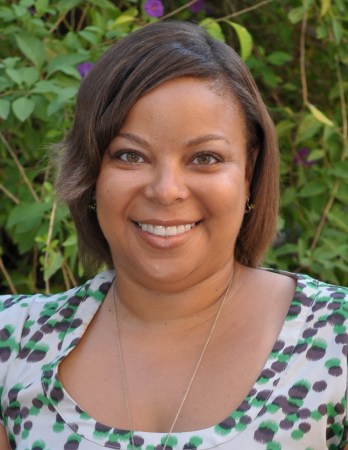
Role Play: In Search of the Authenticity of My Being by Elise Edwards

Elise Edwards“I stood in the authenticity of my being: Black, preacher, Baptist, woman. For the same God who made me a preacher made me a woman, and I am convinced that God was not confused on either account.”
– Reverend Dr. Prathia Hall

These words came across my Facebook feed on Sunday in celebration of International Women’s Day. Reconciling Ministries Network put the statement on its Facebook page, along with a picture of Prathia Hall preaching from the pulpit, in remembrance and honor of women leaders who contributed to the US Civil Rights Movement. This past Sunday, March 8, when the quote was displayed, marked the 50th anniversary of Selma’s Bloody Sunday. Prathia Hall was a leader in the Student Non-Violent Coordinating Committee (SNCC) and one of the activists on the Edmund Pettus Bridge who were attacked as they began to march from Selma to Montgomery, Alabama. Later in her life, she became an ordained minister, professor, and womanist theologian.

For me, this past weekend was about remembrance through many forms. While there were many events commemorating Selma and the important events that unfolded there 50 years ago, my family and I were focused on a more intimate form of remembrance. On Saturday, we held a dinner and informal memorial service for my godfather who passed away last month. I got the news of his death on a day when I’d been doing some deep soul-searching and reflecting about the image I present to the world and its correspondence with who I am and desire to be. Just a few days prior, I’d spoken to my godfather about his health and subsequently, I had been questioning how I might be more connected to him. We lived several states apart, and I wondered how I could be a good goddaughter to him despite the distance. Those questions are left unanswered in the wake of his death. Continue reading “Role Play: In Search of the Authenticity of My Being by Elise Edwards”

Life Begins at 42: Saint Hildegard’s Guide to Becoming a Midlife Powerfrau

hildegard statue appletrees

We live in a youth-obsessed culture. The cosmetic industry pushes wrinkle creams and hair dye on us while celebrities resort to Botox and surgery to preserve an illusion of eternal girlhood. We live longer than ever before, yet advancing age, once a mark of honour, has become a source of shame.

But what happens when women embrace midlife as an inner awakening and call to power?

One such woman was Saint Hildegard von Bingen (1098-1179), powerfrau and late bloomer par excellence.

Her youth was dire. Offered to the Church at the age of eight, she was entombed in an anchorage. Though she had been haunted by luminous visions since earliest childhood, she didn’t dare speak of them. Her entire existence was bent on silent submission to her superior, Jutta von Sponheim, an ascetic whose regime of fasting and mortification of the flesh eventually killed her.

Only after Jutta’s demise could Hildegard step out of the shadows and carve out a spiritual life based not on suffering but on celebrating life in all its burgeoning green beauty. Even so she might have remained obscure, lost to history.

But when she was forty-two, everything changed.

“When I was forty-two years and seven months old,” she wrote, “Heaven was opened and a fiery light of exceeding brilliance came and permeated my whole brain, and inflamed my whole heart and my whole breast, not like a burning but like a warming flame, as the sun warms anything its rays touch.”

Dazzling visionary experiences descended upon Hildegard, along with the divine summons to write and speak of her revelations. Reluctantly at first she embarked on her first book of theology, Scivias, or Know the Ways. After putting quill to parchment, she could never go back.

Hildegard went on to found two monasteries, go on four preaching tours, compose an entire corpus of sacred music, and write nine books on subjects as diverse as cosmology, botany, medicine, and human sexuality, thus leaving her indelible mark on history.

Most of us believe we live in a more enlightened age than Hildegard’s—after all, children are no longer offered as tithes to monasteries. Yet many young women find themselves in modern and secular forms of servitude—dead end relationships, soul-crippling jobs, credit card debt, a life of junk food and junk television—all the sadness and waste of an unexamined life.

We don’t need to be visionaries to break free. We just need to remember who we are, that we all serve some higher purpose. Each of us has our own unique gift to give the world.

In youth, it’s easy to be beguiled by the glamour of the surface of things—if we get the right job, the right partner, the right clothes we’ll be happy forever.

But in midlife we are gifted with the maturity to see through the false scripts consumer society hands to us. After a certain age we can see just how absurd it is to kill ourselves to emulate airbrushed supermodels. We realize that the greatest lover in the world can’t fulfill us until we are at peace with ourselves. And so we can let ourselves go. Paint the pictures we’ve always longed to paint. Learn French and travel the world. Dance under the stars. Play the saxophone. Offer our own song to the vast symphony of life.

Remember, it’s never too early or too late to embrace your inner powerfrau.

Mary Sharratt’s book Illuminations: A Novel of Hildegard von Bingen won the 2013 Nautilus Gold Award: Better Books for a Better World and was a 2012 Kirkus Book of the Year. Her forthcoming novel, The Dark Lady’s Mask, will be published by Houghton MIfflin Harcourt in Spring 2016. Visit her website.

Poppaea & Paul: Was This About A Female Challenge To Male Privilege? by Stuart Dean

Poppaea Sabina as portrayed on a Roman coin minted 62-65 CE.


As suggested in my first post on Poppaea it is likely she knew one or more of the women Paul refers to in Romans. Of particular interest is the woman Paul refers to as his ‘mother’ (Romans 16:13).  If Poppaea knew her she surely knew about Paul.  If that was the case, then it seems all but certain Poppaea was among those members of the imperial household to whom Paul refers at Philippians 4:22.  Corroboration of that may have been in the source(s) of an anecdote Saint John Chrysostom tells, attributing Paul’s incarceration and execution to Nero’s anger at his interaction with a woman with whom Nero was erotically involved.

Though it is difficult to place much reliance on Chrysostom’s anecdote without more knowledge about his source(s), in the aggregate the evidence for Poppaea knowing about or even meeting with Paul is relatively strong, especially when compared to the sort of evidentiary problems with which ancient historians regularly grapple.  Furthermore, it is easy to spot the issue Poppaea would have focused on (that precisely because it relates to sexuality could have led in antiquity to the sort of distortion or misunderstanding of her motivation in meeting with Paul) that may underlie Chrysostom’s anecdote: circumcision.  The problem with understanding that issue today, however, ironically relates to modern perceptions of no relevance whatsoever to the ancient evidence. Continue reading “Poppaea & Paul: Was This About A Female Challenge To Male Privilege? by Stuart Dean”

Who Is Gender Queer? by Carol P. Christ

carol p. christ photo michael bakas“It seems to me that calling oneself queer can be a way of affirming the parts (or all) of oneself that do not fit into the heteronormative paradigm. In my case, though I am white and straight, I am too tall, too smart, too assertive, too strong, too bold, too flashy, too unwilling to be controlled by men to fit the heteronormative paradigm of woman as in every way a little less than man–not as tall, not as smart, not disagreeing too much, not putting herself forward too much, not taking too many risks, not standing out in a crowd, and at least letting men think they are in charge. From this perspective, a whole lot of women are queer.”*

I wrote the above statement in response to a question posed to Vanessa de la Fuente after she called herself a gender queer Muslim feminist. Ivy Hellman asked if it is appropriation for a woman who does not herself identify as LGBTI to identify herself as queer: “where have you left room for queer individuals in their specificity and with their concerns? As a queer person (who happens to be Jewish and not Muslim), I have a problem with this because you end up losing what is particular about a certain group of people and their contributions as well as their particular gifts, struggles and perspectives within Islam (in your case) and Judaism (in mine).”

Vanessa responded that she claimed the term gender queer to describe herself as a feminist Muslim convert with dark skin who along with the “the women who participated in the mosque of women project” was about to “march along with feminist collectives, women theologians, trans women, lesbians, immigrant women, rural women, sex workers women, indigenous women, housemaids unions, all together to call for the early adoption and passing of the bill that legalizing abortion and ask on behalf of all women of Chile that our government hears each of our particular demands .”

I agree with Ivy that it is wrong for others to claim lesbian, gay, Jewish, or Muslim identities as a way of supporting struggles to end discrimination against particular groups. But am not so sure about the term “gender queer.” Though queer theory originally called attention to the ways in which butch lesbians and drag queens challenge gender stereotypes, the word “queer” has broader connotations, including “strange” or “different.”

*

Not long ago my friend Cristina called me “eccentric,” and I cringed. When I was very young, very tall, and very thin, my mother used to say to me, “You should be careful never to  gain weight because then you will not only be taller than the other girls, you will be bigger too.” While recognizing that in many ways I do not fit the “norms” that define the ideal female, I have spent a lifetime trying to pretend that I am “normal.” The idea I might be able to affirm that I am not normal but that I am nonetheless fine just as I am was an idea that my mother and I simply were not able to consider.

When I asked Cristina please not to call me “eccentric,” she responded that for her eccentric is a positive term because the last thing she would want to be is normal. Cristina’s embrace of her eccentricity caused me to wonder why I was still expending so much energy trying to claim my normality.

These questions were in my mind when in a ritual at the Skoteino Cave on the recent Goddess Pilgrimage to Crete, I dropped a stone down a deep hole affirming my desire to let go of my fear of being different. While sitting in meditation in darkness of the cave, I was surprised to hear the words from a Sesame Street song my little brother used to sing form in my mind: “One of these things is not like the others. One of these things just isn’t the same. If you can tell me which thing is not like the others, then we’ll finish our game.”**

As the words from the song swirled in my mind, I found myself physically raising my hand like a school child and while answering silently, “I am. I am the one who is not like the others.” This meditation was powerful because being taunted, excluded, or categorized because of my difference had caused me to spend a life time wanting to be like the others.

*

Before I posted my response to Ivy and Vanessa, I asked my theological pal Judith Plaskow (who like Ivy identifies as lesbian) if she would categorize me as gender queer because I am so much taller than women are supposed to be. She said yes. She went on to say that she gets tired of insisting that a woman can be as smart as she is and still be a woman. Sometimes, she mused, it is easier just to acknowledge that she is gender queer.

I was reminded that identity theories and politics name the experiences of excluded groups in order to call attention to injustice and to offer more inclusive theories. My work on women’s experiences is situated in this framework. While it can be exhausting to explain that women are, can be, and have been different than gender norms have dictated, I (along with Judith) continue to insist that our theories and our politics take account of and value all of women’s multifaceted and intersectional experiences.

Queer theory challenges identity theory by asking whether there are any fixed identities at all. Vanessa speaks to this point when she writes, “I think the beauty of being human is being able to flow, to mutate, to be free of categories and asserting oneself to embrace our quirks and our dark areas and our sorrows and doubts, without wanting to be anyone but myself and without wishing to be anywhere else than in the present moment . . . I am a queer person for many reasons . . . I surrender to the possibilities of life, of my body, of my mind, of my soul.”

As Vanessa states so eloquently, identifying as queer means no longer having to try to fit in, to be like the others, to be normal. Identifying as queer means that it is fine to be different, eccentric, not like the others. It means telling the gender police to “go jump in a lake and swallow a snake and come out with a belly ache.”***

*

Before beginning to write this piece, I watched the most recent episode of Grey’s Anatomy. I was delighted to see the camera focus on the way the character played by Geena Davis (who is six feet tall) “towered over” Arizona, Amelia, and Bailey. I hope Davis’s character will survive her brain surgery because it is such a rare treat for me to see a woman who is different in the way I am different have a part on television program. Thanks to Shonda Rhimes for creating a series where women who are not like the others are celebrated in their difference.

*The quote is edited slightly from the way it appears in the responses to Vanessa’s post.

**The Sesame Street game taught children to identify difference: for example, colors or apples and oranges.

***A children’s rhyme used to respond to being taunted.

Carol leads the life-transforming Goddess Pilgrimage to Crete (facebook and twitter)–space available on the spring and fall 2015 tours.  Carol’s books include She Who Changes and and Rebirth of the Goddess; with Judith Plaskow, the widely-used anthologies Womanspirit Rising and Weaving the Visions; and forthcoming next year, Goddess and God in the World: Conversations in Embodied Theology. Photo of Carol by Michael Bakas.

Being Scared: Fear and Authenticity by Ivy Helman

meblogMy partner is a lawyer who works with asylum seekers and other immigrants here in the Czech Republic (ČR). She’s amazing at her job and I’m constantly in awe of her passion and commitment along with her righteous anger at systematic injustices. In fact just last week, her workplace, together with a consortium of other immigration organizations in the ČR, helped organize a demonstration in the center of Prague to protest the Czech Republic’s refusal to admit Syrian children and their families into the country. She invited me to attend the event with her. I went.

It was my first time attending a public demonstration in Europe. It was moving to see many of her co-workers there and inspiring to listen to the passionate speeches against xenophobia, Islamophobia, racism, the plight of the Roma people as well as the need to come together and welcome diversity. In addition, there were signs in Czech, German and English saying “No One is Illegal,” “End Xenophobia,” “Do Syrian Children Have to Wait for their (Nicholas) Winton?” “I want to have a Syrian Friend!” and “Refugees Welcome!” I wanted to hold each one of those signs! Continue reading “Being Scared: Fear and Authenticity by Ivy Helman”

On Not Being A Big Hollywood Film Director, and Other Life Choices by Marie Cartier

MARIE CARTIER- YOUNGAs you read this, dear FAR community, it will be my 59th birthday. I was born February 27, 1956. I have one year to go before I turn 60. For this last year I desperately wanted to dye my hair blue, purple and green and let the roots go gray.

However in a long conversation with my hair stylist she helped me realize that I have spent so many years dying my hair various shades of brown, dark brown and burgundy that if I bleach the hair out to white (so that I can then go blue, purple and green) the hair will fry and fall out—ah, Ok. I willhair live with my brown, black and burgundy hair until I am ready to go completely gray and watch it grow out (my hairdresser tells me it will take three years). Or I will decide to live with the choice I made to dye my hair since I was 35 or so and let it be and keep dying it – and have that be the choice I made. Continue reading “On Not Being A Big Hollywood Film Director, and Other Life Choices by Marie Cartier”

Abuse Does Not Have “Fifty Shades of Grey” by Michele Stopera Freyhauf

WARNING: This article or pages it links to contain information about domestic abuse and sexual violence which may be triggering to survivors.


Freyhauf, Durham, Hahn Loeser, John CarrollNo matter what you call it abuse is abuse. This is highlighted in the popular book and now movie Fifty Shades of Grey. Because of the stir this book caused, I delved into the first book and my initial reaction was that of repulsion and wonderment. How could a woman let a man control her like that? Why would she let him do things like that to her and continue to come back to him? Why is this book so popular?

Are women sexually repressed in a way that their own sexual experiences are routine and boring (the book is full of BDSM) or they have never orgasmed (every time they have intercourse, Anastasia is guaranteed to orgasm)? Why do we find it okay to label body parts as “love boxes” or “considerable length” or the multitude of references to a man’s penis or woman’s vagina that is meant to sound sexy or romantic? Why does he announce “I am going to f*** you now” every single time they have intercourse? Can’t the reader figure out what is going on without making this announcement?

However, after I got beyond my initial reaction (or shock), I took a step back and became upset and outraged.  In essence, the overall issue with the book can be summed up in one word: control. Some women argue that the awkward doe-eyed virgin journalist exercises control over the sexually deviantPicture from fanpop.com

Picture from fanpop.com

billionaire that keeps him coming back to her – I disagree. I see control exercised by the sexually deviant man over a woman enamored by him in such a way that is sexually, physically, and psychologically exploitative and abusive. Yes – I understand this is fiction, but this type of writing causes immense problems.

In a culture that embraces “Blurred Lines,” money and power, and “the bad boy persona,” this storyline fuels the fodders of the fire with a sensationalism that plays on sexual fantasies and/or those wishing prince charming will sweep them away. One needs to look no further than “The Bachelor” or Bret Michaels’ “Rock of Love” television shows that promote the exploitation of women’s desires to be with the rich handsome man at any cost to self and dignity. In fact, an article posted about the movie stated that if Christian Grey was not a billionaire and behaved in the same way, he would be arrested and labeled a sex offender. So again, is the message we want to send to our daughters, nieces, and friends is that the rich can do whatever they want and you should let him? I think not.

Continue reading “Abuse Does Not Have “Fifty Shades of Grey” by Michele Stopera Freyhauf”

Marion Woodman and Mary Daly – Soul Sisters? by Susan Gifford

Susan Gifford Conscious Femininity was the first book by Marion Woodman that I read August 2010; it is a collection of interviews with Woodman from 1985 to 1992. Marion Woodman was eye-opening to me – I started seeing a connection between the feminine side of “God,” mostly missing in our world today, and the ecological disasters that are looming.

Additionally, I recently read Mary Daly’s book, Beyond God the Father (I was enticed to read it because Sarah Sentilles wrote so movingly about Mary Daly on this forum).  Daly’s writing convinced me, at a deep “gut” level, that any possible “solving” of Earth’s current ecological crisis is directly related to an evolution in human spiritual consciousness – from a patriarchal, hierarchical view of all life to an equalitarian view.  And, this change in consciousness must be preceded by women’s liberation.  These three vital issues (ecological crisis, spiritual consciousness and women’s liberation) are inextricably linked.   Although Woodman connects these issues in a manner very similar to the way Daly links them, evidently I wasn’t ready to “get it” until I read Beyond God the Father. Continue reading “Marion Woodman and Mary Daly – Soul Sisters? by Susan Gifford”

What If There Are Sex Differences But Biology Is Not Destiny? by Carol P. Christ

carol p. christ photo michael bakasTheories about sex differences have been used to keep women in the home and to justify male domination. Because of this, many feminists run as fast as they can from any discussion of them. Last week while thinking again about this question, I realized that the debate about essentialism often turns a flawed syllogism that goes like this:

• If there are sex differences,

• then, biology is destiny.

In fact the conclusion does not follow from the premise. The syllogism assumes that there if there are sex differences they must inevitably determine behavior.

What if there are sex differences, but we have a choice as individuals and societies as to how to negotiate them? This suggests another possible syllogism:

• If there are sex differences,

• we can choose how to respond to them as individuals and societies,

• because biology is not destiny. Continue reading “What If There Are Sex Differences But Biology Is Not Destiny? by Carol P. Christ”

All We Are Saying Is Give Greece a Chance by Laura Shannon

Laura Shannon square cropTen years ago, I went to live in Greece. I knew I would love living in a culture where everyone dances, and so it turned out. I also loved the generosity, hospitality, connection, mutual support, and positivity embodied by the dance, a set of values which goes back thousands of years to Old European culture as articulated by Marija Gimbutas, Carol P. Christ, and Riane Eisler. When the economic crisis struck in 2008, I saw firsthand how Greek people used these values to help each other survive.

On Sunday, Jan 25th, 2015, the Greek people decisively voted into power the anti-austerity party Syriza (SEER-ih-zah), after six years of intense suffering under brutal austerity measures imposed by the IMF, the EU and the European Central Bank.

These three powers together are known as the ‘troika’. The austerity measures required by them in return for the so-called ‘bailout’ loans have been devastating, causing soaring rates of poverty, hunger, unemployment, sickness, and suicide. Times are harder in Greece than in the US during the Great Depression, though you won’t hear the details in the mainstream media. And the cost of this humanitarian crisis is not being counted by anyone.

Continue reading “All We Are Saying Is Give Greece a Chance by Laura Shannon”