When El Presidente decided his war against his people was insufficient, his toadies began throwing very, very tremendous bombs at the university. When one of those very, very tremendous bombs blew up the university library, pages from exploded books floated far out into the country. Some of them spiraled down and landed on the wicked witch’s farm. Among the refugees driven away by this attack upon learning and knowledge were Professor Schroedinger, who had once owned a cat, and Professor Heisenberg, who had proposed that one could know either where a cat was going or how fast it was traveling, but not both. The two physicists and many other new refugees were welcomed by those who had escaped earlier, among whom were displaced performance artists, philosophers, musicians, and scientists.
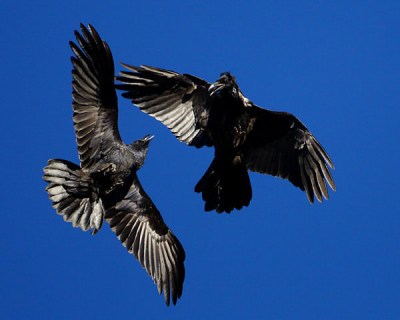 The wicked witch and the senior refugees called a meeting the next day. As people from other farms arrived, the two ravens, Kahlil and Hamilton, also flew in to attend. Everyone gathered in the field where they had magicked the scarecrow.
“My friends,” said the witch to the crowd of newcomers, “you’re welcome here,” she looked around, “though I have no idea where you can sleep. It’s already too crowded. All the farms, indeed, all the small towns past the woods and the river are also overcrowded. Is the capital city empty?”
“It’s nearly empty of people,” said Professor Schroedinger. “It’s just ruins and rubble.”
Kahlil the prophetic raven had been walking around the circle looking for handouts. “Yo, folks,” he said, “like I been sayin’, you’re all in a world a hurt. Yer El Presidente’s got most a th’ army, but since he decided to destroy learning, what else has he got? Nada.” He plucked up a tiny scrap of something that might be edible, then dropped it again. “He’s gonna come to a bad end. An’ that’s my prophecy fer today.” He bowed as everyone applauded, then dived on an eyeball. No. It was a cat’s eye marble. “Phooey.”
“A bad end,” said one of the professors, “is devoutly to be hoped. Ignorance is a dangerous weapon.” He turned to the wicked witch. “Madame, what can we do to ensure that the bad end is ultimately his and not ours?”
By this time, of course, all the refugees both old and new were becoming enraged at El Presidente and his endless war. A muttering was arising among the gathered people, and pretty soon, someone shouted out, “Hey—you professors know how to build bombs, doncha?” “Isn’t that what physicists do?” someone else shouted. “So hows about we build a big ol’ bomb and give El Presidente a taste of his own medicine?” At which nearly everyone raised their fists and began cheering.
The witch raised her hand to try to stop the cheering. “Wait!” she cried out. “If we start hurling bombs, then we become as bad as he is. Do we want that?”
Some of the refugees cried yes, it’s the only way to get back at him, the only way we can go home, while others stopped cheering and considered her question. “No,” some called back, “no, we don’t want to be like him. But what else can we do?”
One of the older refugees tapped Professor Schroedinger on the shoulder. “You did that experiment with your cat,” he said. “How about you just build a bigger box and put El Presidente in it? Then release that fatal gas! Who cares what other universe he goes to as long as he’s not here anymore?”
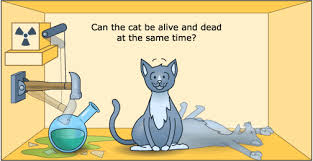 The professor shook his head. “That was a thought experiment,” he said. “And Sweetums, my cat, lived to a fine old age. I have no definitive proof that the thought experiment would work on the macro level in what we call ‘real’ life.” “And,” said Professor Heisenberg, “we have no more scientific equipment.”
While everyone was thinking about this, one of the louder refugees pushed his way through the crowd. When he reached the center, he approached the witch. “You keep saying you’re a wicked witch. Well, prove it! Be wicked! Invent quantum magic! Find a way to send El Presidente to some other universe. Or chop him up into quantums and send parts of him to multiple universes.”
This set everyone to whispering and muttering again. The idea of quantum magic even got the two professors thinking. After a brief conversation, they nodded at each other and turned to the witch. “We may be renowned theoreticians, but you’re the witch. How would this work? Can thoughts become things?”
And so the wicked witch let herself be persuaded. “Build another scarecrow and we’ll see what we can do. Professors, will you assist?”
 A few days later, on the spring equinox when light and dark are equally present, refugees from far around returned to the field and took their places in a huge circle that was many layers of people deep. A new scarecrow (wearing a nice red tie) stood in the center, and the two ravens were dancing on its shoulders. As the wicked witch took her place at the north and cast the magical circle, the ravens flew around the circle nine times.
“Let us begin our magic,” said the witch. “Our honored professors worked on the subatomic level, with particles and waves. One thing they learned is that the particles and waves like to change form and become wavicles. I don’t know what a wavicle looks like…but we have our imaginations! What do you think a wavicle might look like?” She was silent for several minutes as the people built images of wavicles in their minds. “And now we attempt our quantum magic,” she said. “Throw your wavicles at the scarecrow and visualize them going to El Presidente to punish him for his crimes by being dissolved and his parts sent to multiple universes.” A few minutes later, the scarecrow disappeared.
 Barbara Ardinger, Ph.D. (www.barbaraardinger.com), is a published author and freelance editor. Her newest book is Secret Lives, a novel about grandmothers who do magic. Her earlier nonfiction books include the daybook Pagan Every Day, Finding New Goddesses (a pun-filled parody of goddess encyclopedias), and Goddess Meditations. When she can get away from the computer, she goes to the theater as often as possible—she loves musical theater and movies in which people sing and dance. She is also an active CERT (Community Emergency Rescue Team) volunteer and a member (and occasional secretary pro-tem) of a neighborhood organization that focuses on code enforcement and safety for citizens. She has been an AIDS emotional support volunteer and a literacy volunteer. She is an active member of the Neopagan community and is well known for the rituals she creates and leads.


 Introduction by Maeve: Elizabeth’s July post usually features an excerpt from my Chronicles in honor of my feast day, July 22. This year the excerpt comes from the novel that opened the way for my story. Ever since a playdough figure took shape spontaneously in her hands, Esther, a minister’s wife, has been on a quest to find out Who She Is! Here she encounters the Lady as the Virgin Mary. (For my take on the BVM, aka Ma, the scene stealer, see The Passion of Mary Magdalen and Bright Dark Madonna.)
 The raven was standing on the little table in the wicked witch’s private room. Expecting a new kind of feast, he dipped his beak into a bowl of wiggly white worms. And spat them clear across the room. “Great Suffering Succotash!” he exclaimed. “What is this stuff?’
 In her 1975 manifesto, “
 There are quite a few post-apocalyptic shows out these days.
  I have written segments of a novel before for the FAR community several times—starting
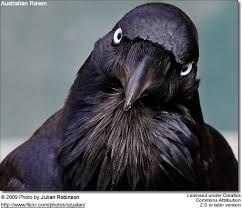 —first there was a dark eye at the window. Then a tap-tap-tapping. Then a long black beak came around the edge of the slightly open window. Then the raven hopped inside. “Oh, goody,” said a gravelly voice. “Eyeballs! I dearly love a tender, juicy eyeball.”
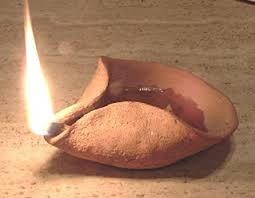 The raven looked around. The tiny room at the top of the tiny wooden house was filled with books and papers written in a dozen ancient languages, which the wicked witch was reading by the light of a sputtering oil lamp with a nearly empty reservoir. “Well,” he told her, “we’re only six weeks past the solstice. Yeah. It’s dark all over. Girlfriend, you could do with a little more light—”
 Feminism and Religion