Margaret Fuller (1810-1850): A Thanksgiving Revelation by Maria Dintino

Moderator’s Note: This piece is in co-operation with The Nasty Women Writers Project, a site dedicated to highlighting and amplifying the voices and visions of powerful women. The site was founded by sisters Theresa and Maria Dintino. To quote Theresa, “by doing this work we are expanding our own writer’s web for nourishment and support.” This was originally posted on their site on November 19, 2024. You can see more of their posts here. 

As the Thanksgiving holiday rolls around, I am reminded of Margaret Fuller’s Thanksgiving revelation, one she later wrote about in her journal. This revelation resonates annually for its gentle reminder of the value of being willingly and patiently engaged, of releasing resistance in the face of what cannot readily be altered.

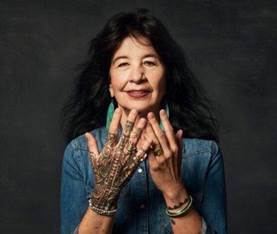
Joy Harjo, American poet, musician, playwright, and author. She served as 23rd US Poet Laureate, the first Native American to hold that honor. (Wikipedia) Learn more at joyharjo.com.

As I re-read Fuller’s account, I think about something former US Poet Laureate Joy Harjo said when she joined us a few years back at Flagler College in St Augustine, Florida for a virtual event. I don’t remember the exact question one of the listeners asked, but I’ll never forget Harjo’s response. She answered, “Every job is a service job.”

The truth in this statement struck me. I’d never considered my many jobs over the years, both inside and outside the home, as service jobs, but indeed they were.

Continue reading “Margaret Fuller (1810-1850): A Thanksgiving Revelation by Maria Dintino”

Of Cruelty and Compassion: Jane Goodall: Messenger of Hope by Beth Bartlett

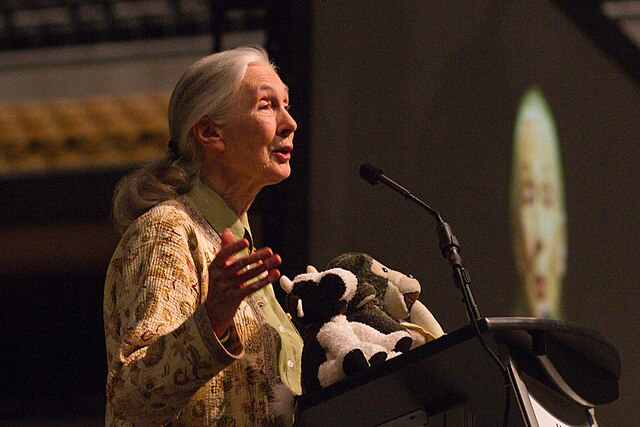
Mark Schierbecker, Wikimedia Commons

During the last week of September I had the opportunity to spend a few days in solitude in a place that is my soul’s home.  I spent part of my time reflecting on questions posed by ecotheologian Mary DeJong to mark the autumnal equinox.  The first question was “What is a desire you carry into the autumn season? What are you seeking?”  After much contemplation, the words that came were, “I wish for a change in government – to be rid of Trump and company – for freedom, equality, respect, for the dignity of all, for an end to the suffering in Gaza and the reign of terror of ICE in this country – the horrors of those being abducted and imprisoned – for an end to cruelty. Yes, for an end to cruelty everywhere.  Why is this country so cruel? I do not understand cruelty. Where does it come from? Why would anyone want to be cruel? How could anyone even stomach the suffering of another?  How does that happen? Yes, I desire an end to cruelty.”

A few days after writing those words, on October 1st, scientist, environmentalist, and humanitarian Jane Goodall passed away in her sleep, prompting me to re-read her book, Reason for Hope. There I found her words echoing my own, “To me, cruelty is the worst of human sins. . . “[i] And while she had not set out to study human cruelty, how we become cruel and how we might move beyond our worst impulses, her work with chimpanzees eventually would lead her to this.

Continue reading “Of Cruelty and Compassion: Jane Goodall: Messenger of Hope by Beth Bartlett”

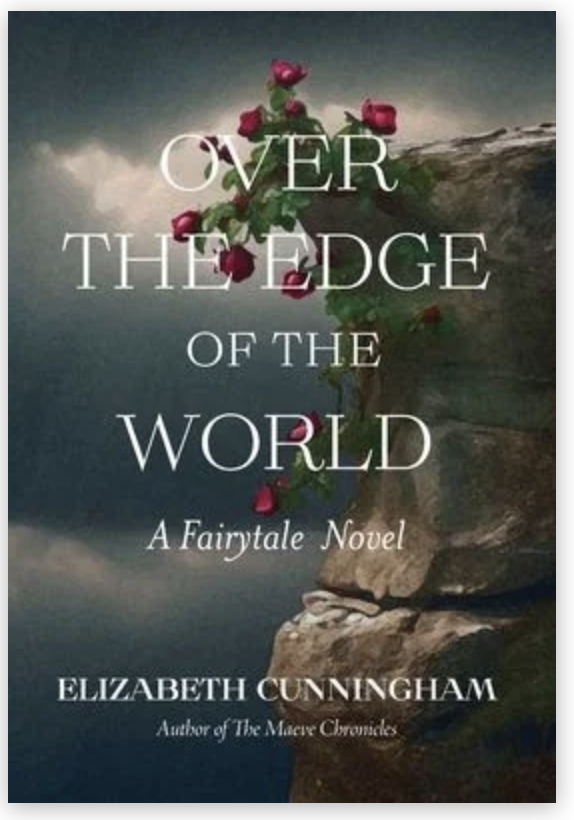
Elemental Grannies: Snippets from Over the Edge of the World, A Fairytale Novel by Elizabeth Cunningham

Introduction: An old woman, Rose begins spinning the tale the children never tire of hearing. Grannies Sweep, Spark, Dirt, and Brine, were old, so old, they forgot who they were and how they came to live where they did: a sheer pinnacle, a walking forest, an old shoe, a ship moored off a hidden shore.

But Rose has never told the whole story—to anyone. The story of a world these children have never seen, where the rich lived inside a vast dome, protected from heat and cold, rain, wind—and hunger. Nor do the children know about madness or cruelty. She has never told them about Noone, the power behind the dome, his obsession with immortality.

If she never tells these stories, who will remember the bravery of the beauty singers who daily risked the ultimate penalty—being thrown over the edge of world. Who will remember the intrepid children who danced defiantly on the dung heaps. If Rose does not tell her own story, who could imagine her birth deep inside the dome, the dangerous secret of her existence. A secret guarded her two huge aunties, once ragged outside boys, who became outrageous bodyguards in towering wigs and heels. To protect the new world and the people she loves, it is time for Rose to tell…

Continue reading “Elemental Grannies: Snippets from Over the Edge of the World, A Fairytale Novel by Elizabeth Cunningham”

Archives from the FAR founders: Rereading Adrienne Rich’s “Compulsory Heterosexuality and Lesbian Existence” by Xochitl Alvizo 

This was originally posted on Feb 10, 2024

I recently reread the essay titled “Compulsory Heterosexuality and Lesbian Existence,” by late poet and essayist Adrienne Rich, with my students this semester. Published in the summer of 1980, on the heels of the Women’s Liberation Movement, I found that the essay still maintains its relevance and challenges us to remember that feminism is a political movement that itself must be continually interrogated.  

The essay (which you can read here, with a foreword from Rich published 23 years after the original) has four sections which are titled only with the roman numbers I-IV. I labeled these sections for my students to try and capture the focus of each: I. Compulsory Heterosexuality – The Groundwork; II. Male Power and the Inequality of the Sexes; III. Lesbian Existence as Political Identity; and IV. Woman-Identification as Source of Power and Energy.  

Continue reading “Archives from the FAR founders: Rereading Adrienne Rich’s “Compulsory Heterosexuality and Lesbian Existence” by Xochitl Alvizo “

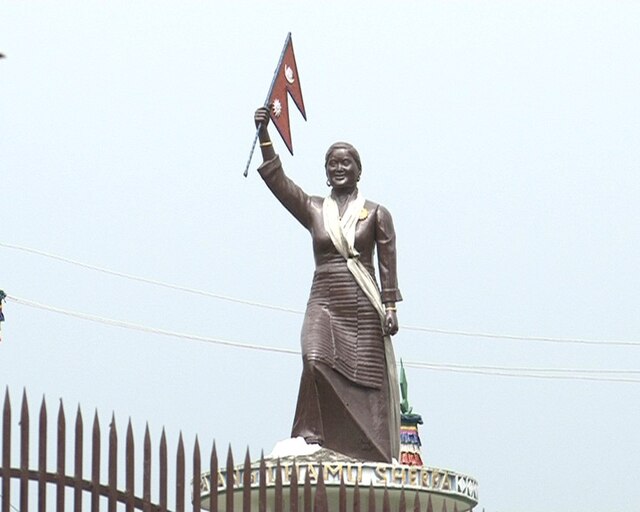
Pasang Lhamu Sherpa: The Fearless Sherpa Lady Who Conquered Everest and Shattered Patriarchy by Bikash Khanal

Introduction: Beyond Being a Mountaineer a Feminist Icon of the Himalayas

Wikimedia common, by Krish Dulal

When we hear the name Mount Everest, the world’s highest mountain, we involuntarily think of rugged, macho explorers battling ice and thin air. Pasang Lhamu Sherpa’s existence defies that stereotype. Not only was she the first Nepali lady to reach the summit of Everest, but she was a living testament to feminine strength, determination, and will. Her life is a stirring affidavit to feminism in its very extreme forms, where gender discrimination is as hard to overcome as the mountains themselves. 

Early Life: A Sherpa Girl Raised Among Giants Dreams beyond Tradition

Born in 1961, in the high-altitude town of Lukla, Pasang Lhamu Sherpa was brought up in the shadow of the Himalayas, under a centuries-long patriarchy-dominated culture. Sherpa women had assumed support roles—cooks, caregivers, assistants to climbing expeditions—while the men assumed the risky climbs.

But ever since childhood, Pasang was captivated by the mountains, her aspirations reaching as high as the mountains themselves. Defying cultural expectations that she seek domesticity, Pasang applied herself diligently and acquired competence which would make her a trailblazer in the years ahead.

Continue reading “Pasang Lhamu Sherpa: The Fearless Sherpa Lady Who Conquered Everest and Shattered Patriarchy by Bikash Khanal”

The Erotic as Power, Notes on Audre Lorde by Janet Maika’i Rudolph

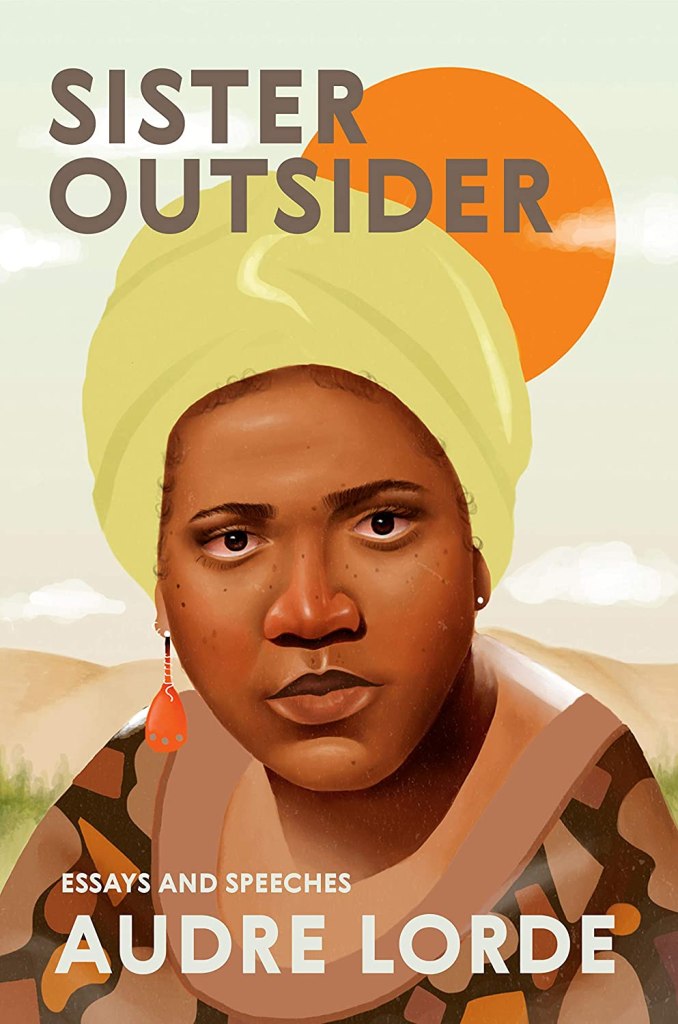
I’ve long kept a tract of Audre Lorde’s seminal piece The Uses of the Erotic near my computer. “The Erotic as Power” is her subtitle. If you haven’t read it, please do.  It is in her book Sister Outsider. And you can find it as a stand-alone here. It was written in 1978.

Lorde points out how the erotic is the opposite of pornography, in fact pornography is ultimately a denial of the erotic because it emphasizes sensation without feeling. “The erotic is a resource within each of us that lies in a deeply female and spiritual plane . . .” She goes on to note how it is through our bodies that we recognize and access this power. But she goes on, “We have been taught to suspect this resource, vilified, abused and devalued within Western society.”  In the hands of patriarchy this amazing and important resource often lies out of reach because it has become a source of shame and a sense of inferiority for women.[1]

I would add to the definition of patriarchy that one of its main goals is to damp down, even destroy, the erotic. We have seen this play out over thousands of years of history. Women are often viewed as either saints or sinners. Saints are denuded of this deep earthy power and sinners are those who flaunt it, or at least in the eyes of patriarchy.

Continue reading “The Erotic as Power, Notes on Audre Lorde by Janet Maika’i Rudolph”

Legacy of Carol P. Christ: SACRED RHYTHMS OF THE OLIVE HARVEST

This was originally posted on December 2, 2013

carol-christOlives are being harvested in the fields outside my town these days.  We have been having the first rains of the season.  The roads are wet and muddy, and the trees are partially shrouded in mist.  The fields are spread with black plastic nets, and people are hard at work, the men hitting the trees to make the olives fall, and the women picking up the olives from the nets.  The harvest will continue throughout the winter.

The olive press is busy. Cars and trucks come and go, unloading heavy bags filled with olives.  These days the bags are white, made of sturdy woven plastic. In Crete this fall several of us bought canvas olive bags, hand-woven by women.  These, along with baskets hand-woven by men, were still in use only a few decades ago.

olive harvest in Lesbos early 20th century by Theofilos Hajimichael

A friend who died a few years ago told me that “in the old days” there were no nets. The women and the children had to pick the olives up from the ground, often cutting their hands on thorns and stones.  The nets are a Goddess-send.  Between harvests, the nets are simply folded up and placed in the crotch of the tree. Here no one steals them.

In the fields where I walk some of the trees have enormous trunks. Some of them have two trunks, growing like sisters.  Many of them are 300, some perhaps 500, years old.  A man emerges from a field that has some particularly old trees.  I ask him how old they are. “Older than I am,” he replies. “They were here before I was born.  They will be here after I die.” Continue reading “Legacy of Carol P. Christ: SACRED RHYTHMS OF THE OLIVE HARVEST”

SheSpeaks! Eve by Janet Maika’i Rudolph

Author’s Note: I have begun a project called She Speaks! Women of the Bible Have Their Say. As part of this project, I have done five films with some very dedicated actors (friends of mine) who have dubbed themselves the SheSpeaks!Ensemble. I showed 4 of the films at the recent Yerusha Symposium. Based on the comments and reception, the project is now expanding. I am looking to create longer films that include story arcs. The first one will be of Eve. Below is the script for Eve along with the link to the video.

EVE speaks:

Why hello I don’t get visitors very often! Welcome. Come, come sit under my tree, let’s share some tea. I have the most wonderful and flavorful herbs here in my garden.

Look around at my most marvelous paradise. It is all filled with magical treasure. I’ll tell you a secret, the treasure I care for spans both the heavens and the earth. You see, we are at the place where spirit, breath and matter intersect. Where the living beings of earth and the animating forces of the divine join in harmony.

It is so hard to look at your holy book. I can’t imagine why I keep getting blamed for . . .well . . . just about everything.  It’s strange that your world wants to connect me with curses as I am the giver of life. In fact, did you know that my name Eve means life. I don’t understand what has become of you, my children. It is said that I brought a curse to humanity. Do you see life as a curse?  Let me tell you a bit about myself. Perhaps then you will see me differently.

Continue reading “SheSpeaks! Eve by Janet Maika’i Rudolph”

Bright Circle: Five Remarkable Women in the Age of Transcendentalism by Randall Fuller, Book Review by Carolyn Lee Boyd

“As I sat there, my heart overflowed with joy at the sight of the bright circle…for I know not where to look for so much character, culture, and so much love of truth and beauty, in any other circle of women and girls” – unidentified woman from Margaret Fuller’s “Conversations” (1)

In the early 19th century, the five women of Fuller’s book — Margaret Fuller, Elizabeth Palmer Peabody, Mary Moody Emerson, Sophia Peabody Hawthorne, and Lydia Jackson Emerson — built many of the foundations of both American feminism and the philosophical movement known as transcendentalism, among many other American “firsts.” Yet, they are almost unknown to most people today.

Continue reading “Bright Circle: Five Remarkable Women in the Age of Transcendentalism by Randall Fuller, Book Review by Carolyn Lee Boyd”

Legacy of Carol P. Christ: What Does It Mean to Say that All White Feminists Are Racist? (Questions Posed to White Women/Myself about Our Part in the Dialogue with Women of Color)

This post was originally published on Oct. 7th, 2011

Carol P. Christ, a founding mother in the study of Women and Religion and Feminist Theo/a/logy, has been active in anti-racist, anti-poverty, anti-war, feminist, pro-gay and lesbian, anti-nuclear, and environmental causes (in that order) for many years.  All of these issues have informed her teaching, her scholarship, and her politics.

The recent posting of Mary Daly’s letter to Audre Lorde on the Feminism and Religion blog is a correction of a piece of feminist history that is important in its own right and because of the way Lorde’s letter has shaped feminist discourse and politics up to the present day.  Knowledge of the existence of Daly’s letter and the facts surrounding Lorde’s distortion of history has been in the public domain since the 2004 publication of Alexis DeVeaux’s Warrior Poet, but when I searched the internet for a copy of “Mary Daly’s letter to Audre Lorde” a few days ago, what came up was Lorde’s letter to Daly — not Daly’s letter to Lorde.

I often hear younger feminists say that “all white feminists” of the older generations “were racist.” Sometimes Mary Daly is mentioned. Finding the more detailed record about Mary Daly is one step in retelling the history of feminism in a more complex way. 

Continue reading “Legacy of Carol P. Christ: What Does It Mean to Say that All White Feminists Are Racist? (Questions Posed to White Women/Myself about Our Part in the Dialogue with Women of Color)”