Winter Turns the Tide by Sara Wright

This winter has been most challenging on every level.

 I am exhausted, emotionally and physically. Most of my hair has turned gray. I have become an old woman who needs to be in touch with her limitations.

 On December 31st I broke my foot at three in the morning when a horrible crash awakened me to a blocked front door. I shoveled pure ice for an hour. Frantic with anxiety, I didn’t even realize that I had broken my foot until the crisis was over and the door could be opened again.

Continue reading “Winter Turns the Tide by Sara Wright”

Carol P. Christ’s Legacy: Does Belief Matter?

Moderator’s Note: Carol Christ died from cancer in July, 2021. Her work continues through her non-profit foundation, the Ariadne Institute for the Study of Myth and Ritual and the Goddess Pilgrimage to Crete. This blog was originally posted December 10, 2012. You can read it long with its original comments here.

In recent days I have been pondering the fact that some people and some feminists seem to see the issues of religious faith and belonging to be rooted in birth, family, and community, while for others the question of belonging to a religious community hinges on belief and judgments about the power exerted by religious institutions.  What accounts for this difference in the way we view religious belonging?

Recently I watched The Secret History of Sex, Choice and Catholics, a film featuring Roman Catholic feminists and ethicists who dissent from the Roman Catholic hierarchy’s views on contraception, abortion, and homosexuality.  At the beginning of the film those interviewed state almost univocally that for them being Catholic stems from having been born Catholic. These Catholic dissidents continue as Catholics, even though they disagree with major portions of Roman Catholic teaching.  It may have been because they were not asked, but most of them did not name reasons of belief for remaining Catholic.

Continue reading “Carol P. Christ’s Legacy: Does Belief Matter?”

Let’s Watch a Silent Film by Barbara Ardinger

Let’s go back 100 years today and watch a silent movie. As you may know, most silent films had orchestral accompaniment. While you’re reading this, therefore, you can be the orchestra. Hum along as you read. Selections from Wagner (like the Ring Cycle) would probably be best unless you want to dive deep into irony, in which case you can hum selections from Gilbert and Sullivan.

The film begins. It’s a dark and stormy night. The ocean is crashing against a narrow beach overlooked by steep cliffs. There is a deep, dark forest nearby. Out of the forest comes a small figure bearing a large burden upon its back. As the figure comes forward, we see a curly-haired young girl wearing ragged clothing.

Intertitle: O me, O my. I seem to be carrying the burdens of the world upon my back. I am so weary!

Continue reading “Let’s Watch a Silent Film by Barbara Ardinger”

On The Baby and The Bathwater by Liz Cooledge Jenkins

It wasn’t until seminary—and even then, only sporadically—that I learned that many of the foundational figures in Western Christianity held some incredibly sexist attitudes. Somehow, in all my years of attending church, hearing sermons, participating in (and leading) Bible study groups, reading Christian books, and working in ministry, I had missed this historical reality. I just hadn’t thought about it. And the (mostly white male) Christian leaders who shaped my own faith apparently hadn’t thought about it, either. That, or they didn’t think it was important enough to talk about. Or they intentionally tried to keep it on the down low. Or some combination of these things.

In seminary, when influential theologians’ sexist views came up in class, inevitably someone would say—in a wise-sounding tone—“Well, we don’t want to throw out the baby with the bathwater, do we?”

Continue reading “On The Baby and The Bathwater by Liz Cooledge Jenkins”

Goddess Embroideries of Ukraine as Prayers for Peace by Laura Shannon

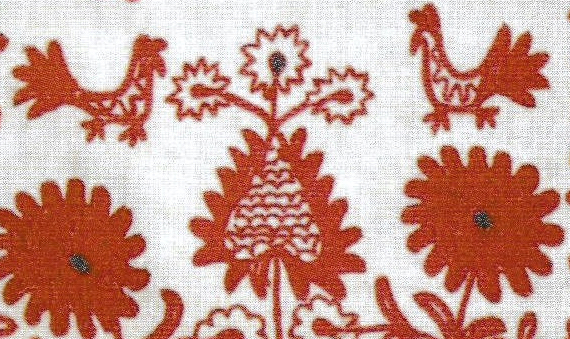
I imagine many of you share my feelings of anger, grief and dread about this invasion of Ukraine. It is hard to know what to do and terrible to feel so powerless. I would like to offer a practice which I am finding very helpful: to meditate on Ukrainian Goddess embroideries as a prayer for peace.

 Early 20th C. Goddess embroidery, central Ukraine. Photo: Ukrainian Museum. In The Tree of Life, the Sun, the Goddess: Symbolic Motifs in Ukrainian Folk Art, p. 99

Goddess figures are ubiquitous in Ukrainian folk art, in woven and embroidered clothing, ritual textiles, pottery, painting, and pysanky, ceremonially decorated Easter eggs (which I will explore in a future post). Goddess embroideries are also found throughout the entire Slavic world, Eastern Europe, the Near East and North Africa, and even farther afield, as Mary Kelly and Sheila Paine have diligently shown.

Continue reading “Goddess Embroideries of Ukraine as Prayers for Peace by Laura Shannon”

From the Archives: Buddhist Misogyny Revisited – Part I by Barbara McHugh

Recently, I wrote a novel about the Buddha’s wife disguising herself as a man to join his religious community. When I showed the manuscript to a Buddhist friend, whose knowledge and practice I respect greatly, he expressed apprehension that it violated the basic myth of Buddhism. I assumed he meant that my storyline of gender deception strays too far from the versions of the Buddha’s life as recorded in the traditional canon, which adherents regard as the Buddha’s inviolable teachings. The last thing I wanted to do was to misrepresent these teachings.

What does it mean “to violate a myth”?  If I had portrayed the Buddha as a psycho-killer or wife-beater, I could appreciate this charge, but I had presented an enlightened Buddha whose values were in alignment with standard scripture and the mores of his day. The change I made was to tell the story from a woman’s point of view, and to do so, I modified some of the traditional legends and created new material to make my choices plausible. Predictably, my modifications came up against many of the stories’ misogynistic elements.

For instance, in the canon, the Buddha initially refuses to admit women to the monastic order.  Eventually his attendant Ananda persuades him, but then the Buddha adds 104 extra rules for nuns, eight of which (the Garudammas) clearly put women in an inferior position.  One rule states: “A nun who has been ordained even for a hundred years must greet respectfully, rise up from her seat, salute with joined palms, do proper homage to a monk ordained but that day.” The Buddha also told Ananda that thanks to the admission of women, the Dharma (the teachings and practices of Buddhism) would die out after only 500 years.

Continue reading “From the Archives: Buddhist Misogyny Revisited – Part I by Barbara McHugh”

Queering the American Dream by Angela Yarber

As Florida politicians try to ban teachers from including LGBTQ+ issues in the curriculum, admonishing them, “Don’t Say Gay” at school, I’m shouting “GAY!” from the rooftops. Because I’m celebrating the release of my eighth book and first memoir, Queering the American Dream. It’s my queer family’s story of leaving it all and the revolutionary women who taught us how.

Our story began the day the Supreme Court ruled our marriage legal and ended the moment my younger brother’s addiction spiraled into a deadly overdose. In-between were eighteen months of full-time travel with a toddler in tow. Criss-crossing the American landscape, my wife and I came face to face with jaw dropping natural beauty on the one hand, which contrasted with the politics, policies, and people who continued to discriminate against marginalized families like ours on the other. At each stop along the way, a different revolutionary woman from history or mythology guided our footsteps, reminding us that it’s not simply our family who dared to queer the American dream, but a subversive sisterhood of saints who have upended the status quo for centuries. From Vermont to Hawai’i, and everywhere in between, the beauty of the American landscape bore witness to a queer clergywoman whose faith tradition was not enough to sustain her. But the revolutionary women were.

Continue reading “Queering the American Dream by Angela Yarber”

Mycelial Madness by Sara Wright

For those of us who are dedicated to feminism and to the sanctity of nature here is one more way to understand the earth as our goddess. Her mysterious veil is the source of all life. Immanence is sacred.

The last winter I spent in New Mexico I walked to the river every morning in the pre-dawn hour. No matter how much the wind would howl later on, at this time of the day nothing stirred besides the birds. Because I traveled the same path every morning circling round one wetland listening to river songs I would find myself slipping into a light trance as my feet hit the hard unforgiving ground. Every bush, cottonwood, russian olive, juniper was familiar, each was a friend. Although this wetland had been trimmed and paths mowed (parching open ground), the majority of trees, plants and grasses had been left intact and the river was nearby. During these light trance states I sensed that the ground beneath my feet was pulsing with some kind of light; that the earth was trying to communicate with me.

At that time I didn’t know that I was walking over of miles of mycelium, because I didn’t know whether these networks extended throughout the desert although I assumed they did. But I felt or sensed something. I knew from trying to garden in NM that the surface of most of the ground seemed quite barren except for the piles of decaying cottonwood bark that I used as mulch, so where was the rest of the mycelium?

Continue reading “Mycelial Madness by Sara Wright”

Carol P. Christ’s Legacy: The Keepers and the Roman Catholic Church featuring Jean Hargadon Wehner

Moderator’s Note: Jean Hargadon Wehner, who is referenced and quoted by Carol in this post will be available to respond in the comments section. Feel free to ask her any questions. Jean has a new book out about her experiences. The link is at the bottom of the post.

Carol’s work continues through her non-profit foundation, the Ariadne Institute for the Study of Myth and Ritual and the Goddess Pilgrimage to Crete. This blog was originally posted July 10, 2017. You can read it along with its original comments here.

He told me his “come” was a sacrament… He made the sign of the cross with it on my breasts. Jean Hargadon Wehner in The Keepers

I sat glued to my television last weekend watching seven episodes of The Keepers one after the other. Out of all the horrific information in this Netflix documentary, these words stick in my mind. Jean Hargadon Wehner said Father A. Joseph Maskell told her that she was sinner after she confessed to him that her uncle had molested her. Father Maskell explained that her case was so severe that ordinary absolution might not work. Thus, he told her, she must participate in ritual sex with him in order to purify her soul. Jean Hargadon was too young and naive to question his authority. She only knew that she dreaded hearing her name called out on the school loudspeaker with instructions to report to Father Maskell’s office.

Continue reading “Carol P. Christ’s Legacy: The Keepers and the Roman Catholic Church featuring Jean Hargadon Wehner”

Abortion Rights (?) by Esther Nelson

Slowly, yet systematically, women, men, and everybody else along the gender continuum, are losing access to a timely, legal, and safe abortion. This is not breaking news. Pushback in the United States against abortion “rights” has been happening in various state legislatures for decades.  These days we find ourselves more and more constricted as laws across the country reflect a tightening of accessibility to what some people refer to as a “scourge” in the land.

My first-ever blog post on FAR (March 2014) wrestled with the subject of abortion.  In that essay (one that’s still relevant), I suggest we broaden our thinking about a subject that has polarized Americans. Is abortion (a) right?  Is it wrong? The two sides have become entrenched.


Continue reading “Abortion Rights (?) by Esther Nelson”