What’s Done Is Really Done by Barbara Ardinger

This is an encore performance of a satire I wrote in November 2019, when I thought Trump’s sociopathic behavior was at its height. Little did I know. Little did we know. Only a year later, following the 2020 election, we watched him lie and deny, spread conspiracy theories, and finally encourage his true believers to invade the Capital and “stop the steal.” It’s good to see that President Biden is a normal person who knows what presidential behavior and work really are. A small example: right after the inauguration, we watched him signing executive orders. Did he use a Sharpie? No. Biden used (and still uses) a normal pen to sign his name. And he doesn’t wave an illegible signature at the TV cameras.

Two brief notes: In his novel Metamorphosis, Franz Kafka does not say the protagonist is turned into a cockroach. He’s an ungeheures Ungeziefer, i.e., a “monstrous vermin.” But if you want to see Trump as a roach, that’s fine. Note also that Trump’s answers are spoken by Dogberry in Shakespeare’s Much Ado About Nothing. Dogberry, Messina’s police constable, is probably the stupidest character Shakespeare created. And so, here’s the encore. Enjoy! (And let’s squash that bug!) Continue reading “What’s Done Is Really Done by Barbara Ardinger”

Toadwise: A Tale for a Life Lover – Part II by Sara Wright

Read Part I here

In the Americas I found more recent Indigenous mythology on the Toad as Goddess. Tlaltecuhtli is a Pre–Columbian (1200–1519) goddess belonging to the Mexica. Although Tlaltecuhtli’s name is masculine modern scholars interpret this toad figure as female because she is squatting giving birth. Some see her as crouching under the earth, mouth open waiting to devour the dead. Since the Aztec culture was a warring male dominated Patriarchal one I think it’s perfectly reasonable to assume that the Earth Goddess/Toad was seen as masculine to the Mexica.

In Mesoamerica we find Toad widely represented in art, often with feline or other non-naturalistic attributes, including jaguar claws and fangs. These images can be regarded as versions of Tlaltecuhtli. In contemporary Mexico, as in Guatemala, and throughout South America toads play a role in myth, sorcery, shamanism, and in curing/healing. Continue reading “Toadwise: A Tale for a Life Lover – Part II by Sara Wright”

Toadwise: A Tale for a Life Lover – Part I by Sara Wright


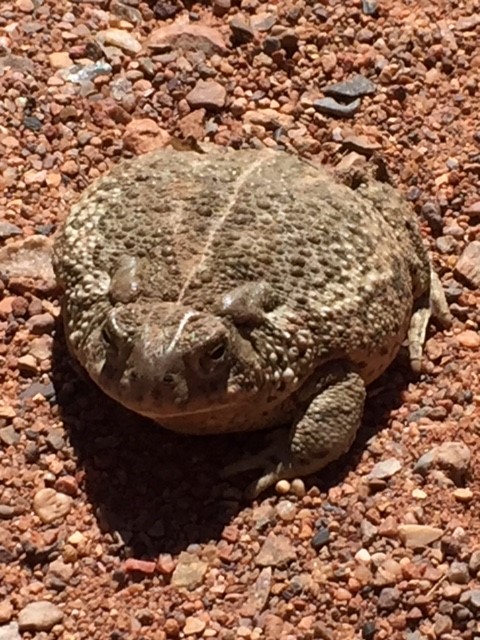
Last night I was thinking about the giant western toad that is living in my garden when I had a peculiar thought: Write a story about the Toad and an Old Woman and call it A Tale for a Life Lover. At this very moment I heard my toad’s rasping guttural cry outside my window. I was so shocked I got up and went out on the porch, hoping to hear the call again, but the toad only spoke once. Afterwards, I wondered if I had imagined it.

When the giant western toad appeared in my yard last week I had been in a state bordering on despair over baffling health issues and the ravages of Climate Change. Maybe it is no longer possible for me to separate the two? After the visitation I sensed that the toad’s abrupt appearance meant something beyond the amazing fact that I had met a giant toad who apparently had been living here all along. Continue reading “Toadwise: A Tale for a Life Lover – Part I by Sara Wright”

Breathe with me by Trelawney Grenfell-Muir


Breathe with me.

I know. I know. I understand.
Breathe with me anyway.
It hurts. It’s scary. It’s horrible. It’s relentless. I know.
Just breathe.
Every time we breathe out, our bodies release things we do not want.
So breathe it out. All of it. Let it go.
Deep breath. However you prefer—mouth, nose—just breathe.
What do you need to let go?

For me right now, there’s rage.
All the people refusing the masks, refusing the vaccine, even friends of mine who have watched me suffer with post-COVID syndrome for almost a year, still blaming me somehow for my illness.
Breathe. Let it out. Don’t have to carry it anymore.
There’s fear, too — friends, family, fighting COVID, or taking dangerous, unnecessary risks.
Long, slow breaths. Release. Into the loving matrix of Creation-Life-Love. I can’t hold this anymore. I release it.

There’s grief. Loss. Suffering. Isolation. Pain. Oh, breathe, let the tears flow, let the breaths and the tears just be what they are.
Stress. So much stress. We’re all frayed, so far beyond our limits. Breathe it out. Breathe it out again. Deep breaths – make noise if you want. Moan.
She cradles us in breath, the Divine Womb. She is the Source of our breath, and She is always cradling us, always breathing with us.
Breathe again. Close your eyes. Let your Holy Spirit bathe you in its healing power.
But it doesn’t fix anything, doesn’t DO anything!
I know. But it is enough. Just let it be. Be breath breathing itself.
What if you deserve to let go?
What if you deserve to be cradled in healing Love?
What if you deserve just to be?

Breathe. It sometimes feels so nice. Breath in, breath out.
Your body is letting go of anything you do not want.
You can release it now. Breathe it out. It’s ok.
Anywhere you want to feel your breath is ok. Wherever you want it to go, just breathe it there, and then release.
There’s no way to do this wrong. It’s your breath. It’s your breathing. A gift your body has, a magical, powerful, simple, holy gift. Breathe however feels good and right to you.
No rush. Take your time. As long as you want. As often as you want.
What if you deserve compassion?
What if you deserve to be bathed in healing Love?
What if you deserve to rest in your breath?
Breathe, darling. Close your eyes if you like. With every breath, you are holy.

In my Methodist tradition, which focuses heavily on the Holy Spirit, we sing a breathing hymn I love. Here is my rewritten version:

Breathe on me, Breath of Love,
fill me with Life anew,
restore my soul with ev’ry breath,
to do what Love wouldst do.

Breathe on me, Breath of Love,
so shall I rest, secure,
cradled in Love’s bright healing peace,
and held in compassion pure.

Breathe on me, Breath of Love,
till I am wholly thine,
till body, spirit, all of me,
glows with thy Fire divine.

Breathe on me, Breath of Love,
until my heart is free,
and I perceive my ev’ry breath
is thine Eternity.

—Edwin Hatch (1878), revised.

Our world is so frayed right now. We are all at the end of our rope. We feel the same way most new mothers feel in capitalist patriarchies, in which motherhood means financial strain (or poverty), isolation, anxiety, constant demands, an inability to meet basic physical and mental health needs, and no escape from continuous, relentless emotional and physical labor. Women are expected to embrace this level of self-sacrificial stress in motherhood, as part of our female slave role in capitalist patriarchy, which defines our unpaid, unvalued labor as a natural extension of our biological sex. The burden on women is higher than ever these days, with women and even girls taking the lion’s share of extra household duties so that boys and men can continue in their education and careers. Women are suffering 100% of job losses as well.

In times like these, I keep turning to my faith for comfort and strength. In my tradition, the Holy Spirit is the Divine Breath, the Source of Life, which animates all living things and all Creation as sacred. It comes originally from the Hebrew “ruach,” a feminine noun. So when I take time just to breathe, that is sacred time, allowing my true, divine self to feel its divinity (as Methodism’s founder John Wesley might say). I do not take breathing for granted. After my COVID experience, how could I ever take it for granted again? So, for me, breathing time is holy — “set apart” as a communion, a Eucharist of Grace: life-giving, healing, restorative, and liberative. Almost every night for the past eleven months, I have spent time lying in bed just breathing: feeling the breath of the trees behind me in the woods, allowing their wellness to enter me, breathing out to them whatever I want to let go. In breathing this way, I am able to understand bodily that my breath is Goddess. Goddess who is ever birthing Love and Liberation. The Divine Source of All, who is every justice, every healing, every restoration. My breath is fair economies and safe respected female bodies; it is just relationships and female thriving. This is my breath. This is the Source of the Healing that rebirths every death into Life. This is Goddess.

So, breathe with me, sisters. And brothers. She is here, and we are the ones who breathe her. What if we deserve to be bathed in Healing Love? She knows. She understands.

Just breathe.


Trelawney Grenfell-Muir teaches courses about Sex, Dating, Marriage, and Work in the Religion and Theological Studies Department at Merrimack College and about Cross Cultural Conflict in the Department of Conflict Resolution, Human Security, and Global Governance at the University of Massachusetts, Boston. A Senior Discussant at the Religion and the Practices of Peace Initiative at Harvard University, she holds an M.Div. from the Boston University School of Theology with a concentration in Religion and Conflict, and a Ph.D. in Conflict Studies and Religion with the University Professors Program at Boston University. She currently writes articles, book chapters, and liturgical resources about feminist, nature-based Christianity.

Grown Little Girl, Grow Little Girl by Chasity Jones Selenga


I have newly found myself a wife and in the throes of motherhood. In many feminist circles, I have encountered anti-family and anti-wifehood sentiments. The understanding is that to be a wife, and, to be a wife that chooses to start a family, is an oppressive position to occupy as well as the antithesis of the feminist movement. Though I am not typically a fan of tough physical, emotional, soulful labor, these two positions have been the highlights of my life so far.

My daughter embodies both my husband and me, physically. However, she is and will become her own person-soul. She is so young, but her soul is eternal, and has experienced eternity. I am here to help her navigate remembering who she is. She inhabits the intersection of Blackness, divinity, femininity, and infinity. Motherhood has greatly increased my capacity of appreciation for women and what women are capable of doing. Especially from the intersection of Blackness and woman-ness. From the capacity to create, labor, and deliver life to the task of raising Black children in a country that would have them annihilated, emotionally traumatized, and made to accept they are inferior.

Continue reading “Grown Little Girl, Grow Little Girl by Chasity Jones Selenga”

Sacred Geese by Judith Shaw

judith shaw photoThe end of winter is near in the northern hemisphere. Though the cold persists the days slowly grow longer. If you’re lucky you might soon see a skein of geese flying overheard on their way to their northern nesting grounds – a beautiful reminder of our world’s ongoing cycles of change. 

Continue reading “Sacred Geese by Judith Shaw”

What If We Begin from the Hypothesis that Ancient Crete Was Matriarchal, Matrifocal, and Matrilineal? by Carol P. Christ

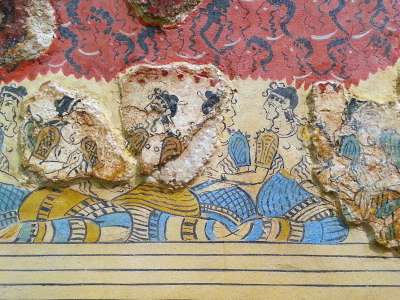
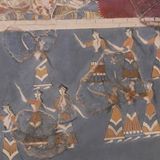
If we begin from the hypothesis ancient Crete was matriarchal, matrifocal, and matrilineal, what would we expect to be the central focus of the its religion?* Harriet Boyd Hawes and her colleague Blanche E. Williams presented an incipiently feminist, woman-centered, analysis of the religion of ancient Crete in Gournia, the book describing their excavation of a Minoan village at the beginning of the twentieth century. Boyd Hawes argued that the archaeological evidence showed not only the pre-eminence of the Goddess, a conclusion with which Williams agreed, but also the strength and independence of women in a culture she defined as matriarchal and matrilineal, centered around the Mother family. If ancient Crete was matrilineal, matrifocal, and matriarchal, we should expect to find evidence that women were not only strong and independent, but also that they had leadership roles in religion and culture. Williams noted the presence of priestesses. The miniature frescoes from Knossos show a group of older women sitting in the place of honor and a group of women performing a ritual dance. Where evidence concerning leadership roles is lacking, it should not be assumed that leadership must have been in the hands of men.
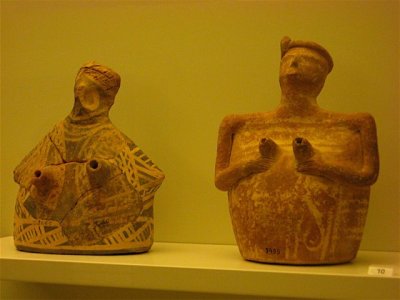
We should not be surprised to find the Goddess or mother earth to be at the center of rituals and ceremonies in ancient Crete. However, to say that the Goddess is central begs the question of what we mean when we say Goddess. In the west, deity is understood to be transcendent of the world, imaged as a dominant male other, and as the judge of the living and the dead. Citing the Oxford English Dictionary, archaeologist Colin Renfrew bases his discussion of Minoan religion on the idea of divine transcendence. But if we accept Marija Gimbutas’ insight that the Goddess represents the powers of birth, death, and regeneration in all forms of life, a different picture emerges. The Goddess is immanent in, rather than transcendent of the world. She is the enlivening force in human beings and all of nature. She is not the judge of the living and the dead, for the dead are returned to her body. Unlike later Greek deities, the Goddesses of Old Europe and ancient Crete are not generally portrayed as idealized human beings. Though they often have eyes, breasts, and sacred triangles, they also have beaks and wings, are shaped like mountains, and decorated with flowing lines symbolizing rivers or streams. These hybrid forms suggest that all of life is in the image of divinity and that humans are not higher, better, or separate from other life forms. Hybrid images celebrate the connection of all beings in the web of life and call human beings to participate in and enjoy this world, not to seek to escape or rise above it. A religion centered around gratitude for life in this world is very different from one that centers around fear and judgment and a longing for life after death. Jacquetta Hawkes’ insight that the religion of ancient Crete celebrated “the grace of life” is exactly right.

Is the Old European or Minoan Goddess one or many? Monotheists have insisted that there can be only one God, yet polytheists revere a plurality of images, while animists celebrate the spirits of (perceived) living beings such as rivers and trees, mountains and caves. The terms monotheism and polytheism are not neutral. Both were developed by monotheists: monotheism describes the correct beliefs of the self; polytheism, the false beliefs of the other. I find theologian and liturgist Marcia Falk’s distinction between exclusive and inclusive monotheism helpful in resolving the question of the one and the many. According to Falk, inclusive monotheism is an intuition of the unity of being within the diversity of the world: celebrating the unity of being, it welcomes a plurality of images to represent diversity and difference in the world. From this point of view, the boundaries between monotheism and polytheism are porous. When Gimbutas spoke of the powers of birth, death, and regeneration in all of life, she was referring to the unity of being underlying the diversity of life forms, including plants, animals, and human beings. Similarly, when indigenous peoples speak of mother earth as the giver of all and all beings as relatives, they recognize that all life is sustained by a single source. The fact that ancient Cretans imaged divinity in different ways and with different characteristics does not require the conclusion that they worshipped many discrete deities as some archaeologists argue: I suggest that they intuited a unity of being while celebrating the diversity of life. This appears to have been the conclusion of Williams who wrote of “the prominence of a goddess under various aspects.”

If matrilineal, matrifocal, and matriarchal cultures tend to view the earth as a great and giving mother, we can expect this insight to be expressed in rituals and ceremonies. Gratitude is the appropriate response to gifts freely given. I suggest that gratitude for the gift and gifts of life was not only a focus, but the central focus, of religion in ancient Crete. If this is so, we should expect to find rituals celebrating the gift of life in the birth of babies, the coming-of-age of girls, as well as in as well as in death rituals honoring the ancestors. We can also expect to find rituals honoring the mother line and expressing gratitude for the wisdom of ancestors. Many of these rituals would have taken place in the matrilineal House as archaeologist Jan Driessen suggests. Rituals for the ancestors might also have taken place in cemeteries. We should also expect to find rituals expressing gratitude for the food that sustains life, for example, in offerings of first fruits to mother earth and in the pouring of libations that are absorbed back into her body. If, women invented agriculture, and if as Gimbutas argued, Old European religion celebrated the processes of birth, death, and regeneration in all of life, we should find rituals focused on planting, harvesting, and storing seeds. Some of these rituals might have taken place in the matrilineal Houses, while others surely took place in nature and in the fields. If pottery-making and weaving were understood to be mysteries of transformation involving birth, death, and regeneration, we might find evidence of rituals associated with these activities in the Houses or in workshops. It is known that rites in ancient Crete involved trees, mountains, and caves, as well as water sources. We must ask if and how such ceremonies expressed gratitude to the mother earth, the source of life, and the cycles of birth, death, and regeneration.

*These musings are part of an early draft of the methodological prologue to an essay I have been asked to write on Religion in a Minoan Village to be published in the archaeological report on recent excavations at Gournia. In the preceding part of the prologue, I discuss the theories about matriarchal, matrifocal, and matrilineal cultures of Harriet Boyd Hawes, Blanche E. Williams, Marija Gimbutas, Heide Goettner-Abendroth, and others.

Carol P. Christ is an internationally known feminist and ecofeminist writer, activist, and educator who lives in Heraklion, Crete. Carol’s recent book is Goddess and God in the World: Conversations in Embodied Theology. Carol has been leading Goddess Pilgrimage to Crete for over twenty years: join her in Crete. Carol’s photo by Michael Honneger.

Listen to Carol’s a-mazing interview with Mary Hynes on CBC’s Tapestry recorded in conjunction with her keynote address to the Parliament of World’s Religions.

Buddhist Misogyny Revisited – Part I by Barbara McHugh

Recently, I wrote a novel about the Buddha’s wife disguising herself as a man to join his religious community. When I showed the manuscript to a Buddhist friend, whose knowledge and practice I respect greatly, he expressed apprehension that it violated the basic myth of Buddhism. I assumed he meant that my storyline of gender deception strays too far from the versions of the Buddha’s life as recorded in the traditional canon, which adherents regard as the Buddha’s inviolable teachings. The last thing I wanted to do was to misrepresent these teachings.

What does it mean “to violate a myth”?  If I had portrayed the Buddha as a psycho-killer or wife-beater, I could appreciate this charge, but I had presented an enlightened Buddha whose values were in alignment with standard scripture and the mores of his day. The change I made was to tell the story from a woman’s point of view, and to do so, I modified some of the traditional legends and created new material to make my choices plausible. Predictably, my modifications came up against many of the stories’ misogynistic elements.

Continue reading “Buddhist Misogyny Revisited – Part I by Barbara McHugh”

Musings on The Crown by Janet MaiKa’i Rudolph


Even though I was a late-comer to the Netflix series The Crown, when I did watch it, I was riveted. Lots of thoughts ran through my mind at this picture of royalty. The concept of royalty in human history is vast and multi-faceted, however in this blogpost I am only pulling on a few threads that tugged at me as I watched this show.

I laughed as people greeted the Queen and said, “your highness.” Does that make the rest of us lownesses? And where did all this pomp come from anyway? And why is the British monarch the head of the Church of England which is a bible-based Christian religion?

Monarchy, religion and war have always seemed so connected in our culture. Indeed, during the coronation of Queen Elizabeth, she was handed “the sword of state” as if she would actually be using it. (I looked it up, true to the ceremony). Continue reading “Musings on The Crown by Janet MaiKa’i Rudolph”

The Last Chemo by Carol P. Christ

When I went to the hospital for chemo on Thursday, the doctor told me it would be my last one. That was a surprise. I thought I would have at least one more. But it was a good surprise, because I had felt more tired than usual after my most recent treatment. Apparently, I had started to feel a bit better when my cancer became inactive, but chemo is cumulative, and it caught up with me.

I slept well on Thursday night. On Friday morning I felt great relief and joy thinking that my chemo was ending. I called a number of friends to tell them the good news. I suspected that I might feel very tired for a few weeks from the last dose of chemo. But after that, all of the symptoms caused by the chemo would begin to lessen—including numbness in my right foot, instability, lack of energy, shortness of breath, anemia, and hair loss.

By the mid-afternoon the tiredness set in again. This time I did not get the few good days that I have attributed to a prescribed dose of cortisone to counter the effects of the chemo. Even though I predicted that the last chemo would make me very tired, there is a part of me that wants this all to be over—and now! 

But in truth it will not be. Not for months. Continue reading “The Last Chemo by Carol P. Christ”