Last Friday my oncologist gave me the best birthday present I could have imagined. (My birthday was 7:30 pm last night December 20, California time.) Without going into details, my latest CT scan was so much more positive than the last one that it feels like a miracle. I have reason to hope.
Today I am full of gratitude. I am grateful to my doctor Dimitrios Mavroudis who is the head of Oncology at the University of Crete and at the Pagni Hospital in Heraklion. I am grateful to medical science for the chemotherapy that is healing my body.
I am grateful for the national health system of Greece that is covering the cost of my treatment because I am a Greek citizen even though I never contributed to the national health insurance.
I am grateful to the nurses at the Pagni hospital who are unfailingly kind as they take my blood and regulate my chemotherapy.
The Winter Solstice awakens in us a sense of awe as we witness the majesty of the crisp, cold night sky spread across the heavens – whispering songs of mystery and meaning – songs meant to awaken the need for the quiet dark and to dispel the fear that arises in the dark.
Songs of the evergreen tree decorated and lit to ensure the renewal of life. Songs of the Reindeer Goddess as she flies through the night
Delilah is a beautiful name on its own merits. As a biblical personage Delilah is forever connected to Samson for their tales are intertwined. As it is told in Judges, Samson is the clear hero of the tale and Delilah is merely the temptress who betrays him. But as in all spiritual accounts there is more here than meets the eye. A spiritual journey is never a linear affair. When reading the story of Samson and Delilah, it immediately becomes clear that something mythical is afoot. The root of Samson’s name is the same as the word shamash, the Hebrew word for sun. The root of Delilah is lila, meaning night. Right away we understand that this story contains apparent opposites, heavenly aspects, the sun and the night, light and dark . . . Continue reading “Delilah, Lost by Janet Maika’i Rudolph”
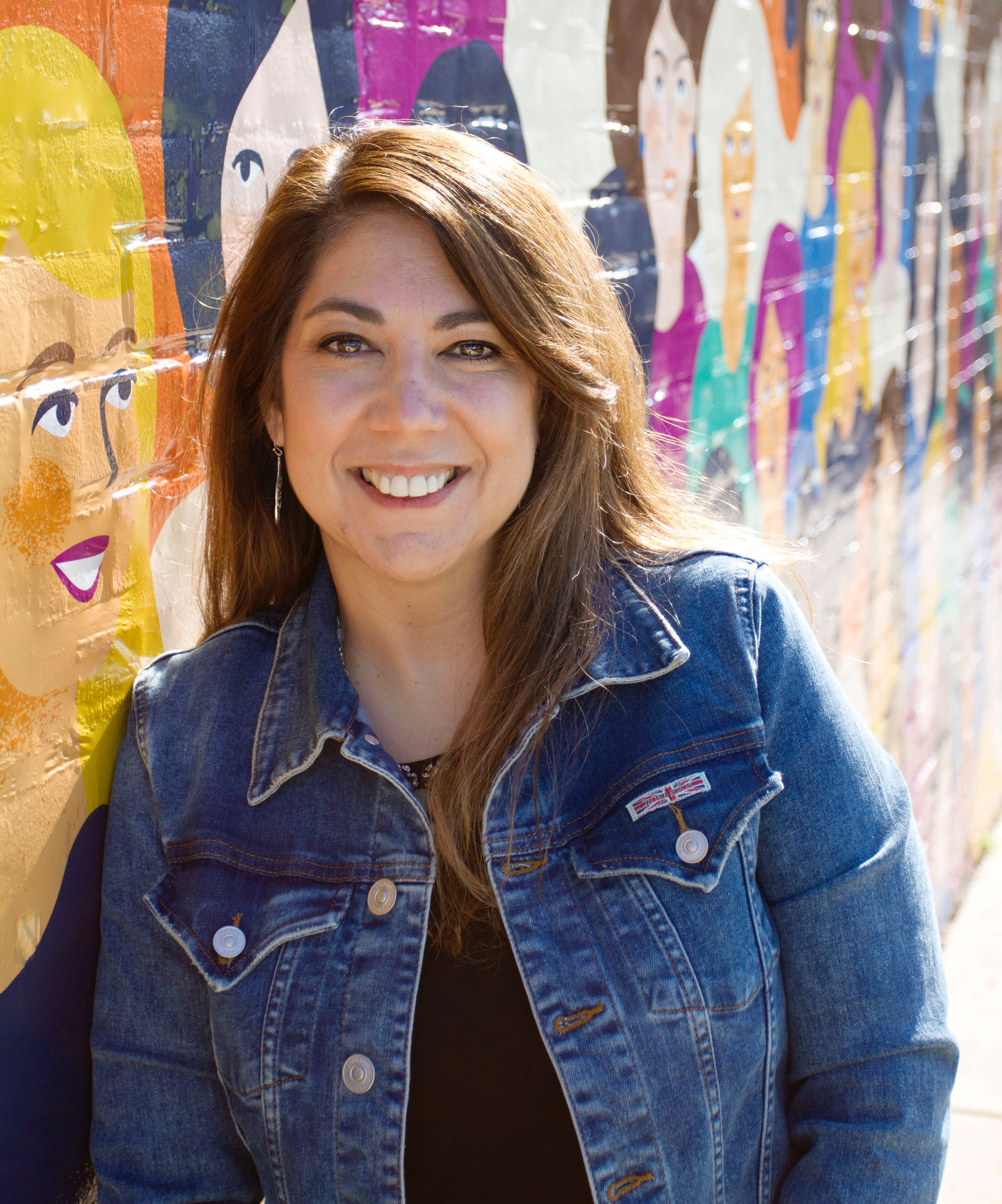
My voice has been absent from the FAR Community as of late; and without good reason. Rather than engaging in dialogue, I have remained in a silo, alone with my thoughts. Something shifted for me a few years ago; and I haven’t been the same. I can’t articulate it. But what I can say is that from that moment I’ve question my feminism and faith and feel as if I’ve lost a part of my identity.
With such turmoil in our nation and the great division among us, I’ve wondered if being so steadfast in my principles has made me part of the problem. It seems we are in the midst of a political civil war; and if I’m being honest, so many of the people I love are standing on the other side of the divide. I haven’t known how to reconcile this, and I’ve been grieving.
The intersection of religion, gender, and politics has been an intense focus of my research and work for quite some time. And now, to engage in such work serves as a reminder of our current state and the hurt so many of us feel deep in our core. We wonder how anyone could think differently from us when the answers are so obvious. With such critical issues on the line it is easy to write each other off, to walk away, sever relationships, and cling to the comfort of an echo chamber. Yet, with such a response, the division continues and there is no reprieve from our grief.
As I wonder how we can overcome this, I return to the philosophy of Carol Christ. Sharing our stories, hearing our own experience in those of another reminds us that we are not alone. It also reminds us that commonalities do exist among us that can help bridge our divides.
In search of healing in my own journey, I’ve decided to do what I know – start another project. If you know me, you might be laughing right now, or rolling your eyes. Nonetheless, I’ve launched a podcast and workshop series to share our stories and discuss when it is okay to be bold, take risks, and break the rules to create a better outcome. My hope is that we recognize one another in the small intimate details of our lives and find a space to begin a conversation that centers on what brings us together.
It might be foolish or a band aid to shield my own wounds. But in these moments, I think it is important that we consider what we are grieving and how we might re-envision our lives in a way that allows us to move forward.
Gina Messina, Ph.D. is an American feminist scholar, Catholic theologian, activist, and mom. She serves as Associate Professor and Department Chair of Religious Studies at Ursuline College and is co-founder of FeminismAndReligion.com. She has written for the Huffington Post and is author or editor of five books including Women Religion Revolution. Messina is a widely sought after speaker and has presented across the US at universities, organizations, conferences and on national platforms including appearances on MSNBC, Tavis Smiley, NPR and the TEDx stage. She has also spoken at the Commission on the Status of Women at the United Nations to discuss matters impacting the lives of women around the globe. Messina is active in movements to end violence against women and explores opportunities for spiritual healing. Connect with her on Twitter @GMessinaPhD, Instagram: @GinaMessinaPhD, Facebook, and her website ginamessina.com.
The days are slowly winding down toward Winter Solstice in the northern hemisphere, the longest night of the year. Today the sun rose at 7:20 and will set at 5:08 in Crete. In Sweden, the sun will rise at 9:25 and set at 2:12. Though I light candles in the darkness of morning and have lights on my tree, I am not celebrating the “return of the light,” but rather welcoming the restful dark.
In The Spiral Dance, Starhawk writes that Winter Solstice is about the rebirth of the sun. This interpretation has taken hold. For most pagans, Summer Solstice also is a celebration of the sun on the longest day. Few are those mark it as the time of the dying of the sun or the rebirth of night.
In our culture we have learned to celebrate the light and to avoid and disparage the darkness. We have inherited this habit of mind from the Indo-Europeans who, as Marija Gimbutas wrote, celebrated the shining light of the sun as reflected in their shining bronze weapons. When the Indo-Europeans rewrote the myths of the land that came to be called Greece, they placed the “Olympian” deities on Mount Olympus while relegating many of the oldest female deities to the underworld, which became a fearful place. New Age spiritualities follow this pattern, celebrating “light and love.” This habit of mind reinforces racism. Continue reading “Winter Solstice: Can We Celebrate the Restful, Welcoming Darkness?”
In the 15th century, as now, independent female travelers faced harassment and suspicion.
I’ve always been fascinated with the women mystics, such as 12th century powerfrau and visionary Hildegard von Bingen, the heroine of my 2012 novel, ILLUMINATIONS. Likewise my new novel, REVELATIONS, which will be published in April 2021, is centered on two 15th century English mystics, Margery Kempe and Julian of Norwich. Like Hildegard, they were women of faith facing the roadblock of institutional, male-dominated religion that sidelined them. But instead of letting this beat them down, they found within their own hearts a vision of the divine that mirrored their female experience. I believe it’s no mere coincidence that both Hildegard and Julian dared to create a theology of the Feminine Divine, of God the Mother. All three women seized their power and their voice to write about their encounters with the sacred, preserving their revelations to inspire us today.
While Hildegard and Julian are iconic, Margery Kempe is a more marginal figure–well-known among medievalists but much less known to a general audience. I first encountered Margery in a post-grad course entitled Late Medieval Belief and Superstition. I was blown away by the story of this enterprising woman who survived postnatal depression and a soul-destroying marriage to become an intrepid world traveler and literary pioneer. The Book of Margery Kempe (c. 1436–38) is the first autobiography in the English language.
Margery’s story explodes our every stereotype about medieval women.
She was not just a desperate housewife and mother of fourteen. She rebelled against the straightjacket of an abusive marriage by becoming an entrepreneurial businesswoman. First she ran a brewery, then a grain mill. When both businesses failed and she’d had enough, she left her husband behind and took to the road as a pilgrim, traveling to Jerusalem, Rome, and Santiago de Compostela. This in an age when very few women traveled even in the company of their husbands, Margery blazed her own trail across Europe and the Near East.
Alas, like strong women throughout history, her independence and eccentricities drew suspicion. Before long she found herself on trial for heresy. A guilty verdict would have seen her burned at the stake, yet she kept her spirits high by regaling the Archbishop of York with a parable of a defecating bear and a priest.
Before leaving on her monumental pilgrimage, Margery sought the counsel of her sister mystic, Julian of Norwich. This was an exceedingly vulnerable time in Margery’s life. In leaving her husband and children behind, she had broken all the rules, and she was filled with self-doubt and uncertainty. Julian’s advice to trust her inner calling and not worry too much about what other people thought seemed to have a profound and empowering impact on Margery. While Julian had chosen to wall herself into a cell and live as an anchoress, she gave Margery her blessing to wander the wide world.
Sadly, some historians and theologians try to pit Julian and Margery against each other. Julian is held up as the real saint, the real deal, while Margery is dismissed as a hysterical wanna-be. Because she had the habit of copious weeping when in the throes of mystical experience, many people, both in her time and ours, have refused to take her seriously.
Yet a number of fascinating synchronicities connect Margery and Julian. In so many ways, their stories intertwine and complement each other.
Margery was born in 1373, the same year that thirty-year-old Julian received her “showings”—the divine visions that would inspire her landmark book Revelations of Divine Love, the first book written in English by a woman. Both women lived in Norfolk, in cities less than 45 miles away from each other. Both women were literary pioneers whose lifework was lost to obscurity, only to resurface in the twentieth century.
Immersing myself in Julian’s radical theology of the primacy of divine love was a profound experience. Like Margery, I often found myself moved to tears by the beauty of Julian’s visions, by her absolute assurance that no matter how dire things may seem, all will be well.
But what took me by surprise was how revelatory Margery’s dance with self-doubt was for me. In writing this book and delving into medieval mystical texts, I discovered that our doubts, as painful and wrenching as they are, aren’t a flaw or hindrance. In fact, they lead us deeper into the divine mystery, the vast “Cloud of Unknowing” where God dwells. Only when we set aside our preconceived notions of what we think we believe the divine to be, can we enter this numinous place.
As a mystic, Margery’s especially fascinating to me, because she found her spiritual bliss not in the cloister, but as a laywoman, in the full stream of worldly life with all its wonders and perils. May we all have the power to reinvent ourselves as courageously as Margery did.
Mary Sharratt is on a mission to write women back into history. Her acclaimed novel Illuminations, drawn from the dramatic life of Hildegard von Bingen, is published by Mariner.Her new novelRevelations, about the globe-trotting mystic and rabble-rouser, Margery Kempe, will be published in April 2021. Visit her website.
In the 1960s and 1970s, American-born Genevieve Vaughan was living in Rome with her husband, philosopher Ferruccio Rossi-Landi, and their three daughters. When Rossi-Landi, using Marxist models, began to write about language as a form of “exchange,” Vaughan was inspired to articulate her alternative theory based on the idea that language was developed and is learned through the gifts of the mother to the child. From that beginning, Vaughn developed an alternative theory of culture based on what she calls the “gift economy.”
According to Vaughan, the “exchange economy” is based in the gift economy, while at the same time it denies the gifts it has received from mothers and mothering figures and disparages mothers and their work. Mothers rear children who enter into the exchange economy, but these children would not be alive to enter the exchange economy unless they had first been nurtured by the freely given gifts of mother. Vaughan writes that prior to patriarchy, cultures and societies valued the gifts of mothers and were organized around the principle of gift-giving. Vaughan states that gift-giving economies are based in the idea of meeting the needs of others, while exchange economies are focused on the enrichment of the individual self. She believes that re-valuing and re-instating the gift economy is the only path to creating and restoring peace and justice in the world. Continue reading “Maternal Gift Economy: Webinar Gifts by Carol P. Christ”
It is just past mid-January. The almost-ex-prez is sitting at the desk, staring at his smartphone. It begins shaking in his hand. There is a pile of documents on the desk, his Sharpie lying on top. The Sharpie suddenly rises into the air, black ink dripping from its pointy end. Almost-Ex hears a strange sound and looks at the giant big-screen TeeVee hanging on the opposite wall. The TeeVee is sprouting red fur! It slides down the wall and lands on the floor with a furry crash. As it explodes, tiny people fall out and begin yelling in big voices. “It’s not over till the recount is done.” “Always attack.” “It’s a conspiracy.” “It’s Fake News.” “Don’t listen to nobody but us.” “We know the Real Truth.” “Never give up.” “Never give in.” “It’s time to fire—”
This is a continuation of an earlier blog in which I discuss home altars as a way to bring beliefs about women’s spiritual power into the body and daily life.
In my bedroom, images of the Snake Goddesses of Knossos sit on a cabinet painted by a Greek woman with images of birds and flowers. Between them is a crystal ball, while before them are three shells, the smaller of which was given to me by a Maori woman from New Zealand. Above them is an image of the sea in Molivos, Lesbos, painted by my friend Judith Shaw in the year we were both living in the village.
All things being relative, remember that collective and individual histories are cyclical but open-ended, and discern the kind of moment you are in and part of.
Remember how to make it better by holding on to all that is dear in life, and becoming more prayerful and thoughtful.
When deprivation comes, return to what is essential— first, beauty, so look for and create beautiful behavior and encourage it.


 Last Friday my oncologist gave me the best birthday present I could have imagined. (My birthday was 7:30 pm last night December 20, California time.) Without going into details, my latest CT scan was so much more positive than the last one that it feels like a miracle. I have reason to hope.

 My voice has been absent from the FAR Community as of late; and without good reason. Rather than engaging in dialogue, I have remained in a silo, alone with my thoughts. Something shifted for me a few years ago; and I haven’t been the same. I can’t articulate it. But what I can say is that from that moment I’ve question my feminism and faith and feel as if I’ve lost a part of my identity.
 The days are slowly winding down toward Winter Solstice in the northern hemisphere, the longest night of the year. Today the sun rose at 7:20 and will set at 5:08 in Crete. In Sweden, the sun will rise at 9:25 and set at 2:12. Though I light candles in the darkness of morning and have lights on my tree, I am not celebrating the “return of the light,” but rather welcoming the restful dark.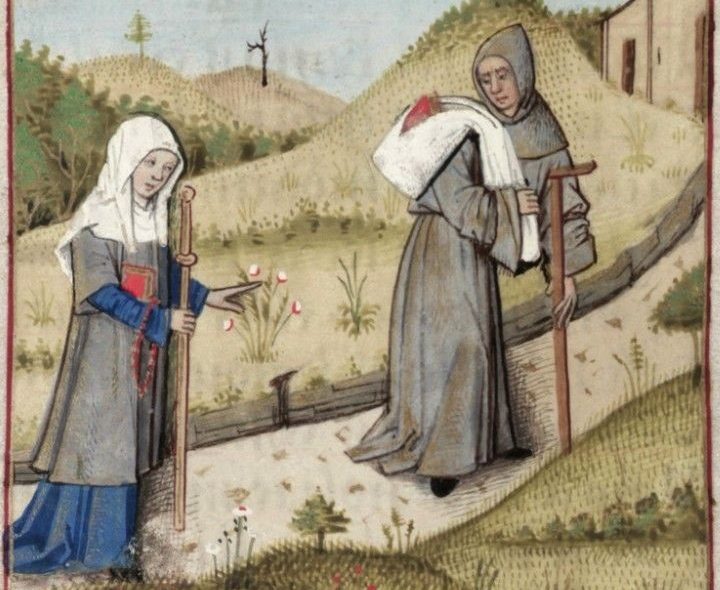
 Mary Sharratt is on a mission to write women back into history. Her acclaimed novel
  In the 1960s and 1970s, American-born Genevieve Vaughan was living in Rome with her husband, philosopher Ferruccio Rossi-Landi, and their three daughters. When Rossi-Landi, using Marxist models, began to write about language as a form of “exchange,” Vaughan was inspired to articulate her alternative theory based on the idea that language was developed and is learned through the gifts of the mother to the child. From that beginning, Vaughn developed an alternative theory of culture based on what she calls the “gift economy.”
 It is just past mid-January. The almost-ex-prez is sitting at the desk, staring at his smartphone. It begins shaking in his hand. There is a pile of documents on the desk, his Sharpie lying on top. The Sharpie suddenly rises into the air, black ink dripping from its pointy end. Almost-Ex hears a strange sound and looks at the giant big-screen TeeVee hanging on the opposite wall. The TeeVee is sprouting red fur! It slides down the wall and lands on the floor with a furry crash. As it explodes, tiny people fall out and begin yelling in big voices. “It’s not over till the recount is done.” “Always attack.” “It’s a conspiracy.” “It’s Fake News.” “Don’t listen to nobody but us.” “We know the Real Truth.” “Never give up.” “Never give in.” “It’s time to fire—”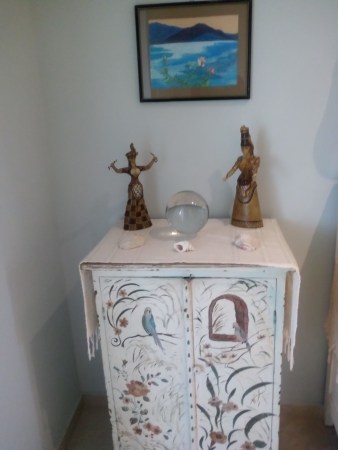
 Feminism and Religion