Reconsidering Faith in the New Semester by Sara Frykenberg

Ironically—though if I’d really thought about it I should have expected this—I have found that my own experiences feeling lost, in-between and more despairingly, halfway, have proved my most useful tools for teaching a class about faith.

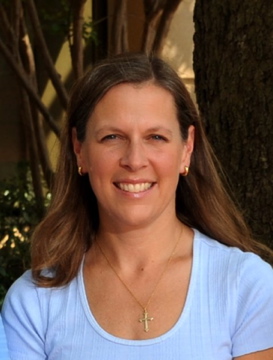
Sara FrykenbergLast October I wrote a blog about feeling halfway: halfway between faith and identity, halfway present in the day to day of my life, halfway full, and afraid to lose the “half as much as I really needed” to which I clung. Of possible experiences that might feed my soul and lighten my heart last year, I didn’t expect it to be my visit the AAR National Conference, but it was. I came home from San Diego feeling excited, capable and cared about, after visiting friends with whom I share passion, meeting new people and listening to scholarship that woke up my brain.

A necessary respite, this short trip reminded me that really I like what I do. Scholarship and genuine camaraderie feed my soul and the work that I do. And while I am glad to be holding onto these facts of my life, I find that the question of faith and identity has surfaced again this semester. Continue reading “Reconsidering Faith in the New Semester by Sara Frykenberg”
Fragment. From Delphi. Part Two by Barbara Ardinger

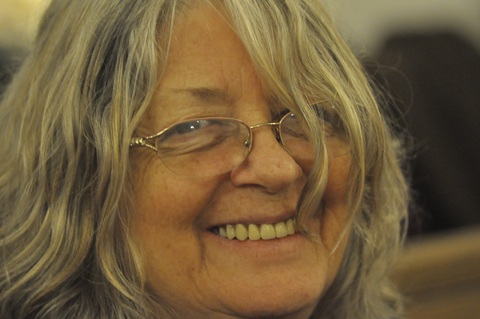
Barbara ArdingerRead Part One of this story here

The two men nodded in mutual respect, and the priest pointed at the old woman, who was now sitting on a three-legged stool. “Your Grace, the Pythoness herself is in attendance today. The Eldest One. Because of your … ah … great generosity to the holy precinct of the College of Lord God Apollo, we—I, myself, I went down … down in the darkness … went down to fetch her. Under the command of the Lord God Himself. All has been explained to you?” As the general nodded, the priest hurried on. “You understand, then, that Lord God Apollo has received your inquiry? The Pythoness will reply. That is, she will convey the Lord God’s words, which I myself will translate. You understand that old women often speak gibberish that common men—that … ah … august personages such as yourself—do not … er … comprehend.” The general frowned. “It’s part of the mystery! It is as Lord God Apollo permits.” The general nodded again. “If Your Grace will kindly excuse me, I must prepare myself. Ordinarily, the younger priests carry out these duties … for the questions of common men … that is to say—”

“Get on with it, man. I’m waiting. My army is waiting. The enemy is waiting.”

The high priest bowed. “Yes. Of course. Waiting.” He bowed again, backed away, and walked with fussy dignity to his station, a pavilion just outside the shed where the veiled woman sat waiting. The pavilion had been especially constructed for this occasion. Gold and white cloths were draped across ebony poles to shade a wide ivory chair for the head priest and a low table for the stenographer, a skinny brown man who emerged from one of the marble outbuildings and stumbled down the slope.

Continue reading “Fragment. From Delphi. Part Two by Barbara Ardinger”

Fragment. From Delphi. Part One by Barbara Ardinger

Barbara Ardinger

The United States has not won a war by the surrender of its enemies since 1945, yet we keep going to war. Young men are committing acts of war to terrorize us at home. Our civilian police forces are becoming increasingly militarized. Who can remember what it was like when the warrior-priests of the mouse-god, Apollo Smintheus, took over Gaia’s ancient shrine?

Long before they came down, she could see the three men in their imitation women’s robes. Because she had no place to hide, she continued to sit calmly on her little stool. She stroked the serpent, which tended to become excitable when the priests were present. It coiled more snugly around her shoulders.

The oldest of the three men, the one right behind the warrior with the torch and the sword, was wheezing heavily as he explained the situation to the boy, whose first trip into the darkness this was. “She’s always back there,” he said, mopping his forehead. “Like a damn snake in a hole.” He paused to catch his breath, and the other two paused with him. “So we always have to run her to ground, so to speak.” He laughed. “Sometimes we have to bind her to bring her out. She’s old. Used to be quite dangerous—” Continue reading “Fragment. From Delphi. Part One by Barbara Ardinger”

Safety and Vulnerability in a Dangerous and Fertile World: A Meditation on Incarnation

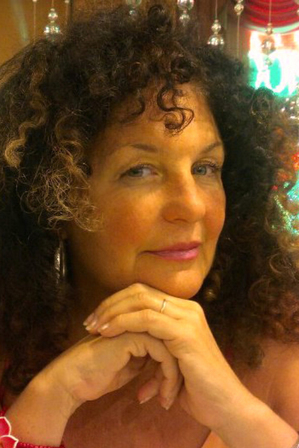
Marcia headshotFeeling safe again is often the healing and elusive aspiration of a person like me.
I have been living with the deep and cellular residuum of sexual trauma for most of my life—over thirty of my going-on forty-six years.

For many years, the grief and shame of losing my innocence cultivated an intense orientation to life’s doing. Safety for me back then was activity, noise, frenetic schedules, and a constant soundtrack to my life that meant I never had to be quiet with myself. Safety was in the predictable metrics of success that I could use to measure my self worth. I never had to stop and admit that I didn’t feel safe, ever.

I got a lot done all those frenetic years and my diligent efforts were affirmed with everything from scholarships to awards to pay raises.

But, trauma does not allow itself to be ignored. It demands attention. Its cellular ghosts haunt their host. They must be acknowledged, sometimes cast out, sometimes befriended, other times adapted or transformed. My trauma is tethered to the violence of a dangerous world, a world that knows no boundaries when it comes to annihilating innocence.

How can I be safe in this kind of world? How can any of us? Continue reading “Safety and Vulnerability in a Dangerous and Fertile World: A Meditation on Incarnation”

Moving the World Forward on the Spiral of Life by Carolyn Lee Boyd

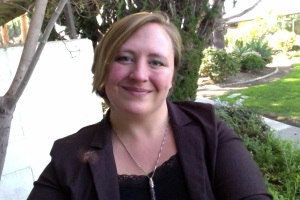
Carolyn Lee BoydThe wasp nest dwells at the edge of my vision waiting for me to notice what it has to show me. In my mind, I have come to this beloved circle of earth beneath the embracing branches of this tree to ponder because the need is urgent for all the world’s women to have lives of peace, safety, equality, opportunity, and enough prosperity to guarantee necessities, and to save our planet from ecological disaster. I seek new ways of thinking about my life and actions and those of the global community of women to inspire more effective means of progress.

wasps nestI finally spy the wasp nest. I follow its spiral shape, beginning at one point and then expanding in circles ever-outward and upward. I wonder, what if, in addition to perceiving my life as the more traditional journey or age-defined stages, I imagined it as a spiral like the galaxy, flowers, ancient sea creatures caught forever in fossils, swirling water, and so much else of nature? What if at my birth I was like a spiral’s central point, perhaps me at my most essential or as an infinite potential, and then, over time, I spiraled endlessly into the cosmos? Continue reading “Moving the World Forward on the Spiral of Life by Carolyn Lee Boyd”

The Greek Elections and the 1% by Carol P. Christ

Alexis Tsipras of Greece & Pablo Iglesias of Spain hope to change Europe for the 99%

On January 1, 2016, 1% of the world’s population will own 50% of the world’s wealth, according to Oxfam.

On January 26, 2015 Alexis Tsipras will be in the process of forming a new anti-austerity government in Greece. Some believe this will be a new beginning not only for Greece, but for the world–if others follow the Greeks in resisting the domination of their economies by the international monetary interests that represent the 1%.

The bondholders and the international press tend to portray the Greek economic crisis as a morality play in which foolish Greeks borrowed too much and must suffer the consequences to pay back their loans. If Greece were a lazy teenager appearing on Judge Judy, tough love might be the answer.

But this simplistic equation cannot be made to work for a country of 10 million people, only some of whom colluded in taking out loans they could not pay back. Continue reading “The Greek Elections and the 1% by Carol P. Christ”

Sequana and Blessed Water by Deanne Quarrie

deanne_2011_B_smWater is the daily necessity for earth’s creatures.

When the Continental Celts were looking for a new homeland, they ventured west from the known river valleys of the great landmass we call Eurasia. Just beyond the great mountains, the Alps, they discovered sweet and abundant water, fertile soil, expansive woodlands, and the plentiful fish, game, berries, grasses, fungi and broad-leafed plants necessary to support their tribe.

We know that Celtic spirituality was, in its roots, animistic (spirit was alive in every living thing), non-anthropomorphic (the source of life and death was water, land, plant and animal-life), tribe-specific (in France alone there is evidence of several hundred deities) and a spirituality of place, of the major landforms that defined the world (rivers, springs, forests, animals, heavenly bodies). To the extent that Celtic spirituality was theistic, the creator/sustainer/destroyer of life was typically a goddess. Continue reading “Sequana and Blessed Water by Deanne Quarrie”

Hail Mary: The Rosary and Why I Keep Praying by Marie Cartier

MarieCartierforKCETa-thumb-300x448-72405My mother-in-law is currently in hospice and expected to cross over any time now. My wife is with her. Those two sentences alone—since I am a woman writing this blog—signify historic/herstoric change. I am a woman and I am writing about my mother in law and I am writing that my wife is with her. We are in a sea change regarding gay marriage. I will be allowed bereavement to go with my wife, when the time comes, for the services.
What has not changed in my life is my dependence on traditional prayer. Although I am a witch/Wiccan, have done all kinds of meditation from Transcendental Meditation, and Buddhist chanting, to visualization, spell work, and New Age affirmation—when push comes to shove as they say, I get out the Rosary.

Why? Continue reading “Hail Mary: The Rosary and Why I Keep Praying by Marie Cartier”

Research and the Dissertation: Getting Back to Basics by Michele Stopera Freyhauf

Freyhauf, Durham, Hahn Loeser, John CarrollHistory is written by the victors – this is something that we all know, or at least should know. I apologize in advance for being elementary in my discussion, but I think one thing that scholars tend to do too often is assume our readers or audience has a firm grasp on what we are talking about. With this topic, I am not assuming.

When studying artifacts from past civilizations, an interesting phenomenon of using spolia as a demonstration of conquest is commonplace. If a conquered country’s deity is placed on the bottom of a column, or even turned a different direction, the significance usually means that deity is demoted or inferior – this is found in the Hagia Sophia (especially under the structure). If spolia is found whereby a country adds their deity (even if that deity is their ruler) to another country’s monument, then there is a coexistence or combining of empires with the conquesting ruler in prominent view, even substituting past rulers. This is best demonstrated on the Arch of Constantinople whereby Christian symbols and the likeness of Constantine was incorporated into an arch that once displayed the victories of Marcus Aurelius and Domitian. If you are interested in this topic, please see my article “Hagia Sophia: Political Symbolism in Stones and Spolia” in Popular Archaeology magazine.

Continue reading “Research and the Dissertation: Getting Back to Basics by Michele Stopera Freyhauf”

Strong Female Role Models among Swedish Immigrant Ancestors in Kansas City by Carol P. Christ

carol p. christ photo michael bakasWhen I decided to become a career woman, I thought I had no role models in my family. My parents (who sometimes considered me the black sheep) would have agreed. Imagine my surprise to find a matriarchal family and three generations of businesswomen women among my Swedish family in Kansas City!

My great-aunt Edith who was a stenographer, secretary, and notary public was a fixture at family gatherings. When I knew her, she was living in California with her two brothers who also were not married. Until their father died, they had lived their whole lives in the family home in Kansas City. I sensed that though my family respected my uncles, they felt sorry for Aunt Edith. It certainly was never suggested to me that instead of getting married and being supported by a husband, I could become a self-supporting working woman like my aunt. Continue reading “Strong Female Role Models among Swedish Immigrant Ancestors in Kansas City by Carol P. Christ”