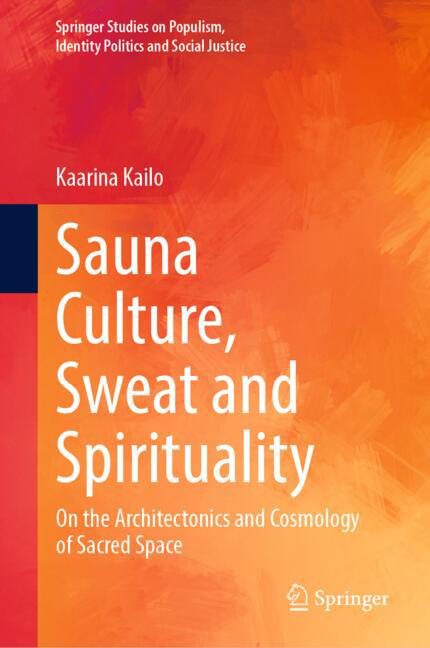
Sauna, Culture, Sweat and Spirituality: On the Architectonics and Cosmology of Sacred Space by Kaarina Kailo: Book Review by Beth Bartlett

Living as I do in the midst of both Finnish immigrant and Anishinaabe cultures, and where the two merge in the many here who identify as “Findians,” I was intrigued by the description of Kaarina Kailo’s book, Sauna, Culture, Sweat and Spirituality, as a comparative exploration of Indigenous sweat lodges  — madoodiswan in Anishinaabemowin — and Finnish saunas.[i] As an outsider to both cultures, I have no ancestral or traditional knowledge of either saunas or sweat lodges and I wanted to learn more about both.  Kailo’s book did not disappoint.  What I hadn’t expected and was delighted to discover was that Kailo connects both with ancient goddess religions, contemporary feminist spiritualities, and ecofeminism. 

Kailo’s book is a widely and deeply researched cross-cultural comparative study of the elements, practices, intentions, and spiritualities of sweat cultures ranging far beyond various Native American sweat lodge practices – Delaware Great Houses, Anishinaabe sweat lodges, Pueblo kivas – and the Finnish sauna,to Iberian/Galician saunas, Irish sweathouses, and Old Europe.  As Kailo herself says, the value of such cross-cultural studies is the way they help to expand our thinking, enabling us to see things we might not have otherwise.  She repeatedly says that she is looking for the “affinities” among these various sweat cultures, rather than focusing on their differences, and she finds many.  In the process, she reveals the role of sweat lodges, sweat houses, and saunas as sacred spaces of healing, restorative balance, connection with the spirits, rebirth and regeneration, women-centered spirituality, and Great Bear religions. Infiltrated throughout are her reflections on how reviving the widespread use of sweat cultures and saunas, and the woman and life-centered spiritualities at their heart, would provide an antidote  to the current economic, ecological, and political threats to the world.

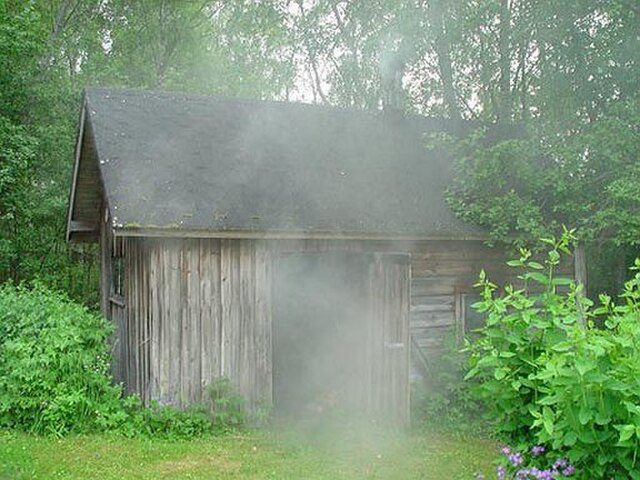
Finish Smoke Sauna
Continue reading “Sauna, Culture, Sweat and Spirituality: On the Architectonics and Cosmology of Sacred Space by Kaarina Kailo: Book Review by Beth Bartlett”

Changing Woman’s Light, part 2 by Sara Wright

Last week Sara told the story of Changing Woman. You can read it here.

What I love the most about this story is that Changing Woman evolves from a woman who is passively acted upon into a self – directed deity  who stands up for what she wants and needs. A second reason I feel so strongly about this tale is that Changing Woman demonstrates the importance of having a relationship with more than human beings – animals and plants. A third reason I am so attracted to this myth is the gender balance that eventually evolves between the two – Changing Woman and the Sun. But I think the most important part of the story for all of us is that Changing Woman never dies. She grows old and then young again reflecting the powers of the Great Round to renew All Life.

Imagine if we were all brought up with this kind of myth to guide us…

  When I returned from NM five years ago, I brought home fragments of worked and unworked chert not realizing at the time that Changing Woman accompanied her stones and that they would continue to exert an influence on me. My relationship with that mountain is not distance dependent. I also continue to re – experience the wonder and awe I experienced as becoming part of that mountain, although these periods wax and wane like the moon. The Navajo call Changing Woman’s Mountain Tsip which means tree mountain and the Tewa use a similar word Tsip’in, to name this Being obsidian or flint mountain.  A shining mountain crafted of stones and trees, yes!

Continue reading “Changing Woman’s Light, part 2 by Sara Wright”

Changing Woman’s Light, part 1 by Sara Wright     

Born of Stone and Trees
Birthing a People
from a Mountain
of Light
I hold slivers of her body
touch numinous fragments
worked by Peoples
who honor and
live the Great Round
Pungent scent of
red pine and
spruce,
luminescent
lemony cottonwood
cobalt sky
steep gorges, sand
flakes of pink,  rust
a splash of bittersweet
translucent charcoal
flint
spiny cactus
juniper serpents
twisted into
fantastic shapes
a peak that pierces sky
flat topped
on one side
I belong to Her
and She to me
Mother of all
Creation.

Changing Woman’s Mountain

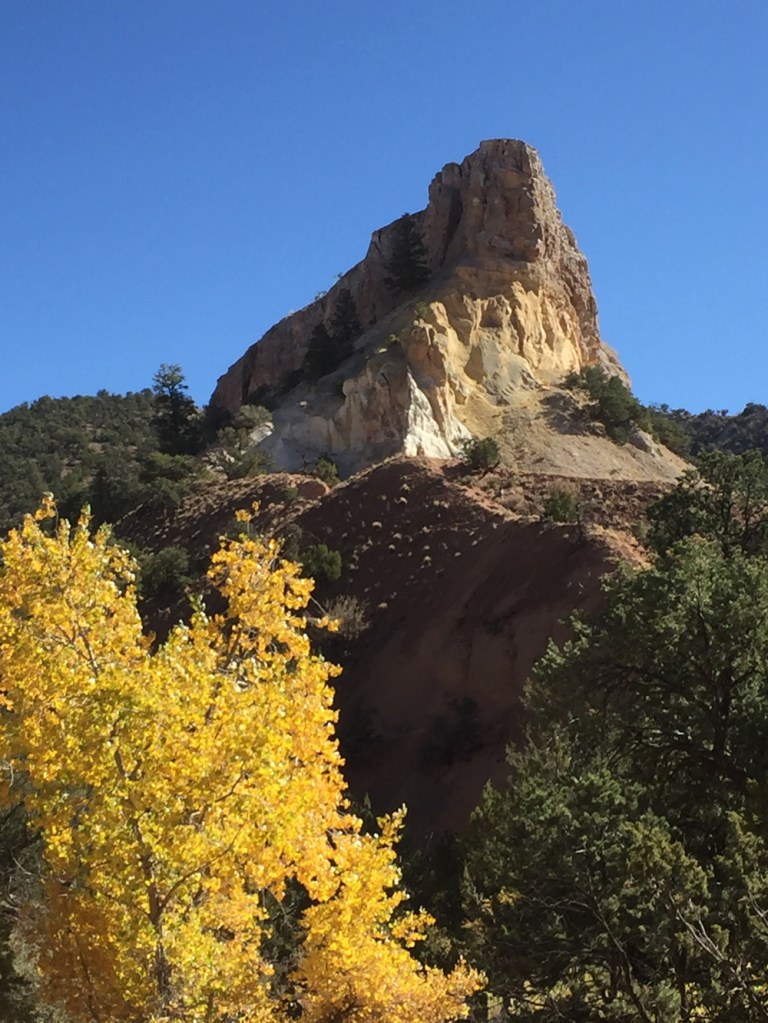
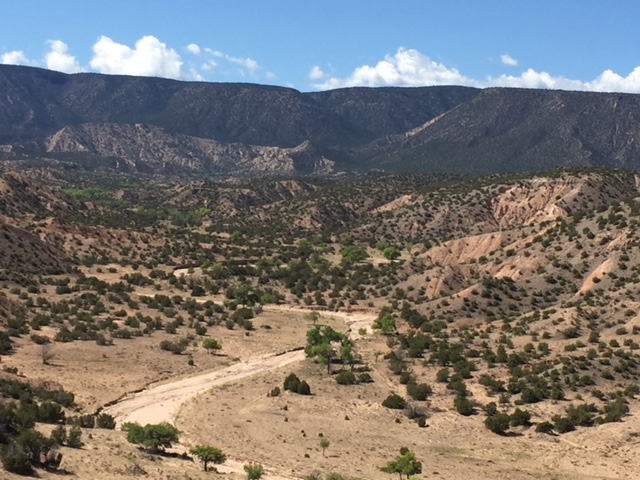
I have written before about Changing Woman’s Mountain located near Abiquiu New Mexico. Most call this mountain Cerro Pedernales and an image of the flat side of this mountain, her mesa, was made famous by artist Georgia O’Keefe.

 Astonished by my first glimpse I climbed a long serpentine road that wound around steep gorges, rivulets of water, open meadows and unbroken stretches of lush fragrant green forests to reach the backside of this mountain.  I couldn’t get over the fact that one side was a mesa and other was a peak that pierced the sky like a sword.

Continue reading “Changing Woman’s Light, part 1 by Sara Wright     “

Navajo  Mountain Way Chant :  Bear as Healer – He Who Frightens Away Illness, part 2 by Sara Wright

Part 1 was posted last week. You can read it here.

The second sand painting used on the sixth night of the Mountain Way Chant is supposed to be a representation of the bears’ home in the Carrizo Mountains. In the center of this painting is a bowl of water covered with black powder. The edge of the bowl is adorned with sunbeams, and external to it are the four sunbeam rafts, on which the Nature Spirits, the Yei stand. There is a close relationship between the Yei and the bears. In the Mountain Way Chant, Talking God, Water Sprinkler (often pictured as a rainbow) Growling God (bear), and Black God are always present.

Bears and Light are related. In the first painting there is light that surrounds the bear and light is present in the form of sundogs that are positioned in each of the four directions. In the second, sunbeams are present in the center and also in each of the four directions providing places for the Yei to stand. It’s very difficult not to draw the conclusion that the light that we are speaking of is also an inner light, and this is consistent with the qualities of healing, insight, and introspection that the Navajos associate with the bear.

Continue reading “Navajo  Mountain Way Chant :  Bear as Healer – He Who Frightens Away Illness, part 2 by Sara Wright”

Navajo  Mountain Way Chant :  Bear as Healer – He Who Frightens Away Illness, part 1 by Sara Wright

All Navajo ceremonial practices emphasize healing human illness, emotional, mental, and physical, while restoring balance and harmony between humans and the rest of Nature. The most sacred of these ceremonies occur during the winter months. All the winter ceremonies have at their center the healing power of animals. The best known of these is probably the Night Chant that lasts nine days and nine nights and is held sometime around the winter solstice – the timing of these ceremonies is fluid. Like the Night Chant, the Mountain Way Chant probably stretches back into prehistoric times from 60,000 – 4000 B.C.E.

The Mountain Way Chant, the second and equally sacred although less well-known ceremony is also a nine-day night chant that marks a transition between the seasons of winter and spring. The Mountain Way Chant takes place in late winter before thunderstorms strike and the spring winds arrive ( any time after First Light which occurs in the beginning of February until the Spring Equinox). It’s important to know that these ceremonies are not only fluid but can occur as many times as are needed. One purpose is to call up the rains. The ceremony is led by a medicine man that addresses, in particular, the mental uneasiness and nervousness associated with transitions, helping to bring individuals and their extended families back into balance and harmony with the rest of nature (my italics).

Continue reading “Navajo  Mountain Way Chant :  Bear as Healer – He Who Frightens Away Illness, part 1 by Sara Wright”

The Grandfathers, part 2 by Sara Wright

Yesterday’s post which you can read here, ended with this line from the Grandfather, “The young people will become confused and when all is finally lost then the Creator will return to restore not just the Tewa but all tribal peoples to the land.”

I experienced wild hope surfacing… I had heard words to this effect before but assumed that the people needed that story to go on. Suddenly I wasn’t so sure… something about the way this man talked to me made me believe him. He exuded a complex sense of deep humility, knowledge and authority. I thought about the ravages of Climate Change and the disgusting cross-cultural belief that the Earth’s job was to serve humanity. My rational brain went on overload giving me a thousand reasons why what he predicted couldn’t be true, almost as if it needed to win this round (ah, Patriarchy exposes itself – if you don’t win you lose). Yes, it was true that we were in a state of breakdown… he didn’t deny it but he also made it clear that this was not the end. First we had to survive the breakdown, and living through it is a challenge that some like me live with every day. These are dark times.

Continue reading “The Grandfathers, part 2 by Sara Wright”

The Grandfathers, part 1 by Sara Wright

Moderator’s Note: Sara wrote this in 2019. This is its first publication and has grown all the more pertinent now.

Sapawe is an ancestral Tewa Pueblo located outside of El Rito. Until this weekend I had never been to the ruin. I didn’t know, for example, that it was the largest ruin in New Mexico, and perhaps the entire Southwest or that during the period it was built and occupied (1300- 1500’s) that ten thousand people lived there. Estimates suggest that there were at least 1,800 ground rooms and twenty – three kivas. Walking around the huge compound is something I have yet to do. It was too hot for me to do more than take in the astonishing view or traverse a small part of the plateau, briefly. I did note that there were artifacts and planned to come back another time – soon.

Early yesterday morning I met with four other people to see the shrine that was located outside the pueblo. This was the place that secret ceremonies were held on behalf of all the people in the pueblo. On the surface all that could be seen was a large raised stone circle, but there was a sense of presencethere that felt both powerful and peaceful probably because few people knew about this shrine and the  natural power of place had not had a chance to dissipate. After having explored a couple of other Tewa ruins, I learned that it was very important to allow place to speak in its own time, and to allow that to happen I had to return again and again with an open heart, eyes that could see beyond the obvious, and an active inner ear … The land speaks to those that can listen.

Continue reading “The Grandfathers, part 1 by Sara Wright”

Evergreen – Part 2 by Sara Wright

[Part 1 of Evergreen]

This year while submerged in this process of creating my winter story, I remembered…  

When the vision occurred that frigid winter solstice dawning in 2019, I was traversing the Bosque (a wetland) in Abiquiu NM. I had slipped into a light trance as I walked with my hands tucked into my pockets around the junipers, cottonwoods, thorny olives in a repetitive circle. The geese and cranes were wheeling overhead, welcoming in the dawn. The sound of the river in the background was a soothing murmur.

Suddenly I stopped. I was looking down at my cupped hands, entranced. A perfect miniature marbled earth had appeared in my hands. Inside the clear plastic film, the whole earth was visible and pulsing with light. Lush green trees, fields, plains, mountains, deserts, oceans, and clear waters flowed through the pristine planet. I saw a tiny wooden boat with all manner of creatures streaming out of the vessel all at once. What? An Ark?

Continue reading “Evergreen – Part 2 by Sara Wright”

Evergreen – Part 1 by Sara Wright

I forgot the
‘Original Instructions’
until She nudged me
Black Bear
Chloe
Green Shoot
alive or dead
She lives on
like the Evergreens
she evolved
with, climbed
to safety
from those
who would harm.

Continue reading “Evergreen – Part 1 by Sara Wright”

The Story of Changing Woman, part 2 by Sara Wright

Part 1 was posted December 7th. You can read it here.

Commentary:

I love this story because it demonstrates the evolutionary and eternal nature of Woman; her intimate relationship to Nature, her ability to give birth, to mother, to let go, her ability to endure, her need for animals and plants as companions and her willingness to stand her ground until she is able to get what she needs. Changing Woman matures from a passive figure who is acted upon by the forces of Nature into a self-directed female power who knows what she wants, and one who finds peace in choosing relationships with animals, plants and humans on her own terms.

Initially, Changing Woman is impregnated by the wind – the power of the spirit moving across the land – and not through sexual intercourse. Spirit and the Body of the Earth are the two equally creative aspects involved in her birth. The same holds true for her children, who are male, but conceived and birthed in a similar manner without the need for male insemination (no room for Patriarchy to enter here), suggesting to me that all three are parts of one spiritual/bodily whole that cannot be separated. As creative principles (beyond gender stereotypes) they work together as a triad to rid the world of monsters, to make the Navajo world a safe place, and to secure the matrilineal line. According to Navajo mythology securing the matrilineal line is primarily how Changing Woman saves the world.

Continue reading “The Story of Changing Woman, part 2 by Sara Wright”