Deciding to Leave or Remain in the Religion of Your Birth – Part II by Judith Plaskow

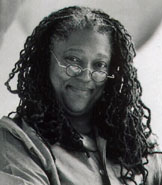
Photo by Manhattan College

This is a response to Carol P. Christ’s blog of April 29, 2013 on why she decided to leave the Christian tradition. Carol and I discuss these questions further in our forthcoming book Goddess and God in the World: Conversations in Embodied Theology.

You raise the important question of what factors lead feminists to leave or remain within the religion of their birth. Your central challenge to me is how I can commit myself to a tradition in which God is imagined as a violent warrior when these images have harmed and continue to harm women and the world. How can I not recoil from using such images in worship? Why is the power of symbols less important to me than to you?

The first thing I would say is that, like you, I find these images profoundly problematic. One of the projects I have taken on in my retirement is reading the Bible from cover to cover, and I was appalled in going through all the prophets together at the amount of violence in their teachings. When I have spoken on the topic of dealing with difficult texts in the Jewish and Christian traditions—a subject that is dear to my heart—I always talk about God’s violence in addition to texts that demean women. And, yes, I have sometimes asked myself how I can remain part of a tradition in which God is depicted in this way. So I do not disagree with your critique of this imagery, but obviously for me, it is not decisive. Why not? Continue reading “Deciding to Leave or Remain in the Religion of Your Birth – Part II by Judith Plaskow”

When Feminists Disagree by Linn Marie Tonstad

Linn Marie TonstadA while back I gave a talk on feminist trinitarian theology to an audience of mostly progressive academics, including feminist and womanist scholars of religion. In the course of analyzing what I called the ‘trinitarian imaginary’ in Christianity and its often-patriarchal and masculinist forms, I suggested that transforming that imaginary might require recognizing the hypothetical character of theological statements until the eschaton, a theme that has been developed in depth by a German theologian named Wolfhart Pannenberg. Now, Pannenberg is decidedly neither a feminist nor a progressive theologian. To name just one example: in his three-volume Systematic Theology, his few explicit references to feminist or female theologians include a brief mention of Mary Daly (volume 1, p. 262) in connection with a critique of feminist theologians for projecting (!) masculinity into God in their readings of divine fatherhood, and a critique of Valerie Saiving and Susan Nelson Dunfee’s positions on the traditional Christian doctrine of sin as pride (volume 2, p. 243). So when I mentioned Pannenberg as a resource in my talk, one of the feminist scholars in the audience audibly gasped and flinched – it became clear in the Q&A that she had significant concerns about whether I could count as a feminist at all. After all, to mine someone like Pannenberg for constructive feminist theological work might imply an endorsement of his other positions, or might entail taking over aspects of his system that would taint my own project in anti-feminist directions – all legitimate concerns.  Continue reading “When Feminists Disagree by Linn Marie Tonstad”

Papal Retirement: A Matter of Conscience by Mary E. Hunt

Mary HuntThe unexpected announcement of the resignation of Pope Benedict XVI is a welcome breath of fresh air. A human being, even a pope, ought to have the option to say enough is enough, I have done what I can do, and now it is time for someone else to take over. I applaud his move and read it as a sign of hope in a dreary ecclesial scene.

Speculation about his health is rampant. As with many elders whose offspring plot to take away the car keys, I suspect there was some backdoor lobbying to make this retirement happen. But I dare to hope that it was at least in part the considered judgment of an octogenarian who saw his predecessor propped up long after his prime and did not want the same for himself.

But before looking for the backstory there’s something in Benedict’s resignation statement that bears noting: “After having repeatedly examined my conscience before God, I have come to the certainty that my strengths, due to an advanced age, are no longer suited to an adequate exercise of the Petrine ministry.” Continue reading “Papal Retirement: A Matter of Conscience by Mary E. Hunt”

Monthly Highlight: Emilie M. Townes


Emilie M. Townes

“In my teaching I want to get students excited about that notion of, you know, you’re not just here to get a Yale degree and have it on your diploma and be able to hang it on your wall…You should be here thinking about what kind of contributions can I make to society….What are you doing that helps enhance the lives of all of us, as opposed to (our) own little idiosyncratic research interests.”  – – Emilie M. Townes

Emilie Townes is a pivotal person in the field of Womanist and Christian ethics as well as a foremother and pioneer in Womanist theology. Cornel West of Princeton University said:

“Emilie Townes is the towering womanist ethicist of our time….In this ice age of indifference and evasion, her powerful voice and viewpoint summon us. And we thank her for her vision and courage.”

At an opening address at the Convocation in 2005, Townes stated that there is a need to live in a “deep walking hope” that shapes lives “in ways that are not always predictable, not always safe, rarely conventional” and protests “with prophetic fury the sins of a world, and sometimes theological world views, that encourage us to separate our bodies from our spirits, our minds from our hearts, our beliefs from our actions.” Continue reading “Monthly Highlight: Emilie M. Townes”

Mourning the Loss of Beverly Wildung Harrison

20121216-213151.jpg

It is with deep sadness that Feminism and Religion mourns the passing of our foresister Beverly Wildung Harrison. As a feminist religious ethicist her work has made substantial contributions to the field and she has paved the way for the next generation of feminists to continue the pursuit of justice and social change.

As Mary Hunt states, “her mentoring and friendship set the bar high for how to be a feminist professor. Her stalwart commitment to justice is a legacy all its own.”

She was known to say, “Bless you, and bless the revolution.” We bless and celebrate Beverly’s life, her wisdom, strength, generous nature, and commitment to our community. May she rest in peace and may we all continue the revolution!

“I believe that our world is on the verge of self-destruction and death because the society as a whole has so deeply neglected that which is most valuable and the most basic of all the works of love — the work of human communication, of caring and nurturance, of tending the personal bonds of community….Those who have been taught to imagine themselves as world builders have been too busy with master plans to see that love’s work is the deepening and extension of human relations. This urgent work of love is subtle but powerful. Through acts of love — what Nelle Morton has called “hearing each other into speech” — we literally build up the power of personhood in one another. It is within the power of human love to build up dignity and self-respect in each other or to tear each other down. We are better at the later than the former. However, literally through acts of love directed to us, we become self- respecting and other-regarding persons, and we cannot be one without the other….The power to receive and give love, or to withhold it — that is, to withhold the gift of life — is less dramatic, but every bit as awesome, as our technological power. It is a tender power….rooted in our bodies, ourselves.”   Beverly Wildung Harrison, Making The Connections, p.12. 

A Gift I hope I can give: A Thank you to Ada Maria Isasi-Diaz by Sara Frykenberg

At some point, I finally asked the mentor what her name was and with a smile and joy that I do remember, she said, “I’m Ada Maria Isasi-Diaz.”  OH MY GOD/DESS.  I was completely taken aback.  I really couldn’t believe that I was sitting at a table and casually talking with this woman whose work I had read and loved: a woman I considered famous.  More than this, however, I couldn’t believe that she was talking to me.

I attended a memorial panel for Mujerista theologian, teacher and activist Ada Maria Isasi-Diaz at the American Academy of Religion National Conference this year.  After panelists shared their memories of their friend and mentor, audience members were also invited to speak.  Sitting in the audience, listening to story after beautiful story of this woman’s life, I was amazed not only by how many people Isasi-Diaz affected in that one room, but also by the similarities of the stories I heard.  Ada Maria Isasi-Diaz was a woman who shared her gift with many people: empowerment and access to their own power.  She generated confidence, both by creating opportunities directly and indirectly for others, and by rewarding the faith of those who believe in her work by living her ideals in an obvious, open and caring way.

I was lucky enough to meet Prof. Isasi-Diaz once in my life.  I was attending a women’s mentor luncheon as a graduate student, hoping to meet a more senior scholar who could tell me something I needed to know in order to get a job some day.  I sat down at a table with another student and a woman older than both of us who seemed to be our mentor representative.  I do not remember the entire conversation.   However, I do remember that we, the students at the table, did most of the talking and the mentor asked us questions.  Continue reading “A Gift I hope I can give: A Thank you to Ada Maria Isasi-Diaz by Sara Frykenberg”

What Do Women Bring to the Interfaith Table? by Rita M. Gross

The most important thing that women bring to the interfaith table is our sheer presence. I do not support theories of gender essentialism, which claim that women and men are fundamentally different, that men have a masculine essence different from women’s feminine essence. Regarding most interfaith issues, I do not think that women offer different insights than men could. But because religions have been such a boys-only club, the presence of women at the interfaith table loudly proclaims a critical message that can be proclaimed no other way. Religions are no longer going to be male sanctuaries, closed off to women except for the supportive roles we have traditionally played. Continue reading “What Do Women Bring to the Interfaith Table? by Rita M. Gross”

Catholic Feminists Meet, Strategize by Rosemary Radford Ruether and Theresa Yugar

During July 8-11, 2012 twenty Catholic feminist leaders met in a retreat center near Baltimore to discuss their concerns and hopes in the light of the recent and ongoing attacks of Catholic bishops on women and especially on feminist work in the church. The group consisted of representatives from many sectors of Catholic institutions and movements.  There were the founders of a peace and justice movement of the Sisters of Charity and the Institute for Communal Contemplation and Action. There was a pastor and leadership trainer from an alternative parish and a writer for the National Catholic Reporter.

Many in the group were professors of theology or ethics at Catholic, Protestant or state schools. Among them were teachers at Whittier College, Claremont School of Theology, Santa Clara University and San Jose University in California, Loyola University in Chicago, St. Catherine in Minnesota, Drew University in New Jersey and Boston College. Catholic reform movements were well represented, with leaders from Dignity, the Women’s Ordination Conference, Call to Action and RomanCatholicWomenPriests. There was a teacher at Marymount School in New York City, the President of Marymount School in Los Angeles and a doctoral student in theology. Continue reading “Catholic Feminists Meet, Strategize by Rosemary Radford Ruether and Theresa Yugar”

Narrative Textiles and Women’s Stories by Mary E. Hunt

Art, like religion, is a window into cultures. Women’s stories often find expression in narrative textiles, a medium I have long admired but never quite understood. I encountered the fabric art of Esther Nisenthal Krinitz recently. She was a Holocaust survivor who created stunning needlepoint pictures of her and her sister’s escape from Nazis in 1942. They left their Jewish parents behind and pretended to be Catholic girls from the country in order to survive. In 1977, she began to create 36 works of needlepoint in which she stitched the heart-wrenching episode with power and beauty, color and force, the memory of a child now seared in the heart of a woman.

Her daughters, Bernice Steinhardt and Helene McQuade, set up a foundation, Art and Remembrance, to show the “power of personal narrative in various forms of art to illuminate the effects of war, intolerance, and other forms of social injustice on its victims.” Their mother’s story is now available both in a book and a riveting film as well as in the art itself. These are narrative textiles of the most precious sort. Continue reading “Narrative Textiles and Women’s Stories by Mary E. Hunt”

SHE WHO CHANGES* by Carol P. Christ

She changes everything She touches and everything She touches changes. The world is Her body. The world is in Her and She is in the world. She surrounds us like the air we breathe. She is as close to us as our own breath. She is energy, movement, life, and change. She is the ground of freedom, creativity, sympathy, understanding, and love. In Her we live, and move, and co-create our being. She is always there for each and every one of us, particles of atoms, cells, animals, and human animals. We are precious in Her sight. She understands and remembers us with unending sympathy. She inspires us to live creatively, joyfully, and in harmony with others in the web of life. Yet choice is ours. The world that is Her body is co-created. The choices of every individual particle of an atom, every individual cell, every individual animal, every individual human animal play a part. The adventure of life on planet earth and in the universe as a whole will be enhanced or diminished by the choices we make. She hears the cries of the world, sharing our sorrows with infinite compassion. In a still, small voice, She whispers the desire of Her heart: Life is meant to be enjoyed. She sets before us life and death. We can choose life. Change is. Touch is. Everything we touch can change. Continue reading “SHE WHO CHANGES* by Carol P. Christ”