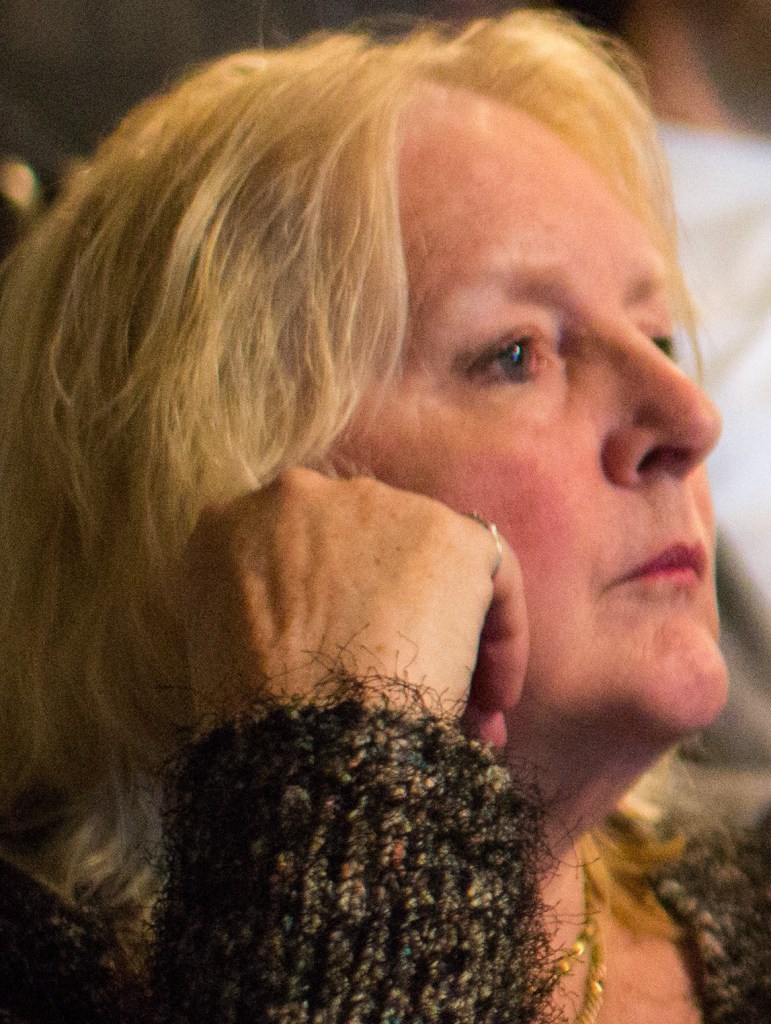
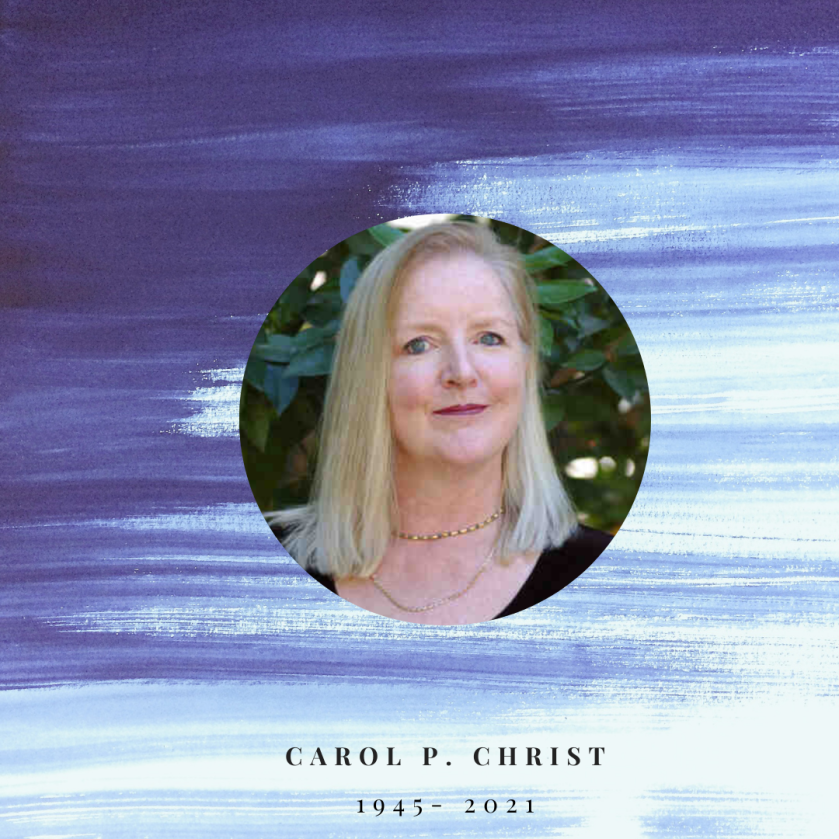
Legacy of Carol P. Christ: Is It Essentialist To Speak Of Earth As Our Mother?

This was originally posted on November 25, 2013
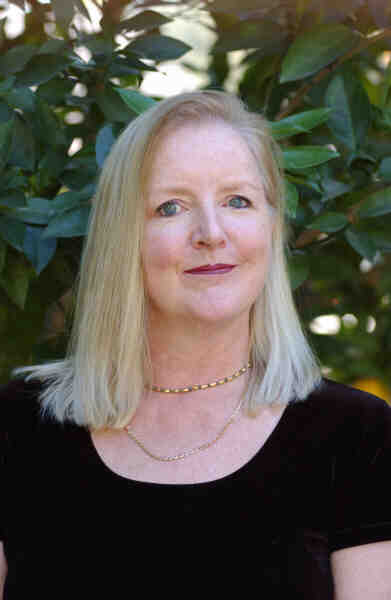
The charge of “essentialism” has become equivalent to the “kiss of death” in recent feminist discussions. In this context it is taboo to speak of Mother Earth.  Yet, I would argue there are good reasons for speaking of Mother Earth that do not add up to essentialism. What if the values associated with motherhood are viewed as the highest values? What if the image of Mother Earth encourages all of us to recognize the gift of life and to share the gifts we have been given with others?

For those not familiar with the “essentialism” debate in feminist theory, it might be useful to define “essentialism.”  In philosophy, essentialism is the idea that every “thing” has an “essence” which defines it.  In its pure form, essentialism is a by-product of Platonic “idealism” which states, for example, that the “idea” of table is prior to every actual table and that every actual table is an embodiment of the idea of table.

Continue reading “Legacy of Carol P. Christ: Is It Essentialist To Speak Of Earth As Our Mother?”

Legacy of Carol P. Christ: “THE DIVINE MYSTERY”?

This was originally posted on November 11, 2013

christina's love

“The mystery of God in feminist theological discourse” is the subtitle of Elizabeth Johnson’s widely read She Who Is. The notion that God is “a mystery” is rarely questioned in feminist theologies. But maybe it should be.

Although it is true that the finite cannot encompass the infinite, and that all knowledge is rooted in particular standpoints, I do not agree that the first and last thing to be said about the divine power is that it is “a mystery.” Indeed as I will argue here, speaking about God as “a mystery” obscures more than it “reveals.”

Continue reading “Legacy of Carol P. Christ: “THE DIVINE MYSTERY”?”

Legacy of Carol P. Christ: The Sacred Feminine or Goddess Feminism?

This was originally posted on January 25, 2016

Carol Molivos by Andrea Sarris 2

In recent years “the Sacred Feminine” has become interchangeable with (for some) and preferable to (for others) “Goddess” and “Goddess feminism.” The terms Goddess and feminism, it is sometimes argued, raise hackles: Is Goddess to replace God? And if so why? Does feminism imply an aggressive stance? And if so, against whom or what?

In contrast, the term “sacred feminine” (with or without caps) feels warm and fuzzy, implying love, care, and concern without invoking the G word or even the M(other) word–about which some people have mixed feelings. Advocates of the sacred feminine stand against no one, for men have their “sacred feminine” sides, while women have their “sacred masculine” sides as well.

Nothing lost, and much to be gained. Right? Wrong.

Continue reading “Legacy of Carol P. Christ: The Sacred Feminine or Goddess Feminism?”

Legacy of Carol P. Christ: Sacred Marriage or Unholy Cover-up?

This was originally posted on November 7, 2016

Many women are drawn to the image of the Sacred Marriage—perhaps especially those raised in Roman Catholic or Protestant traditions where sex is viewed as necessary for procreation but nothing more, and who learn that the naked female body as symbolized by Eve is the source of sin and evil. In this context, the positive valuing of sexuality and the female body found in symbols of the Sacred Marriage can feel and even be liberating.

Jungians have claimed that the Sacred Marriage is an archetype of the wedding between the “masculine” and the “feminine.” Many women have been attracted to this idea as well. It “softens” the radical feminist critique of patriarchy and male dominance. Rather than “castrating” the “phallocracy” as Mary Daly urged, we can think in terms of the “marriage” of qualities traditionally associated with male and female roles. Women, it is said, can use a good dose of ego and assertiveness traditionally associated with the masculine, while men need to have their dominating rational egos tempered by feminine qualities like care and compassion.

Continue reading “Legacy of Carol P. Christ: Sacred Marriage or Unholy Cover-up?”

Legacy of Carol P. Christ: Argument from “Absence” and Absence of Dialogue

This was originally posted August 31, 2015

Recently in a conversation with a noted archaeologist and his male graduate student assistant, I proposed that the absence of war and the trappings of war, including images of larger than life-size warrior kings, suggested to me that we should not understand the social structure of ancient Crete on the model of patriarchal kingship. “Kings are always warriors,” I said, “yet there is no clear and convincing evidence of organized warfare in ancient Crete. And,” I continued, “because warrior kingship is not a ‘natural state,’ but one achieved through warfare and domination, kings must legitimate and celebrate their power through larger than life-size images of themselves. Such images were common in ancient Sumer and in ancient Egypt, but are not found in ancient Crete.”

The response I received was unexpected: both archaeologists seemed dumbfounded. “Is kingship always associated with war?” they asked. “Yes,” I responded, “this is a conclusion I reached many years ago while studying the cultures of ancient Greece and ancient Israel, and I have recently elaborated this theory in a series of essays on the blog Feminism and Religion ( See “Patriarchy as a System of Male Dominance Created at the Intersection of the the Control of Women, Private Property, and War”).”

Continue reading “Legacy of Carol P. Christ: Argument from “Absence” and Absence of Dialogue”

From the Archives: Forty Days After Childbirth, Mary Returns to the World by Laura Shannon

This was originally posted on Feb 6, 2021

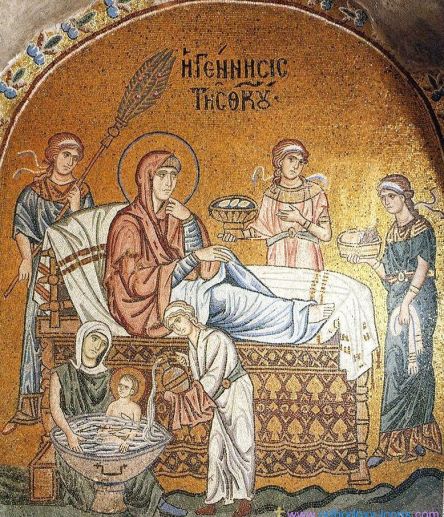
image of Mosaic of the Nativity

Mosaic of the Nativity

All week we have been warming our spirits at the sacred fire of Candlemas / Imbolc, the Celtic holiday in honour of Brighde, Irish saint and Goddess of poetry, smithcraft and healing. Imbolc falls approximately 6 weeks between the winter solstice and the spring equinox, one of the 8 festivals of the Celtic year.
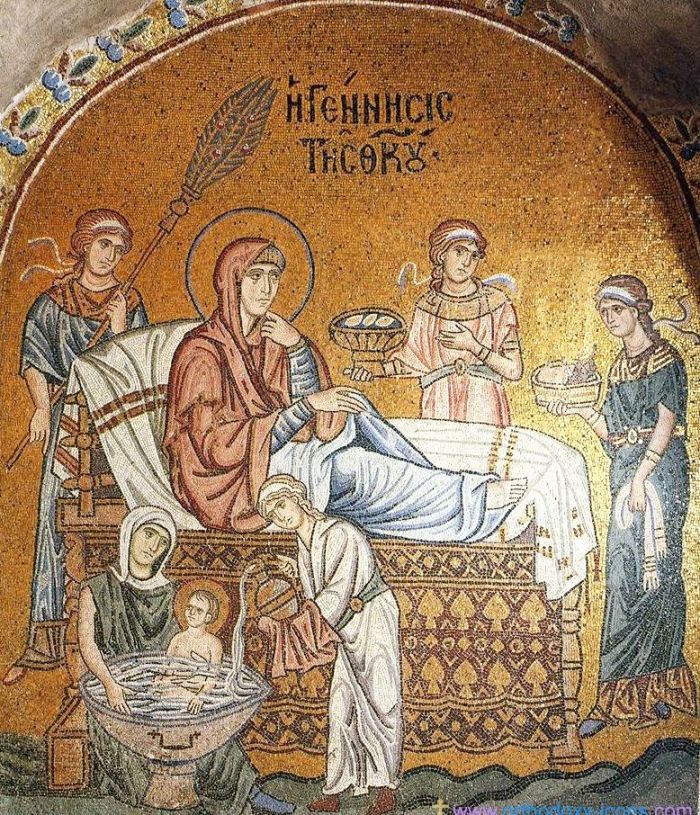
In the Greek Orthodox Church, February 2 is celebrated as Ypopantis, the presentation of Jesus at the Temple, 40 days after his birth, in accordance with Mosaic law. This day also marks Mary’s ritual return to the world after forty days of postpartum seclusion. This practice was known in the Western Church as ‘churching’ or blessing a new mother after 40 days; Hindu tradition also recommends women spend up to 40 days in rest and isolation after childbirth.

Continue reading “From the Archives: Forty Days After Childbirth, Mary Returns to the World by Laura Shannon”

Iron Mothers: Iron as Embodiment of the Biblical Matriarchs in Jewish Folklore by Jill Hammer

Jewish amuletic objects come in many forms: salt, the hamsa or hand, the bowl, the scroll with verses, even sword-shaped amulets. These items are meant to provide spiritual protection from malevolent forces such as demons and the evil eye and vary across different times and places.  One protective item from Jewish folklore is iron. In medieval Germany, for example, pregnant Jewish women carried an iron object to repel malevolent forces.  This was part of a wider cultural norm: across Western Europe, iron was understood to repel fairies and spirits of all kinds, and was sewed into babies’ clothing, hung above cradles and doorways, etc.  According to one Jewish legend, when the waters of Egypt turned to blood during the first plague, water in metal vessels was 34245 the only water to remain unchanged. Pieces of iron were placed on all vessels containing water during the solstices and equinoxes—considered to be a time when spirits were roving the world—to protect them from contamination.

Continue reading “Iron Mothers: Iron as Embodiment of the Biblical Matriarchs in Jewish Folklore by Jill Hammer”

Forty Days After Childbirth, Mary Returns to the World by Laura Shannon

All week we have been warming our spirits at the sacred fire of Candlemas / Imbolc, the Celtic holiday in honour of Brighde, Irish saint and Goddess of poetry, smithcraft and healing. Imbolc falls approximately 6 weeks between the winter solstice and the spring equinox, one of the 8 festivals of the Celtic year.

In the Greek Orthodox Church, February 2 is celebrated as Ypopantis, the presentation of Jesus at the Temple, 40 days after his birth, in accordance with Mosaic law. This day also marks Mary’s ritual return to the world after forty days of postpartum seclusion. This practice was known in the Western Church as ‘churching’ or blessing a new mother after 40 days; Hindu tradition also recommends women spend up to 40 days in rest and isolation after childbirth.

image of Mosaic of the Nativity
Mosaic of the Nativity

In the west, the customs of confinement and churching have dwindled since the 1960s, but in Greek Orthodox tradition until very recently, these forty days of isolation for mother and child were routine. A special word, lechóna (λεχώνα), from the ancient Greek for ‘bed’ or ‘couch’, denotes a woman in this special time. Continue reading “Forty Days After Childbirth, Mary Returns to the World by Laura Shannon”

Matriarchal Manifesta by Heide Goettner-Abendroth

What is the STATUS of WOMEN today?

To cite a brief summary of the 1980 UN Report:

 WOMEN make up half of the world population, work nearly two thirds of all hours worked, receive one tenth of worldwide income, and own less than one hundredth of worldwide property.                             (United Nations Report 1980)

What a SCANDAL that is! Yet no one seems to get worked up about it.

But if we women believe a lot has changed in the meantime, then we are mistaken.

In 2010, the President of the UN Economic and Social Council cited the following figures:

WOMEN work 66% of all hours worked worldwide and produce 50% of the  food.  But they get 10% of the world income, own 1% of the property and represent 60% of the world’s poorest.” (Hamidon Ali, UN Press Conference on June 25, 2010)

This was the sitaution in 2000, in 2010, in 2018. The U.N.report is published annually, but nothing changes.  The SCANDAL continues, and we are outraged! Continue reading “Matriarchal Manifesta by Heide Goettner-Abendroth”

Wisdom from our Ancient Female Lawgiver and Judge Traditions by Carolyn Lee Boyd

Carolyn Lee Boyd


As I have witnessed both the joy of so many across the world at the nomination of Kamala Harris for Vice President and the deep sorrow at the death of Ruth Bader Ginsburg, I am struck by the fact that, in 2020, supremely qualified women still need to be trailblazers to hold high office. After all, goddesses and wise women gave a number of cultures their systems of laws and governance and have been celebrated for their wisdom as judges for millennia. 

Here are a few of the goddesses and wise women lawgivers:

The Goddess Themis
  • the Italian goddess Egeria gave Rome its first laws and taught the correct rules for Earth worship; 
  • the Babylonian Kadi, was goddess of Earth and justice; 
  • Ala of the Ibo people of Nigeria is both the Earth Mother and lawgiver of society; 
  • the Greek Themis, daughter of Gaia, symbolized the social contract and cohesion of people living on Earth; 
  • the Inuit Sedna both gave humanity abundance from the ocean for life from her own body and withheld it when her laws were broken;
  • Marcia Proba, whose historical reality is unclear, is said to have created the ancient Celtic system of laws known as the Marcian Statutes that may have influenced later British law;
  • past and present Women’s Councils and Clan Mothers of the Iroquois and other Indigenous peoples as well as those of Societies of Peace have brought harmony and well being to their people for tens of thousands of years.

Continue reading “Wisdom from our Ancient Female Lawgiver and Judge Traditions by Carolyn Lee Boyd”