

Modern science has proven what ancient myth has long told us about our Earth — billions of years ago our world was a water world. It’s not surprising then to find water-based creation stories and goddess mermaids in the myths of our ancient ancestors.
Continue reading “Atargatis, the Mermaid Goddess by Judith Shaw”Category: Myth
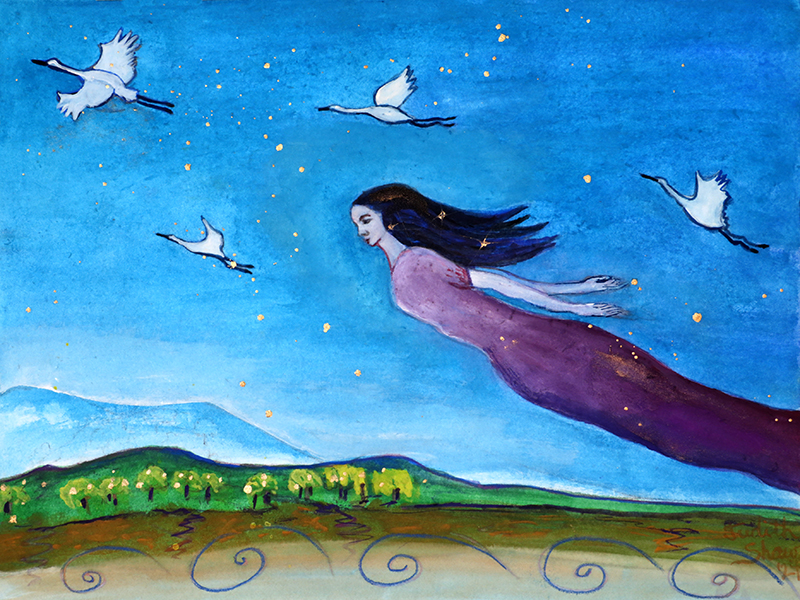
Women Fly Free by Judith Shaw
Artists tend to develop their own visual language over the course of a career, returning again and again to certain motifs. That’s certainly the case for me with trees, women and goddesses, doorways and passages, ancient symbols, flowers, and animals — in particular birds — emerging again and again.
Desperately Seeking Persephone by Janet Rudolph, Book Review by Carolyn Lee Boyd, Part Two
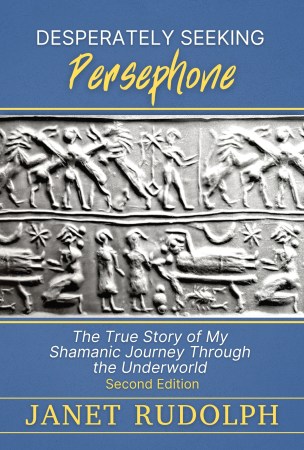
In Part One of this review (posted yesterday), we learned how Janet descended into the Underworld, like Inanna and Persephone, after child abuse and rape, and how she began a decades-long journey back to our own world, healed and empowered. To learn more about her return from the Underworld and how she became the shaman and author she is today, I invite you to join the journey in Part Two as we continue to explore “Signposts” that marked her ascent.
Signpost #3. Be aware, be free, be focused, be here, be loved, be strong, be healed.
Janet’s teachers at the Mystery School had brought together shamanic traditions from throughout then world. Among them was Huna, or Hawaiian Adventure Shamanism as practiced by Serge Kahili King. A summary of Huna is shown in a mantra: Be aware, be free, be focused, be here, be loved, be strong, be healed (114) and “focus on the gifts that come to us through adversity” (116).
Continue reading “Desperately Seeking Persephone by Janet Rudolph, Book Review by Carolyn Lee Boyd, Part Two”From the Archives: Triple Goddesses in the Celtic World by Judith Shaw
Many neopagans and modern Goddess worshipers mistakenly equate the triadic nature of some Celtic Goddesses with the Triple Goddess concept first popularized by Robert Graves in his book, The White Goddess. Graves stated that Goddesses were frequently found in triplets as Maiden, Mother and Crone. But there is nothing found in the ancient stories of Celtic Goddesses to indicate that the Triple Goddesses were known as Maiden, Mother and Crone.

From the Great Unknown, oil on canvas, 34″x36″ by Judith Shaw
Continue reading “From the Archives: Triple Goddesses in the Celtic World by Judith Shaw”Celtic Goddess Branwen: A Path to Empathy by Judith Shaw
From the mists of Welsh mythology Celtic Goddess Branwen provides important wisdom for our modern world. Themes of the destructiveness caused by viewing those different from us with distrust and fear are found in her story. Vengeance is revealed as a downward spiral of pain and suffering. She illustrates the healing role empathy, compassion and forgiveness can play in a world gone mad with war. Her story reveals the importance of restorative justice and the many factors at play preventing its application.
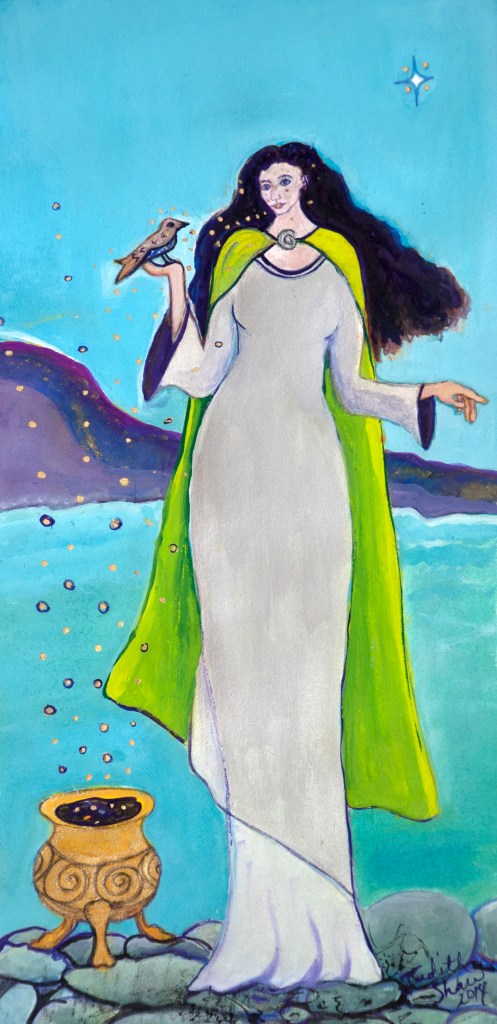
Branwen was the sister of the giant, King Bran of the Isle of the Mighty. She was loved by her people for her gentleness, compassion and beauty. In the tradition of the Old Tribes of the British Isle — most likely a hold-over from the days before kings, when Goddess was supreme — her son would become king upon the death of King Bran.
Continue reading “Celtic Goddess Branwen: A Path to Empathy by Judith Shaw”Maternal Thinking: Gifts, Mothers’ Bodies, and Earth edited by Sid Reger, Mary Jo Neitz, Denise Mitten, and Simone Clunie; book review by Carolyn Lee Boyd
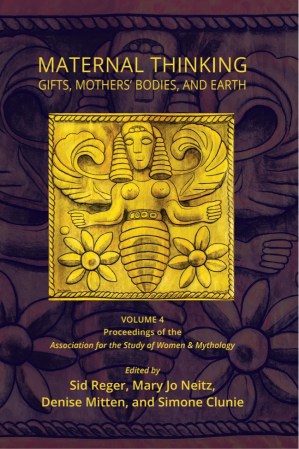
Maternal Thinking: Gifts, Mothers’ Bodies, and Earth, the fourth book of proceedings of conferences held by the Association for the Study of Women and Mythology (ASWM), is an instructional guide to saving ourselves and our planet. Many pre-historic, and even contemporary cultures, especially Indigenous communities, feature “Maternal Thinking.” Such cultures perceive that societies are successful when they center qualities associated with mothering: care, nurturance, cooperation, and meeting everyone’s basic needs while respecting the Earth and reciprocating nature’s generosity. Some 5000 years ago, Maternal Thinking was superseded in many societies by a perspective valuing instead competition, exploitation, and domination, and we and our planet are now facing the catastrophic consequences.
The fifteen contributors and four editors represent myriad disciplines and life experiences. They are academic researchers in wide-ranging fields, artists, activists, a storyteller, a therapist, scientists, educators, and more. This diversity reflects the expansiveness of the book’s vision, including many layers and facets of “mothering,” and the need for as many voices as possible to be heeded if we are to envision and birth a peaceful, just, equitable, compassionate, and environmentally balanced Earth.
Continue reading “Maternal Thinking: Gifts, Mothers’ Bodies, and Earth edited by Sid Reger, Mary Jo Neitz, Denise Mitten, and Simone Clunie; book review by Carolyn Lee Boyd”A Time of Renewal: Brigid Emerges at Imbolc by Judith Shaw
The wheel of the year continues turning and once again we find ourselves at the transition point from winter’s deep sleep to the first awakenings of spring. It is marked by an ancient Celtic festival called Imbolc, also known as Imbolg or Brigid’s day. It is believed to have been celebrated long before the Celts arrived in Ireland and Scotland, probably as far back as Neolithic times.
Continue reading “A Time of Renewal: Brigid Emerges at Imbolc by Judith Shaw”Elena and the Reindeer Goddess: The Mission Begins by Judith Shaw
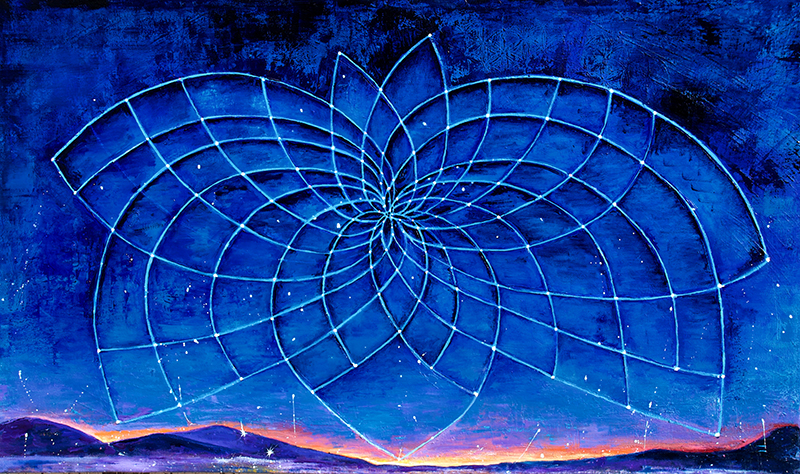
As much as I wanted to finish my fairytale project in time for the winter holidays, the muse had a different idea. Perhaps the energy of winter was what I needed in order to finish the grand finale painting for the tale. It depicts a night sky filled with magic and wonder.
Winter’s Wisdom: The Cailleach and Solstice Insights by Judith Shaw
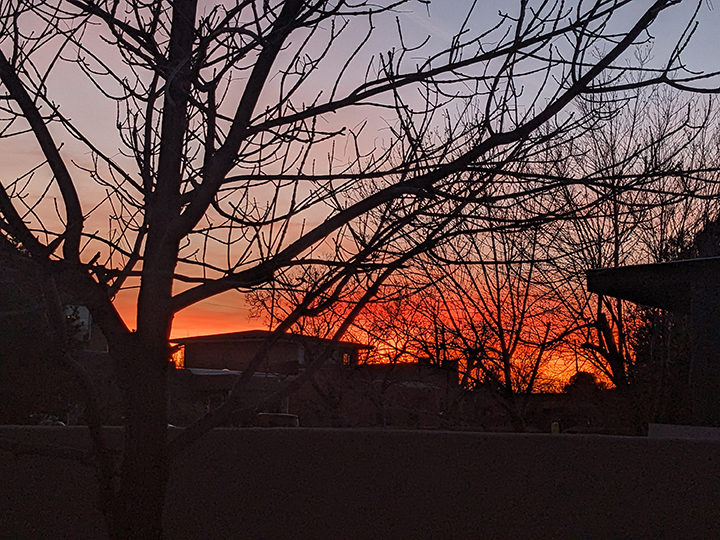
How quickly the wheel of the year turns. Once again we have reached the dark and cold of the Winter Solstice, which occured on December 21st this year. Winter Solstice is an astronomical moment – the exact moment when our hemisphere tilts as far away from the sun as possible. But for the ten days after, the increase in daylight each day is only a few seconds So I think of this time as the Winter Solstice Season.
Women in Greek Mythography: Pythias, Melissae and Titanides by Max Dashu, Book Review by Carolyn Lee Boyd
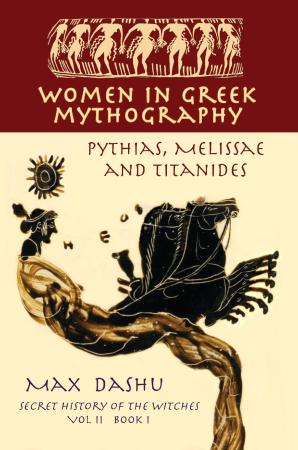
Demeter and Persephone, Hera, Athena, Medusa, Artemis are often the first, sometimes only, goddesses modern women experience, and they have profoundly influenced our 21st century attitudes about gender, violence, and more. Yet, as Max Dashu says in her new book, Women in Greek Mythography, Greek history has “served as a template for supremacy, from male domination and Hellenic colonization, to modern Eurocentric ideologies about history” (xi). While most Greek scholarship generally glosses over these malevolent influences and ignores women’s lives, Dashu focuses on “female spheres of power, priestesses, witches, and of course systemic patriarchy” (xi) in order to “map realities of women’s lives, both their spiritual authority and their subjugation; the spaces they carved out, their ceremonies, and the stories they wove into their tapestries” (xi).
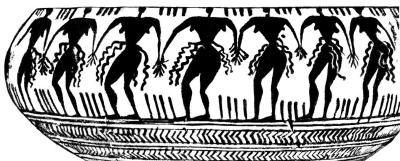
Women in Greek Mythography is not only a fascinating historical story of Greek myth and religion to be read cover-to-cover, but a rich sourcebook full of meticulously documented facts. She draws from scholarly works of history and mythography, as well as analyzing images on vases, friezes, sculpture and more. She has carefully rendered 270 drawings of these images so that readers can judge their meaning themselves. She delves into language, seeking out the origins of words that may indicate where goddesses and myths originated and their relationships to one another. She demonstrates that goddess mythologies often had many variations, sometimes conflicting, with many “countless regional deities that were subsumed under Olympian names, the local origin myths, ceremonies, and customs” (xiv).
Continue reading “Women in Greek Mythography: Pythias, Melissae and Titanides by Max Dashu, Book Review by Carolyn Lee Boyd” Feminism and Religion