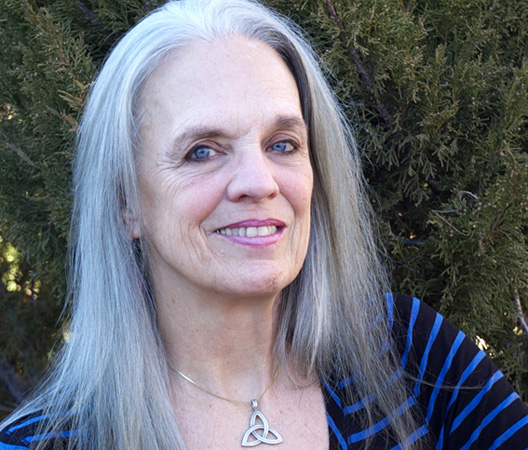
Rites of May, by Molly Remer

It is important that we share these rituals of celebration and affirmation with our sons as well as our daughters. Men, too, should know the power of joined hands in a circle, voices lifted in song, and sweet words of connection surrounding one another on a bright spring day…

I rose early seeking Beltane dewdrops
with which to anoint my brow.
the cupped violet stems and clover
were dry
and I found no dewdrops
in the chickweed stars.
Instead, I put out oranges
for the orioles,
ran my fingers through the dandelions,
and pressed my nose into the lilacs.
I spotted green flowers
on the mulberry trees,
found the first wild pink geraniums
and tender bells of columbine
and came face to face
with the quiet black eyes
of solemn deer in the raspberry bushes.
These things
their own kind of anointing,
their own small and significant
rites of May Magic.

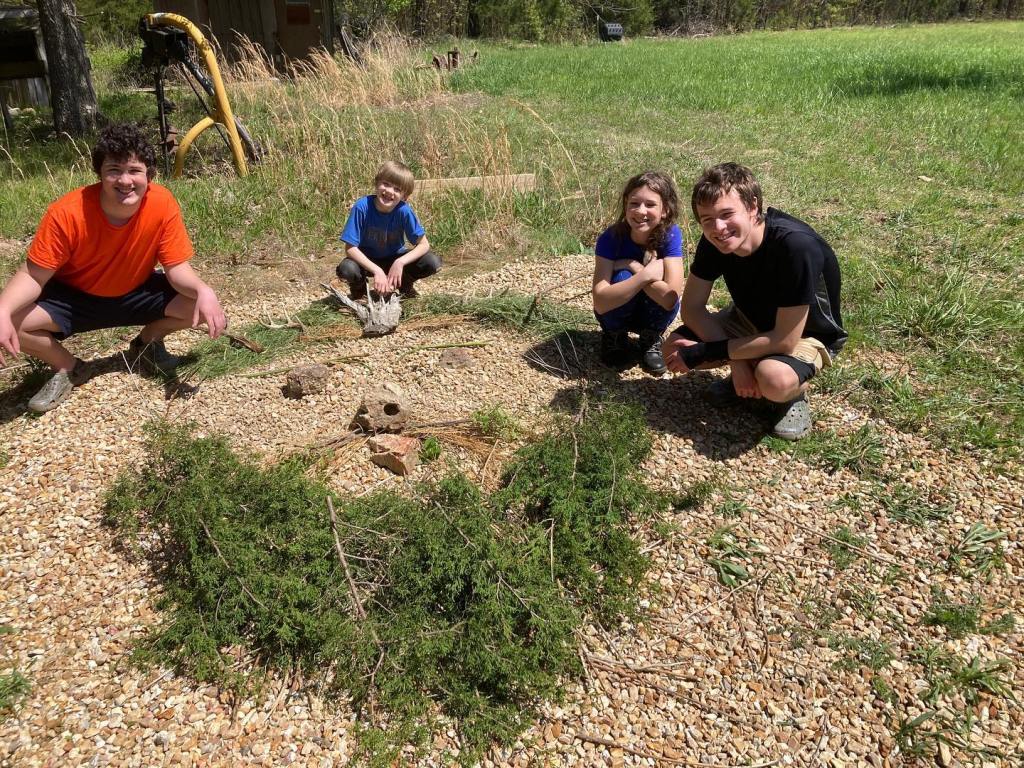
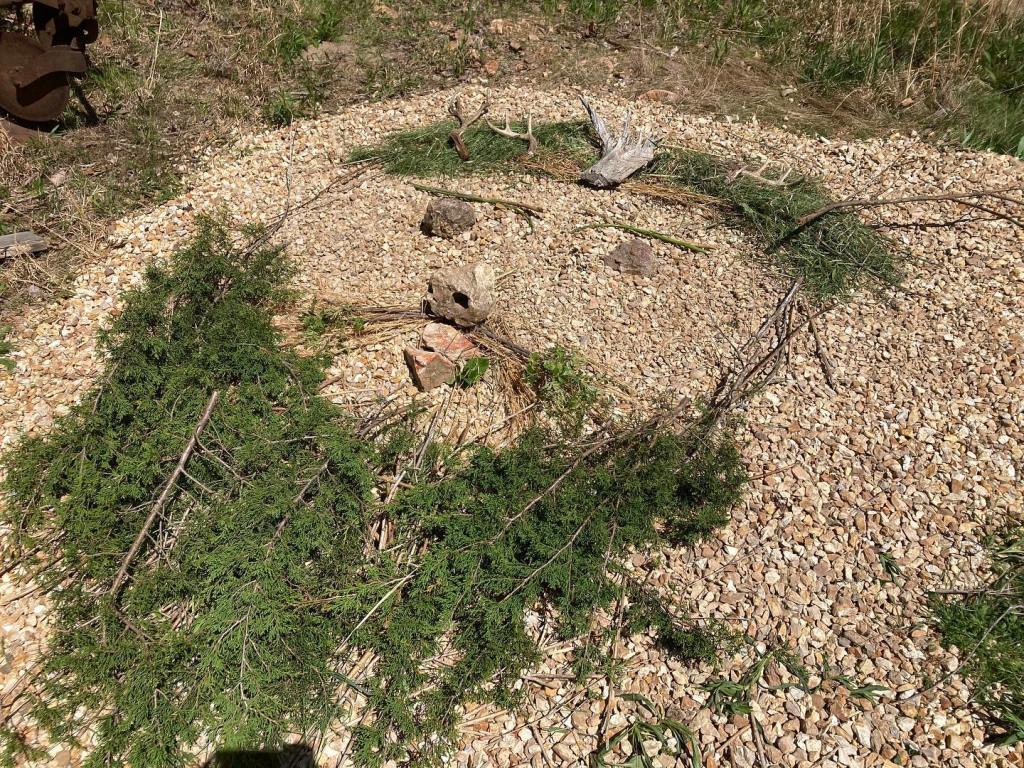
As a family, we traditionally celebrate the May by making a Green Man face in our field, using natural items that we find that day. As a goddess-focused person who walks an almost exclusively goddess-centered/nature-based path, this is one of our few family rituals that centers around more masculine sacred imagery. It is a favorite for my kids—rituals involving multi-age groups should always be as highly participatory as possible. I have written several times for FAR about how my hearth-priestessing has evolved over the years, letting go of more and more control, doing less and less planning, and being more freeform, spontaneous, flexible, and playful. My four children now range in age from 7-18. We have celebrating the turning of the Wheel of the Year for their entire lives. I love how our memories of past rituals inform the present—for example this year’s Green Man had the same rock for a nose that we used for last year’s Green Man.

This year, May Day was bright and sunny with a wild wind. We circled near the driveway, building our Man on the gravel, where his features would stand out against the brown rocks. We gave him antlers formed from cedar branch and white-tailed deer and a crown of a split stump of gray oak. My oldest son trimmed off cedar branches for his beard, my husband pruned the hydrangeas of last year’s dead growth to frame his face, my sixteen year old gathered golden stalks of dry bluestem grass for a mustache, and my 11 and 7 year olds gathered pieces of grass and cinquefoil to trim his hair and beard.

We stood around him in admiration for a few minutes and then I spoke of the bounty, growth, and renewal of this time of year. We stood hand in hand and read the following blessing together (me calling a line and then all repeating it):

A sweet blessing
of the singing sky
to us.

A slow blessing
of the shining flame
to us.

 A strong blessing
 of the crashing wave
to us.

 A soft blessing
of the pulsing earth
to us.

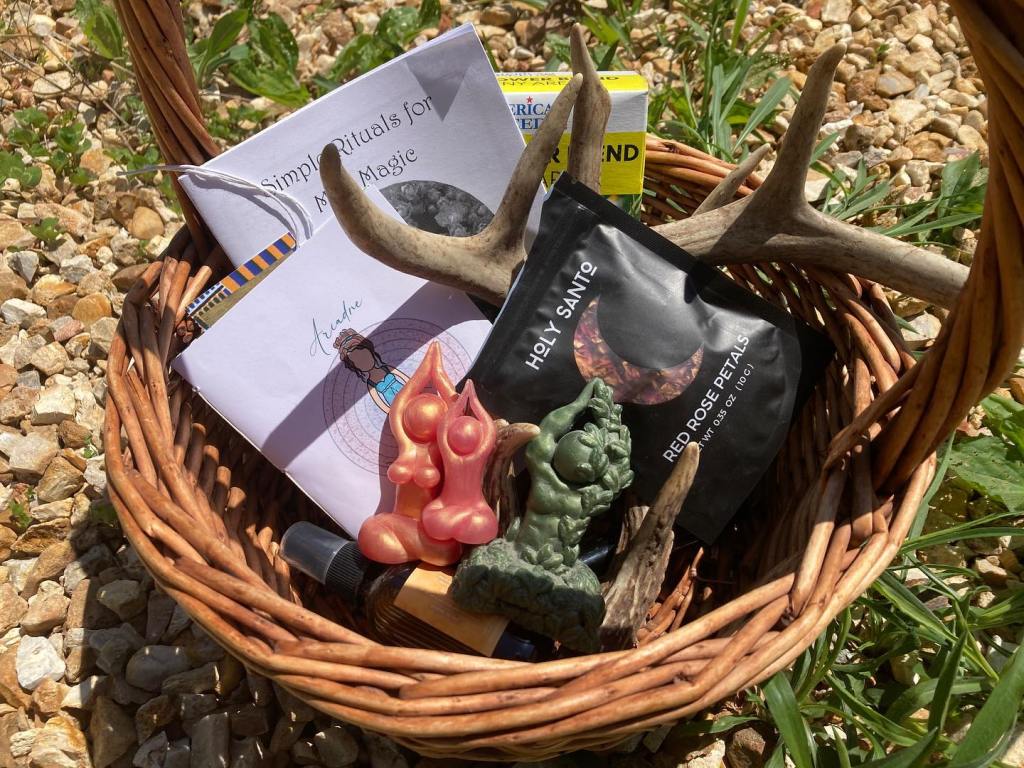
We then offered a wish to one another in turn with a spritz of “Valiant Heart” spray (from Honey and Sage Co). For example, I spritzed my daughter (11) and wished her curiosity and creativity and then she turned to her father and spritzed him wishing him health and prosperity.

I gave everyone four rose petals (whole flowers would have worked well, but I was working on the fly!) and invited everyone to kiss each petal in turn and then offer it to the Green Man (the wind whirled most of our petals away as we released them, which was pleasant as well—our wishes, accepted), based on this past poem:

Find four flowers
and bring them to your lips
one at a time.
One for wonder.
One for joy.
One for love.
One for magic.
Make your promise
invite them in,
one by one
the spell is done.

We sang a few lines together, laughing, from one of Tom Bombadil’s ditties in The Fellowship of the Ring and shouted out, “Happy May!”  after finishing our raucous rendition:

Now let the song begin! Let us sing together!
Of sun, stars, moon and mist, rain and cloudy weather,
Light on the budding leaf, dew on the feather,
Wind on the open hill, bells on the heather,
Reeds by the shady pool, lilies on the water…

We then each took a handful of wildflower seeds and sang “Call Down a Blessing” over them, each of us plugging in a blessing word in our turn.

Call down a blessing
Call down
__________before you
__________behind you
__________within you
and around you.

This song is based on Cathy Parton and Dave Para’s song, but is sung collaboratively with each person choosing a blessing to sing together in the blank space. (A recording of our women’s circle singing this together during a ritual is available here.) We then scattered to plant our handfuls of seeds in whichever place we wished to do so.

This whole ceremony took less than thirty minutes and we closed our largely spontaneous ritual by joining hands and offering our family’s usual closing prayer (learned from our own dear Carol Christ): May Goddess bless and keep us, may wisdom dwell within us, may we create peace.

It is important that we share these rituals of celebration and affirmation with our sons as well as our daughters. Men, too, should know the power of joined hands in a circle, voices lifted in song, and sweet words of connection surrounding one another on a bright spring day.

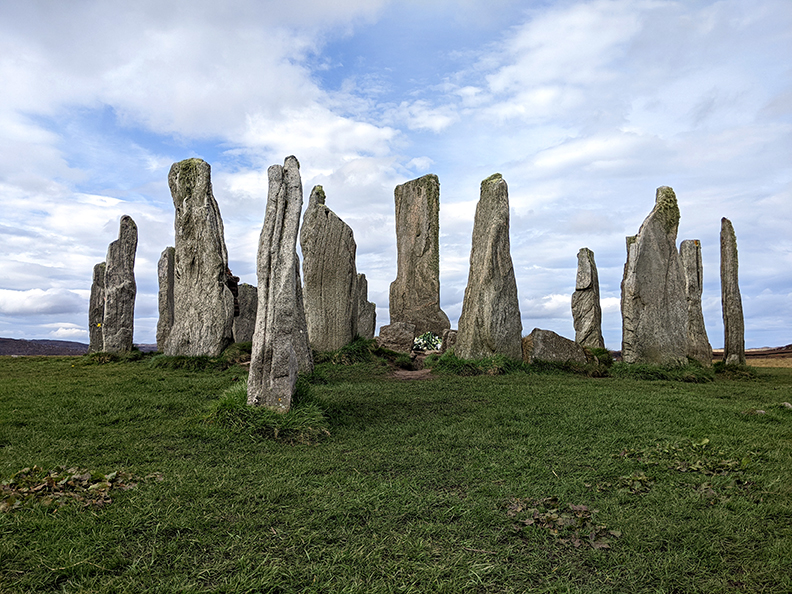
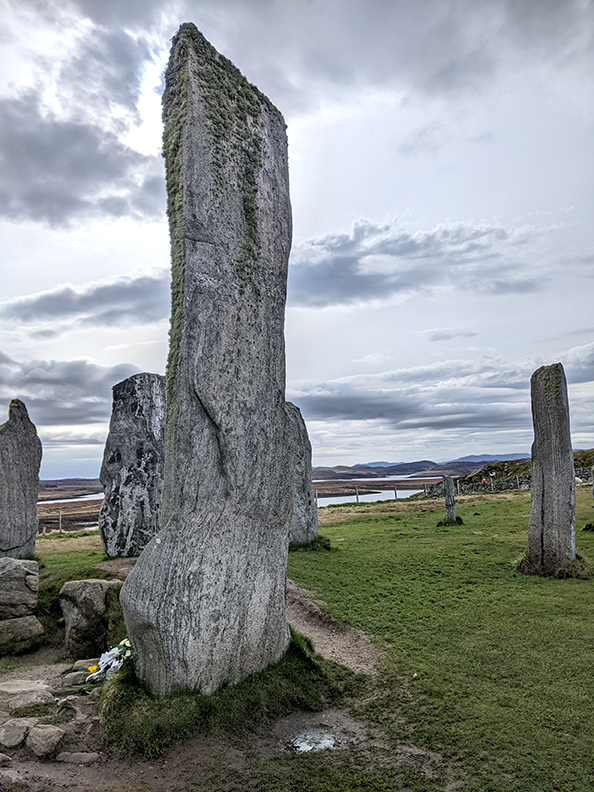
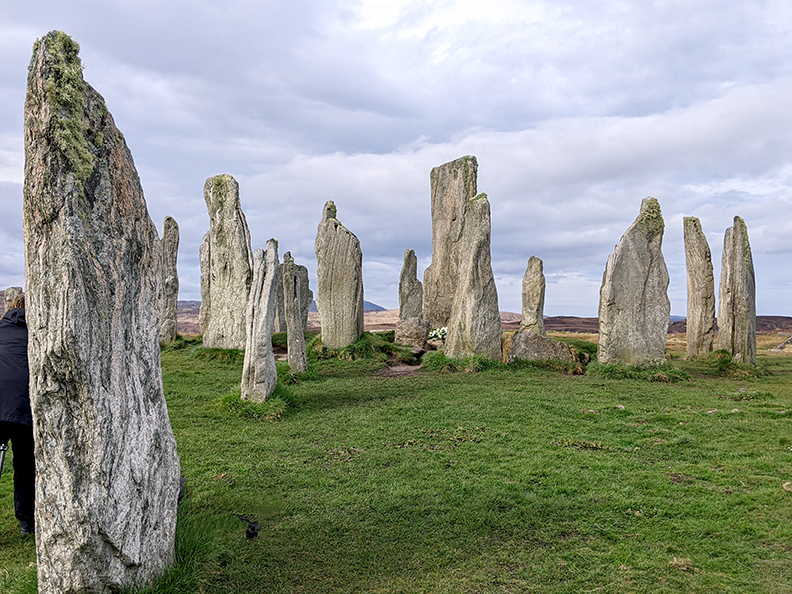
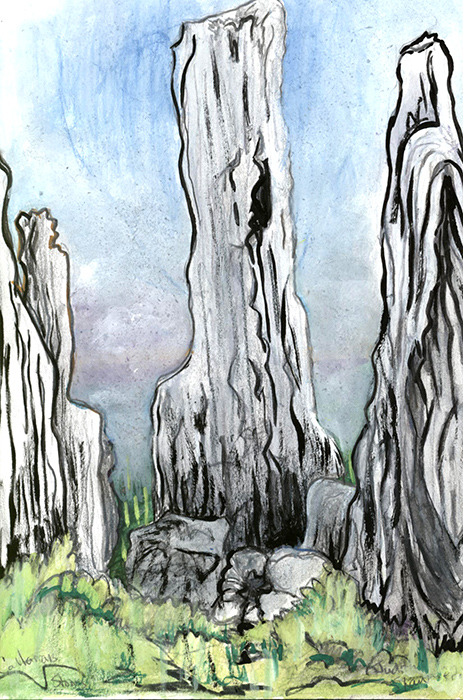
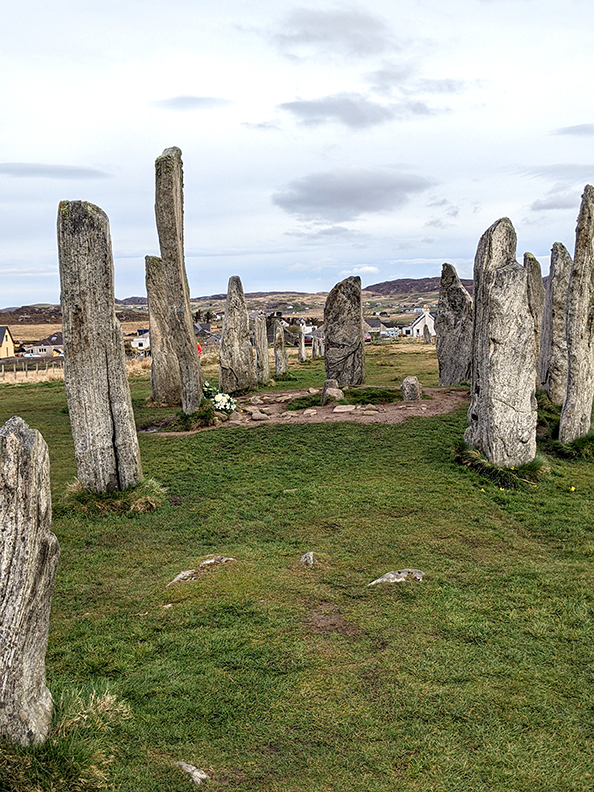
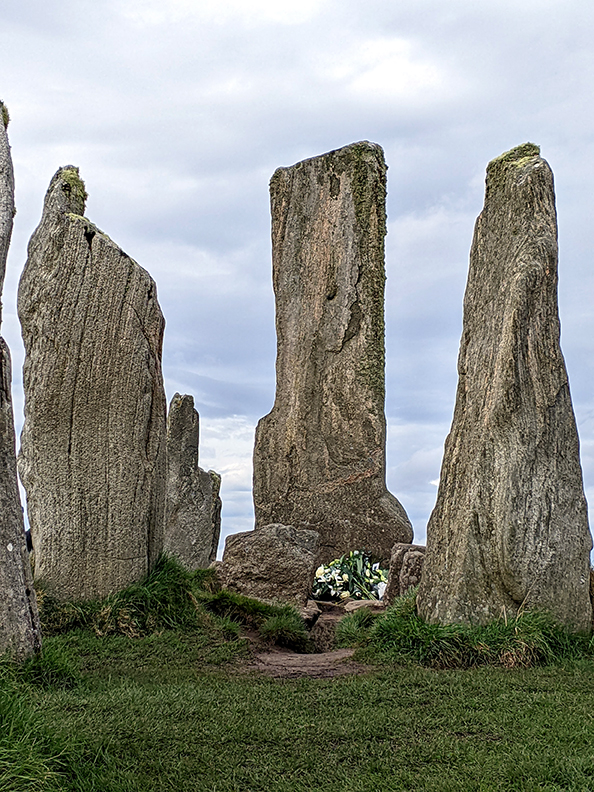
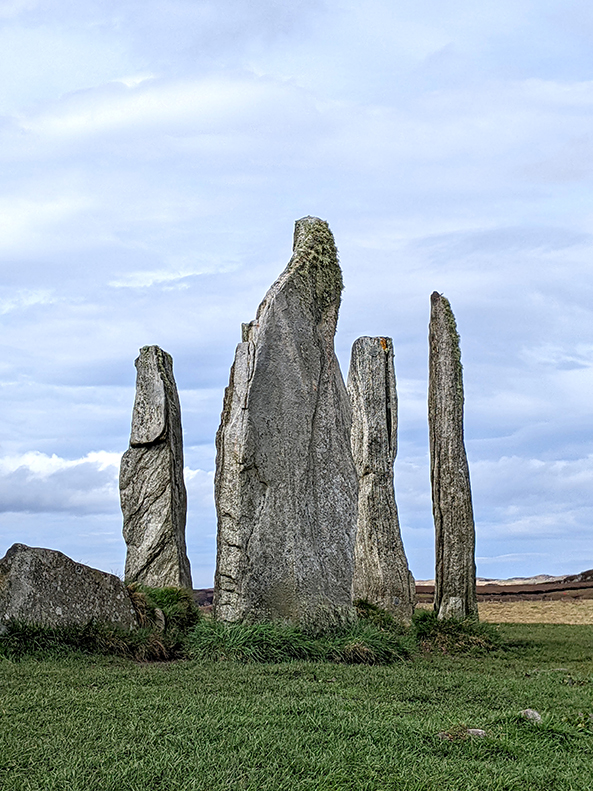
My oldest son is graduating from high school this month and this week I took him to register for his first college classes. At this threshold moment in parenting, I feel the odd psychological sensation of overlapping generational “timelines,” sometimes feeling like I, myself, have become my parents, while at the same time, feeling like I am a college student myself. But, for now, at this moment, we stand here together under a Beltane sun, laughing together around a Green Man in the stones.

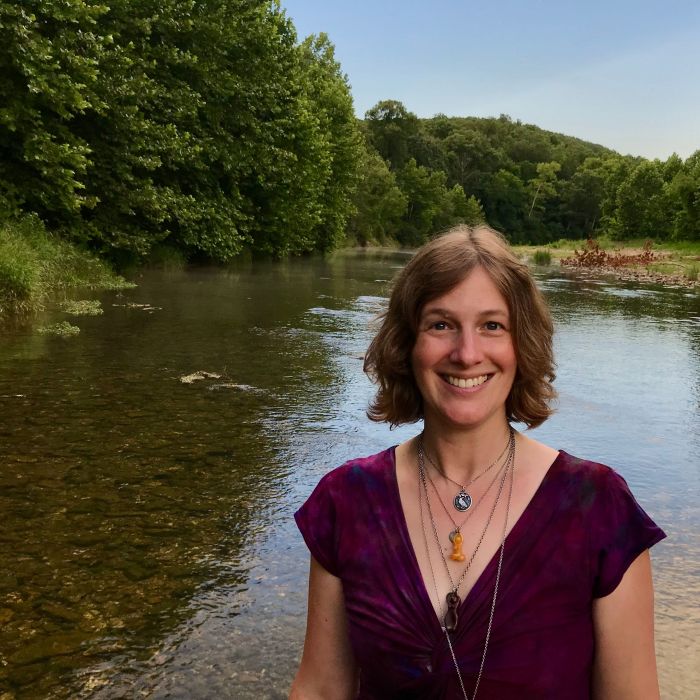
Molly Remer, MSW, D.Min, is a priestess, teacher, and poet facilitating sacred circles, seasonal rituals, and family ceremonies in central Missouri. Molly and her husband Mark co-create Story Goddesses at Brigid’s Grove (brigidsgrove.etsy.com). Molly is the author of nine books, including Walking with Persephone, Whole and Holy, Womanrunes, and the Goddess Devotional. She is the creator of the devotional experience #30DaysofGoddess and she loves savoring small magic and everyday enchantment.

The Magic of the Ordinary, by Molly Remer

“Nothing is so simple, or so out of the ordinary for most of us, then attending to the present.”

— Ernest Kurtz & Katherine Ketcham, The Spirituality of Imperfection

I often speak of being in the temple of the ordinary, of seeing the enchantment in the ordinary. In the book The Spirituality of Imperfection, the authors write that “beyond the ordinary, beyond material beyond possession, beyond the confines of the self, spirituality transcends the ordinary, and yet, paradoxically, it can be found only in the ordinary. Spirituality is beyond us, and yet it is in everything we do. It is extraordinary. And yet, it is extraordinarily simple.”

This spring, I presented at an event and the concept of “being versus doing” arose. I reminded participants that “being” is not a competitive sport. We cannot not be, we are being all the time. I think sometimes the pressure we put on ourselves to be better, to “do” being better, can be really hobbling. Likewise, the sensation that spirituality is somewhere “out there” or that it has to be bigger than or better than or transcendent instead of present in the ordinary. On a goddess based path, with a feminist orientation, I find that the Goddess herself pervades all of existence, pervades your whole entire life, even the rough and weary places, even the ragged and strange places. Returning to Kurtz and Ketcham, they write: “Now…beyond the ordinary is not meant to suggest something complicated, different, different or self-consciously special. Nothing is so simple, or so out of the ordinary for most of us, then attending to the present. The focus on this day, suggested by all spiritual approaches, attending to the present, to the sacredness present in the ordinary, if we can get beyond the ordinary is, of course, a theme that pervades Eastern expressions of spirituality and other expressions too.”

I know that I often find myself seeking or longing for the special moments, the magic, the flashes of transcendence, and sometimes this can cause me to miss the ordinary, to miss the present, to miss where I am because I’m longing for something else. Adages to the effect of “do what you are doing” and “be where you are” may begin to sound cliché almost and the reason they do is because it’s so simple and so out of the ordinary to simply come back to attending to the present. The present moment is, in my eyes, truly where we find the goddess, in the pulse of presence in the every day. In the book She of the Sea, author Lucy Pearce addresses the question of the transcendent ordinary as well: “I want to write of the oceanic mystery, the soul of goddess magic, the sacred that which lies beyond words, because the repeated deliberate seeking of connection to this is at the heart of what I do and who I am. It is my creative and spiritual practice. I want to speak of this so that you can close your eyes turn inwards and smile knowing, just knowing until our conversation can continue without words…I want to share what I have known and for not to sound strange, yet strangeness is its nature. The soul is not of this world. It’s not rational, the sacred is not logical, but nor is this chaotic, magnificent, contradictory, and complex world of ours. And yet, we insist on pretending that it is and being disappointed, afraid, or bemused when it shows us its reality, again and again.”

The sacred is not logical, and neither is the world itself, but we pretend that it is, and then we get disappointed when we see reality. I originally learned the phrase “don’t argue with reality” from self-help author Wayne Dyer. There can be a whole range of potential experiences that are beyond objective reality or the reality that people sometimes insist is all there is. Jeanette Winterson, in her book Lighthousekeeping writes: “I do not accept that life has an ordinary shape, or that there is anything ordinary about life at all. We make it ordinary, but it is not.”

Maybe we are trying to make things ordinary that are not. My kids are growing up and getting ready to graduate from high school. One of my sons is very into science and loves biology and genetics and he is fond of boiling things down to an “everybody’s just a mass of cells having a collective hallucination” type of rhetoric that leaves little room for the esoteric and little room for inherent meaning. However, for me, I come back to the reality of being human as its own kind of miracle, its own profound magic. The reality of having this body with all these cells, which are doing all these things day in and day out that I don’t consciously know how to do, and yet my body does them every single day. That’s magic, even if we can explain the objective “why” of it. I don’t consciously know how to beat my own heart, but wait a second, yes, I do, because here it is beating every day from birth till death. Some people may be quite attached to maintaining the assertion that life is random and pointless, but this is not the story I see. I see wonder. I see magic. I see a miracle in motion. I am awestruck at the impossible reality of being a bundle of cells typing this essay right now. Yes, I am “only” a bundle of cells and that is absolutely pure magic to me. In fact, your very presence right here, right now is proof of the sacred on this earth in my eyes. May we all love the ordinary and let it whisper of the magic right beneath the skin.

Breathe deep
and allow your gaze
to settle on something you love.
Draw up strength from the earth.
Draw down light from the sky.
Allow yourself to be refilled and restored.
There is good to be done on this day.
Let your own two hands
against your heart be the reminder
you need
that the pulse of the sacred
still beats
and the chord of the holy yet chimes.

Molly Remer, MSW, D.Min, is a priestess facilitating women’s circles, seasonal rituals, and family ceremonies in central Missouri. Molly and her husband Mark co-create Story Goddesses at Brigid’s Grove. Molly is the author of nine books, including Walking with Persephone, Whole and HolyWomanrunes, and the Goddess Devotional. She is the creator of the devotional experience #30DaysofGoddess and she loves savoring small magic and everyday enchantment.

On Ukraine, War and Goddess’s Protection by Judith Shaw

We have all been horrified by the Russian invasion of Ukraine as we witness the brutal bombardment of not only military sites but also of civilians, neighborhoods, hospitals, churches, historical sites and nuclear power plants. It has been called the first TicToc war as these images fill up our computers and cellphones, leaving peace lovers challenged to maintain their belief in peaceful resolutions to conflict

Continue reading “On Ukraine, War and Goddess’s Protection by Judith Shaw”

Stag – Majestic Messenger of Light by Judith Shaw

The seasons turn and again we reach the Winter Solstice – the longest night which marks the sun’s return to light in the northern hemisphere. Stag, in all his antlered majesty, symbolizes the return of the sun’s life-giving rays. 

Continue reading “Stag – Majestic Messenger of Light by Judith Shaw”

Rituals for Our Sons, Part 2, by Molly Remer

Five years ago, I wrote an essay for Feminism and Religion musing about rituals for our sons. I wondered aloud how we welcome sons in manhood, how we create rituals of celebrations and rites of passages for our boys as well as our daughters. I have been steeped in women’s ceremony and ritual since I was a girl myself, watching the women wash my mother’s feet and crown her with flowers at her mother blessing ceremony as she prepared to give birth to my little brother when I was nine years old. Her circle of friends honored us too, crowning their daughters with flowers and loosely binding their wrists with ribbon to their mothers as they crossed the threshold into first menstruation.

At 24, I then helped plan the rite of passage for my youngest sister, then 13, as she and her friends gathered into a wide living room, flowers on their heads and anticipation in their eyes as we spoke to them of women’s wisdom and the strength of, and celebration of, being maiden girls on their way to adulthood. I knew then that I would have a ritual for my own daughter, yet unconceived, one day. I birthed two sons and lost another son in my second trimester. I led a circle of mothers and daughters through a series of nine classes culminating in a flower-becked coming of age ceremony while newly pregnant with the rainbow baby who would become my own daughter.

Continue reading “Rituals for Our Sons, Part 2, by Molly Remer”

My Encounter with the Venus of Dolní Věstonice by Ivy Helman.

Marija Gimbutas, in her book Language of the Goddess, mentions only one goddess figurine from what was, at the time of her writing, Czechoslovakia (pages 31-32).  That figurine comes from Předmosti, in the very eastern part of what is now the Czech Republic.  However, there are more, and I would like to introduce you to the one that I encountered during a visit to another part of the Czech Republic several weeks ago.

Meet what Czechs refer to as the Venus of Dolní Věstonice.  There is not a lot of information about her, so I have pieced together what I can find.  Said to be the oldest known fired terracotta figurine (some 29,000 years old), she was first unearthed in 1925.  She was found broken into two pieces at the site of the Stone Age settlement known as Dolní Věstonice, in the southeastern part of the Czech Republic.  This settlement, according to Archeo Park Pavlov, was part of the Pavlovian culture, a Stone Age culture local to the area.  

Author’s photograph of a replica of the Venus on display at Archeo Park Pavlov.
Continue reading “My Encounter with the Venus of Dolní Věstonice by Ivy Helman.”

Spider Wisdom – Creation and Destruction Part 2 by Judith Shaw

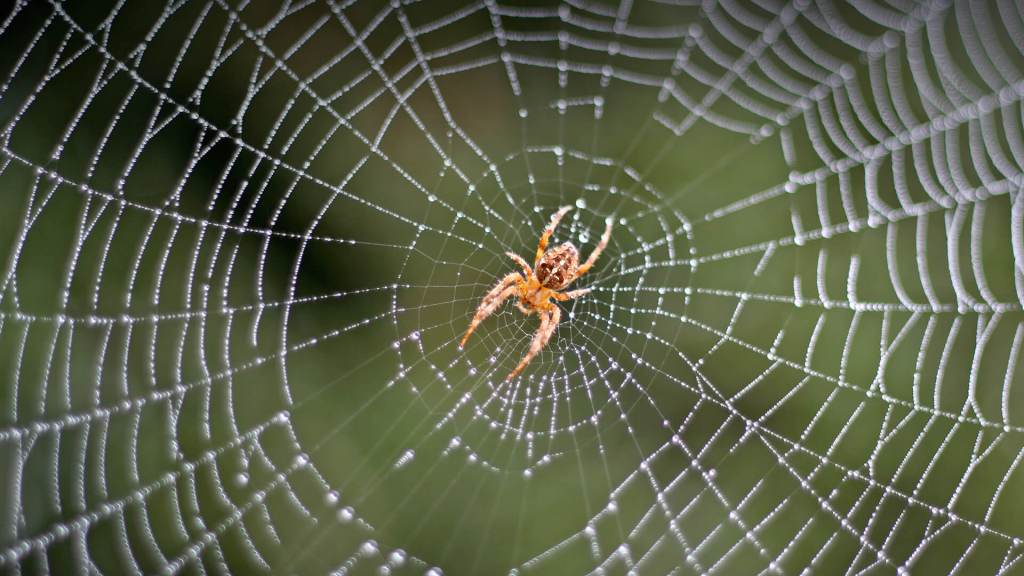
In addition to being viewed as a Creator Goddess and a Destiny Weaver, Spider is associated with many other aspects of life. Some of these aspects fall into what we would consider the light – the good – and others are dark dangers – the dark side of life. 

Spider Wisdom by Judith Shaw

Patience, Resourcefulness/Protection, Good Fortune
Though spiders have eight eyes they have very poor eyesight. Instead they have infinite patience, waiting quietly in their webs for prey.

Spider is credited with inspiring King Robert the Bruce of Scotland with its patience. A 14th century legend tells of a time when Bruce had suffered various military defeats against the English. While hiding in a cave he observed a spider trying and failing repeatedly to climb its silken thread. But it persevered and eventually reached its web. Bruce was inspired. He decided to persevere in his efforts, came out of hiding, and eventually won Scotland’s independence from England. 

Spiders are important to our gardens. They eat more insects than both birds and bats.

Long ago people used spider webs to stop bleeding. Now science has discovered that spider webs contain Vitamin K – a coagulant which stops bleeding. 

The Torah recounts a story of how Spider protected David, before he become King of Israel. As King Saul’s soldiers pursued him, David hid in a cave. A spider built a huge web across the cave entrance. The soldiers saw the cave but did not investigate, thinking that no one would crawl through a spider web to gain entrance. 

Similarly a story from Islamic tradition depicts Mohammad hiding in a cave from pursuing soldiers. Here also a spider spun a web across the opening, protecting Mohammad.  

A Hopi legend about Spider Grandmother tells how she protected a village by spinning a magical web over the whole village, which when doused with water gave protection from being burned down by its enemies.

Spider Woman of Dine (Navajo) mythology helps and protects her people. She helped them to destroy the monsters that roamed the land as they emerged from the third world into this world. She chose the top of Spider Rock in Canyon de Chelly – the Dine ancestral home – as her home. Children were warned that misbehaving would make Spider Woman angry. She would cast her web like a net, as some spiders do, to catch the naughty child, bring him up to her home and devour him. It was said that the top of Spider rock is white because of the bleached bones of those naughty children. 

By RyderAce – Own work, CC BY-SA 4.0, https://commons.wikimedia.org/w/index.php?curid=51968232

The Celts saw spider as a helper and believed that killing one would bring bad luck.

Spider appears frequently in Chinese legends as lucky beings, bringing happiness and wealth. Spider charms are worn for good luck.

Wisdom, Interconnection, Transformation
A Hopi legend tells of Spider Woman helping Tiyo on his journey to the underworld. He begins with a visit to Spider Woman who gives him a serum to subdue his enemies. Then she accompanies him to the ‘Far-Far-Below River’ to offer advice during his trials. With her help Tiyo completes his journey successfully and returns to his people with greater wisdom and knowledge.

Egyptian Creator/Spider Goddess, Neith, often depicted veiled, wove this veil at creation to hide herself from humanity. As humans are not capable of understanding the fullness of divine mysteries the veil offers folds and strands that are thinner, allowing humans a glimpse at divine source and higher understanding. 

African and some Native American stories portray Spider as a trickster god whose tales are part of a rich storytelling tradition which convey wisdom and moral lessons. 

Spider symbolizes Maya (illusion) in Hindu Mythology. Vedic philosophy characterizes Spider as the weaver of the veil of illusion, hiding the ultimate truth of reality. In addition, Indra’s net, envisioned like a spiderweb with jewels at each vertex, illustrate the belief that all things are connected.

Though spiderwebs are stronger than steel, by weight they don’t usually last very long. Sometimes spiders destroy their own webs. Spider, with it eight (infinity symbol) legs and eyes symbolizes the infinite cycles of transformation as Spider continually creates, destroys  and creates again, reflecting the essence of our natural world and its infinite cycles of birth, death and rebirth.

Dark Dangers – cunning, deception, intrigue, death
Only a small number of spider species are dangerous to humans with venom that can cause localized pain to a person. Further, there are only about 25 spider species with venom that can cause serious illness in humans. And yet arachnophobia, the fear of spiders, is one of the most common fears worldwide.

Many folktales and myths warn of the dangers associated with Spider. 

Athena, Greek Goddess of Wisdom and Handicraft was a skilled weaver. Arachne, a mortal and gifted weaver, got carried away with her talents and boasted that her work was better than that of Athena. Athena was furious and a contest was arranged between the two. Not only was Arachne’s weaving beautiful it also depicted the gods in a bad way.  Athena destroyed Arachne’s work in a rage. 

Arachne, ashamed to see what her arrogance had wrought, hung herself. Athena took pity on her – turning the rope into a web and Arachne into a spider. Through her death and transformation, Arachne was able to weave her beautiful tapestries for eternity. 

Japanese mythology tells of the Spider Princess, Jorōgumo, who transformed into a beautiful woman and entraped men with her deception.

To Christians Spider symbolizes the Devil as the Devil prepares its trap for human souls like the spider prepares its web for prey.

When a spider is finished with its web many species roll it up and consume it. 

In ancient Indian tradition Brahma, the creator of all things, was seen as a spider weaving the web that is our universe. Sacred text says that one day she will devour the web – our universe – and then weave another.

Divinatory
Spider calls you to transform – to imagine your world anew. A time of creativity is at hand – a time of magic – a time to manifest your true destiny. Spider reminds you that with patience you can best reach your goal. 

At the same time Spider calls you to recognize the dark side of life – the ways in which you or others might be deceptive, or engaged in intrigue. 

Spider reminds you of the eternal cycles of life, death and rebirth. 

Spider awakens your memory of the interconnection of all life, allowing you to integrate problem areas into a more wholistic perspective on life and reminding you of the system of interdependency in which we live.

Sources: Ancient Origins, Cultural Depictions of Spiders, Britanicca, UniGuide

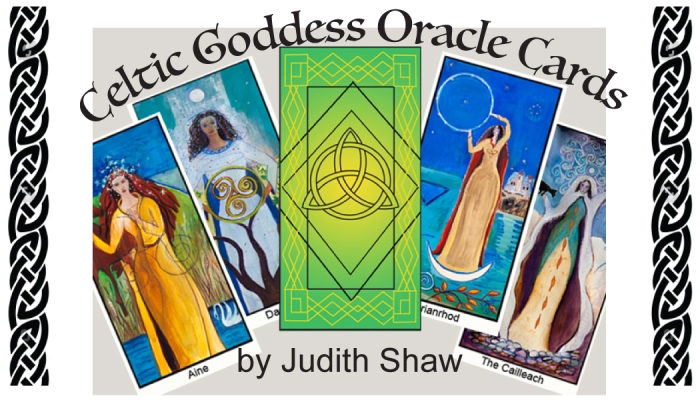
Judith’s deck of Celtic Goddess Oracle Cards is available now. You can order your deck from Judith’s website – click here. Experience the wisdom of the Celtic Goddesses!
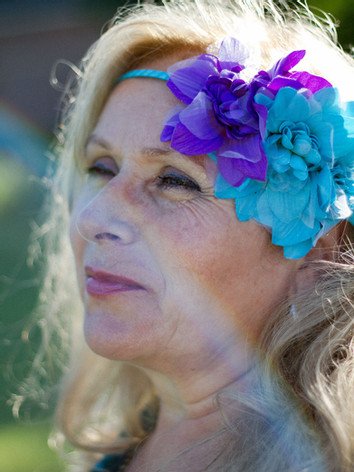
Judith Shaw, a graduate of the San Francisco Art Institute, has been interested in myth, culture and mystical studies all her life. Not long after graduating from SFAI, while living in Greece, Judith began exploring the Goddess in her art. She continues to be inspired by the Goddess in all of Her manifestations. She is now working on her next deck of oracle cards – Animal Wisdom. Originally from New Orleans, Judith makes her home in New Mexico where she paints as much as time allows and sells real estate part-time. Give yourself the gift of one of Judith’s prints or paintings, priced from $25 – $3000.


The Goddess in Portugal by Mary Sharratt

Luiza Frazão

Most people know Portugal as a deeply Catholic country with a rich Islamic past and an ancient Sephardic Jewish heritage reaching back to Roman Lusitania. But what about the country’s pre-Roman, pre-Abrahamic Goddess cultures? 

Like many foreigners, I moved to Portugal knowing nothing about Portugal’s Goddess heritage.

Then I met Luiza Frazão, Priestess, author, and independent scholar who studied at the Glastonbury Goddess Temple in England with Kathy Jones. After years of training and steeping herself in the lore of the Celtic Goddesses of the Avalonian Tradition, Luiza returned to her native Portugal to research the rich Goddess lore of her country. Intrigued and eager to learn more about her research, I met up with Luiza in the medieval town of Óbidos.

Continue reading “The Goddess in Portugal by Mary Sharratt”

Are Bees Begotten from Bull? by Judith Shaw

At first glance the ancient belief that bees were birthed from dead bulls seems odd. But if we delve deeply into pre-historical artifacts we discover the mythopoetic roots of this idea.

Continue reading “Are Bees Begotten from Bull? by Judith Shaw”

Bull, Oracle of Strength and Prosperity by Judith Shaw

judith shaw photo

Bull, with its components of aggressiveness, stubbornness, virility, and ferocity, is emblematic of masculinity. But Bull is also associated with fertility, abundance, strength, and determination. Viewed by some cultures as a solar symbol – in the oldest myths, we find Bull connected to the moon.

Continue reading “Bull, Oracle of Strength and Prosperity by Judith Shaw”