Spring by Deanne Quarrie

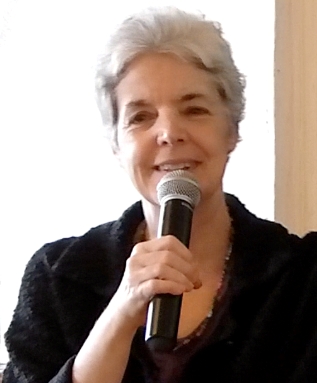
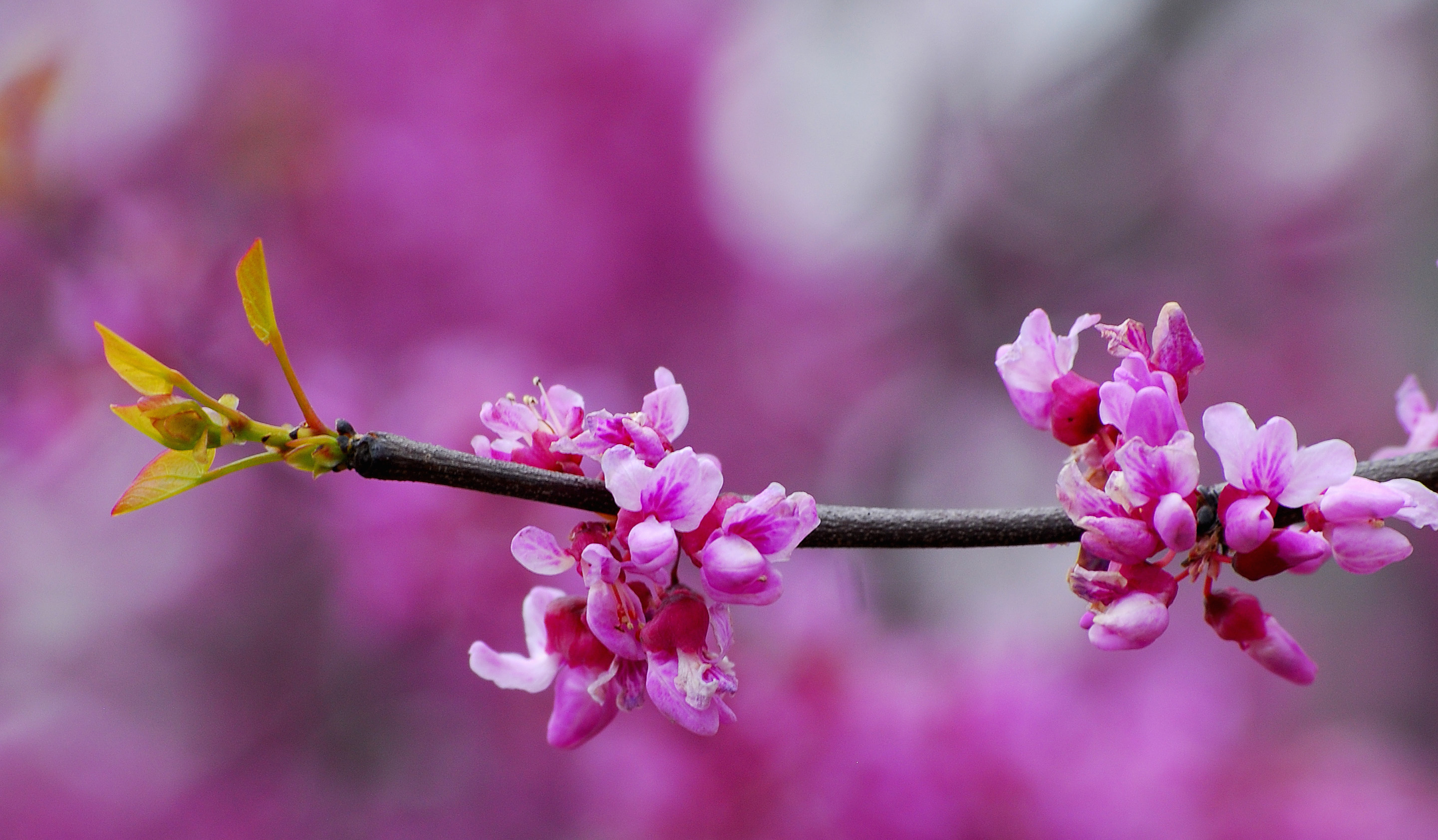
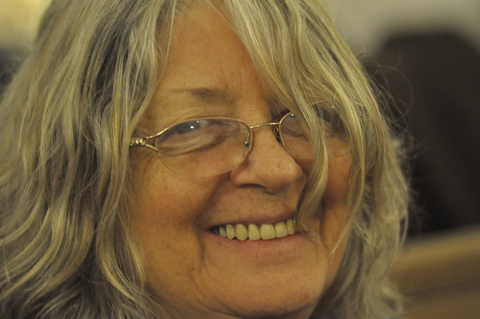
deanne_2011_B_smWe celebrate the Spring Equinox as a reflection of the birthing time of the year. We have made it through the winter’s cold and ice, experienced the warming of the Earth and the flood waters that prepared for the birth of all that is new. Seeds are germinating and beginning to sprout. We see that around us, depending on where we live. Here in Texas the red buds are in bloom and some of the trees have their fresh green leaves opening up at the tips. Just seeing these indicators, brings an internal feeling of birth. My heart expands in joy when I see my first red bud tree in bloom – the first buttercup opening to the sun!

Red BudThis is the time that the Goddess makes herself known by birthing all into existence. She first creates day and night and on this day they are equal, only to rise and fall as the year changes. Then She creates the stars, the heavens, the green things upon the earth, the animals and us – all Her children. All of us glistening in Her birth waters, ready to dance in Her rhythms.

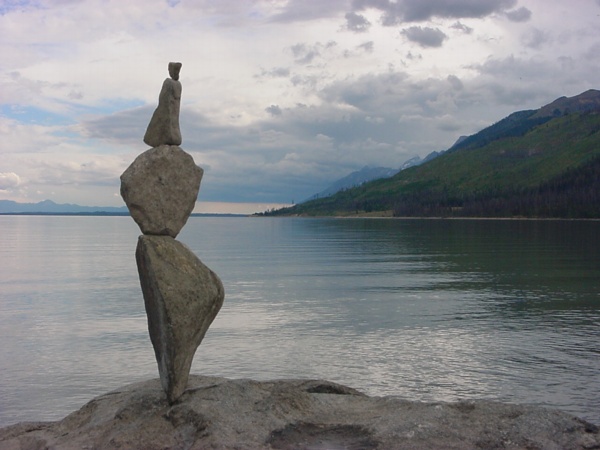
I see the creation of day and night in equal portions coming first, as a lesson for all that follows; balance, a moment of equilibrium, manifesting everything else. We attempt to have that place of balance in our lives, but know from experience it never stays exactly in the center. All we can do is hope to bring it back as we move between states. It is like the pendulum, swinging back and forth from one side to the center then to the other side, but always seeking center.Balance Continue reading “Spring by Deanne Quarrie”

Credhe, Celtic Goddess of Love and Spirit Contact by Judith Shaw

judith Shaw photoCredhe, also known as Creide or Cred is an Irish Faery Queen Goddess of Love and Spirit Contact. She is associated with Danu’s mountains, the Paps of Anu.  These are two gently rounded high hills that were adorned by the ancients with earthen and rock mounds and cairns positioned on top to represent erect nipples.  Her Sidhe was most likely located near the Paps of Anu.  She is also associated with crystals, the color pink and rose oil.

Continue reading “Credhe, Celtic Goddess of Love and Spirit Contact by Judith Shaw”

The Goddess of Willendorf and Does My Uterus Make Me Look Fat? by Molly

editMollyNov 083

 “Loving, knowing, and respecting our bodies is a powerful and invincible act of rebellion in this society.”
~ Inga Muscio

I do not remember the first time I ever saw her, but I do know that I have loved the Goddess of Willendorf sculpture for many years. When someone uses the phrase, “Great Goddess” or “Great Mother,” she’s the figure I see. To me, she honors the female form. I love her full-figure and the fact that she is not “perfect” or beautiful. I love that she is not pregnant* and what I like best is that she is complete unto herself. She is a complete form, not just a headless pregnant belly. She represents a deep, ancient power to me.

In a past post for FAR, I wrote:

I have a strong emotional connection to ancient Paleolithic and Neolithic goddess sculptures. I do not find that I feel as personally connected to later goddess imagery, but very ancient figures call to something deep and powerful within me. I have a sculpture of the Goddess of Willendorf at a central point on my altar. Sometimes I hold her and wonder and muse about who carved the original. I almost feel a thread that reaches out and continues to connect us to that nearly lost past—all the culture and society and how very much we don’t know about early human history. There is such a solid power to these early figures and to me they speak of the numinous, non-personified, Great Goddess weaving her way throughout time and space.

via Echoes of Mesopotamia by Molly Meade |.

Continue reading “The Goddess of Willendorf and Does My Uterus Make Me Look Fat? by Molly”

Caer Ibormeith, Celtic Goddess of Dreams and Prophecy by Judith Shaw

judith Shaw photoCaer Ibormeith, Celtic Goddess of Dreams and Prophecy, is a pan-Celtic goddess who was worshipped in Ireland, Scotland and Wales.  In Scotland and Wales Her name was used to name places such as Caer Edin (Edinburgh). In Ireland Her name identified the homes of Goddesses and Gods, such as Caer Arianrhod, home to the Goddess Arianrhod. Continue reading “Caer Ibormeith, Celtic Goddess of Dreams and Prophecy by Judith Shaw”

Morrigan, Celtic Goddess of Sovereignty, War and Fertility by Judith Shaw

judith Shaw photoMorrigan, Celtic Goddess of War and Death, is a dark goddess we mortals tend to approach with fear and trepidation. A great Warrior Goddess, She represents the more terrifiying aspects of female energy; sensuality, magic, prophecy, revenge, and war. She could either shapeshift into a crow or raven or be accompanied by them.  In the Ulster cycle stories she also appears as a cow, a wolf and an eel.  This indicates Her connection to prosperity, sovereignty and the land.  Encompassing all essential divine functions, She is the Goddess of War, Sovereignty, Fertility and the Land.

Continue reading “Morrigan, Celtic Goddess of Sovereignty, War and Fertility by Judith Shaw”

What is a Crone? By Deanne Quarrie

Deanne QuarrieFirst of all a Crone is a woman. She has lived most of her life already and has accumulated many life experiences and therefore, can relate to those younger than her with greater understanding. She has acquired the wisdom associated with having had those life experiences. She has reached a place in her life when she may be slowing down. She may have retired from her career. She may want to devote more time to herself, serving more as an advisor rather than as the doer. We can read the poem, Warning by Jenny Joseph to get an idea, or watch her read it here or below…

“When I am an old woman I shall wear purple
With a red hat which doesn’t go, and doesn’t suit me.
And I shall spend my pension on brandy and summer gloves
And satin sandals, and say we’ve no money for butter.
I shall sit down on the pavement when I’m tired
And gobble up samples in shops and press alarm bells
And run my stick along the public railings
And make up for the sobriety of my youth.
I shall go out in my slippers in the rain
And pick flowers in other people’s gardens
And learn to spit.

You can wear terrible shirts and grow more fat
And eat three pounds of sausages at a go
Or only bread and pickle for a week
And hoard pens and pencils and beermats and things in boxes.

But now we must have clothes that keep us dry
And pay our rent and not swear in the street
And set a good example for the children.
We must have friends to dinner and read the papers.

But maybe I ought to practice a little now?
So people who know me are not too shocked and surprised
When suddenly I am old, and start to wear purple.”

Continue reading “What is a Crone? By Deanne Quarrie”

Winter Solstice Meditation by Molly

December 2014 022When the wheel of the year turns towards fall, I always feel the call to retreat, to cocoon, to pull away. I also feel the urge for fall de-cluttering—my eyes cast about the house for things to unload, get rid of, to cast away. I also search my calendar for those things which can be eliminated, trimmed down, cut back on. I think it is the inexorable approach of the winter holiday season that prompts this desire to withdraw, as well as the natural rhythm of the earth which so clearly says: let things go, it is almost time to hibernate.

Late autumn and the shift toward winter is a time of discernment. A time to choose. A time to notice that which has not made it through the summer’s heat and thus needs to be pruned away. In this time of the year, we both recognize the harvest of our labors and that which needs to be released or even sacrificed as we sense the promise of the new year to come. Continue reading “Winter Solstice Meditation by Molly”

An Archaic Trinity of Goddesses? Not Necessarily. by Barbara Ardinger

Barbara ArdingerIn her comment following my last post which was about mythology, my friend, Carol Christ, expands on my paragraph about how the so-called “ancient triple goddess” was really invented in 1948 by Robert Graves in his book, The White Goddess. (Thanks, Carol.)

Back in the 1970s and 1980s, when the Goddess movement was just getting up on its feet and our ovular books were being published, the idea arose that if “they” have a holy trinity, “we” have one, too. And ours is older and holier. We see it in the three phases of the moon, new (Virgin), full (Mother), and dark (Crone). Here’s a tiny sample of these books that changed the lives of so many women and men:

  • Woman’s Mysteries Ancient and Modern by M. Esther Harding (1971, but first published in 1933)
  • The Goddesses and Gods of Old Europe (1974) by Marija Gimbutas
  • When God Was a Woman (1976) by Merlin Stone
  • Lost Goddesses of Early Greece: A Collection of Pre-Hellenic Myths (1978) by Charlene Spretnak
  • The first edition of The Spiral Dance (1979) by Starhawk
  • The Chalice and the Blade (1987) by Riane Eisler
  • Laughter of Aphrodite (1987) by Carol P. Christ
  • The Holy Book of Women’s Mysteries (1989) by Z. Budapest
  • The Reflowering of the Goddess (1990) by Gloria Feman Orenstein
  • Whence the Goddesses: A Source Book (1990) by Miriam Robbins Dexter

Triple goddess? ’Tain’t so. Our beloved triple goddess is one of our foundational myths. It’s nice and it’s perhaps inspiring, but it’s only a myth. Anyone who looks at a calendar or almanac—or up into the sky every night for a month—can easily see that the moon doesn’t have three phases. It has four: waxing, full, waning, and dark. And since the late 20th century, women have lived long enough to go through more than three stages of life. Continue reading “An Archaic Trinity of Goddesses? Not Necessarily. by Barbara Ardinger”

Scholars of Mythology by Barbara Ardinger 

Barbara ArdingerHere’s how my mind leaps around. I was mooning about and trying to figure out what I wanted to write for this blog when I picked up one of the books in the stack at the other end of the couch. I bought The Mythology of Eden by Arthur George and Elena George because I’d read the thoughtful review by Judith Laura, a Goddess scholar I know and respect.

In their introduction, the Georges present a paragraph by biblical scholar Millar Burrows that explains that myth is:

a symbolic, approximate expression of truth which the human mind cannot perceive sharply and completely, but can only glimpse vaguely, and therefore cannot adequately or accurately express. … It implies not falsehood, but truth; not primitive, naïve misunderstanding, but insight more profound than scientific description and logical analysis can ever achieve. The language of myth in this sense is consciously inadequate, being simply the nearest we can come to a formulation of what we can see very darkly. … The procedure is quite legitimate if [we] understand what is being done (p. xii). (Burrows’ book is An Outline of Biblical Theology, published in 1946.)

Mind leap: Wow, I said to myself, does this describe the revisionist fairy tales I write? I try to see through that dark glass more clearly and recast old ideas in new ways. (I hope this doesn’t sound too pretentious. I don’t mean it to.)

Mind leap: And, I further said to myself, we scholars who write for Feminism and Religion often write about myth, though we don’t always acknowledge that our religious stories are indeed myths. It’s like the old joke—“If I believe it, it’s religion. If you (or they) believe it, it’s myth.” Even though we sometimes call our myths the inerrant word of this god or that goddess, the stories in all of our holy books are our instructive myths. Read Burrows’ definition again. Continue reading “Scholars of Mythology by Barbara Ardinger “

The Descent of Inanna to the Underworld by Deanne Quarrie

Deanne QuarrieInanna provides a many-faceted image of the feminine. She is a goddess of order, fertility, grains, love, war, heaven and earth, healing, and emotion. She is called the “Lady of Myriad Offices”. Most of the powers once held by her, “the embodied, playful, passionately erotic feminine; the powerful, independent, self-willed feminine; the ambitious, regal, many-sided feminine” were eroded by the patriarchy throughout time.

Her descent to the Underworld is a valuable story at any time of the year but even more so here as the wheel turns fully into the dark of the year. During the dark of the year, we are to turn inward, our most introspective work is to be accomplished at this time. It is vital that we enter the darkness as did Inanna, bare and bowed low. Continue reading “The Descent of Inanna to the Underworld by Deanne Quarrie”