Mother Blues II: Interfaith Womanist Reflections on Nurturing a Resilient Bloom, part 2 by Chaz J

You can read part 1 here.

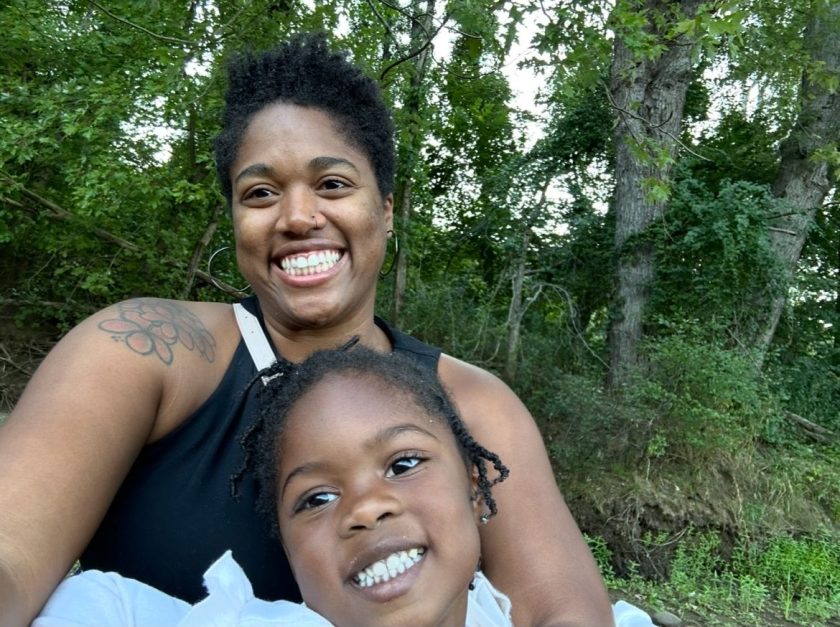
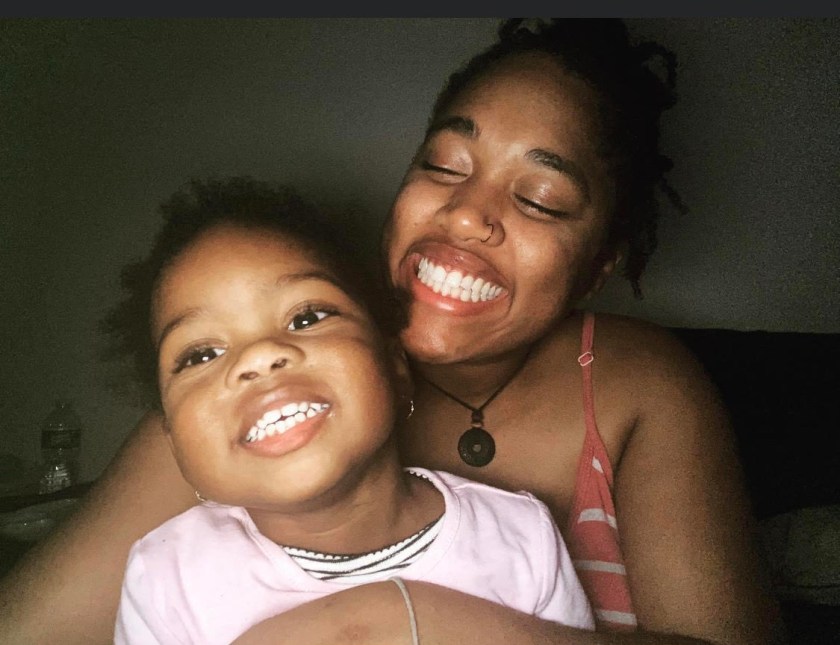
I remember confessing to a kindred spirit, also a therapist, heart heavy with a therapist’s sight: my daughter, a child of divorce. And I, who knew the long, shadowed roads— the substances, the destructive turns children take to bury unaddressed grief, hurt, and pain— this knowledge terrified me.

My friend, in turn, spoke of her own adopted daughter, of sudden, tearful storms for a birth family unseen. “This is her journey,” she said softly, “You cannot control the currents of her life. All you can do is stand with her, and teach her to navigate with a healthy heart.”

Until that moment, my fierce, unspoken goal was to shield my daughter from a therapist’s couch in twenty years’ time. But then, my friend’s truth cut through: “There is no perfect parent, and she will likely find her way to therapy no matter what you do. Just do your best and TRUST that she will be ok.”

This truth allowed me to soften, to release. Now, my purpose unfurls: to forge a bond with her, a healthy and vibrant connection that stretches through the wholeness of our days. I want her to know, beyond all shadow of doubt, that she can depend wholly on her mother, a steadfast harbor in every storm.

Continue reading “Mother Blues II: Interfaith Womanist Reflections on Nurturing a Resilient Bloom, part 2 by Chaz J”

Mother Blues II: Interfaith Womanist Reflections on Nurturing a Resilient Bloom, part 1 by Chaz J

Even before her life unfurled beneath my heart, a quiet vow took root: to parent with purposeful grace. My unwavering compass points to this: to nurture an emotionally vibrant, confident, kind, compassionate, gentle, yet fiercely bold chocolate warrior queen, a child wholly devoted to her own radiant self. For in her spirit, I long to mend the broken echoes of my past, to see her soar where I once faltered, especially in the intricate landscape of the soul. She will possess a richness I only dreamed of; she will transcend.

Seven years, a fertile ground before her birth, from youth’s edge at twenty-two to twenty-nine, I dreamt of motherhood, shaping it idealistically. My spirit yearned to reweave the tapestry of mothering, to cast aside the heavy cloak of predetermined expectation: no longer would Black motherhood be synonymous with weariness, with anger’s sharp embrace, with bitterness, or a spirit held distorted and captive. I craved for her a vision unobstructed, a path where she could shatter the assigned roles that shadowed a Black girl’s journey into Black womanhood in this land. Above all, I wanted her to be FREE.

Continue reading “Mother Blues II: Interfaith Womanist Reflections on Nurturing a Resilient Bloom, part 1 by Chaz J”

Showing Up, by Molly M. Remer

When we return home, I see a meme on social media that says: “Ten minutes online will show you everything that is wrong with the world. Ten minutes outside will show you everything that is right.” I think about the students and professors, each one alight with enthusiasm, with passion, for their work, their projects, their art, the contributions they are making. This is what we need. We need to see, spend time with, and BE people who are involved, connected, committed, and passionate. People who are creating instead of destroying. People who are connecting instead of controlling. People who are reaching out to offer what they can, who create and care, and who show up.

We may let connections thin
and interests slide,
forgetting that it takes work
to nurture and tend
to what we love,
that following what is easy
can be the wrong direction,
one that eventually leads
to the withering of what we value
and to the shrinking of our worlds.
We must evaluate the balance
between effort and ease,
yes,
but let us remember
that both are essential to thriving.
Let us lean into effort sometimes,
when there is meaning on the line,
put our backs into it,
feel sweat on our brows
and the satisfaction that comes
from choosing to immerse ourselves
in wholehearted living,
in presence,
in the work of reaching out
and holding on.

This past weekend, I went to my oldest son’s next college campus. The green spaces were filled with students working on art. The halls of the buildings were lined with art by high school students there for a visiting show. The art gallery was filled with diverse works of many mediums. The speakers for the day were filled with enthusiasm for their subjects, talking about study abroad trips to Paris and being part of the chorus or the band. We pass the student theater, abuzz with activity, and listen to a young man playing rippling tunes on the piano in the atrium of the library. This school is in a rural Missouri farming community, where we passed tractors laden with hay on the potholed road. Their mascot is a mule (“the only college with live mascot in Missouri!” they proudly report. The mule’s name is Molly, so I like her right away). Missouri is a “red state” and yet the students handed me the school paper with a front page story about protests at the capitol and a large color photo of someone holding an “Impeach Elon” sign. I happily picked up a library button proclaiming “libraries are for everyone” and another saying “what’s more punk than a library?” as well as snagging a “plant queer” sticker from the LGTBQ+ alliance table for my sister. The History table gives me a bookmark reading: “Don’t make me repeat myself.” –History

Continue reading “Showing Up, by Molly M. Remer”

Children Are The Future by Judith Shaw

If the saying “Children are the future” is true, then it must also hold true that exposing children to a worldview which supports a loving world is important. Authors, illustrators, animators, musicians, and film and tv producers are hard at work creating stories that nurture children’s capacity to follow their dreams, to share, to resolve conflict peacefully, and to love and accept themselves and others. 

Continue reading “Children Are The Future by Judith Shaw”

My Daughter’s Religions by Sara Frykenberg

I find it interesting how certain or settled we often expect our little ones to be instead of getting curious about them or acknowledging that they are curious.

My daughter, Hazel, is six years old and will be starting first grade next week. She loves cats, swimming, her cousin, and food. Purportedly, Chinese style barbecue pork buns come first in her heart, even before mommy and daddy (though we are a close second). She also prefers to run instead of walk; and has recently declared that she is Taoist and Shinto. This determination came after some discussion which went something like this:

Sitting at the kitchen table one morning, Hazel declares “My best friend asked me if I was a Christian and I told her I was. I am a Christian.”

Mommy the agnostic is a little surprised. Daddy, the atheist, is biting back a retort—he is somewhat hostile towards Christianity. I am only hostile to abusive, hetero-Patriarchal Christianity. I say to Hazel, “Oh. That’s interesting. Do you know what that means?”

“No. What do Christians believe,” she asks.

Continue reading “My Daughter’s Religions by Sara Frykenberg”

Rites of May, by Molly Remer

It is important that we share these rituals of celebration and affirmation with our sons as well as our daughters. Men, too, should know the power of joined hands in a circle, voices lifted in song, and sweet words of connection surrounding one another on a bright spring day…

I rose early seeking Beltane dewdrops
with which to anoint my brow.
the cupped violet stems and clover
were dry
and I found no dewdrops
in the chickweed stars.
Instead, I put out oranges
for the orioles,
ran my fingers through the dandelions,
and pressed my nose into the lilacs.
I spotted green flowers
on the mulberry trees,
found the first wild pink geraniums
and tender bells of columbine
and came face to face
with the quiet black eyes
of solemn deer in the raspberry bushes.
These things
their own kind of anointing,
their own small and significant
rites of May Magic.

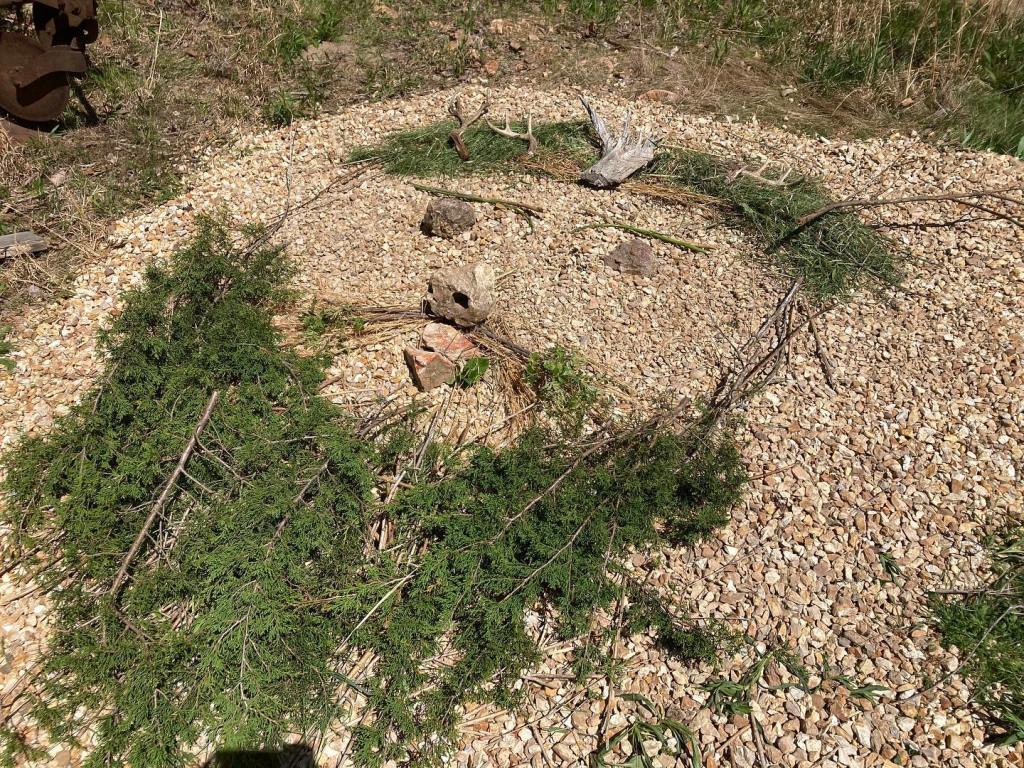
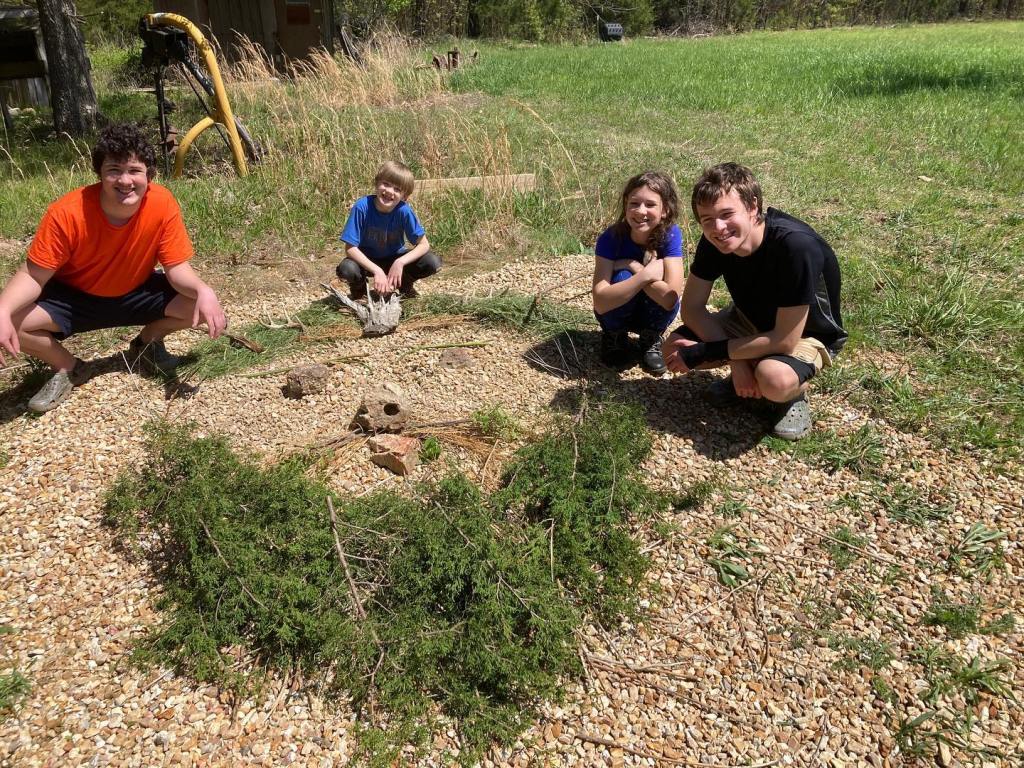
As a family, we traditionally celebrate the May by making a Green Man face in our field, using natural items that we find that day. As a goddess-focused person who walks an almost exclusively goddess-centered/nature-based path, this is one of our few family rituals that centers around more masculine sacred imagery. It is a favorite for my kids—rituals involving multi-age groups should always be as highly participatory as possible. I have written several times for FAR about how my hearth-priestessing has evolved over the years, letting go of more and more control, doing less and less planning, and being more freeform, spontaneous, flexible, and playful. My four children now range in age from 7-18. We have celebrating the turning of the Wheel of the Year for their entire lives. I love how our memories of past rituals inform the present—for example this year’s Green Man had the same rock for a nose that we used for last year’s Green Man.

This year, May Day was bright and sunny with a wild wind. We circled near the driveway, building our Man on the gravel, where his features would stand out against the brown rocks. We gave him antlers formed from cedar branch and white-tailed deer and a crown of a split stump of gray oak. My oldest son trimmed off cedar branches for his beard, my husband pruned the hydrangeas of last year’s dead growth to frame his face, my sixteen year old gathered golden stalks of dry bluestem grass for a mustache, and my 11 and 7 year olds gathered pieces of grass and cinquefoil to trim his hair and beard.

We stood around him in admiration for a few minutes and then I spoke of the bounty, growth, and renewal of this time of year. We stood hand in hand and read the following blessing together (me calling a line and then all repeating it):

A sweet blessing
of the singing sky
to us.

A slow blessing
of the shining flame
to us.

 A strong blessing
 of the crashing wave
to us.

 A soft blessing
of the pulsing earth
to us.

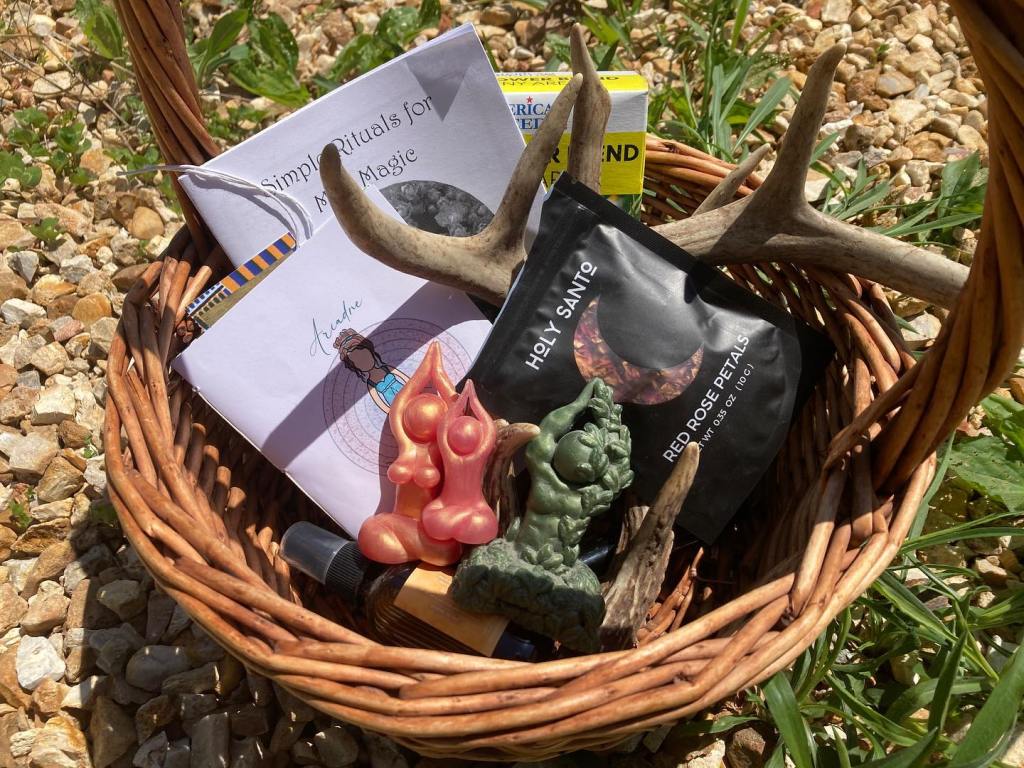
We then offered a wish to one another in turn with a spritz of “Valiant Heart” spray (from Honey and Sage Co). For example, I spritzed my daughter (11) and wished her curiosity and creativity and then she turned to her father and spritzed him wishing him health and prosperity.

I gave everyone four rose petals (whole flowers would have worked well, but I was working on the fly!) and invited everyone to kiss each petal in turn and then offer it to the Green Man (the wind whirled most of our petals away as we released them, which was pleasant as well—our wishes, accepted), based on this past poem:

Find four flowers
and bring them to your lips
one at a time.
One for wonder.
One for joy.
One for love.
One for magic.
Make your promise
invite them in,
one by one
the spell is done.

We sang a few lines together, laughing, from one of Tom Bombadil’s ditties in The Fellowship of the Ring and shouted out, “Happy May!”  after finishing our raucous rendition:

Now let the song begin! Let us sing together!
Of sun, stars, moon and mist, rain and cloudy weather,
Light on the budding leaf, dew on the feather,
Wind on the open hill, bells on the heather,
Reeds by the shady pool, lilies on the water…

We then each took a handful of wildflower seeds and sang “Call Down a Blessing” over them, each of us plugging in a blessing word in our turn.

Call down a blessing
Call down
__________before you
__________behind you
__________within you
and around you.

This song is based on Cathy Parton and Dave Para’s song, but is sung collaboratively with each person choosing a blessing to sing together in the blank space. (A recording of our women’s circle singing this together during a ritual is available here.) We then scattered to plant our handfuls of seeds in whichever place we wished to do so.

This whole ceremony took less than thirty minutes and we closed our largely spontaneous ritual by joining hands and offering our family’s usual closing prayer (learned from our own dear Carol Christ): May Goddess bless and keep us, may wisdom dwell within us, may we create peace.

It is important that we share these rituals of celebration and affirmation with our sons as well as our daughters. Men, too, should know the power of joined hands in a circle, voices lifted in song, and sweet words of connection surrounding one another on a bright spring day.

My oldest son is graduating from high school this month and this week I took him to register for his first college classes. At this threshold moment in parenting, I feel the odd psychological sensation of overlapping generational “timelines,” sometimes feeling like I, myself, have become my parents, while at the same time, feeling like I am a college student myself. But, for now, at this moment, we stand here together under a Beltane sun, laughing together around a Green Man in the stones.

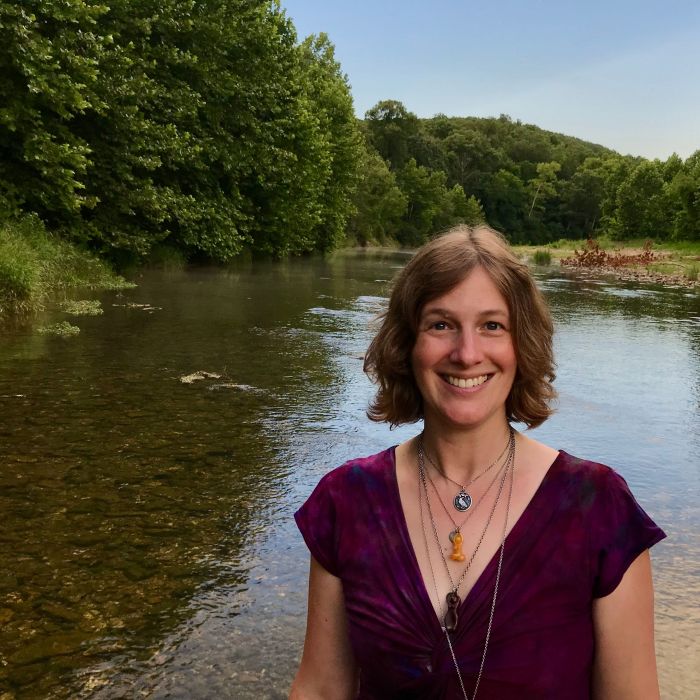
Molly Remer, MSW, D.Min, is a priestess, teacher, and poet facilitating sacred circles, seasonal rituals, and family ceremonies in central Missouri. Molly and her husband Mark co-create Story Goddesses at Brigid’s Grove (brigidsgrove.etsy.com). Molly is the author of nine books, including Walking with Persephone, Whole and Holy, Womanrunes, and the Goddess Devotional. She is the creator of the devotional experience #30DaysofGoddess and she loves savoring small magic and everyday enchantment.

Celebrating Our Girls, by Molly Remer

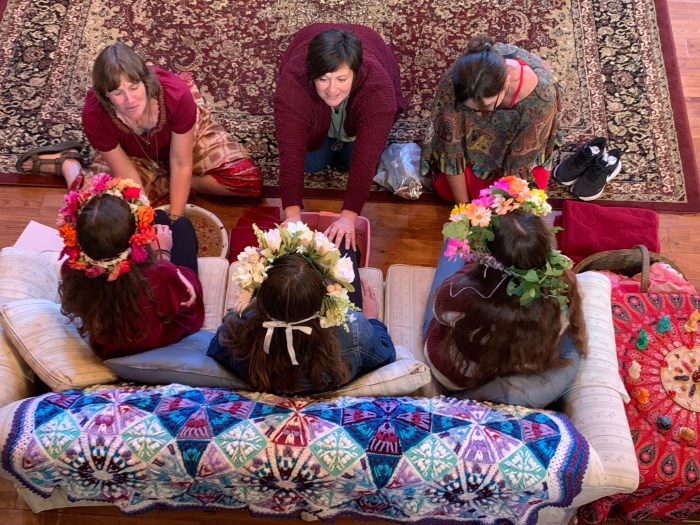
We gathered roses
and bright zinnias
to crown their heads with flowers,
these shining daughters
who we’ve cradled and fed
and loved with everything
we have
and everything we are.
We knelt before them and sang,
our hands gently washing the feet
that we once carried inside our own bodies
and that now follow
their own paths.
For a moment,
time folded
and we could see them
as babies in our arms,
curly hair and round faces,
at the same time seeing
the girls in front of us,
flowers in their hair,
bright eyed and smiling,
and so too
we see women of the future,
tall and strong boned
kneeling at the feet
of their own girls
as the song goes on and on.
We tried to tell them
what we want them to know,
what we want them to carry
with them as they go on their ways:
You are loved.
We are here.
You are loved.
You are strong.
You are magical.
We treasure who you are.
This love that carried them
forth into the very world
they walk on,
we hope it is enough
to embrace them for a lifetime,
and so we kneel and sing
and anoint and adorn
and hold their hands in ours.
We are here.
You are not alone.
You are wise in the ways.
You belong.
We are not sure if tears can say
what we mean to say,
but they fall anyway
as we try our best to weave
our words and wishes
and songs and stories,
with strength and confidence
into a cloak of power
that will encircle them with magic,
no matter
how far away
from us they journey.

Continue reading “Celebrating Our Girls, by Molly Remer”

Rituals for Our Sons, Part 2, by Molly Remer

Five years ago, I wrote an essay for Feminism and Religion musing about rituals for our sons. I wondered aloud how we welcome sons in manhood, how we create rituals of celebrations and rites of passages for our boys as well as our daughters. I have been steeped in women’s ceremony and ritual since I was a girl myself, watching the women wash my mother’s feet and crown her with flowers at her mother blessing ceremony as she prepared to give birth to my little brother when I was nine years old. Her circle of friends honored us too, crowning their daughters with flowers and loosely binding their wrists with ribbon to their mothers as they crossed the threshold into first menstruation.

At 24, I then helped plan the rite of passage for my youngest sister, then 13, as she and her friends gathered into a wide living room, flowers on their heads and anticipation in their eyes as we spoke to them of women’s wisdom and the strength of, and celebration of, being maiden girls on their way to adulthood. I knew then that I would have a ritual for my own daughter, yet unconceived, one day. I birthed two sons and lost another son in my second trimester. I led a circle of mothers and daughters through a series of nine classes culminating in a flower-becked coming of age ceremony while newly pregnant with the rainbow baby who would become my own daughter.

Continue reading “Rituals for Our Sons, Part 2, by Molly Remer”

Talking about Death with my Daughter & Remembering Carol Christ

Recently, facing the reality that I do not have definitive or perhaps, static “answers” for my little one when she asks me about death, I find comfort in Carol’s words—in the idea that I don’t have to “answer” my daughter with one, forever “truth.” Because I have to ability to give her “enough,” at least for now.

As I sit down to write, I am reminded of a post I wrote many years ago entitled “Where Do Cat’s Go,” about my mother’s cat, Mimi, who passed away at the age of twenty-four. At that time, I was struggling with what death meant outside of an Evangelical Christian ideology. I had rejected the doctrine of heaven (and hell) itself; but doubt lingered. Fear still held sway over my emotions. I wanted to “believe in,” something else. Whether to regain control or simply for comfort, I hoped for new belief.

Carol Christ, who has touched so many of us, who was my teacher and whom I miss, replied to that post (paraphrasing here), “Why does [Mimi] have to go anywhere? Isn’t it enough that she is a loved and remembered part of life?”

At the time it was not enough. But recently, facing the reality that I do not have definitive or perhaps, static “answers” for my little one when she asks me about death, I find comfort in Carol’s words—in the idea that I don’t have to “answer” my daughter with one, forever “truth.” Because I have to ability to give her “enough,” at least for now.

 As a feminist mom, I frequently think about what will give my daughter strength and a sense of her value outside of hetero-patriarchal standards. I am also an ex-vangelical agnostic married to an atheist. He and I want our daughter to have choice in her spirituality and freedom to explore her own directions. I think this is a good commitment, though it is frequently a little more difficult in practice. My partner wants to protect our daughter from all religion and Christianity in particular. I tend to take an educational approach, answering her questions about spiritual matters with, “well, people believe all sorts of things about that,” then listing several beliefs or mythologies that might give her some information on the matter.

Continue reading “Talking about Death with my Daughter & Remembering Carol Christ”

Feminist Parenting About Sexuality Part 4: What to tell my daughters by Trelawney Grenfell-Muir

In this blog series, we have discussed:

—The importance of admitting how painful this subject is

—Reminders that I am NOT saying all men are bad or maleness is bad, because men and maleness are truly inherently beautiful and divine

—The necessity of facing honestly just how scary and horrifying the epidemic of violence against females is in our world today

—The truly evil, vicious destruction pornography is causing to female bodies and male psyches in training many, many males to rape and abuse females, and grooming females to normalize and comply with rape and abuse by males

Continue reading “Feminist Parenting About Sexuality Part 4: What to tell my daughters by Trelawney Grenfell-Muir”