The Cost by John Erickson

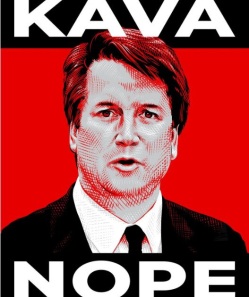
Brett Kavanaugh is a piece of shit.

Brett Kavanaugh is a piece of shit.

KavaNope

There, I said it. I know that we are supposed to “use our words” or “take the high road” but I no longer can. I am completely and totally done with the fact that it is Sunday night and I sit here wondering whether or not our Democracy will be around by the end of the week.

If you are like me, you have found yourself, more times than one I am guessing, watching the news, mouths agape, mind in disbelief, and your heart heavy with grief and sadness. While these great travesties occur, I find myself wondering what is the cost? How many children must be locked in cages? How many women must come forward with accusations of sexual assault and rape? How many more people must accuse the President of harassment and assault? How many more anonymous op-eds and faulty promises must be made before we finally all see that the real cost, is that these great travesties themselves (too many to recall here) are what it really takes to take down imperialist white supremacist capitalist patriarchy. Continue reading “The Cost by John Erickson”

The Exclusion and Embrace of Trans-women within Feminist Spirituality by Kelly Palmer

Women-only circles have long existed within the Goddess movement, the Red Tent movement for example exists as an inter-faith, grass-roots movement for women only to come together to claim safe and sacred space. But too often ‘women-only’ in fact means ‘cis women only’. Trans women are not allowed. This has been the topic of much heated debate in recent years, culminating last year in the publication of ‘Female Erasure’ an anthology of essays on gender politics and feminist spirituality that has led to calls for the editor Ruth Barrett to be expelled from her thealogical seminary on grounds of transphobia. Barrett and many of her contemporaries openly call for the exclusion of transwomen from women-only Goddess circles and respond to criticism by saying that asking for ‘women born women only’ space is not meant to be antitrans but simply carving out a space for people with similar life experience – in the same way that people of specific ethnic minorities may gather, or LGBTQ people. Surely, they may say, the answer is for trans women to create their own spaces?

There are two problems with this. Firstly, trans women are in a significant minority, making access to groups of other trans women practicing Goddess spirituality difficult. If a local woman’s circle is their only means to practicing their religion with others, and they are excluded by this on the basis of their genitalia, this exclusion is incredibly hurtful and undermines not just one’s ability to practice a faith but one’s very identity and esteem. Secondly, it is not just local, personal groups that are practicing this exclusion, but large and public gatherings, making very public pronouncements that trans women are not welcome. They have been excluded from womens rituals at PantheaCon in 2011 and Michigan Womyns Music Festival has a policy of excluding trans women from the entire event.

Continue reading “The Exclusion and Embrace of Trans-women within Feminist Spirituality by Kelly Palmer”

I Was Brainwashed to Believe I Wasn’t Human. Now I’m on a Mission Against that Cult – Part 2 by Trelawney Grenfell-Muir

Trigger warning: rape, sexual assault, domestic abuse, graphic sexual content

In Part 1 of this story, I introduced a discussion of Johan Galtung’s theory of cultural violence as it relates to my experience as a young woman in an abusive relationship. To recap:

Cultural violence is: “…any aspect of a culture that can be used to legitimize violence in its direct or structural form. Symbolic violence built into a culture does not kill or maim like direct violence or the violence built into the structure. However, it is used to legitimize either or both.”[1]

Cultural violence against women is: Normalization and promotion of pornography, prostitution, degradation, and sexual objectification of females in media, predominantly male language in civic, business, and religious institutions, gender roles and stereotypes, misogynist humor, gaslighting, minimizing or denying any of these forms of violence.

Part 1 ended right before my ex convinced me to leave MIT and move with him to Minnesota. I had been trying my best to please him by sculpting my appearance to match his preferences, believing that it was my job as a female partner to try to satisfy my male partner sexually.

Continue reading “I Was Brainwashed to Believe I Wasn’t Human. Now I’m on a Mission Against that Cult – Part 2 by Trelawney Grenfell-Muir”

Spinning the Fire, Shifting the Current by Chris Ash

Christy at the beachSeventy-two hours out of every week, I carry a hotline phone. While calls come in waves and some shifts are silent, my everyday and professional lives are peppered with reminders that evil doesn’t just pierce reality through acts of power, control, and violence – it seeps through in discrediting voices and disbelieving questions. It rolls into us off the well-meaning tongues of community members who’d rather protect the status quo than hold people accountable. It wraps its tendrils around us as we walk through each system we are forced to navigate – systems that are not set up to protect our vulnerable hearts and human dignity. Evil powers the backlash wave that tries to knock down every survivor who speaks out about gender, sexual, or intimate partner violence, and it also is in the fear we swallow when we choke down our own stories, press them down deeper, grasping to avoid yet another assault on our integrity, intelligence, and truth.

Evil stains our flags with the undeniable imprints of genocide, slavery, and continuing racial injustice and then demands that we wave those flags, smiling and allegiant, as The American Dream itself is held hostage, torn from its family, held in a cage. Continue reading “Spinning the Fire, Shifting the Current by Chris Ash”

Gas-lighting on Al Franken(stein)’s Street by Elisabeth Schilling

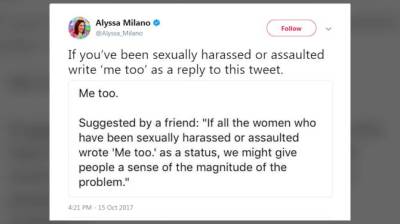
I will add my #metoo, but don’t feel like going into details. I will just say that in light of my past experience and Al Franken’s statement of apology, I’m realizing why some of us don’t tell at an even deeper level.

This is Al Franken’s statement:

“I’ve met tens of thousands of people and taken thousands of photographs, often in crowded and chaotic situations. I’m a warm person; I hug people. I’ve learned from recent stories that in some of those encounters, I crossed a line for some women — and I know that any number is too many. Some women have found my greetings or embraces for a hug or photo inappropriate, and I respect their feelings about that. I’ve thought a lot in recent days about how that could happen, and recognize that I need to be much more careful and sensitive in these situations. I feel terribly that I’ve made some women feel badly and for that I am so sorry, and I want to make sure that never happens again.”

Summary: It’s super hard to be a guy in this society.

Continue reading “Gas-lighting on Al Franken(stein)’s Street by Elisabeth Schilling”

Why We Don’t Tell by Gina Messina

Roy Moore is the next in line to be exposed as a sexual predator in a long list that has unfolded since the Harvey Weinstein scandal. I find it both comical and distressing that Moore has attempted to justify his behavior by saying “I’ve never dated a girl without her mother’s permission.” In addition, he argued that such claims against him could not be true; it was so long ago; who would wait forty years to tell?

Apparently Moore has not heard the term rape culture – one he is clearly a product of – and how it leaves victims feeling silenced and ashamed. Perhaps he has not listened to the woman he assaulted sob on television as she spoke of her fear, embarrassment, and pain? Recounting her victimization, Beverly Young Nelson said she didn’t speak out because Moore told her no one would believe her. At only sixteen, Nelson knew that reporting the assault would lead to more trouble for her and no consequences for Moore. Continue reading “Why We Don’t Tell by Gina Messina”

Why Not Me? by Marcia Mount Shoop

My “me too” went out for all to see way before Facebook existed, way before there were hash tags and internet pages for unveiling our secrets to the world. In all the years that have passed since I first spoke publicly and published about my experiences with sexual violence, there has been a steady stream of people (mostly, but not all, women) who have come to me with their #metoo.

Survivors tend to hold lots of secrets—they become heavier with time and the more the secrets stay secret, the more power they have to distort and rupture and isolate. I held mine for many years and I planned on never telling anyone. But, those memories began to disrupt my life more and more—and finally they had to come out. That was the only way I could ever be free, that is the only way I could truly be alive.

Continue reading “Why Not Me? by Marcia Mount Shoop”

#MeToo or Why I Didn’t Make a Film in Film School by Marie Cartier

I needed to check out a camera for an assignment. I was in the small equipment room looking at equipment I clearly did not know how to use yet. But, I was required to check out a camera and start. I was excited to begin.

I turned around to ask a question of the guy who helped us check out equipment. I was surprised, and then stunned to see him close the door behind him. I don’t know if he locked it, but he stood in front of it, blocking my exit, and asked me, “How bad do you want that camera?”

I was a radical lesbian separatist who wore “ACT-UP FIGHT AIDS” T-shirts regularly to school. I stared at him and said the first thing that came to my mind, “I am not the person you want to do this to. Trust me.” We stared at each other. He laughed and slowly moved away from the door. I left, with the camera (I think), I finished that assignment and somehow passed the camera class. What I do know for sure is that I never checked out a camera again, and somehow convinced myself that the “equipment” part of film making was somehow too technical for me.

I had come out to LA from Colorado and was extremely proud to get into one of the best theater and film schools in the US. However, I was completely not “used to” the level of casual and cruel sexism women in the industry were subjected to. There was an unwritten code that if you wanted to make it as a woman—well, you better toughen up and get used to what the industry looked like for women. Continue reading “#MeToo or Why I Didn’t Make a Film in Film School by Marie Cartier”

Rape Culture and Muslims by Vanessa Rivera de la Fuente

rape culture

There is no doubt that Rape Culture is installed within religions and Islam is not an exception. Lately, “honorable Islamic scholar,” Nouman Ali Khan (NAK) was exposed as sexual predator, causing a battle in social media. NAK is only one more in the list of sexual offenders operating in religious spaces, on many occasions with the support of opinions leaders, or the silence and blind eye of the community of believers.

During my months in Cape Town, as you know, I engaged in critical education in Gender and Islam through workshops with Muslim women from the Cape Flats, where the rigid dynamics of researcher-object of study, gave way to an equal interaction of “people talking.” A recurrent theme, as I said in a previous article, was sexual violence and the discursive tenets that facilitate it.

In the light of the controversy aforementioned, I want to share excerpts that I recorded during our sessions of the sincere statements of Muslim women between 25 and 60 years old from different suburbs of Cape Town on Rape Culture and religion as they live it.  Continue reading “Rape Culture and Muslims by Vanessa Rivera de la Fuente”

An Algorithm for Capturing White Heteropatriarchy: The Woman Caught in Adultery and the Failure of the Civil Rights and Feminist Movements to Embrace Intersectionality by Blanche Cook


The church occasioned one of my first conscious experiences with inequality — Sunday school to be exact. I was nine and bedecked in black platform shoes and a bright pink polyester suit.  It was the 70s, a moment in fashion history never to be revisited.  My Sunday school teacher, a spiritually angelic woman, was explaining the demise of the Woman Caught in Adultery. According to the story, the leaders of law and religion wanted to stone the woman to death for having intercourse with a man that was not her husband.  Although she was vulnerable to the death penalty, the man was not exposed to any punishment.  This lopsided sanctioning plagued my young mind.  Little did I know, I would spend my legal career, as a federal sex trafficking prosecutor and as a legal scholar, trying to vindicate the Woman Caught in Adultery.

Continue reading “An Algorithm for Capturing White Heteropatriarchy: The Woman Caught in Adultery and the Failure of the Civil Rights and Feminist Movements to Embrace Intersectionality by Blanche Cook”