Unjust Wars and ‘Innocent’ Bodies by Kelly Brown Douglas

According to a recent online CNN report (15 September 2013) an 8 year old girl in Yemani died from internal injuries after her wedding night. Apparently this was not the first time a young Yemeni girl died under these circumstances.  Despite the fact that there have been various attempts to outlaw child marriage in Yemani, it remains legal.  For some families steeped in poverty, the “innocent” bodies of  young girls becomes a way to make money as these girls are sold for marriage to older men. One Yemeni woman lamented, “this is what poverty can do to people” (CNN online 15 September).

All around the world there are stories of young girls and women whose bodies are being “legitimately” violated.  Even in those places where the violence against women’s bodies is considered a crime, the redress for these crimes fall short of justice.  The story of the Yemeni girls and others like it have raised many theological questions in my mind concerning  notions of innocence,  the meaning of violence, and the implications of just war.  In this blog, I will share my rather fragmented thoughts on these issues as an invitation to conversation. Continue reading “Unjust Wars and ‘Innocent’ Bodies by Kelly Brown Douglas”
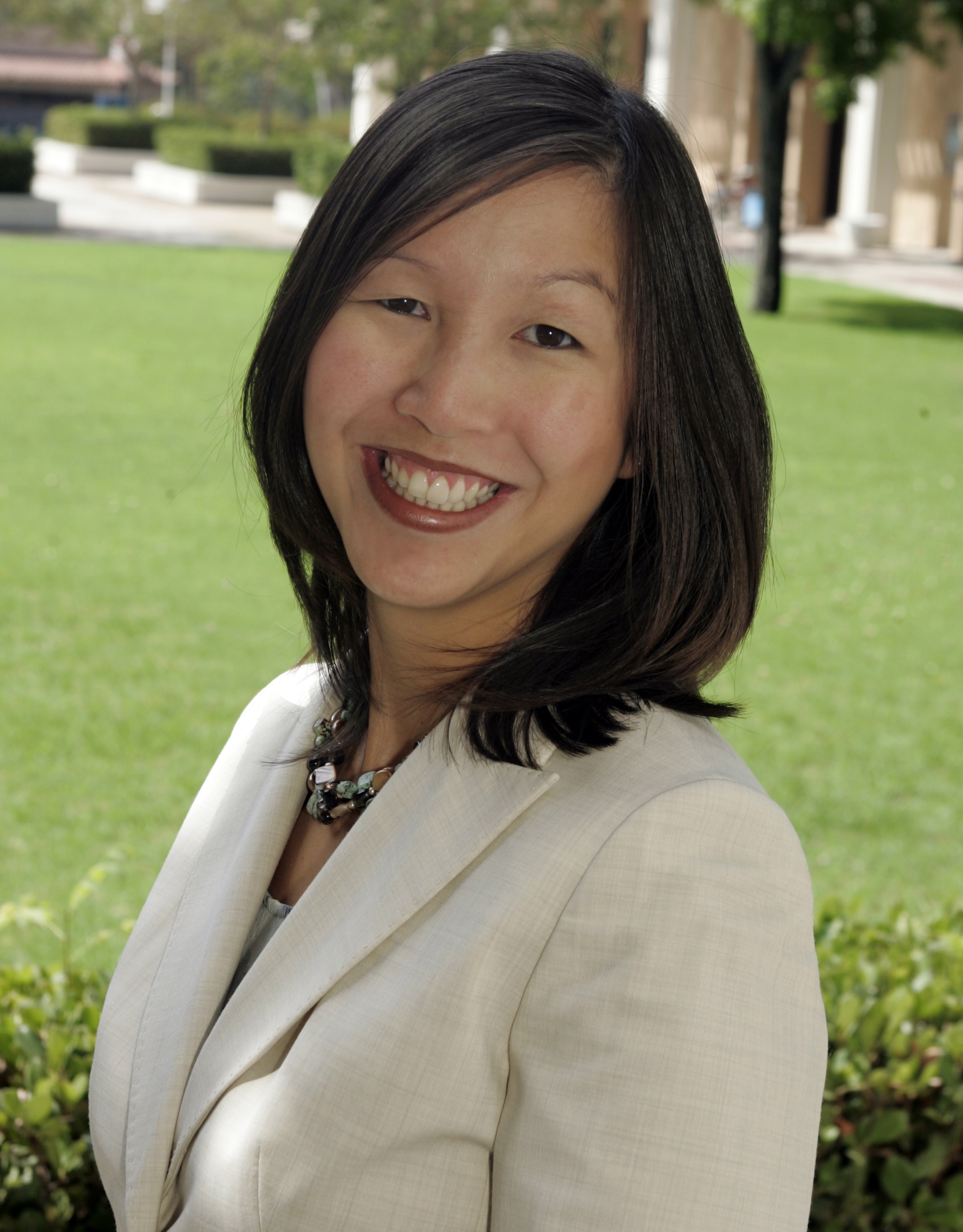
Everywhere I am surrounded by tales of violence by Grace Yia-Hei Kao

 Grace Yia-Hei KaoAs I write this blog, I am nearing the end of my week-long family vacation in Palm Desert. While we’ve had lots of fun splashing around in the pool, everywhere I turn I am bombarded by scenes and memories of violence.

Continue reading “Everywhere I am surrounded by tales of violence by Grace Yia-Hei Kao”

The Words Ring Hollow by Kelly Brown Douglas

July 2008 the United States House of Representatives passes a resolution apologizing for the more than two hundred years of slavery and the decades of Jim Crow that followed.

June 2009 the United States Senate passes a resolution apologizing for slavery and Jim Crow.

October 2007 Tallahatchie County Mississippi Board of Supervisors and Sheriff William Brewer, Jr. sign a resolution apologizing to the surviving family of Emmett Till for his murder and for the acquittal of the two men who murdered him.

March 2013 Montgomery Alabama police chief Kevin Murphy apologizes to Congressman John Lewis for the failure of police to protect Lewis and other Freedom Riders from mob attacks when they rode through Montgomery in 1961.

April 2012  “I am sorry for the loss of your son,” George Zimmerman says at his bail hearing to the parents of Trayvon Martin. Continue reading “The Words Ring Hollow by Kelly Brown Douglas”

Feminism and My Existentialist Leanings by Xochitl Alvizo

In light of so much destruction in our world – from the violence inside individual homes to beyond and between national borders – how is it still possible to hope for and to live toward a vision of beauty and peace for the world?

It was at a community college in LA in my Psychology 4 class that I first formally encountered existentialism. When it came to the time of the semester to teach on that topic, our professor, Eric Fiazi, came alive in a new way, energetically teaching us about existentialism and Jean-Paul Sartre. Professor Fiazi dramatically gestured and sketched on the board as he explained the concept of ‘nothingness’ and Sartre’s well-known proposition that “existence precedes essence.”  Teaching psychology was for him a means of teaching what he truly loved, art and existentialism. He believed these subjects helped expand students’ horizons and helped make them happy and productive members of society. And so these class sessions were his favorite to teach – and mine to experience. Immediately, I was hooked.

I remember the moment he hit the chalk to the board – leaving a speck of a mark – telling us that the tiny little mark left on the great wide chalkboard was like our galaxy, tiny  against the great vastness of the universe; the earth, a particle of chalk-dust in comparison, and our individual lives, imperceptible in its midst (it now reminds me of Carl Sagan’s pale blue dot monologue). Engaging the students, he countered each one of their assertions that humans indeed have an essence, a meaning. “Humans are good by nature” – “Humans are inherently selfish beings” – “Humans are created in the image of god” – “We are each created for a purpose”; for each of these he gave a clear and logical retort. I was fascinated! What would it mean to live a life with no inherent meaning – with no essence to determine or guide our existence? How might it be different to live my life stripped of any assumed or inherited sense of meaning or purpose – to instead give these up and start from a presupposition of nothingness? Continue reading “Feminism and My Existentialist Leanings by Xochitl Alvizo”

Cells in The Body Of Earth: Living with Violence, Part 2 by Candice Valenzuela

Candice Rose Valenzuela teaches English Literature at Castlemont High School in East Oakland, California, and she has been teaching and organizing inner-city youth for the past eight years. She is currently pursuing a Masters in East-West Psychology at the California Institute for Integral Studies, and desires to bring indigenous healing methodologies into teaching and learning in the inner-city.

In a previous blog, I wrote about the feelings that have engulfed me and the students I teach at Castlemont High School in East  Oakland, California, following the shooting death of “one of my own,” Olajumon Clayborn.

An indigenous elder told me that I needed to go to the ocean in order to heal. I needed to go to nature, the source, to find the sustenance that will strengthen me in these times.  I went to the ocean yesterday evening after school, though my body was exhausted after running up and down Macarthur Avenue trying to dissuade students from fighting with each other in their anger and grief.

As the waves crashed up and down, back and forth on the shore, and came up steadily to meet me, I suddenly found myself knee deep in water, but I was not cold. And I could see clearly from that place. What I saw was this: Continue reading “Cells in The Body Of Earth: Living with Violence, Part 2 by Candice Valenzuela”

Cells in The Body Of Earth: Living with Violence, Part 1 by Candice Valenzuela

Candice Rose Valenzuela teaches English Literature at Castlemont High School in East Oakland, California, and she has been teaching and organizing inner-city youth for the past eight years. She is currently pursuing a Masters in East-West Psychology at the California Institute for Integral Studies, and desires to bring indigenous healing methodologies into teaching and learning in the inner-city.This week has been especially hard. At the high school where I teach, the youth and staff are facing a level of heightened violence, the likes of which, I have not myself personally seen before. Two weeks ago, a young woman was shot in front of the youth center next door, and two days later there was a drive-by in front of the campus targeting one of our young men. Shots flew through the building as youth and teachers hid under desks. I am writing this now as I process the knowledge that one of my own, Olajuwon Clayborn, was shot and murdered this past Sunday around midnight in front of his home while his mother watched.

I’ve been teaching in urban schools for the past eight years (for one of those years I was a sex educator, two a special ed teacher, and the last five an English instructor). In this time I’ve grown tremendously, through having to face the severe struggles of inner-city youth, face what their struggles trigger in me, and then channel that into something that can be helpful, useful, or inspiring to them. What has resulted are new lesson plans, deep relationships, and a constantly transforming work ethic. Above all, I continue to grow into a person who is greater and wiser than I could have ever imagined, all due to the trust and love of the youth, who literally, often give me more than I give them. Continue reading “Cells in The Body Of Earth: Living with Violence, Part 1 by Candice Valenzuela”

Betraying Bodies by Kelly Brown Douglas

Her name was Tricia Meili. Their names were Yusef Salaam, Raymond Santana, Antron McCray, Korey Wise and Kevin Richardson.  On April 19, 1989 all of their lives were irrevocably changed. They would never meet, but their lives would become forever linked.  When they entered into Central Park on that night, did they know that they were stepping into a haunting history of dismembered bodies?  Tragically, their bodies would become another story to be told in that history.

On that April day in history some 34 years ago one white female body went into Central Park for her routine jog. Five black and brown male teenage bodies went into Central Park to hang out, but soon became a part of a crowd engaged in mischievous if not dangerous and out-of-control harassment of other park visitors. As the night wore on, police were called and arrests were made. It would later be discovered that Tricia was brutally and sadistically raped, but not by Yusef, Raymond, Antron, Korey or Kevin. Yet, the five young teenagers were badgered into confessions, charged with the rape and sentenced to prison. Continue reading “Betraying Bodies by Kelly Brown Douglas”

The Flesh Made Word: Colm Toibin’s “The Testament of Mary” on stage and in print By Joyce Zonana

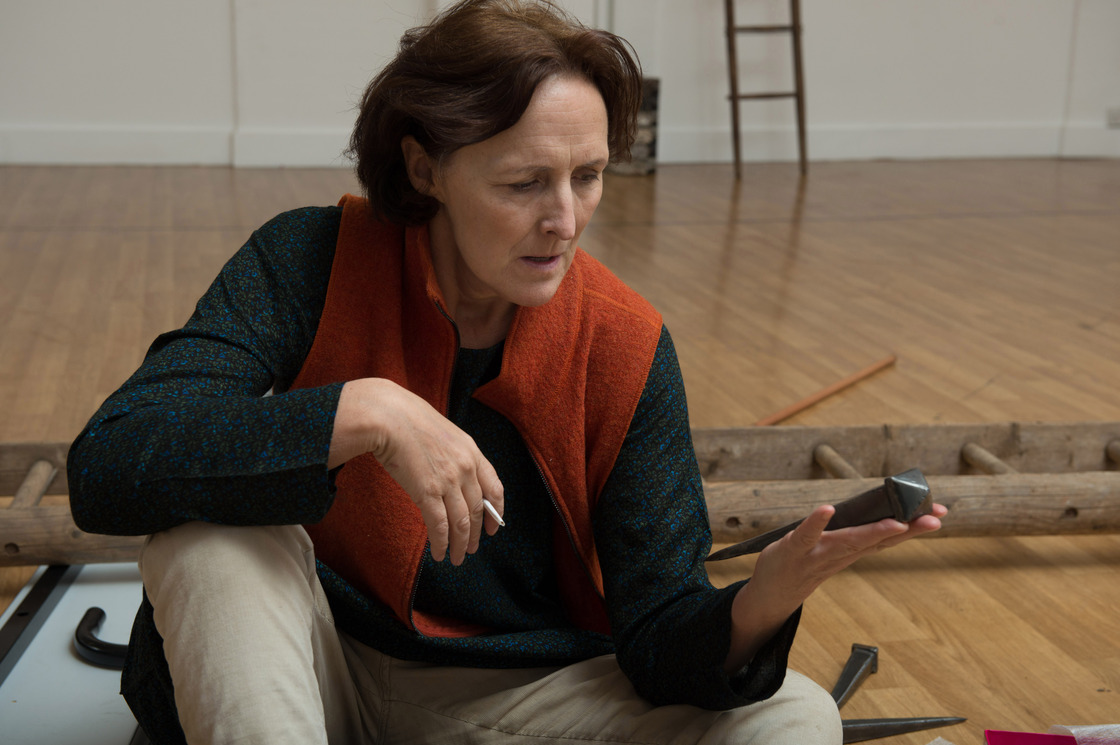
Colm Toibin Fiona Shaw Testament of Mary Ephesus Artemis House of the VirginBefore the play begins, the audience is invited on stage; we walk around, not quite knowing what to do, gazing at the props, uncertain.  A few chairs, scattered jars of honey, jugs of water beside a free-standing waist-high faucet, a tall ladder, a long table, a stripped tree trunk with a wooden wheel at the top suspended from the rafters, a menacing roll of barbed wire, and a live turkey vulture occasionally spreading wide its iridescent blue-black wings: such is the set for Deborah Warner’s searing production of Colm Toibin’s The Testament of Mary, a one-woman show currently in previews at the Walter Kerr Theater in New York.  In a large open-sided box, stage left, the actress Fiona Shaw, draped in blue from head to toe, arranges herself, then sits perfectly still, holding a lily and an apple.  We know this woman.  The Virgin Mary.  The Icon.  Incarnate.

Fiona Shaw rehearses for her role as the Virgin Mary in The Testament of Mary. Irish novelist Colm Toibin's one-woman play opens April 22 at Broadway's Walter Kerr Theater.
Shaw in rehearsal. Photo by Hugo Glendinning

But when we are all back in our seats, Mary casts off her robe to stand before us in a simple black shift, flowing easily over narrow brown pants. Her hair is cropped, her face haunted; wearing short leather boots, she fumbles as she searches for a hand-rolled cigarette to steady herself.   “I remember everything.  Memory fills my body as much as blood and bones.”  No longer an icon, hardly a virgin, this Mary addresses us with the piercing directness of the passion she has suffered: to have seen her only son crucified despite her efforts to save him. Now, interrogated by two unnamed apostles (John and Luke?) who want to fix the story of her son’s life and death and resurrection, Mary insists on reporting only what she knows:  “I was there.  I fled before it was over but if you want witnesses then I am one and I can tell you now, when you say that he redeemed the world, I will say that it was not worth it.  It was not worth it.”

Continue reading “The Flesh Made Word: Colm Toibin’s “The Testament of Mary” on stage and in print By Joyce Zonana”

Grief Beyond Belief and Rebecca Hensler by Kile Jones

Kile Jones, atheistIn my last post, “A Pro-Science, Skeptical Woman Speaks” I interviewed a woman with whom I share many views in common.  One of my goals here at Feminism and Religion is to introduce different secular, atheistic, liberal feminists who share many of the same ethical views as regular contributors and readers, but not the same “religious” or “spiritual” ideas.  In this post I examine an online support network for unbelievers, Grief Beyond Belief, and ask a few questions to its founder, Rebecca Hensler.

I met Rebecca in February in San Francisco while on a visit I made to meet with the Unitarian Universalist Association in regards to my ordination.  My girlfriend and I met Rebecca in North Beach, San Francisco for dinner and drinks.  I experienced her as a compassionate, friendly, and genuine person.  Her experiences and insights inspired me to think more about the role of grief and pain among unbelievers.  I mean, atheists cry, agnostics experience loss, skeptics lose family members, and we do it all without a “God” or “spirit” to help us.  And if we were to meet C.S. Lewis, we would make

sure to exclaim, “No…pain is not some megaphone for God to rouse a deaf world.”

R Hensler

Why did you start Grief Beyond Belief?

The original idea was born of my own grief.  After my son died, I found a group in which to share comfort and compassion with other grieving parents: The Compassionate Friends, a mainstream parental grief support organization with a strong online presence.  It was so close to exactly what I needed, but I frequently felt alienated by the religious and spiritual content — not just the offers of comfort that depended on beliefs I do not hold, but the assumption that everyone there held some sort of belief in life after death. And the assumption, so common in mainstream grief support, that even if I am not the same religion as you are, I have a religion, and I believe in some sort of afterlife was equally alienating and hurtful. Continue reading “Grief Beyond Belief and Rebecca Hensler by Kile Jones”

Reflections on Good Friday by Kathryn House

Tomorrow is Good Friday on the western Christian calendar, the day when western Christians remember Jesus’ death on the cross. The day is often memorialized in ways that recall Jesus’ last moments, from his final steps to his final words, with great specificity. For as many traditions to observe the day, there are theologies to interpret just what, if anything, the cross “means.” In the past few years, I have found myself moving further and further away from identifying this day as one that saves. If I am honest, it has been, and continues to be, an exercise and practice in theological freedom. For me it started with the moment in my first year of theology class when my professor spoke about Anselm and Abelard, of transactions, of debt satisfaction. Something about seeing this formula within its feudal context – of seeing it for the first time as a deeply contextual rather than eternal or primordial or absolute theology – struck a chord and disrupted some sediments I considered unshakeable.

This fissure and subsequent reimagining has continued as over the years I’ve engaged the work of womanist and feminist theologians. There was sister FAR contributor Xochitl Alvizo’s post last year disrupting the spectacle of Good Friday, of re-imaging new rituals that do not dwell on death. There is the work of JoAnne Terrell, the books Proverbs of Ashes and Saving Paradise by feminists Rebecca Parker and Rita Nakashima Brock, and my professor Shelly Rambo’s work on spirit and trauma. I suppose if I am anywhere on the topic, I am just no longer sure that Jesus paid a debt he did not owe because I owe a debt I cannot pay. I am unconvinced that suffering redeems, that blood atones, that the death of a son – of anyone’s daughter or son – brings satisfaction. Certainly feminists and womanists hold diverse beliefs, but here is where I can stand, for now.

Continue reading “Reflections on Good Friday by Kathryn House”