Grief Beyond Belief and Rebecca Hensler by Kile Jones

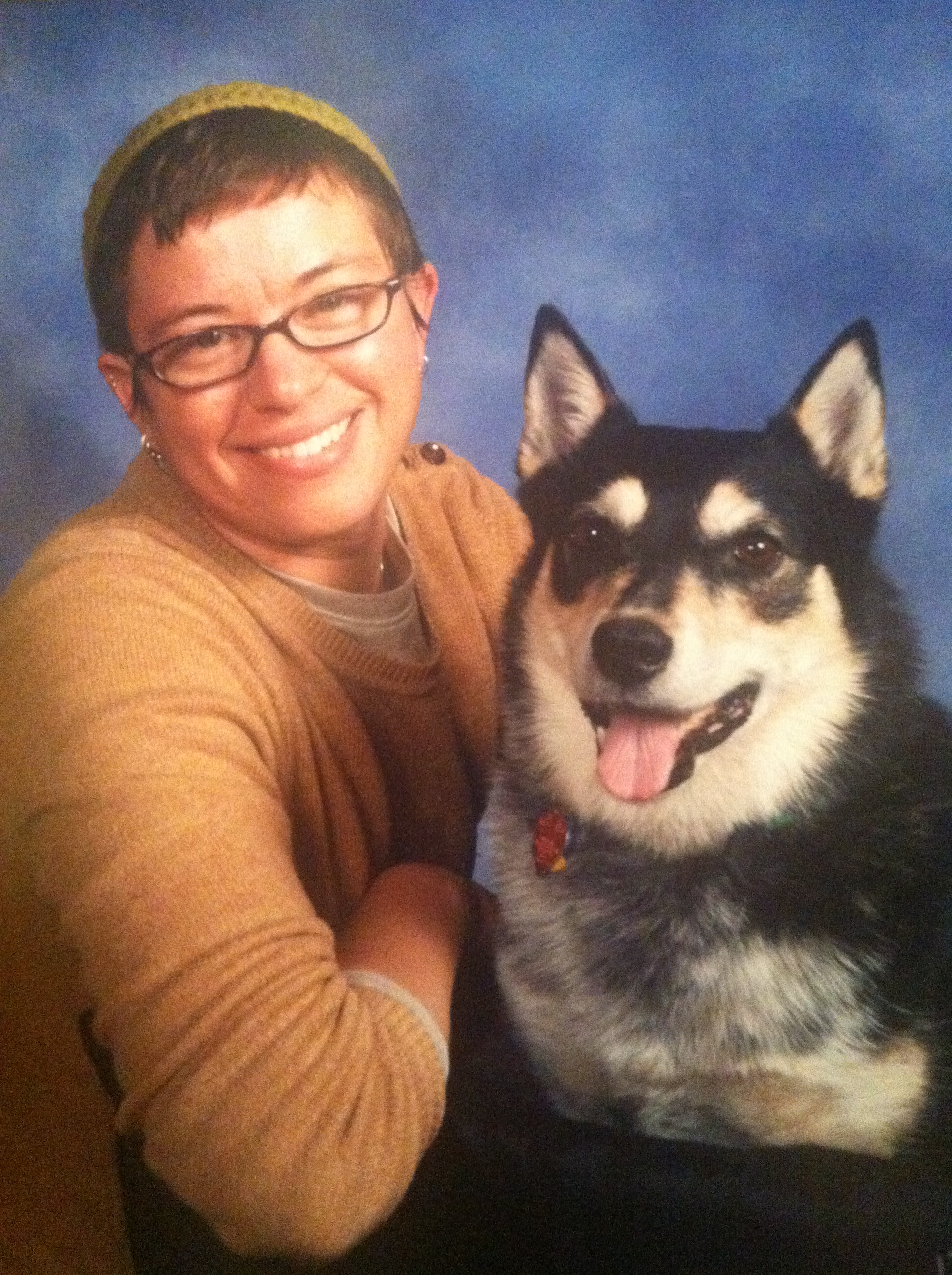
Kile Jones, atheistIn my last post, “A Pro-Science, Skeptical Woman Speaks” I interviewed a woman with whom I share many views in common.  One of my goals here at Feminism and Religion is to introduce different secular, atheistic, liberal feminists who share many of the same ethical views as regular contributors and readers, but not the same “religious” or “spiritual” ideas.  In this post I examine an online support network for unbelievers, Grief Beyond Belief, and ask a few questions to its founder, Rebecca Hensler.

I met Rebecca in February in San Francisco while on a visit I made to meet with the Unitarian Universalist Association in regards to my ordination.  My girlfriend and I met Rebecca in North Beach, San Francisco for dinner and drinks.  I experienced her as a compassionate, friendly, and genuine person.  Her experiences and insights inspired me to think more about the role of grief and pain among unbelievers.  I mean, atheists cry, agnostics experience loss, skeptics lose family members, and we do it all without a “God” or “spirit” to help us.  And if we were to meet C.S. Lewis, we would make

sure to exclaim, “No…pain is not some megaphone for God to rouse a deaf world.”

R Hensler

Why did you start Grief Beyond Belief?

The original idea was born of my own grief.  After my son died, I found a group in which to share comfort and compassion with other grieving parents: The Compassionate Friends, a mainstream parental grief support organization with a strong online presence.  It was so close to exactly what I needed, but I frequently felt alienated by the religious and spiritual content — not just the offers of comfort that depended on beliefs I do not hold, but the assumption that everyone there held some sort of belief in life after death. And the assumption, so common in mainstream grief support, that even if I am not the same religion as you are, I have a religion, and I believe in some sort of afterlife was equally alienating and hurtful. Continue reading “Grief Beyond Belief and Rebecca Hensler by Kile Jones”

Reflections on Good Friday by Kathryn House

Tomorrow is Good Friday on the western Christian calendar, the day when western Christians remember Jesus’ death on the cross. The day is often memorialized in ways that recall Jesus’ last moments, from his final steps to his final words, with great specificity. For as many traditions to observe the day, there are theologies to interpret just what, if anything, the cross “means.” In the past few years, I have found myself moving further and further away from identifying this day as one that saves. If I am honest, it has been, and continues to be, an exercise and practice in theological freedom. For me it started with the moment in my first year of theology class when my professor spoke about Anselm and Abelard, of transactions, of debt satisfaction. Something about seeing this formula within its feudal context – of seeing it for the first time as a deeply contextual rather than eternal or primordial or absolute theology – struck a chord and disrupted some sediments I considered unshakeable.

This fissure and subsequent reimagining has continued as over the years I’ve engaged the work of womanist and feminist theologians. There was sister FAR contributor Xochitl Alvizo’s post last year disrupting the spectacle of Good Friday, of re-imaging new rituals that do not dwell on death. There is the work of JoAnne Terrell, the books Proverbs of Ashes and Saving Paradise by feminists Rebecca Parker and Rita Nakashima Brock, and my professor Shelly Rambo’s work on spirit and trauma. I suppose if I am anywhere on the topic, I am just no longer sure that Jesus paid a debt he did not owe because I owe a debt I cannot pay. I am unconvinced that suffering redeems, that blood atones, that the death of a son – of anyone’s daughter or son – brings satisfaction. Certainly feminists and womanists hold diverse beliefs, but here is where I can stand, for now.

Continue reading “Reflections on Good Friday by Kathryn House”

Marriage as a Commodity (Satisfaction Guaranteed) by Michele Stopera Freyhauf

Freyhauf, Feminism, Religion, Durham, Old Testament, Blogger, Bible, Gender, Violence, Ursuline, John CarrollThis Saturday I will be presenting a paper about Cyberbrides at the United Nations Commission on the Status of Women.  While my focus for that paper is the impact on mothers and families, my research also revealed how some Cyberbrides (or Mail-Order Brides) are selected from internet catalogues with “satisfaction guaranteed” and how “International Marriage Broker” may be a cloak hiding the agencies’ involvement with human trafficking.

Cyberbrides are essentially mail-order brides, but like pen pals, they can chat and exchange pictures on the Internet and interact through video or instant chat.  There are almost 2.9 million website matches that turn up when Google-ing “Mail-Order Brides” within 19 seconds of pressing the “return” button. With the low cost of social media, a new venue to market and display this “commodity” is available.  Presently,  about 30 Facebook sites exist that advertise “Mail-OrderBrides. Continue reading “Marriage as a Commodity (Satisfaction Guaranteed) by Michele Stopera Freyhauf”

Second Class Rape Victims: Rape Hierarchy and Gender Conflict

Deconstructing masculinity isn’t the key to solving social, sexual, and domestic violence across the world but it is a step worth taking when attempting to engage men in affecting change to stop these violent actions since men, statistically are the perpetrators of such crimes that both cause such outcry as well as perpetual silence.

johnThe most disturbing part of the 2006 documentary Deliver Us from Evil isn’t the fact that Father Oliver O’Grady is rewarded by the Catholic Church with a new congregation in Ireland after his short stint in prison for the rape of dozens of children in the 1970s, but rather the hierarchy of gendered victimization which is often created throughout the various rape cases that are both reported and unreported throughout history.

I am often troubled by the ways in which rape cases are discussed and deconstructed via mediums such as blogs, online communities, social media networks, the news, and popular culture.  No series of events troubled me more than the Jerry Sandusky trial, but more importantly, the ways in which the young boys and adult men who were subjected to Sandusky’s abuse quickly overshadowed the other rape cases that are reported on a daily basis, specifically those involving young girls and women. Continue reading “Second Class Rape Victims: Rape Hierarchy and Gender Conflict”

On Love, Theodicy and Domestic Violence by Ivy Helman

ivyandminiLast week, I introduced my students to the theological concept theodicy.  Theodicy is a theological explanation of why suffering and evil occur that usually includes some kind of defense of divine attributes.  For example, if G-d is all-knowing (omniscient), ever-present (omnipresent), all-powerful (omnipotent) and all-loving then how do we explain hurricanes, illness, mass murder, airplane crashes and other forms of evil and suffering?  This is quite difficult because, as my students point out after a few minutes of discussion, most explanations are often unfulfilling or inadequate.  The discussion turns quite quickly to two reactions.  Either, G-d isn’t what we thought G-d was or science does a better job explaining these examples of evil and suffering.  Science explains that hurricanes happen because of various environmental factors or a plane crashes because of mechanical problems. Even the concept of humanity’s freewill as the cause of evil often circles back to G-d’s creation of humanity and leaves students unsettled.  If G-d created within humanity the possibility of evil, how, then G-d can be all-loving?

The love/evil dichotomy is often the real conundrum of theodicies in monotheism.  This has been pointed out by numerous theologians throughout the ages.  How do we account for evil when there is only one divine Being?  How can an all-good, all-loving Being clove-1345952464afLreate or even be responsible for evil?  Which leads to the next question, is evil the absence of love?  These are extremely difficult philosophical and theological questions.

To explore then, we should start where it is often suggested that we learn most about love: family, close friends and intimate relationships.  Take this for example.  Continue reading “On Love, Theodicy and Domestic Violence by Ivy Helman”

Random Questions? by Kelly Brown Douglas

 The notion of the bad body allows for bad things to be done to any body and anything human or non-human that has become body identified.

Where did it all begin? How has it happened that we have nurtured such an ethos of disrespect for the earth and all that is therein? How has it happened that we have fostered an ethic of indifference for that which is different? How has it happened that we have cultivated an environment hostile to the well-being of our very selves?  Where did this cycle of violence against the sacredness of all that is begin?

These are the questions that have troubled my mind and soul over these last few days as we have once again been reminded of the unimaginable and painful price we pay for not asking the hard questions of ourselves and trying to discover the seeds of our inhumanity.  As I have tried to answer these questions one word has continually come to the forefront of my mind: “wholeness.” As a womanist, informed by Alice Walker’s definition of a womanist as one who strives for wholeness, I have increasingly recognized that perhaps it all begins with a betrayal of the wholeness of creation itself.  Most of us are influenced by a Western view of the world that sees things in either/or paradigms.  The way in which we engage the world and ourselves is shaped by a dualistic consciousness.  Thus, distinctiveness becomes “other,” paradoxes become opposition.  Such a dualistic worldview undermines the unity of all being. It defies the complex harmony of the universe. And, it most especially disrupts our appreciation for our own bodies and the bodies of others.  Disdain and cavalier regard for the body and the earth becomes virtually inevitable. Continue reading “Random Questions? by Kelly Brown Douglas”