#YesAllWomen, the Darwin Debate, and the God Complex by John Erickson

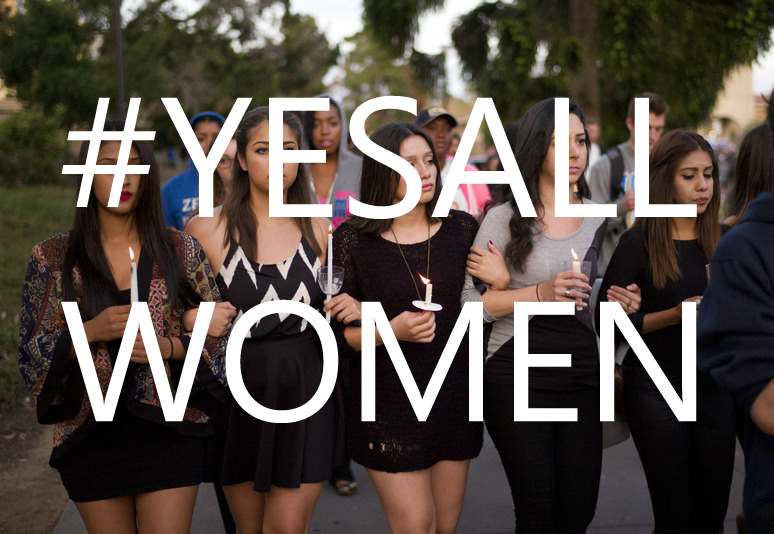
#YesAllWomen proved that although not all men commit horrible crimes against women, the men that often get the headlines and create the most controversy are the ones that need to be watched out for.

John EricksonThe one thing I typically will choose to do on the rare occasion that I’m able to sit down and relax is to watch a documentary.  While some people may go to the gym, read a book, or hang with friends, I typically choose to stay in, nestle up on my couch, and learn.  While on my last bout of relaxation, I chose to watch the HBO documentary Questioning Darwin. Although it offers very little new insight into the evolution vs. creationism debate, it does offer an interesting new way to look at the recent social media hashtag war feminists, allies, and supporters found themselves in over the #YesAllWomen movement that took the world by storm.

yesallwomen

Now, before I discuss #YesAllWomen, I have to admit that I did not enter into the safe space women created for themselves to tell tales of the horrible things they have and have had to face on a daily basis.  I firmly believe that men should not have entered into the digital space Continue reading “#YesAllWomen, the Darwin Debate, and the God Complex by John Erickson”

BARBARA LEE SPEAKS FOR ME by Carol P. Christ

carol christWhile I was in Crete on the Goddess Pilgrimage teaching about and experiencing a Society of Peace where violence and domination were neither celebrated nor encouraged, another war broke out in Iraq, breaking my heart, breaking all of our hearts—yet again. When will we ever learn, oh when will we ever learn?

Barbara Lee was the only member of Congress to vote against the US war powers authorized after 9/11 which were used to launch war in Afghanistan; she also voted against authorization for the Iraq war in 2002. Hillary Clinton voted for the Iraq war, despite clear indications that the US administration was lying about weapons of mass destruction—which were never found in Iraq. I voted for Barack Obama because he opposed this war. Then he listened to General Petraeus and expanded the war in Iraq. Barbara Lee speaks for me. Hillary Clinton and Barack Obama do not.

The Iraqi people are once again living in fear of their lives as reports surface that armies and militias are engaging in mass executions of their so-called “rivals.” Is there any cause that could justify this? Continue reading “BARBARA LEE SPEAKS FOR ME by Carol P. Christ”

The Feminization of Poverty: The Impact on Migrant Mothers in the U.S. by Michele Stopera Freyhauf

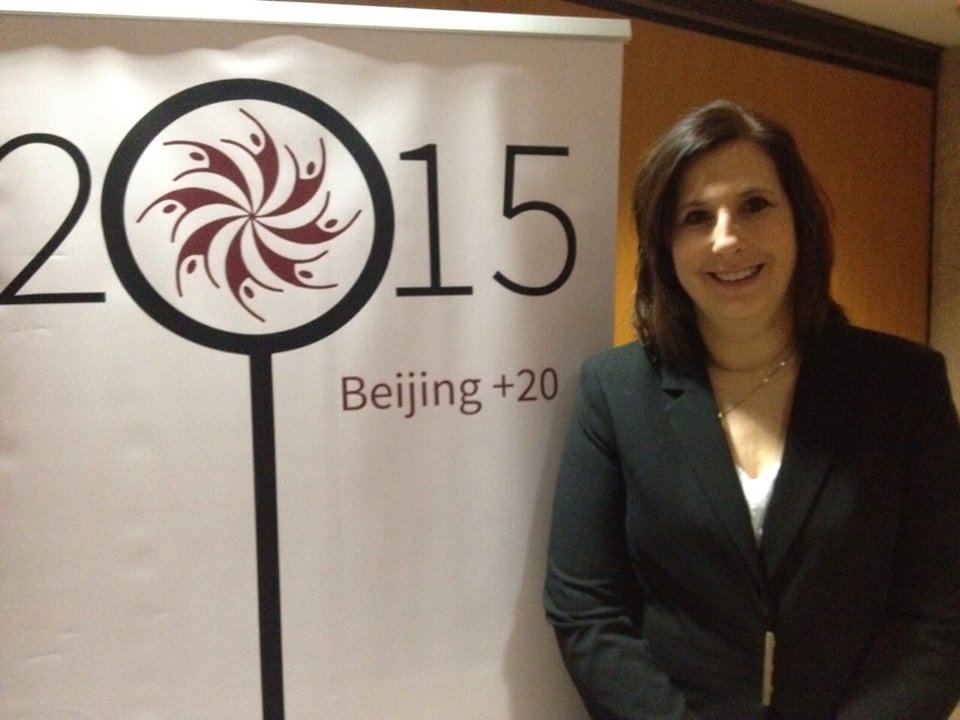
Freyhauf, Durham, United Nations, Feminism and Religion, John Carroll, UrsulineI had the honor of speaking at the United Nations during the Commission for the Status of Women this past March about the Feminization of Poverty and the Impact on Migrant Mothers.  Below is the text of my speech delivered.  By posting my speech, it is my hope to use social media to help draw attention to this problem and use our resources to find solutions.

Over the last thirty years, rich countries have grown much richer, and poor countries have become, in absolute and relative terms, poorer. Global inequality in wages are striking and poor countries are turning to the IMF or World Bank for loans, which require “so-called” structural adjustments of devaluing currency, cuts in support for “noncompetitive industries,” and the reduction of public services such as healthcare and food subsidies, which has provided disastrous results for the poor, especially women and children.

The feminization of poverty not only means that more of the world’s poverty is born by women, thanks in large part to globalization of the world economy, but includes a denial of access to fundamental human rights, including health, education, nutritious food, property, representation, etc. Feminized poverty encompasses more than matters of individual suffering – it ensnares a vicious cycle of poverty that impacts their entire family.

Feminization of poverty has no singular cause. The United Nations Development Fund for Women identified 4 key dimensions that indicated a heightened rate of poverty for women:

First is called “the temporal dimension,” which means that women are often the primary caretakers of children and household duties. Women who live in developing nations may also have agricultural or physical responsibilities. With these demands, less time is available to devote to paid employment causing them to earn a smaller income even though they effectively do more work than their male counterparts.

Second is “the valuation dimension” which is defined as unpaid labor that women perform to take care of family members and other household chores. Work that is considered “less than” because formal education or training is not required.

Third, is “The employment segmentation dimension.” Women are natural caretakers and thus corralled into “women’s work”, such as teaching, working with textiles, or domestic servitude that includes caring for children or the elderly.

Finally, “the spatial dimension.” When employment is non-existent or difficult to find, women may have to migrate to other areas to find work temporarily. If a woman has children, she may refuse to take the job and stay to care her family. However, Some opt to leave their families behind, to secure what they consider a better life – a means of support – but this choice often comes a great cost. Continue reading “The Feminization of Poverty: The Impact on Migrant Mothers in the U.S. by Michele Stopera Freyhauf”

We Rose for the One Billion on V-Day by Jameelah X. Medina

Jameelah Medina

Every February I gear up to participate in local V-Day 1 Billion Rising events where activists rise up to end violence against women and girls. This year’s theme was the journey to justice, and there were two local events. I delivered a speech at the second event. This is so meaningful to me because it testifies to how far I have come in my journey. Just a few years ago, I would never have spoken what I considered the unspeakable. I have found that with each utterance, I gain more freedom and encourage others to do the same in their own way.

One in every three women/girls will be sexually assaulted in her lifetime, and someone is sexually assaulted every two minutes in the USA. Knowing this and being one of these women, I dedicate this month’s post to my fellow survivors in hopes that you find some healing in it. Below is what the crowd heard from me on V-Day:

Justice is one of those tricky concepts that has many faces. For some survivors, justice is restorative where they are willing to engage in a dialogue with the perpetrator, community, and other stakeholders to attempt to repair the harm that has been done to them. For others, justice is poetic. It comes in the form of retribution and punishment whether it involves incarceration, physical harm or illness, or death by homicide or suicide. Yet other survivors feel that there is no such thing as justice any way you look at it. They feel that there is nothing that can ever be said or done to erase or minimize the life-long effects of the violence perpetuated against them. Continue reading “We Rose for the One Billion on V-Day by Jameelah X. Medina”

Sex, Religion, and Discourse: An Interview with Judith Butler

One of my academic joys is interviewing people I find particularly interesting (see most of my posts here). This time I am honored to present a recent interview I did with Judith Butler.

Image from The European Graduate School

Many wonder how gender performance relates to chromosomes, phenotypes, genitalia, and other scientific “evidence” for innate sexual differences. Continue reading “Sex, Religion, and Discourse: An Interview with Judith Butler”

To Do Justice for Jordan Davis by Kelly Brown Douglas

Rev.-Dr.-Kelly-Brown-Douglas

Theology is faith seeking understanding.  Faith is that ineffable, intangible spiritual apparatus that keeps us in relationship to a transcendent, infinite god. It is, for Christians, the core of their relationship with the god of Jesus Christ. Yet, as Karen Armstrong and others so often remind, faith is not about loyalty to a certain doctrine, or dogma, or set of beliefs, rather it is about a commitment and engagement in a certain way of “living, and moving and having one’s being” in the world.  As the word faith derives from the Greek word “pistis” it fundamentally signals not a way of thinking about who god is and god’s relationship to us, but a way behaving in light of our belief in and relationship to god.

Christian faith is grounded in the theological claim that god became incarnate in Jesus. Faith, in this regard, is not about an intractable and intolerant assertion of that theological claim; rather, it is about a sincere and consistent commitment to live into the implications of that claim. Put simply, “To keep the faith,” is not about holding onto a certain way of thinking, rather it is about maintaining a certain way of acting. The point of the matter is that for Jesus faith did not signal a preoccupation with belief per se.

When Jesus was calling people to faith, or telling them to have faith, he was not calling them to believe in him or in his divinity, rather he was asking them to be engaged in a particular way of living, to be committed to his mission in the world. Their loyalty, their trust was to be in the way of life which he embodied, a way of life that reflected the presence of god in the world. And so it is in appreciating the meaning of this word faith as Jesus used it, that I come to theological task on this day. Continue reading “To Do Justice for Jordan Davis by Kelly Brown Douglas”

Painting Jephthah’s Daughter by Angela Yarber

angelaAnd Jephthah made a vow to the Lord, and said, “If you will give the Ammonites into my hand, then whoever comes out of the doors of my house to meet me, when I return victorious, shall be the Lord’s, to be offered up by me as a burnt offering…Then Jephthah came to his home at Mizpah; and there was his daughter coming out to meet him with hand drums and with dancing…he did to her according to the vow he had made…” (Judges 11:30, 34, 39)

When I was a little girl I used to make up routines to perform for my family.  From Tina Turner’s “What’s Love Got to Do With It” to Michael Jackson’s “Beat It” I can remember making up creative choreography and performing in front of the affirming audience that was my family.  Often times, my routines were accompanied by props, such as a hula hoop, roller skates, or an unwilling younger brother.  Whether I had props or not, there was always a big smile on my face as I twirled and leapt to the tunes on my family’s 8-track, record, or cassette player.  Half the fun was making up the routine and practicing until it was performance perfect.  The other half of the fun was the response on my family’s faces as I forced them to “watch me, watch me!” once again.  Despite the cheesiness of my routines and my silly props, they watched with delight, clapped, and encouraged me to dance all the more.  Such is the experience for many fortunate children: choreographing routines, drawing pictures, making up skits and plays, and practicing to make their parents proud. Continue reading “Painting Jephthah’s Daughter by Angela Yarber”

Yes, You’re a Homophobe by John Erickson

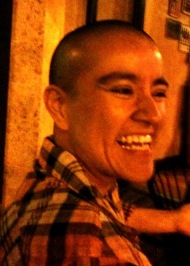
Jesus loved sinners and Jesus would rather be dancing with me in West Hollywood on a Friday night than lugging through a swamp luring ducks into a trap with a duck caller made by a clan who think that my sexual actions are similar to that of an individual having sex with an animal.

John Erickson, sports, coming out.

To be able to walk down the street holding the hand of the one you love is a great feeling and an action that some of us aren’t able to perform without fear.

A line has been drawn in the sand between those who support gay rights and those who do not.  While some call it being on the “right side of history,” I simply now refer to it as not sounding and looking like a bigot in the halls of history and in the various books, Facebook posts, and Tweets that our children will one day read. Continue reading “Yes, You’re a Homophobe by John Erickson”

Moral Courage by Kelly Brown Douglas

The time for false solidarity is over…Let’s us stop talking about it, let us just dig deep inside of ourselves and find a way to do it. 

Fifty years ago in response to President Kennedy’s assassination Martin Luther King Jr. wrote: “Our nation should do a great deal of soul-searching …” It is these words of Martin King’s that echo in my mind fifty years later as news headlines continue to be filled with stories of innocent young black bodies falling victim to a social climate that nurtures racialized fears and breeds racialized violence. If the deaths of Renisha McBride, Jonathan Ferrell, Jordan Davis, and Trayvon Martin tell us nothing else, they proclaim loud and clear that we are a people in need of a “great deal of soul-searching.”  For me, this time for soul-searching is nothing less than a kairos time. Continue reading “Moral Courage by Kelly Brown Douglas”

Surviving and Thriving: For My Defender by Sara Frykenberg

Sara FrykenbergLast year many of my actions, choices and emotions could have been characterized as a part of my ongoing efforts towards what I recognize as survival: I was often ‘trying to make it through,’ live ‘despite,’ exist ‘even though,’ grapple with violence or choose in such a way that I could continue to live in the midst of chaos.

Survival is an extremely important skill, practiced by many people for many different reasons.  And before I continue here, I would like to say that in all of my struggles last year, I always had the basic necessities required to live my life.  Many people do not; and for many, survival is an everyday practice that may or may not be achievable, requiring access to necessities that may or may not be accessible.  No one tried to kill me last year.  I had access to food.  I did not lose my home or livelihood; though I felt these things threatened.  I am privileged to live where and how I do, with many resources available to me.  These resources helped me to make it though, where other people survive with far, far less.  I choose to share my own feelings of survival because I want to decry the self-dehumanizing shame that tells me I am bad or wrong for feeling my own experience.  I identify my survival in an attempt to also, thrive. Continue reading “Surviving and Thriving: For My Defender by Sara Frykenberg”