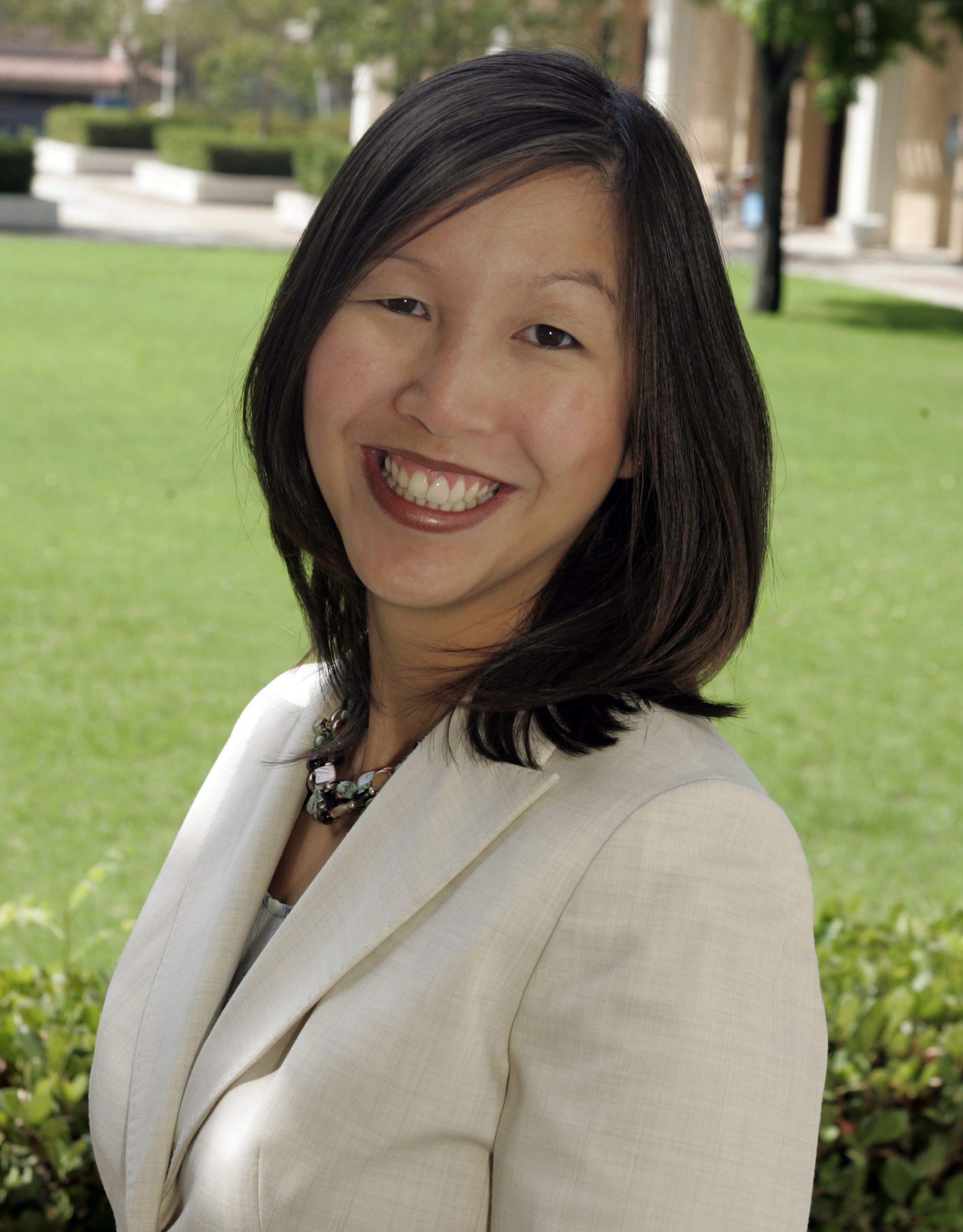
My First Experience at a Women-Only Conference by Grace Yia-Hei Kao

“This ain’t your daddy’s conference!”

I knew that I was going to be attending a totally different type of conference than I had ever been to before when I received the following instructions on additional items to pack: (1) my own mug with which to drink coffee or tea (“we will go green in this conference as much as possible”), (2) 3 oz. of water “from a source of nature near your home” to be offered during “opening worship,” and (3) a small, modest, pre-owned, homemade, or inexpensive “earth-honoring gift for exchange.”

Continue reading “My First Experience at a Women-Only Conference by Grace Yia-Hei Kao”

Feminism and the Emerging Church By Xochitl Alvizo

What is emerging in the emerging church will not be faithful, liberative, or just if it continues to perpetuate the erasure of women’s herstory. 

There has been on ongoing conversation among Christian identified people for about 20-30 years now. It originally started in the U.K. and Australia before making its impact in the U.S.  It has its roots in evangelical Christianity but has since extended more broadly to Christians of all stripes including Catholic ones. This conversation is often referred to as the Emerging Church, the emerging church movement, or, as preferred by many, the Emerging Conversation. Phyllis Tickle has written a book, The Great Emergence, suggesting that this movement represents a much larger historical transformation of Christianity that occurs about every 500 years prompting a kind of house cleaning and rummage sale of the church. Continue reading “Feminism and the Emerging Church By Xochitl Alvizo”

Catholicism, Contraception, and Conscience: Church Imposed Teaching, God’s Gift of Free Will, and Political Rhetoric by Michele Stopera Freyhauf

Certainly one cannot turn on the news without seeing a story about the feud over the Catholic Church’s stance on forbidding the use of contraception and Obama’s Patient Protection and Affordable Care Act (PPACA) that mandates free contraception to women.  In preparing this article, I took the time to review many articles from liberal and conservative news outlets, law professors who are experts on constitutional law, and statements from the USCCB and Bishops.  Before asking questions, I want to outline the following points:

  1. In the literature reviewed, only two women, Sr. Carol Keehan and Sr. Mary Ann Walsh, made a statement against this policy stating that the government is interfering with the working of the Church.  Most voices heard and shouting the loudest are members of the clergy.
  2. Hospitals considered “Catholic” hire people of all faiths and various beliefs.  They also treat patients of all faiths.  They are not exclusively “Catholic.”
  3. Catholic identified Colleges hire professors and staff that are not Catholic.  Moreover, their student body is not totally Catholic.
  4. Catholic Charities, once again, hire non-Catholics.
  5. Insurance plans currently in place often offer contraception prescriptions at a zero to low co-pay price.  These plans are in-force at many Catholic Institutions.
  6. Under HIPAA, healthcare of employees are protected and the Employer, even the Catholic Church cannot violate the privacy of the patient, even if it is an employee.
  7. Birth Control Pills are often prescribed for women with endometriosis or other “female” reproductive disorders and not birth control.
  8. Women pregnant, carrying a dead baby, cannot have surgery due to risks are given medication to induce abortion are given. Continue reading “Catholicism, Contraception, and Conscience: Church Imposed Teaching, God’s Gift of Free Will, and Political Rhetoric by Michele Stopera Freyhauf”

Son of Man: An Updated Gospel Story of Jesus Set in South Africa by Michele Stopera Freyhauf

January 12, 2012

Son of Man is an updated story of the life of Jesus set in the fictional State of Judea that is modern day South Africa – complete with warlords and child soldiers.    It could easily be mistaken for modern day Rwanda or Darfur with its modern issues and political overtonesRoger Ebert stated, “The secret of the movie is that it doesn’t strain to draw parallels with current world events – because it doesn’t have to.”  The director draws parallels between the gospels and 21st century Africa.  According to Dartford-May, “we wanted to look at the Gospels as if they were written by spin doctors and to strip that away and look at the truth.”  The director “captures the rhythms of African life in both rural settings and sprawling townships.”  “Feather-clad young angels offer an eerie echo and reminder of Africa’s lost generations.”

The movie also sticks with what Eric Snider calls “Traditional African trial music, dance, and costumes” as a type of worship or or allusion to Jesus’ godhood.  Judea is in flux; warlords and corruption take center stage.  Poverty, violence, and oppression affect the all of the people.  The key idea is that Jesus is a freedom fighter – one that fights injustice and oppression.  The director does not emphasize “Jesus’ divinity so much as his leadership, good sense and compassion.”  Jesus is not violent and his followers, most of whom were former child soldiers, are encouraged to respond non-violently, which goes against their upbringing and training. Continue reading “Son of Man: An Updated Gospel Story of Jesus Set in South Africa by Michele Stopera Freyhauf”

Hildegard of Bingen to be Canonized and Named Doctor of the Church By Gina Messina-Dysert

Known as the “Sybil of the Rhine,” Hildegard of Bingen was a remarkable woman who produced multiple visionary writings and major theological works throughout her life (1098-1179).  During a time period when women received little respect, Hildegard was consulted by religious and political leaders and advised popes and kings.  Her contributions are many and include founding a convent, composing music, and writing about the medicinal uses of natural objects such as plants, trees, animals, and stones.

It was recently announced that Hildegard of Bingen will be canonized and declared a doctor of the church.  Hearing this I was among the many who were surprised by the news since I had assumed that Hildegard was already canonized, particularly since she has been called St. Hildegard and has had a feast day on September 17th since 1940 (although only within the Benedictine order in Germany).  Nonetheless, I have recognized Hildegard as a crucial woman in Christian history – as crucial as St. Catherine of Siena, St. Teresa of Avila, and St. Therese of Lisieux who have already been canonized.  So why the delay in granting this honor to Hildegard of Bingen? Continue reading “Hildegard of Bingen to be Canonized and Named Doctor of the Church By Gina Messina-Dysert”

Rosemary Radford Ruether’s Women and Redemption: A Theological History By Gina Messina-Dysert


Women and Redemption : A Theological History. 2nd ed. By Rosemary Radford Ruether.Minneapolis: Fortress Press. 2011.

Women and Redemption: A Theological History

Having been critically impacted by the work of Rosemary Radford Ruether, I was anxious for the release of the second edition of her crucial book, Women and Redemption: A Theological HistoryRedesigned with illustrative material, research questions, and suggested reading for further research, as well as the addition of a new chapter exploring recent developments in feminist theology, this text does not disappoint.

With this newest edition, Ruether acknowledges the ongoing journey in the field of feminist theology and emerging issues faced by women in religion and society. Examining the Christian claim of an inclusive and universal redemption in Christ, she traces paradigm shifts in understandings of gender over the last two millennia.  Ruether offers an historical exploration of women and redemption in the first five chapters followed by a global survey of contemporary feminist theologies in the final four chapters, which includes a concluding section that gives attention to “Fourth World” feminisms and post-colonialism in an effort to “bring this volume up to date” (xvii). Continue reading “Rosemary Radford Ruether’s Women and Redemption: A Theological History By Gina Messina-Dysert”

Anita Caspery, IHM: Prophetic Icon of Renewal By Cynthia Garrity-Bond

this we were, this is how we tried to love,

and these are the forces they had ranged against us,

and these are the forces we had ranged within us,

within us and against us, against us and within us.

Adrienne Rich

Last week a colleague of mine forwarded the sad news that Anita Caspary, IHM, had died at the rich age of 95. This was the same day (October 5) that Steve Jobs passed away from his battle with pancreatic cancer.  The tension between the two figures was not lost on me.  The death of Jobs, an icon of ingenuity and leadership, wonderful husband and father, is mourned throughout the world.  The life and legacy of Anita Caspary will be remembered and mourned as well, but by comparison, on a much smaller scale. That’s unfortunate, because the life and legacy of Caspary as an instrument for change in the lives of Catholic women in general, and Women Religious in particular is what legends are made of.

As an IHM sister, Caspary was teacher, poet, author, and president of Immaculate Heart College (1958-1963), but is best known in her role as Mother General Sister Humiliata (1963-1973) of the IHM’s.  In Witness to Integrity, Caspary dramatically chronicles the painful struggles and controversies between the IHM sisters and Cardinal Archbishop of Los Angeles, James Francis McIntyre, in which 600 IHM Los Angeles nuns were released from their canonical vows in 1970.  Released because of their self-determination in remaining at the center of their religious fidelity and thought by putting into practice The Second Vatican Council’s  Decree on Up-to-Date Renewal of Religious life, or Perfectae Caritatis Addressed to priest and religious, this decree sanctioned the exodus from the middle ages for the sisters by insisting they join the modern world in both dress and discernment of vocation that best utilized each sister’s talents.  In an exert put forth from the 1967 Decrees of the Ninth Chapter, the IHM community clarify their position for renewal: Continue reading “Anita Caspery, IHM: Prophetic Icon of Renewal By Cynthia Garrity-Bond”

Women Created in the Image of God By Karen Torjesen

The following is a guest post written by Karen Torjesen, Ph.D., Margo L. Goldsmith Professor of Women’s Studies in Religion at Claremont Graduate University where she has helped establish graduate programs in Women’s Studies in Religion and Applied Women’s Studies. For ten years she served as Dean of the School of Religion, partnering with religious communities to create programs in comparative religion. She has published extensively on women, gender and sexuality within Christianity.

Originally posted at Huffington Post: http://www.huffingtonpost.com/karen-torjesen/torjesen-women-image-of-god_b_893367.html

Last month I preached — in South Africa — in Johannesburg — in a township — in a Pentecostal church. In Pentecostal worship, preaching is giving your testimony. So how do I translate my life into a testimony, find the threads that connect to their experience, speak in a spiritual vocabulary to these human needs, and be honest about the depths of my unknowing? I am an American academic, a historian of the early church, a professor of Women’s Studies. Where would I find the points of connection?

I could speak of my own struggling with what it meant to be a woman — inferior, valued less, silenced, excluded, constrained, exhorted to be submissive–and my discovery of the American women’s movement. However, for the context of African Christianities, where traditional tribal patriarchies merged with colonial European patriarchies, there would be little resonance. I would need an alternate framework to human rights feminism. Western notions of equality, individualism, and rights have little resonance in cultures with a strong sense of kinship and communal identity and of responsibilities based on age and gender rather than rights based on citizenship. Continue reading “Women Created in the Image of God By Karen Torjesen”

Be-ing in the Church By Xochitl Alvizo

Sometimes it is difficult to make sense of the peculiar paths our religious lives take, much more so to make sense of one another’s paths which can be so different from our own.

I was raised in a Mexican American family and grew up in Los Angeles, California(my parents say I was “made in Mexico, assembled in the U.S.”). And I grew up going to Spanish-speaking Catholic mass. I have often said that the God I know in Spanish is so different from the God I came to know in English when I began to roam Protestant circles in undergrad. Growing up, the Spanish speaking God I knew was  as assumed and as basic as the air that kept us alive: always available and always with us in the good, the bad, and the ugly. God was a constant without which we could not exist.  But in undergrad, my Protestant friends seemed to have a completely different understanding of God than the one I had grown up with. Theirs was a God that required obedience, a God of very specific expectations, and a jealous God at that! It was a very confusing time for me and my engagement with Christianity wavered.

Then in graduate school, eight years after undergrad, something happened that revolutionized my life – I discovered radical feminists! As ironic as this might seem, radical feminists provided me with a way to make sense of Christianity. They gave me a language and the tools to both critique and engage Christianity and the church. I have often said that if it wasn’t for Mary Daly, I wouldn’t be able to call myself a Christian(!). Continue reading “Be-ing in the Church By Xochitl Alvizo”

Interlocking Pieces and the Maleness of Jesus: Exegeting the “America’s Pope’s” Statement on Gay Marriage and Ordination of Women By Michele Stopera Freyhauf

On a 20/20 interview, posted August 21, 2011, Morley Safer interviewed the Archbishop of New York, Timothy Dolan.  Dolan is also referred to as “America’s Pope.”  In this article, Safer calls him a scholar and a “passionate defender” of issues that he considered to be “settled questions.”  These settled questions? Gay marriage and women’s ordination.

Gay Marriage: Incest, “Necessary Attributes,” and Interlocking Pieces

Dolan makes an unbelievable comparison of gay marriage to the desire to marry his mother:  “I love my mom, I don’t have the right to marry her.”  He further compared gay marriage to his desire to be a shortstop for the Yankees, which is not possible because he does not have “what it takes.”  Both analogies Dolan uses give a clear indication that he does not understand what a committed relationship looks like for a gay couple.  Many in society share this ignorance.  In fact during my daughter’s health class, at a public school no less, she was told that sex was only between a man and a woman because they fit together like a jigsaw puzzle.  Not only does this fail on words, it lays the foundation for bullying, repression of identity, sexual confusion, and problems for children who are members of a modern family.  Besides, last time I checked not all puzzles have interlocking pieces.   Continue reading “Interlocking Pieces and the Maleness of Jesus: Exegeting the “America’s Pope’s” Statement on Gay Marriage and Ordination of Women By Michele Stopera Freyhauf”