Gardens Bloom Between our Wombs by Chaz J.

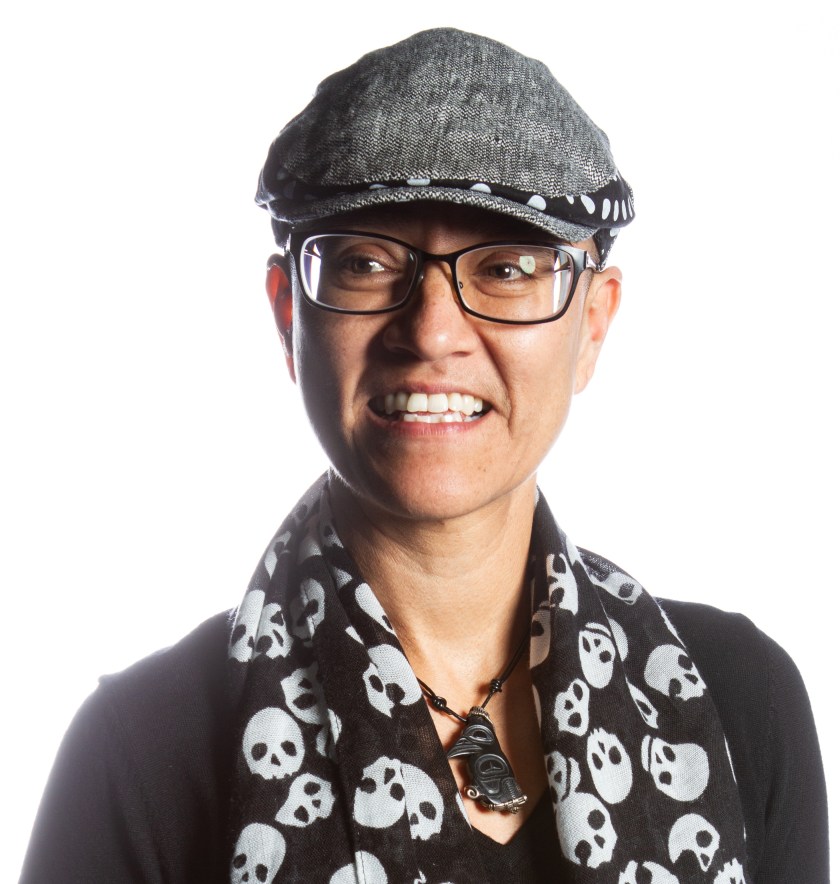
For years, I have dedicated my life to empowering and uplifting all women in all ways. I have loved women as mothers, aunties, sisters, friends, cousins, teachers, mentors, daughters, God, and most recently myself. The depth of sweetness and emotion for women runs as deep as my life’s work. My life’s work centers and finds a deep well of inspiration in women and women’s lived experiences. My feelings concerning women were confusing for a long time and for a long time I have loved women in every way, except two: sexually and romantically. Giving myself permission to love women in every way has been one of the most liberating personal experiences of my life. It is one of my most radical revolutions. It is self-acceptance and self love in totality. 

The object of my desires is fluid and delicate. She is intuitive  and evasive. She is real and ethereal. She is Wombman. She created and is the fundamental elements that constantly gives birth to the world around us. She has given birth to all of us. She is fire and fury. She is Mother Gaia. She is the winds of change. She is water’s depth and grace. She is the sunlight after a storm. She IS the storm purging impurities. She is a creator and she is destruction. She simply IS…

Continue reading “Gardens Bloom Between our Wombs by Chaz J.”

Re-claiming Friday the 13th and Other Tidbits by Janet Maika’i Rudolph

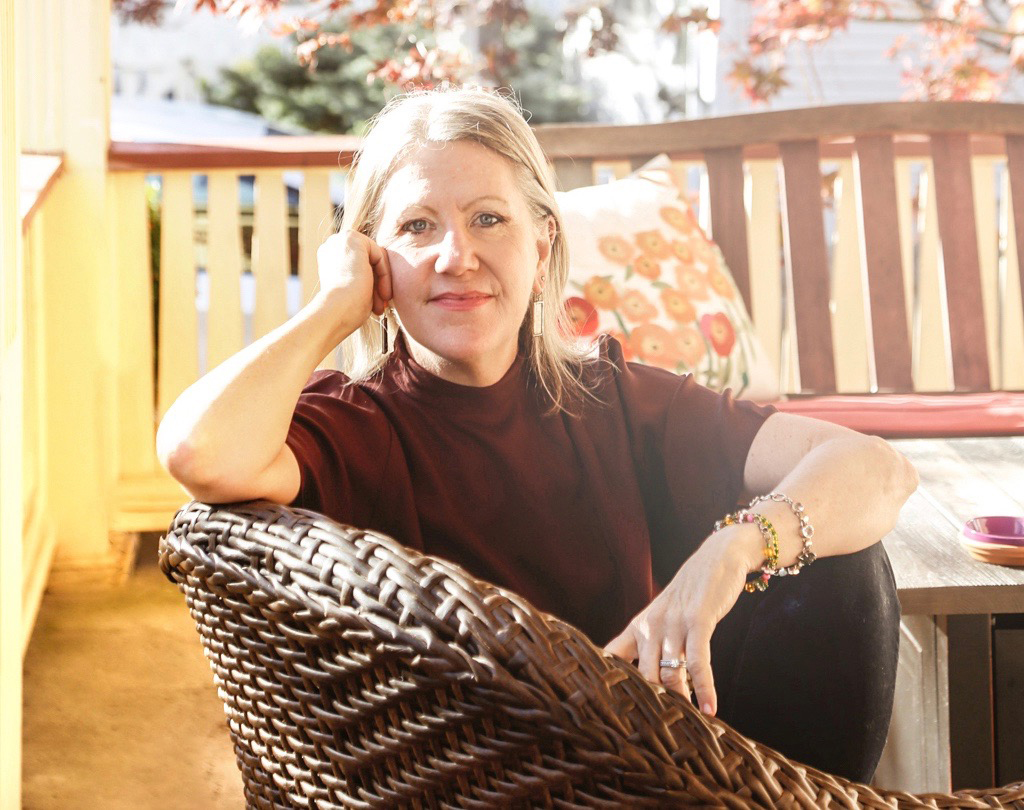
I am struck by how language affects our thoughts, values and even our actions. One standout for me is Friday the 13th which is a day accused of being cursed and holding bad luck in modern beliefs. There is even a series of horror films created in the date’s honor. But why has this date been declared so negative?  Like so much, the answer is that it is a suppression of women and our strength. Although I have heard different explanations for its meaning, my favorite is this; there are 13 moons in a solar year. That means that a woman will menstruate 13 times in that solar year. Thirteen is a symbol of women’s power. And Friday? Friday is the only day of the week named for a Goddess. In English it is Freya’s day named in honor of the Norse Goddess of love. In Spanish it is viernes, in French vendredi, both named for Freya’s counterpart Venus. I present to you that this makes it an extremely powerful day. Perhaps a horror for misogynists but for we women a day to celebrate.

I have also been thinking about the roots of the word “history” – his story.  Many in feminist communities, including here at FAR, counter it with “herstory” – her story. But truly our past is not broken up into genders for the arc of the past affects us all, perhaps differently but all of us nevertheless. We all breathe the same air, live under a culture’s laws, etc.  … Here are some names I have been playing around with as replacements: Ancestorstory.  Ourstory. Hustory.   

Continue reading “Re-claiming Friday the 13th and Other Tidbits by Janet Maika’i Rudolph”

You Lied to Me About God, a memoir by Jamie Marich, PHD, book review by Janet Maika’i Rudolph

This was a hard book for me to review. Perhaps because she writes about such difficult issues and yet she does so in a compelling and at times even humous manner.  I feel a responsibility and yet find it hard to capture how she manages a breezy manner while discussing heavy material. Perhaps, even though our backgrounds are vastly different, I was also relating to so much of what she said. Jamie also covers so much ground; it is hard to pick out individual aspects to discuss.

As a child Jamie Marich was caught in the web of different religious systems, Catholicism from her mother and Evangelical from her father. They were at soul-hurting odds with each other (both parents and religions). Each one proclaimed they were the one true path so there was the ever-present threat of choosing the wrong one and facing a parent’s wrath along with that of eternal damnation. She labels this spiritual trauma. It cuts to the soul of a person being trapped into a no-win situation. It’s a conflict-driven, shame-filled, guilt-ridden way to grow up.

Continue reading “You Lied to Me About God, a memoir by Jamie Marich, PHD, book review by Janet Maika’i Rudolph”

Harris Could Not Outrun 2000 Years of Patriarchy by Janet Maika’i Rudolph

I made this poster 8 years ago and am devastated to have to dust it off again. The safety pins came from a British idea when Brexit was passed. People would wear the safety pins on their clothes to let anyone feeling vulnerable know that they would be “safe” with them.

The political finger pointing for Harris’ loss is beyond noxious. I have heard all manner of scapegoats; Biden, the Obamas, VP candidate Walz, Harris for saying too much of one thing, not enough of another, the progressives, Liz Cheney and even George Clooney. . . .blah blah blah

How can we make sense of a world where women voted for a misogynistic abuser. Black and brown people voted for a white supremist. Latinos voted for a policy of mass deportations targeting their brethren. Youth voted for a climate denier affecting their future. And so on. Think of all the women who voted for a world where they, their daughters and their granddaughters can be denied basic healthcare. It’s a true-to-life Cinderella scenario whose stepmother cut the toes off her own daughters to please a prince. Or Chinese mothers who would bind their own’s daughter’s feet, thereby crippling them in the service of marriage.

Continue reading “Harris Could Not Outrun 2000 Years of Patriarchy by Janet Maika’i Rudolph”

Now What by Esther Nelson

Eight years ago (2016), Donald Trump became the 45th president of the USA.  I felt much the same way then as I do now—eight years later—when Trump somehow was re-elected to that office.

Back in 2016, one of my colleagues brought a short essay by Alice Walker (b. 1944) into his classroom a few days after the election.  Many of those university students were upset–even dazed—by Trump’s victory.  How did it happen? Here’s a link to Walker’s work—a piece that’s just as appropriate today as it was eight years ago.

Continue reading “Now What by Esther Nelson”

What Happens When Hate Wins? by Sara Wright

Do the sandhill cranes stop singing?
Do the junipers cease to release their scent?
Do the stars fall into the sea?
Does the white moon weep??

I want to keep writing stories…

The wind still ruffles fine sand in the wash.
Cottontails leap, jumping through twilight.
Scaled quail still peep as they scurry over red ground.
The thrasher gobbles his suet without restraint.
A woodpecker taps at my window.

I want to keep writing stories…

Continue reading “What Happens When Hate Wins? by Sara Wright”

The Future of Sorjuanista Studies in the Americas: Challenges and Possibilities by Theresa A. Yugar

I had nearly resolved to leave the matter in silence;
yet although silence explains much by the emphasis of leaving all unexplained, because it is a negative thing, one must name the silence,
so that what it signifies may be understood.
Failing that, silence will say nothing,
for that is its proper function, to say nothing.[i]
La Respuesta/The Answer (al Soldado, or The Soldier)
Sor (Sr.) Juana Inés de la Cruz
(November 12, 1651 – April 18, 1695)

Today, I honor the legacy of mid-17th century Mexican Catholic nun, scholar, and poet Sor Juana Inés de la Cruz. She was born in the central valley of Mexico in the Viceroyalty of New Spain, now in modern-day Mexico. She was the daughter of Doña Isabel Ramírez de Santillana and Don Pedro Manuel de Asbaje. They had three daughters: María, Juana, and Josefa. Doña Isabel also had three other children – Antonia, Inés, and Diego – with Diego Ruiz Lozano. Sor Juana Inés was raised with her siblings on their family’s hacienda of Nepantla which was managed by their strong-willed mother Doña Isabel.

Continue reading “The Future of Sorjuanista Studies in the Americas: Challenges and Possibilities by Theresa A. Yugar”

The Wisdom of the Beguines: The Forgotten Story of a Medieval Women’s Movement by Laura Swan, part 2 by Theresa C. Dintino 

Part 1 was posted yesterday

Praying people out of purgatory

Beguines excelled at this. By the Middle Ages, the belief in many Christian circles was that one did not go directly to heaven but to a sort of “holding place” after death to be cleansed of their sins before being allowed into heaven. Eventually “the medieval church also taught that people could pray for the souls in purgatory and that their prayers would effectively aid those souls in their transition from purgatory to heaven”(108).

It’s important to note that these women were esteemed by the communities they lived in as spiritually gifted, able to intercede with God on their own without permission from the church, clergy or men. This is radical for the time.

“Beguines, as we have seen, were understood to have extraordinary spiritual powers. People believed that having a beguine intercede before God on their behalf was an assurance that their petition was heard by God—and perhaps in no instance more than for “those poor souls in purgatory.” And beguines believed that they did indeed exercise the authority to release countless souls from purgatory. Many of the stories included in the vitae of beguines grapple with the fate of the deceased in purgatory (or hell)”(109).

Continue reading “The Wisdom of the Beguines: The Forgotten Story of a Medieval Women’s Movement by Laura Swan, part 2 by Theresa C. Dintino “

The Wisdom of the Beguines: The Forgotten Story of a Medieval Women’s Movement by Laura Swan, part 1 by Theresa C. Dintino 

Moderator’s Note: This piece is in co-operation with The Nasty Women Writers Project, a site dedicated to highlighting and amplifying the voices and visions of powerful women. The site was founded by sisters Theresa and Maria Dintino. To quote Theresa, “by doing this work we are expanding our own writer’s web for nourishment and support.” This was originally posted on their site on July 5, 2022. You can see more of their posts here. 

Around 1200 AD in Europe, communities of women often called beguines began to form. These women were not nuns, they were devout and devoted to the tenets of Christianity but did not belong to any church. They were independent communities of women who often created their own industry, trade or other means to produce income. They were self-sufficient and generally concerned with helping the poor, especially women. They lived in convents. This was the origin of that word.

“These women were essentially self-defined, in opposition to the many attempts to control and define them. They lived by themselves or together in so-called beguinages, which could be single houses for as few as a handful of beguines or, as in Brugge, walled-in rows of houses enclosing a central court with a chapel where over a thousand beguines might live—a village of women within a medieval town or city”(2).

Continue reading “The Wisdom of the Beguines: The Forgotten Story of a Medieval Women’s Movement by Laura Swan, part 1 by Theresa C. Dintino “

The Deep Practice of Being by Xochitl Alvizo   

I have arrived.
I am home;
in the here;
and the now.

I am solid.
I am free.

In the ultimate,
I dwell.


– Thich Na Han 

When you realize that [love for this tender human life] is always here, then there really is nowhere else to get to, there’s only being in this life, learning to love it, again and again, moment by moment.  
– Jeff Warren 

I have tried to be more intentional in my practice of this recently—of being at home with myself and of loving this life this moment. I am trying to learn how to let myself be with myself in whatever I am experiencing, especially in the midst of external stresses and internal grief.  

Continue reading “The Deep Practice of Being by Xochitl Alvizo   “