

This is not Augustine’s confessions. This is not an essay on what love should mean. This is a poetic evocation of recognizing the beauty of friendship, the beauty of companionship. The blessing of breaking bread together and sharing in conversation that is the heart of who and how we are. Who and how we are forever becoming. Even when the Muse abandons us.
My dear friend, Ann, and I shared a wonderful lunch, talking, tears, supreme laughter, exquisite food. During that conversation, it became clear to me that the poetry of life is love that is situated where kindness and kinship and commitment highlight our meaning, our meaning for being and doing, which is intimately linked, for many of us, with our pens to the page. Fingers to the keyboard. Twinned and intertwined with lushness of choice.
A choice to have boundaries, whereby though the heart and the flesh can feel moved by what may present itself to be love, stepping back and feeling with the intellect of the heart and the intellect of the mind what is not being said, what is not being expressed warrants keen attention. A life-changing recognition of the possibility to wash away miasma and mist and pretence. And to stare directly into the depth and clarity that is: Wisdom. She Who Is. Sophia Speaking.
Category: Women’s Voices
Lightbringer by Sara Wright
Author’s Note: I wrote these two poems back to back and didn’t realize until afterwards that they belong together.

Storm Sky Invasion
I stand
at the window
peering
through haze
gray on gray
or is it white
a tangle of
bare branches
obscure powdered
hemlocks
lining a frozen
brook
ki
winding
her way
under
ICE
to the sea
where marble eyed
Seal stands
watch
on a stone
centering a lake
whose boundaries
remain obscure
Guardian
of Flowing
Waters
freed from
constraints
freezing
just one
her sleek
coat
I stand
at the window
peering
through haze
gray on gray
or is it white
a tangle of
bare branches
obscure powdered
hemlocks
lining a frozen
brook
ki
winding
her way
under
ICE
to the sea
where marble eyed
Seal stands
watch
on a stone
centering a lake
whose boundaries
remain obscure
Guardian
of Flowing
Waters
freed from
constraints
freezing
just one
her sleek
coat
a dream
shining
through
descent
each step
takes
us
deeper.
I thought
I saw
a fish?
One silver dagger
Twins with
swords
puncture
frigid air
one falls
to ground
water
petrified
by an
unearthly
chill
ever darkening
skies
blur
the force
of an
oncoming
storm
ICE a
threat
black and
white
crocheted
extremes
hidden
behind
masks
of the dead
“Care -a- vans” by Beth Bartlett
“ . . . when people no longer have the space to construct homeplace, . . .”
Minnesotans mobilize – providing home wherever the need arises
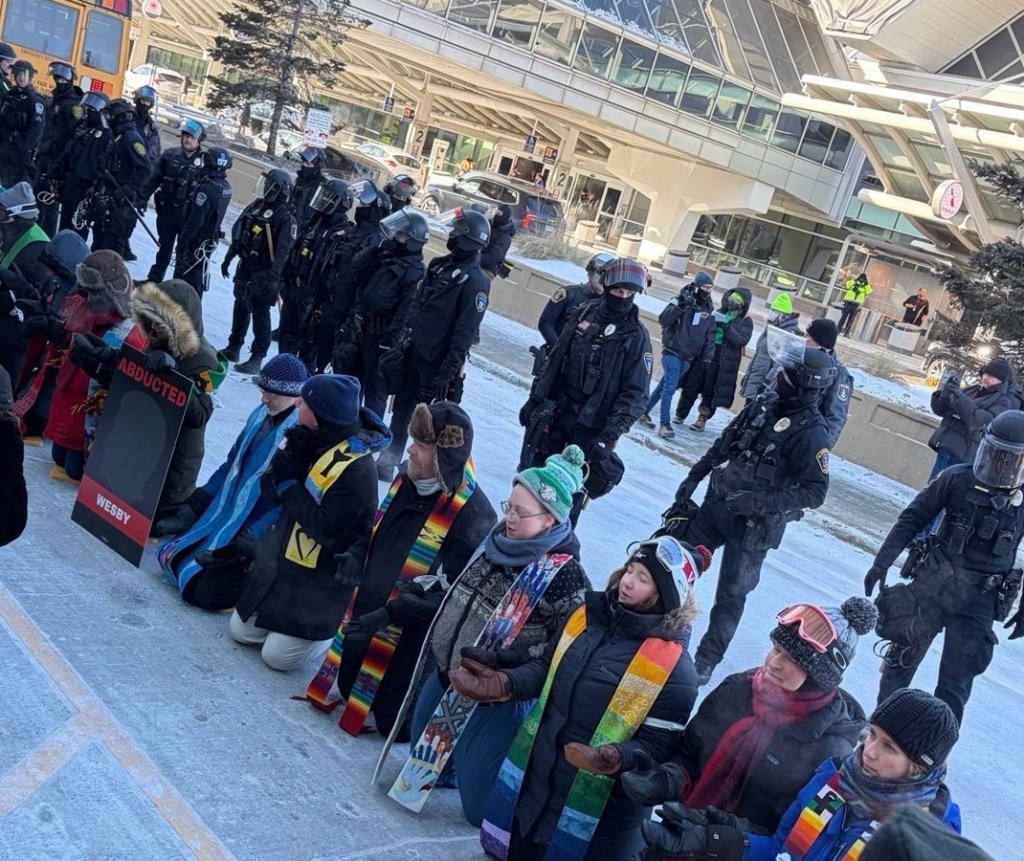
On Friday, January 23rd, seven hundred faith leaders from across the country heeded a call that had been put out just a few days before to come to Minneapolis to train, to observe, and to protest actions by ICE agents in the Twin Cities. Hundreds of them gathered in an interfaith service at Temple Israel. Others joined the National Prayer Call for Minnesota. And still others headed to the Minneapolis-St. Paul airport to engage in nonviolent direct action against the MSP airport authority, and Delta Airlines and Signature Aviation in particular, for their complicity with ICE in transporting those arrested either for deportation or for removal to other detention facilities.
While I was simultaneously livestreaming both the Temple Israel service and the National Prayer, Cal, my son, was among those headed to the airport. In the midst of my concern for his and others’ safety from both the bitter cold – it was -40 below windchill – and from the violence of ICE agents, came the words of Rabbi Marcia Zimmerman offering a prayer for all those engaging in the protests that morning. In that moment, my anxiety eased as I could feel them all being surrounded by the prayer shawl of protection. Then, in a stunning moment of synchronicity, the cantor at Temple Israel sang while a Buddhist priest on the National Prayer Call invoked the blessings of Kuan Yin, goddess of compassion – the compassion that moved the protestors to act, but also that which surrounded the protestors with care. For while thousands engaged in protests that day – 50,000 at the march in sub-zero weather, and thousands more daily participate in protests on the streets and outside the Whipple Building – the ICE detention center in St. Paul, or act as constitutional observers throughout the Twin Cities and greater Minnesota, even more are engaged in daily acts of sustenance and care to support the protestors and those afraid to leave their homes for fear of being detained and disappeared by ICE. These acts of care are at the very heart of the resistance.
Continue reading ““Care -a- vans” by Beth Bartlett”In these United States: A Gratitude Poem, after all, for 2025, by Marie Cartier

Oh yes, I’m grateful for the Portland frog—that blow up adult sized character with the pink scarf blowing back in the wind facing down a squad of ICE “officers.”
I’m so grateful for all the blow-up adult size characters who showed up at the largest protest for anything, single day protest in the U.S. to shout NO KINGS!! And more—the blow-up Tiger with the sign “Fascists get scratches!” My wife inside a blow-up bear, the California bear! With a sign that said, “Yes on 50!”
And so grateful we won: yes, on 50!
Grateful, grateful, for Indivisible! Spreading like Morning Glory. Glory! Glory! Across all 50 states and feeding people, feeding children, passing out whistles – alerting communities when ICE is nearby, stopping ICE in their tracks when they are places, especially in front of schools… I mean, why are they there? (As Gertude says, “There is no there there.”)
But this is a grateful poem. A rant.
I’m grateful for the blow-up unicorn with the sign, “Honk if you are not on the Epstein list.” Dancing on the curb with the rest of us. I’m grateful for all the cars honking as they went by us and all the food donated to give to people in need—some of those in hiding since last spring when this b.s. started – this f*** bullshit– but this is a grateful poem. A rant.
Continue reading “In these United States: A Gratitude Poem, after all, for 2025, by Marie Cartier”Caravanserai and Other Poems by Annelinde Metzner
This set of poems reflects on ways we humans have responded creatively, expansively and artistically to the challenges of our times. Of course, two of the poems center upon music, one of the strongest themes of my own life. The first and last poems are ways that the natural world is always knocking at the door, saying, “pay attention.”
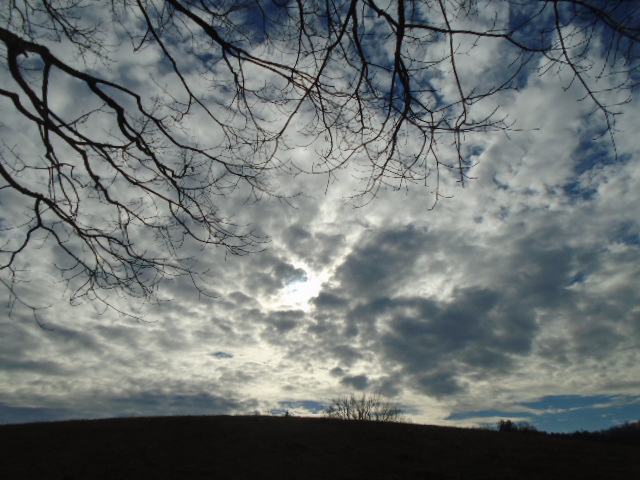
Like this
“Like this,” says the titmouse,
hanging upside down to get at the suet.
“If you really want it, there it is.”
“Like this,” says the January sun,
one day icing us to our bones,
and today like Spring,
warm enough for rides
on little boys’ new scooters.
“Like this,” say the squirrels,
entranced with each other,
whirling ’round the branches,
twining fluffy tails,
intent on making new Squirrel babies.
“Like this,” says the chickadee,
landing near my toe,
tiny and brave, ready to eat,
scolding me to get out of the way.
“You are here to live,
so live.”
The Perfection of Our Imperfection by Margot Van Sluytman/Raven Speaks. Heyoka
Prufrock Again
In this our divine
Comedy of delight
Of destruction
Troubled waters
Calm. Quenching
Us yet again
For in
Our penchant
For beauty
We remake
Over and over again
The tale that tries to
Tame us. Gathering
In circles of hope
Once more we remember
How we remember
© Margot Van Sluytman
Continue reading “The Perfection of Our Imperfection by Margot Van Sluytman/Raven Speaks. Heyoka”Anne Brontë’s Agnes Grey: Lifting the Veil on Cruelty, part 2 by Maria Dintino
Part 1 was posted yesterday.
Here the reader further witnesses how young Tom treats his little sisters which is consistently cruel-hearted. Tom continues to describe how he will harm the helpless birds while Agnes desperately works to persuade him otherwise:
“But you shall see me fettle ’em off. My word, but I will wallop ’em? See if I don’t now. By gum! but there’s rare sport for me in that nest.”
“But, Tom,” said I, “I shall not allow you to torture those birds. They must either be killed at once or carried back to the place you took them from, that the old birds may continue to feed them.”
“But you don’t know where that is, Madam: it’s only me and uncle Robson that knows that.”
“But if you don’t tell me, I shall kill them myself—much as I hate it.”
“You daren’t. You daren’t touch them for your life! because you know papa and mamma, and uncle Robson, would be angry. Ha, ha! I’ve caught you there, Miss!”
“I shall do what I think right in a case of this sort without consulting any one. If your papa and mamma don’t happen to approve of it, I shall be sorry to offend them; but your uncle Robson’s opinions, of course, are nothing to me.”
This young charge of Agnes’s is threatening and manipulating her as he and the other children do often. Tom doesn’t realize he has hit a nerve with Agnes, where the brutal treatment of the most vulnerable is unbearable. This situation is indicative of the overall treatment she receives as a governess, as one less-worthy-than and stripped of power, yet blamed for the misbehavior of her charges.
“So saying—urged by a sense of duty—at the risk of both making myself sick and incurring the wrath of my employers—I got a large flat stone, that had been reared up for a mouse-trap by the gardener; then, having once more vainly endeavoured to persuade the little tyrant to let the birds be carried back, I asked what he intended to do with them. With fiendish glee he commenced a list of torments; and while he was busied in the relation, I dropped the stone upon his intended victims and crushed them flat beneath it. Loud were the outcries, terrible the execrations, consequent upon this daring outrage; uncle Robson had been coming up the walk with his gun, and was just then pausing to kick his dog.
“Tom flew towards him, vowing he would make him kick me instead of Juno. Mr. Robson leant upon his gun, and laughed excessively at the violence of his nephew’s passion, and the bitter maledictions and opprobrious epithets he heaped upon me. “Well, you are a good ’un!” exclaimed he, at length, taking up his weapon and proceeding towards the house. “Damme, but the lad has some spunk in him, too. Curse me, if ever I saw a nobler little scoundrel than that. He’s beyond petticoat government already: by God! he defies mother, granny, governess, and all! Ha, ha, ha! Never mind, Tom, I’ll get you another brood to-morrow.”
Uncle Robson’s appalling show of support and praise for Tom’s egregious behavior toward his governess underscores a deeply engrained and condoned misogyny. But here our usual grin-and-bear-it Agnes will not back down or be silenced.
“If you do, Mr. Robson, I shall kill them too,” said I.
“Humph!” replied he, and having honoured me with a broad stare—which, contrary to his expectations, I sustained without flinching—he turned away with an air of supreme contempt, and stalked into the house. Tom next went to tell his mamma.”
Agnes has risked her position in defense of her values, but Uncle Robson, who it is noted never pays his nieces any heed, has instilled and upholds his nephew’s cruel ways, no doubt leading him to become a person who will kick his dogs and treat all creatures deemed lesser, including girls and women, with disdain. Little Tom is “beyond petticoat government already,” encouraged and rewarded for not listening to any of the women in his life. Following the example of his father, uncle, and many of the other men in his life, Tom has already learned to disregard what women have to say.
And Tom’s mother, Mrs. Bloomfield, buys into the dysfunction wholeheartedly. The passage continues with an interaction between Agnes and lady of the house, with her defending the violent behavior of her son and blaming Agnes for interfering with his fun and games.
“It was not her [Mrs. Bloomfield’s] way to say much on any subject; but, when she next saw me, her aspect and demeanour were doubly dark and chilled. After some casual remark about the weather, she observed—“I am sorry, Miss Grey, you should think it necessary to interfere with Master Bloomfield’s amusements; he was very much distressed about your destroying the birds.”
“When Master Bloomfield’s amusements consist in injuring sentient creatures,” I answered, “I think it my duty to interfere.”
“You seemed to have forgotten,” said she, calmly, “that the creatures were all created for our convenience.”
I thought that doctrine admitted some doubt, but merely replied—“If they were, we have no right to torment them for our amusement.”
“I think,” said she, “a child’s amusement is scarcely to be weighed against the welfare of a soulless brute.”
“But, for the child’s own sake, it ought not to be encouraged to have such amusements,” answered I, as meekly as I could, to make up for such unusual pertinacity. “‘Blessed are the merciful, for they shall obtain mercy.’”
“Oh! of course; but that refers to our conduct towards each other.”
“‘The merciful man shows mercy to his beast,’” I ventured to add.
“I think you have not shown much mercy,” replied she, with a short, bitter laugh; “killing the poor birds by wholesale in that shocking manner, and putting the dear boy to such misery for a mere whim.”
“I judged it prudent to say no more. This was the nearest approach to a quarrel I ever had with Mrs. Bloomfield; as well as the greatest number of words I ever exchanged with her at one time, since the day of my first arrival.”
Agnes knows her place and if she wants to maintain her position to both assist her family and to prove she can handle the role, she must monitor herself and bite her tongue around her employers and their children. In both Agnes’s positions, the parents are portrayed as overly indulgent and uninvolved, allowing the children to misbehave and manipulate at every turn. The parents consistently take their children’s side and refuse to see any fault in them, lest it cast blame on their parenting. This creates an especially impossible arrangement for the governess to have any influence on the children, let alone get them to care about and complete their lessons.

Anne’s resting place at St. Mary’s Church in the seaside town of Scarborough, North Yorkshire.
At a certain point in the story it becomes quite clear how all will unfold, yet one cannot stop reading!
In the end, Agnes is rewarded with the love of one she has admired for some time. The icing on this happy-ending cake is that she is also reunited with the neglected dog, Snap, that one of the young women in her charge had given away, breaking Agnes’s heart. This delightful reunion takes place on the beach, a setting Anne Brontë herself cherished.
If one cannot bear the truth, don’t read Anne Brontë’s novels. Yet, it’s worth keeping in mind that if the ugly truth is kept undercover, it’s less likely to be addressed.
Anne Brontë is a Nasty Woman Writer.
© Maria Dintino 2024
Works Cited & Resources
Brontë, Anne. Agnes Grey. The Project Gutenberg eBook of Agnes Grey, 4 December 2020. https://www.gutenberg.org/files/767/767-h/767-h.htm
Ellis, Samantha. “Anne Brontë: the sister who got there first.” The Guardian. 6 January 2017. https://www.theguardian.com/books/2017/jan/06/anne-bronte-agnes-grey-jane-eyre-charlotte
Holland, Nick. “Agnes Grey: Nothing short of genius.” Anne Brontë Blog, 9 April 2017. https://www.annebronte.org/2017/04/09/agnes-grey-nothing-short-of-genius/
Anne Brontë’s Agnes Grey: Lifting the Veil on Cruelty, part 1 by Maria Dintino
Moderator’s Note: This piece is in co-operation with The Nasty Women Writers Project, a site dedicated to highlighting and amplifying the voices and visions of powerful women. The site was founded by sisters Theresa and Maria Dintino. To quote Theresa, “by doing this work we are expanding our own writer’s web for nourishment and support.” This was originally posted on their site on November 19, 2024. You can see more of their posts here.
Anne, the youngest of the Brontë sisters, penned two novels in her short life. The first was Agnes Grey (1847), then The Tenant of Wildfell Hall (1848).

A sketch of Anne by her sister Charlotte.
It’s probably safe to say that Agnes Grey is the least read and appreciated of all the Brontë novels, of which there are seven. Emily’s Wuthering Heights and Charlotte’s Jane Eyre garner the most praise and attention. But Anne’s The Tenant of Wildfell Hall is not far behind, and by some accounts leads the pack.
Interestingly, all the sisters’ first novels were released in the same year, under their pen names Currer, Ellis, and Acton Bell. First was Jane Eyre in October 1847 and then Wuthering Heights and Agnes Grey together as a ‘triple decker’ in December 1847, with Wuthering Heights making up the first two parts, and Agnes Grey the third.
Continue reading “Anne Brontë’s Agnes Grey: Lifting the Veil on Cruelty, part 1 by Maria Dintino”Requiem? by Sara Wright
A requiem for the seasons is an act of living remembrance for what is vanishing, be that long-cherished seasonal moments, forms of celebration that once tied us to nature’s cycles, and to more than human species – some that are going extinct.
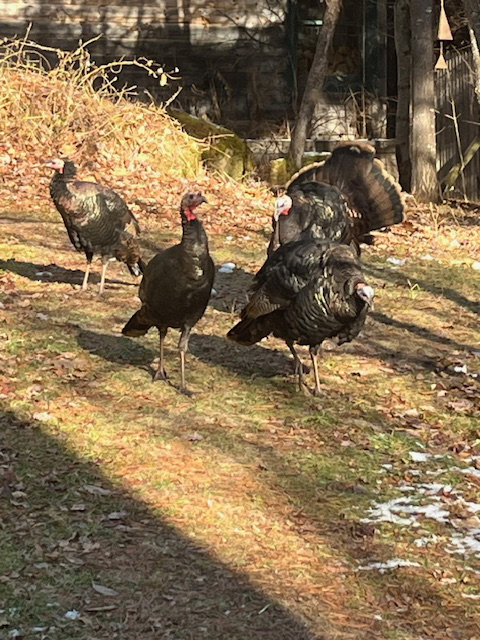
Cheeping twittering birds awakened me at dawn. The first snow of the season cast a spell over the landscape last night and this generous dusting brought in the wild turkeys… I wished all good morning as I scattered seed under the crabapple. A couple of very friendly individuals followed me back to the door. My little dog Coalie is spellbound. She loves these birds.
I noted turkey hieroglyphics on the doormat as I came in but otherwise took no pleasure from the white shrouded landscape. I used to love snow but because each of the seasons is warming, we are getting mixed precipitation on a regular basis beginning in mid – November. The first snow opens an icy door to winters that are dominated by continuous freeze thaws. Last year I considered myself fortunate to have been able to snowshoe as long as I did.
Continue reading “Requiem? by Sara Wright”The Gendered Dimensions of the Water Crisis in Iran: Impacts on Women’s Health, Livelihoods, and Security
Moderator’s Note: This post has been brought to you in cooperation with the NCRI women’s committee. NCRI stands for the National Council of Resistance of Iran. You can learn more information as well as see this original article by clicking this link. A description of their Council can be found at the end of this post.
The water crisis in Iran has moved far beyond a simple environmental issue — it has become a humanitarian, ecological, and economic disaster.
While at first the problem seemed to be the result of drought and declining rainfall, its true causes ran much deeper: entrenched corruption and mismanagement at the heart of the ruling establishment. Until these systemic roots are addressed and removed, Iran’s present — and its future — will only become more precarious.
A significant number of researchers and international observers emphasize that 70 to 80 percent of the current crisis stems from mismanagement, unsustainable policies, lack of transparency, and corruption. As one report notes, “Iran’s water crisis is not a crisis of resources; it is a crisis of decisions—decisions that have made the land thirstier and the future darker. This crisis, alongside the erosion of public trust in governance, is a symptom of structural and managerial failure.” (Newsweek, August 1, 2025; The Times, December 8, 2022; Reuters, April 27, 2021)
Continue reading “The Gendered Dimensions of the Water Crisis in Iran: Impacts on Women’s Health, Livelihoods, and Security” Feminism and Religion