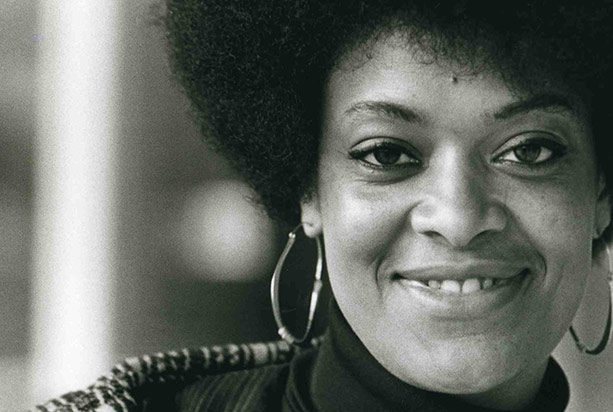
Toni Cade Bambara: How to Care for Oneself While Healing The All (American Woman Writer 1939-1995), part 1 by Theresa Dintino

Moderator’s Note: This piece is in co-operation with The Nasty Women Writers Project, a site dedicated to highlighting and amplifying the voices and visions of powerful women. The site was founded by sisters Theresa and Maria Dintino. To quote Theresa, “by doing this work we are expanding our own writer’s web for nourishment and support.” This was originally posted on their site on August 11th, 2020. You can see more of their posts here. 

While reading adrienne maree brown’s Pleasure Activism for #NastyWomenWriters, I was stopped in my tracks by the praise coming forward in that book for black feminist, writer, activist, film maker and mentor Toni Cade Bambara (1939-1995).

brown writes:

“Toni Cade Bambara, author of The Salt Eaters, the one to tell us writing was a tool for the revolution, that our task was to make revolution irresistible. Bambara is a main stream in the lineage of pleasure activism, not just because of what she put on the page and into words, but also because of the ways she wove community, the way she supported other writers and organizers, the way she engaged in healing work” (45).
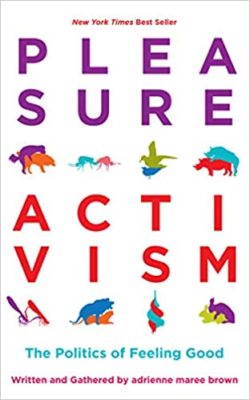
In the chapter “The Sweetness of Salt,” author and activist Alexis Pauline Gumbs, archivist and scholar of Bambara’s work, writes about five women who have been instrumental in her life and work: “scholar Farah Jasmine Griffin, filmmaker and activist Aishah Shahidah Simmons, artist and abolitionist Kai Lumumba Barrow, healer and organizer Cara Page, and editor and intellectual activist Cheryll Y. Greene”(46), who were all personally influenced, mentored, “sistered” and “mothered” by Bambara. It was these women’s recounting of their experiences with Bambara that caused me to go find her for myself.

Continue reading “Toni Cade Bambara: How to Care for Oneself While Healing The All (American Woman Writer 1939-1995), part 1 by Theresa Dintino”

Patriarchy Unbound by Janet Maika’i Rudolph

Some new terms in our language have been after people. Both the terms sadism and masochism were so named according to etymologyonline.

Here is what the site says about sadism: “love of cruelty,” especially as evidence of a subconscious lust that the cruelty satisfies, 1888, from French sadisme, from the name of Count Donatien A.F. de Sade (1740-1815). Not a marquis, though usually now called one, he was notorious for the cruel sexual practices described in his novels.”

And here is what the site says about masochism: “The word masochism originates from the name of Leopold von Sacher-Masoch, an Austrian novelist best known for his 1869 novel Venus in Furs, which explored themes of submissive sexuality and domination.”

I have a new term to add that I would like to add to our vocabulary: Robertism to be named after John Roberts. Here is my definition: love of cruelty, not just cruelty by itself but by spreading cruel acts as widely and far as possible while giving them the authority of legality. Robertism encourages the most base and ugly parts of human behavior, brings them to the surface to be expressed in actions that are given permission through legal cover. 

Continue reading “Patriarchy Unbound by Janet Maika’i Rudolph”

How We ALL Need the Goddesses Now . . . by Annie Finch

Carol Christ, in her 1978 clarion call “Why Women Need the Goddess,” summarized four powerful, foundational ways that the Sacred Feminine urgently matters for women crawling out from under patriarchy.  Each way helps to heal the psychic damage of our upbringings and surmount the profound losses of our violated herstory.  Christ shows how Goddess belief and worship affirms the legitimacy of our power, the sacredness of our bodies, the honoring of our will—and the centrality of our connections with our foremothers and each other.

All this is still so true. All so important.

AND . . . Christ’s framing of Goddessness as a precious path of women’s transformation is not enough anymore.

Times have changed in the forty years since Christ published her essay.  Today’s world has been fast plummeting into an even more blatantly hellish (no, I don’t want to insult the source of that word, Goddess Hel, guardian of life and death—so I will change the adjective!) into an even more blatantly patriarchal state of affairs.

Continue reading “How We ALL Need the Goddesses Now . . . by Annie Finch”

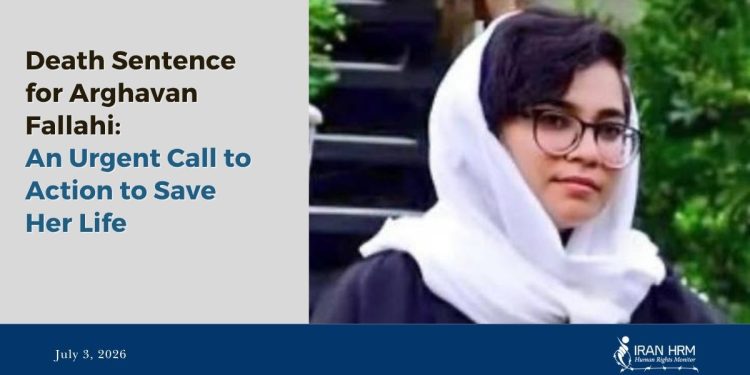
Death Sentence for Arghavan Fallahi in Iran: An Urgent Call to Action to Save Her Life by Iran Human Rights Monitor

This article appeared on the website of Iran Human Rights Monitor on July 3, 2026. It is reprinted with permission. You can see the original and learn more about Iran HRM here.

The death sentence issued for Arghavan Fallahi stands as an immediate and critical warning regarding the imminent danger of execution facing a female political prisoner in Iran. Arghavan Fallahi, 25 years old, was reportedly sentenced to death on July 1, 2026 (10 Tir 1405) by Branch 15 of the Tehran Revolutionary Court, presided over by Judge Abolghasem Salavati (notoriously known as the “Execution Judge”), with the verdict formally communicated to her through her legal counsel. The acute urgency of this case stems from the fact that the primary accusations against her were framed within security cases linked to the People’s Mojahedin Organization of Iran (PMOI/MEK). This death sentence follows months of arbitrary detention, prolonged solitary confinement, enforced disappearance, relentless interrogations, and explicit reports of torture and coercive pressure aimed at manufacturing a state security case.

Continue reading “Death Sentence for Arghavan Fallahi in Iran: An Urgent Call to Action to Save Her Life by Iran Human Rights Monitor”

Ariadne & Me – Mother Magic by Arianne MacBean

The fortune teller stood at a square park table, her hair wrapped in a gold scarf, stacking perfectly formed human fingernails. Across from her, I watched as she methodically piled and unpiled the fingernails according to some obscure but precise calculation known only to her. She measured them against a line carved into the wood marked with tiny incremental notches.

Reading the messages she found there, she spoke.

“Your mother and father are not one, but All.”

My friend Jacqueline, standing between us, immediately blurted out, “What the fuck does that mean? That doesn’t make any sense!”

But I answered with unexpected certainty.

“No. She’s right. They are the archetypal Mother and Father. They are not mine alone.”

The fortune teller waved us closer.

“Come on. I have to finish these visions so I can go to heaven.”

This was the dream I had the night I arrived on the Isle of Mull in western Scotland for a two-week Goddess Pilgrimage. I believed I was traveling to my fatherland, the home of Clan MacBean, to heal old wounds and unbind myself from contracts unknowingly inherited through my patrilineal line.

Continue reading “Ariadne & Me – Mother Magic by Arianne MacBean”

Islam: A Feminist/Womanist Faith by Jamilah Ali

American media and the Taliban in Afghanistan have both long disparaged Islam regarding the status of women. I would like not only to correct the contention that women are second-class, but to provide for you an argument that Islam is, based on our Prophet and the Holy Quran, a feminist and egalitarian religion. It has been falsely maligned.

For your convenience I will use the English word for Allah, God, throughout this piece. (Did you know Arabic speaking Christians call God; Allah?)

Please note Muslims believe that all the Holy Books, the Bible and Torah, were indeed revelations from God. Belief in all the Holy Books is one of Islams 7 articles of faith. However, according to Muslim creed the Bible has been changed by humans through time deliberately or not. Thus Quran, the most recent revelation sent 610 years after Christ, is relatively unaltered from its original. It was radical, even then, for providing women the rights to inheritance, to have their own money and property, and for them to retain the dowry paid for marriage, not the father.

Continue reading “Islam: A Feminist/Womanist Faith by Jamilah Ali”

From the Archives: Hagar and Intersectionality by Marilyn Batchelor

This was originally posted on May 15, 2020

I began to follow Kimberlé Crenshaw a little more than five years ago when I first learned of her theory of intersectionality as a more concise description of oppressions stemming from race, age, gender, sex/sexual orientation, religion and socio-economic status. 

In Delores Williams’ book, Sisters in the Wilderness, there is a closer look at womanist theology as it relates to Intersectionality. The focus on traditions of biblical appropriation that emphasize liberation of the oppressed “showed God relating to men in the liberation struggles,” Williams says in the introduction. “In some African American spiritual songs, in slave narratives and in sermons by black preachers, reference was made to biblical stories and personalities who were involved in liberation struggle.” 

Continue reading “From the Archives: Hagar and Intersectionality by Marilyn Batchelor”

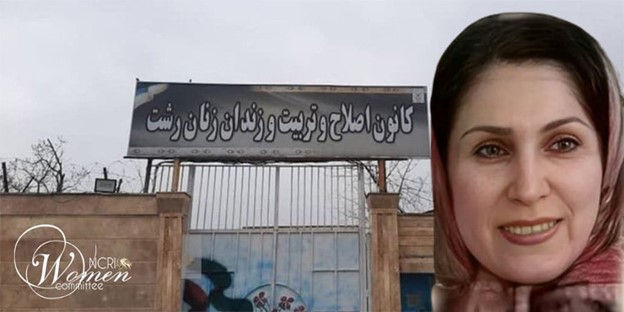
 Zahra Tabari by WNCRI

Women’s National Council of Resistance of Iran (info below)

In a continuation of the escalating crackdown on political dissent in Iran, Zahra Shahbaz Tabari, a 67-year-old political prisoner, was sentenced to death by Branch 1 of the Revolutionary Court of Rasht on October 25, 2025. The regime’s judiciary has accused her of “supporting the People’s Mojahedin Organization of Iran (PMOI).”

Who Is Zahra Tabari?

Zahra Tabari, 68, holds a master’s degree in electrical engineering and is a graduate of Isfahan University of Technology and the University of Borås in Sweden, specializing in Sustainable Energy.

She suffers from chronic health conditions, and the poor conditions in Lakan Prison, combined with shortages of medication, medical care, and constant psychological pressure, have severely deteriorated her physical condition.

She was arrested on April 17, 2025, after security forces raided her home in Rasht without presenting a judicial warrant. During the raid, agents searched the house and confiscated her and her daughter’s electronic devices. For weeks, her family had no information about her whereabouts or health condition. She is currently being held in Lakan Prison in Rasht.

Continue reading ” Zahra Tabari by WNCRI”

 NPR meets My Telepathic Bird Lily b, part 2 by Sara Wright

Part 1 was posted last week. You can read it here.

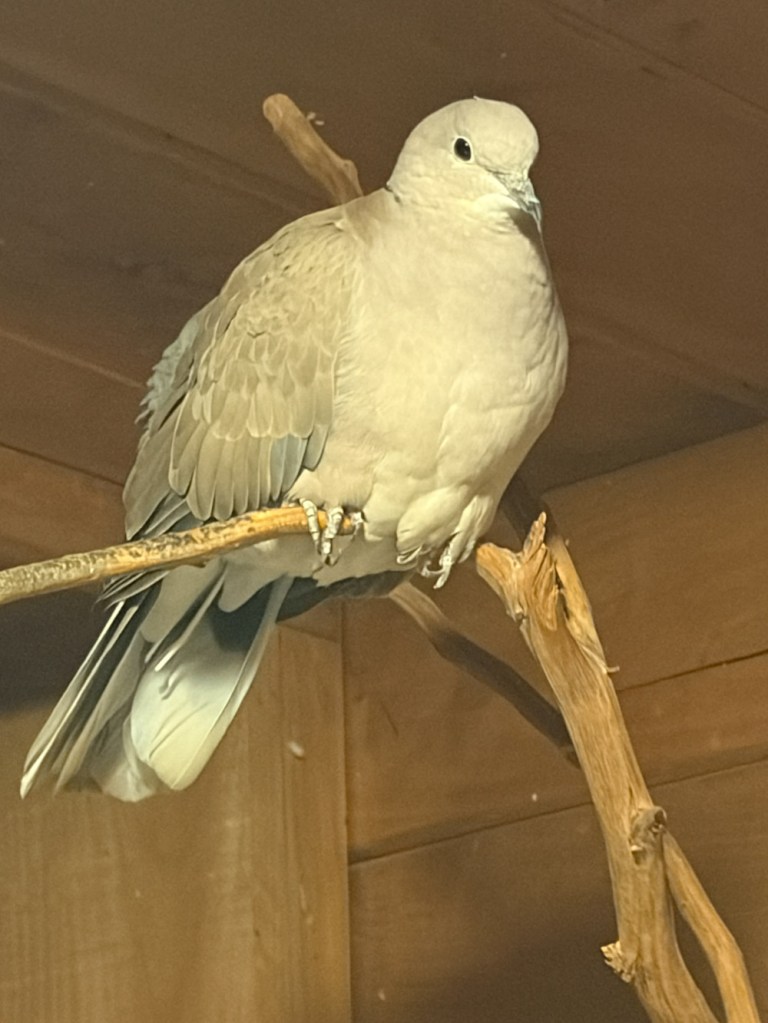
About ten years ago I began to keep a (public) though never advertised blog to help me keep track of my life. Because I am so severely directionally dyslexic this blog helped me to organize my material. Drafts of published and unpublished papers, poetry, opinions, changing seasons, virtually anything that I was experiencing and writing about ended up on that blog. Without conscious awareness/intention I began to include the more esoteric aspects of my experiences, and this is how stories of Lily b, lizards, various extraordinary encounters with birds, bears etc. ended up on this online journal sort of by ‘accident’.  I didn’t even realize what was happening. I wasn’t talking about these experiences, but I was starting to write about them publicly, not just privately. People read what I wrote, I realized vaguely.  Frankly this didn’t matter much because that wasn’t why I kept an online journal. Its primary purpose was twofold. It helped me organize my writings but more importantly it distanced me from particulars so that patterns emerged. Enter NPR. Anna had apparently been reading my blog for a couple of years and asked me if I would do an interview on Lily b my telepathic bird. I was astonished, but agreed, although with some trepidation because I had so rarely discussed this subject. The old fear of crazy surfaced.

Continue reading ” NPR meets My Telepathic Bird Lily b, part 2 by Sara Wright”

May Alcott Nieriker (1840-1879): Little Woman, Big Ambition, part 2 by Maria Dintino

Part 1 was posted yesterday

May clearly defines her audience,

“For I am supposing our particular artist to be no gay tourist doing Europe according to guide-books, with perhaps few lessons, here and there, taken only for the name of having been a pupil of some distinguished master, but a thoroughly earnest worker, a lady, and poor, like so many of the profession, wishing to make the most of all opportunities, and the little bag of gold last as long as possible”(6).

In her book, she covers three art hubs, London, Paris, and Rome, providing information on means of travel, places to stay, artists to study with, galleries and museums to frequent, scenic sites for sketching and painting, and even stores to buy art supplies and clothing. A more useful document, I cannot imagine! Julia Dabbs concurs with this assessment in her article Empowering American Women Artists: The Travel Writings of May Alcott Nieriker:

“Then as now, it is difficult to imagine a reader not being inspired by May’s words of encouragement, her practical advice, and her passion for art.”

Continue reading “May Alcott Nieriker (1840-1879): Little Woman, Big Ambition, part 2 by Maria Dintino”