I have written about this before
And, no doubt, I will write about it again.
This morning we woke to the news of
Another mass shooting, a mass shooting is defined as four or more people shot in a single violent outburst.
So, this time last night there were five killed, and eighteen injured—a mass shooting
Last night at a gay bar in Colorado Springs, ClubQ
The only place, so described by its patrons, for anyone queer in Colorado Springs to go.
I am visiting Denver for a conference and to see friends.
Queer friends.
I don’t live here anymore.
But I know that gay bar without ever entering it.
The sense of being me, being here, I could have gone
There last night and screamed in joy for the drag queens…made it rain with compliments and dollar bills for one of them named Del Lusional….and others.
I could have been happy in that club with chosen family that I had never met before
And I could have been one of those who screamed as I watched someone die, or as I was shot.
I wasn’t there last night. But I know that bar without ever having entered it.
I know those people and how they would have made me feel welcome. How they would have made me feel
Part of things. How they would have made me family.
2.
The only thing that stops a bad guy with a gun is a good guy with a gun, says the GOP narrative.
But no one with a gun stopped the guy at ClubQ
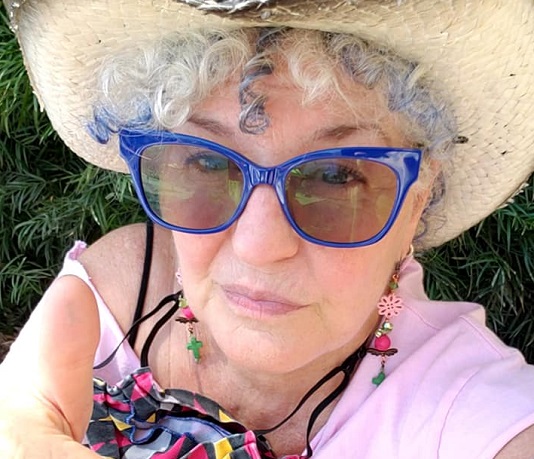
I am a woman with a pen and a notebook. Age sixty. With queer friends crying and angry Because we’ve been here before: Pulse where 49 were killed and the only thing stopping this from being another Pulse was a good guy without a gun.
The GOP has ramped up its hate on the gay population- let’s take down gay marriage, and even a politician who advocates execution for gays.
And so here we are: an assailant with an assault rifle in a gay bar. He had a history of violence on his own mother
And yet, here he is entering a queer club with a gun.
In Colorado my friends mark themselves safe from the mass shooting at Colorado Springs
But are we …?
Can I mark myself safe from gun violence? homophobia?
From the random and now expected crazy cycle of hate.
Today was Trans Remembrance Day in Colorado Springs and because of the shooting last night “the only place to go” is shuttered today.
But nobody is more resilient says my friend, than gays, than drag queens, than trans kids, than butch dykes,
The queer community has a history of resistance, my friend says… I say we have a history of claiming geography in contested spaces. We will do it again and again we both say.
I let hope flutter. There will be a vigil in California where I live. There will be a vigil in Colorado. There will be vigils. There will be prayers. And thoughts.
And…
There were 38,000 gun-related deaths in the US this year. The GOP passed no gun control laws There were 2 instances of voter fraud. The GOP passed 361 voter suppression laws.
This is America.
3.
What’s it gonna take? Asks most of Americans who support gun control.
The GOP opposes gun control overandoverandover and here we are: the not so new anymore normal.
And make no mistake: this is normal now. This is America
Where a public space is defined by
Fear.
Where are we gonna go now? Asks the queer folk of Colorado Springs and indeed we can all ask that—where are we gonna go now?
Where are we gonna go now? Asks a drag performer on the news who hid in the dressing room with the door locked and two friends. They threw themselves on the floor. They saved themselves just in time.
Because five people were murdered in the five minutes that the gunman opened fire on a crowded dance club before two people took him down. A former vet and a performer in high heels. A veteran of several wars, a military guy there with his family to watch his daughter’s friend do drag. He tackled the assailant and took him down. And told the performer to kick the assailant with her high heels.
How I love queer community and our allies. How I love how we love.
And…in five minutes before he rushed the guy five people died.
Where are we gonna go now?
There is no safe place for us now, says another performer on the news.
And my friend who I am visiting says, if someone can kill twenty-five children in a classroom in Sandy Hook and… it. Has. Only. Gotten. Worse. I mean, she says, what’s it gonna take?
If that’s where we are—where are we gonna go now?
It’s Thanksgiving week here in the US, the end of November.
It’s number 702 in terms of mass shootings this year.
Is that it, America? Are we done?
What’s it gonna take? Is this really our new, not so new, normal?
Number 702… is that it, America, for this year?
There were 702 as I write this poem, but as I edit it I look up the number and now…there are 706. Can we get to a point where we answer- that’s it. We are not 706 and counting.
We are 706…and done.
For now, I mark myself safe– from despair.
And…I mark myself lucky to be alive. And…
I mark myself loved. I mark myself part of this chosen family.
There is nothing this kid with a gun could do to make me change who I am, says my friend.
I look for the rainbow.
And I agree.
And I mark myself
Proud.
–Marie Cartier
November 21, 2022
Denver , Colorado
Number of Mass Shootings in America This Year Compared to Past Years (insider.com)
Mass Shooting Tracker
Bio
Marie Cartier is a teacher, poet, writer, healer, artist, and scholar. She holds a BA in Communications from the University of New Hampshire; an MA in English/Poetry from Colorado State University; an MFA in Theatre Arts (Playwriting) from UCLA; an MFA in Film and TV (Screenwriting) from UCLA; an MFA in Visual Art (Painting/Sculpture) from Claremont Graduate University; and a Ph.D. in Religion with an emphasis on Women and Religion from Claremont Graduate University.