This was originally posted on March 31, 2014. We are posting this on Sunday instead of Carol’s usual Monday in order to accommodate other scheduled posts this week.
What is the origin of evil? Is it innate in human nature or even in the nature of the universe? Judith Plaskow and I discuss this question in our forthcoming book Goddess and God in the Worldand this is a chance to listen in our conversation.
I am responding to Judith’s allegation that in imagining Goddess as loving and good I am fantasizing an ideal deity who exists apart from the evil-and-good world that we know. Judith speaks of an “evil impulse” in human beings which she considers to be innate in human beings and in the nature of reality. Judith says that my “defense” of the goodness of God comes down to “the traditional free will defense.” She also questions my view that human beings can
I argue that it does not because the traditional free will defense imagines an omnipotent God who existed before the creation of the world. Then I continue:
I think what you meant to say is that like those who invoke the traditional free will defense of the omnipotent God, I attribute humanly chosen evil entirely to human beings—and not to Goddess or God.
On 25 March, 2026, in a profoundly significant historic ceremony, the 106th Archbishop of Canterbury was installed in Canterbury Cathedral. Her name is Sarah Mullally. She is the first woman to hold the position of spiritual leader of the Church of England and the Anglican Communion worldwide. As such, in spiritual authority in the UK she stands second only to the King.
Sarah Mullally leaves after the Enthronement Ceremony installing her as archbishop of Canterbury in Canterbury, England, Wednesday, March 25, 2026, the first woman ever to lead the Church of England. Photo: AP/Alastair Grant.
Dame Sarah Mullally is married with two children, and worked for decades as a midwife and nurse before she was ordained as a priest in 2002. In 2018 she was named the first female Bishop of London, and in 2026 the first female Archbishop of Canterbury. Her installation (aka enthronement) as Archbishop took place one day before her 64th birthday. She describes herself as a feminist and has ordained both men and women.
Those of us who are old enough to remember the hit song of the 1960s, The Age of Aquarius, have long lived with the promise of the dawn of this new age. The song and the hope of the 60’s promised that, when The Age of Aquarius came, the world would be transformed into a world of peace and love.
This is the dawning of the Age of Aquarius The Age of Aquarius Aquarius! Aquarius!
Harmony and understanding Sympathy and trust abounding No more falsehoods or derisions Golden living dreams of visions Mystic crystal revelation And the mind’s true liberation Aquarius! Aquarius! —The Age of Aquarius, by The Fifth Dimension
I am an unapologetic newspaper clipper. Now when my husband and I are involved in a process of cleaning out our long-time home, I am finding numerous clippings going back to the 1990s. Some of them are gems. They are generally painful to read, though because they illuminate the many threads of recent history that have brought us to the point we are at now.
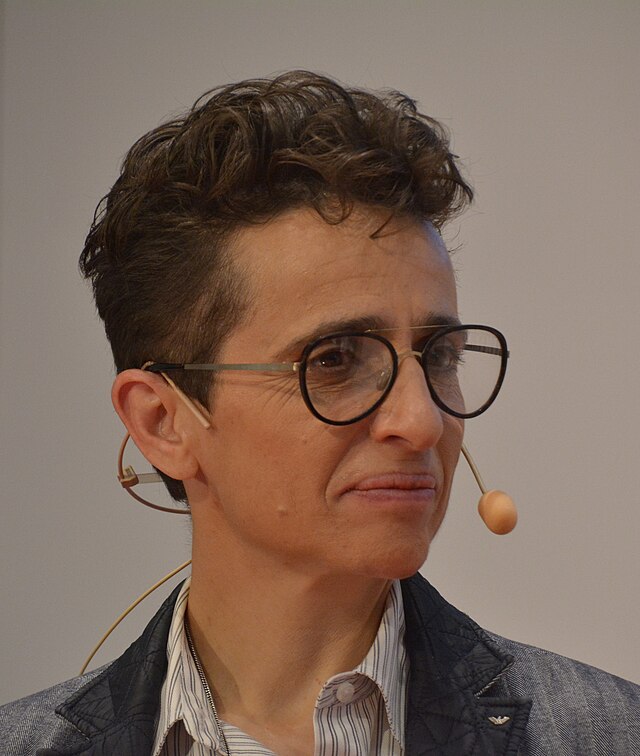
M. Gessen (once writing under Masha Gessen they/them) is a fairly new columnist at the NY Times. When they write, though, I sit up and take notice. I have saved several of their editorials because Gessen has a unique perspective not only from an intellectual point of view but also personal. They were born in Russia, moved to the US when they were a teen-ager through the U.S. Refugee Resettlement Program. Gessen is trans and in a gay marriage. They had returned to Russia pursuing work in journalism but had to leave when the government began talking about removing children from gay parents. With their partner, they have 3 children.
I recently returned home from a two-week visit to Buenos Aires, Argentina—a trip I took with my eldest son, Mike, who throughout the years has expressed an interest in my birthplace. He has an avid interest in history, geography, and economics. It was like putting puzzle pieces together for him—attempting to understand the various aspects of Argentina in light of my experience. What was it like living in a “foreign” country? Did I have friends? Who were they? What were they like? How did we, the family (parents, 4 children—the 5th was born much later), get along?
My parents were American, Protestant missionaries. They met at Moody Bible Institute, Chicago, Illinois, in the early 1940s. My mother was a Registered Nurse. My father had been recently discharged from the U.S. Navy. Both of them were eager to do the “Lord’s work.” For them, that meant serving the Lord as missionaries. They felt “called” to go to Argentina and preach the gospel mainly to Jews, God’s “chosen people.”
In Argentina, my parents struggled financially. Their mantra (especially my mother’s) was “God will provide.” That translated in my mind to “don’t ask for anything we cannot afford.” My parents’ income depended on God placing our needs on the hearts of people (mainly in the U.S.) who would then be moved to support our mission—the New Testament Missionary Union. Funds were divided among all the missionaries in the organization equitably, meaning the more children you had, the greater percentage of the available funds you received. It was never enough. My maternal grandmother, Jessie, often supplemented our income. I don’t remember ever going hungry, but I do recall appearing slovenly and disheveled—always an embarrassment. Except for my school uniform, the only clothes I wore were hand-me-downs or the ones Jessie sent from the U.S.
Moderator’s Note: This post was written in early February, 2026
The Big Bear Moon
(Ojibwe and other Northern Tribes)
We know that each full moon exerts a powerful pull on the earth. At the full moon, the Earth, Moon, and Sun align and the tidal bulges on both sides of the earth manifest as extremes (reminds us that extremes are part of all nature).
This full moon, called the Big Bear Moon also ushers in the First Turning of the year. Last night’s luminous round pearl reminds me that every full moon creates a magnetic and gravitational pull that effects every living being on this planet.
Dealing with these natural extremes on a personal level is necessary if sometimes unpleasant work. I have been a regular journal keeper for 50 plus years and notice that each full moon brings on physical symptoms that have increased in severity with age (inability to sleep/headache spikes/ irritability). When I was younger, I experienced the full moon’s pull as a potent ‘high’ that energized me too much. Another curious consistency is that for me the worst human betrayals including self – betrayal have occurred occur around or during the full moons. I have learned not to make personal decisions during this period and to watch out for weird highs/lows and for inexplicable/explosive anger.
Lately I also have been thinking about the forest whose individual trees synchronize to prepare for the magnetic/and gravitational pull of lunar and solar cycles/includes eclipses, etc. that literally suck up water drying trees out, so trees have learned to shut down to protect themselves from water loss. These extremes are particularly dangerous for young trees who have few if any water reserves, so old trees communicate to the seedlings/adolescents what to expect and what to do. Afterwards, trees separate again into individuals, but they also remain connected through their root systems and through the air so interspecies relationship within the forest does not cease. I wonder if during the winter months the trees are less likely to dry out during celestial events because so many are sleeping? Although most tree energy/power descends below to roots and the mycelial networks where life keeps humming, in colder climates natural antifreeze remains in tree trunks and expands during full moons. Sometimes the antifreeze isn’t enough to stop cracking which will damage the tree.
Plants as well as trees respond to the Moon’s gravitational and magnetic pull through leaf movements, altered stem/root growth, and by absorbing more water to compensate for shrinkage. I have noticed all these effects occurring in my houseplants during the months I spend more time inside with plants and the moon.
Winters go on forever and without my beloved bright green houseplants I would be bereft. I have been paying very close attention to my passionflowers this week during the waxing moon which is also occurring at the First Turning of the year.
One beauty needs repotting and until four days ago I planned to do this job in a couple of weeks. While immersed in another project I received an urgent message from that plant: repot me now. (root growth) Her voice was so insistent that I immediately dropped what I was doing to respond (all plants communicate with those who love them). As usual I expected an ordeal for both of us, so I was stunned to see how easily the plant separated from her pot. Although her thick white roots were spiraling out of the bottom, the whole plant let go without my help (this has never happened to me before – usually re-potting is traumatic with the plant giving off a scent that I associate with pain because plants make sounds or scents when hurt) Ah, she knew when the timing was just right and I (thankfully) was listening! Another point worth mentioning is that repotting/cutting creates distress for all plants. This repotted passionflower had no reaction at all and is already showing new stem growth.
I have also been watching my two other passionflowers. The two in the south windows have required daily watering One is a cutting I placed in a dove pot early last summer that has vined herself around the whole southern window and is now attaching tendrils to the ceiling and a piece of string that I attached to the plant to give the tendrils purchase if/ as the vine moves across the room. Instead of turning south the top of this vine seems to be traveling northeast– or was (it might be important to add that I also had a dream that my dog Coalie and I were traveling northeast via the coast earlier this month). In the last two days the tendrils have reversed their trajectory and are climbing back over themselves towards the west! It’s winter, and southern sun is normally what these plants love.
The Big Bear moon was full last night and this morning the passionflower is once again traveling northeast! So, this reversal was temporary, but it demonstrates the powers of the moon (and other celestial bodies) to create effects like reversals on earth, humans included. Intriguing to say the least.
The third passionflower is in a window that faces north/ northeast. I planted cuttings for someone whose brutal betrayal last spring on the full moon and good friday*(2) unhinged me. After crucifixion day this passionflower immediately developed a mass of blooms, eight weeks before the onset of her regular blossoming cycle. A crown of thorns greeted me each day.
The trauma was so severe that I lost two months of my life. When each astonishing blossom scented the air I felt the knife twist like a corkscrew deepening the hole in my gut. After two plus months nature intervened and I was free at last.
But it took months before I was able to separate that one passionflower from the Betrayer. My passionflowers lived outdoors for the summer which allowed me some space. I started new plants. Both prospered under my care. When I was able, I asked the original plant for forgiveness, but it was too late. My lack of love and attention resulted in a passionflower that was no longer thriving.
Today I remain the ‘Old Woman’ in the crucifier’s life. What I will never forget is that he scapegoated me without cause; I do not hate him but I do not wish him well. That crown of thorns is on his head, not mine.
Lately, I have been asking the passionflower that produced vines and flowers for a killer of soul what to do. Yesterday I received a nudge. Take three cuttings and let me go.
Begin again.
The words could have come from a fairy tale.
I followed the first directions. Next, I burned both my homemade solstice balsam wreaths to acknowledge the circle that had been broken.
I am hedging around throwing out the old plant – part of me wonders if I need to wait until she speaks again – or maybe I am just not ready. Plants are wonderfully patient with humans who often need many more than one set of instructions.
This morning the three cuttings are waving their tendrils towards the light – (normally they droop for days). The repotted plant looks as if ki has been in her new home for a while. No indication that she has just been repotted!
Plants are Powerful Teachers and I am in perpetual awe of how little I know, how mysterious the ways of nature remain. But in this process of writing about plants, I have also uncovered my most recent intentions. Nature, no doubt has known all along!!
Postscript: February 5 9AM – this morning I was stunned to see a bud emerge from a new plant just repotted…. this too has never happened before (this plant has not lived long enough to adjust her cycle for blooming to the light the plant receives in the house). How important it is to learn how to observe and to listen!
_____________________________________
(1) February 2nd is when the bear first leaves his den to determine how much longer winter will last – if he doesn’t see the sun, he knows that winter will last much longer. When the colonists arrived, they turned the Indigenous bear story into a groundhog story)
(2) (AI) The passionflower is steeped in16th-century Christian mythology, where Spanish missionaries interpreted its unique structure as symbols of the Passion of Christ. The corona filaments represented the Crown of Thorns, while the three stigmas symbolized the nails, and the five anthers were wounds.
My commentary:.
In pre – christian/christian mythology one sees Osiris, Dionysus, and Jesus all wearing crowns of one sort or another. Both sides of the archetype can be lived out depending upon whichever side of the alignment a person is living through. For example, in myth Dionysus wore a crown to celebrate joy; Jesus wore a crown to die. Osiris wore a crown depicting his rule over the Underworld.
For Indigenous peoples of South America the passionflower is called the Vine of Souls.
Though I am not a Christian any more, I don’t want to sit home alone on Easter Day. Besides being a Christian ritual, Greek Easter is a time to eat lamb with family and friends, and to celebrate the coming of spring by feasting out-of-doors in flowering fields or in a garden filled with flowers, bees, butterflies, and birds. Such rituals have been celebrated from time immemorial.
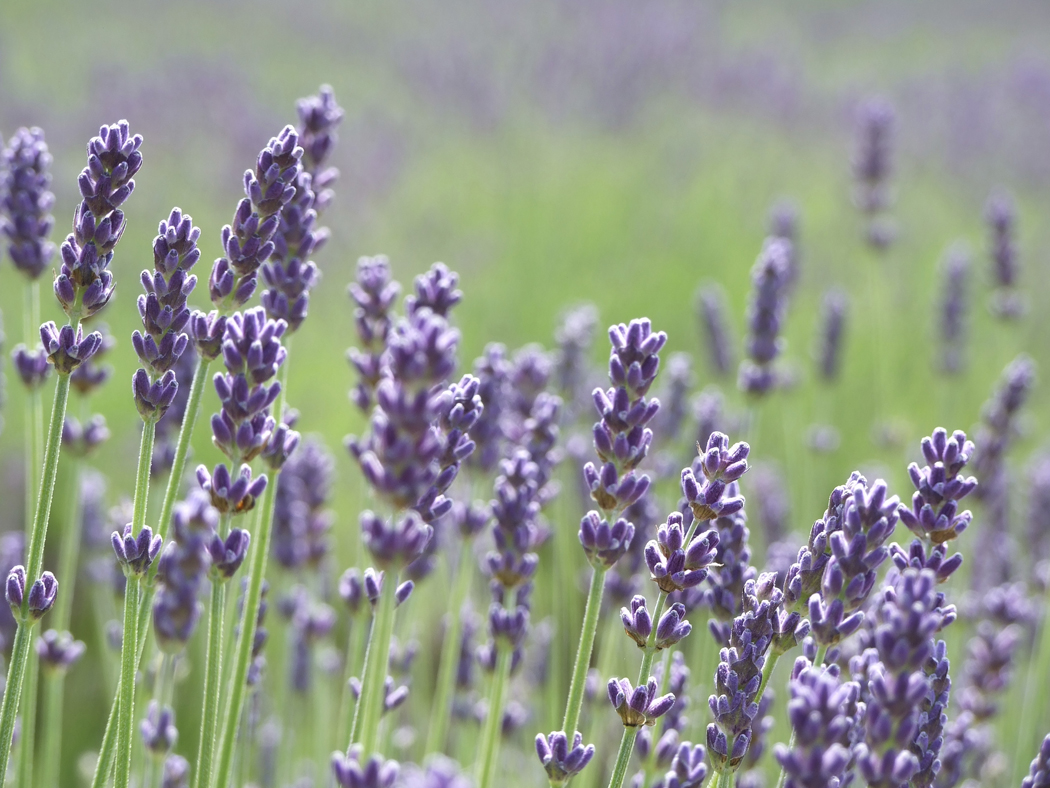
Greek Easter came late this year, only yesterday, May 5. I prepared for an Easter party in my garden for weeks. My garden is planted with herbs and aromatics—lavender, thyme, oregano, rosemary, curry plant, rue, sage, cistus, rose-scented geranium, sweet william, cat mint and several other kinds of mint, bee balm, and roses and fruit trees, including lemon, bitter orange, pomegranate, olive, quince, and cherry. Everything blossoms in spring, attracting bees and butterflies.
I began weeding and pruning about 6 weeks ago. This year I had to remove many overgrown lavender plants. For the last 3 weeks in addition to ongoing weeding and pruning, I have been replanting lavender which I have promised myself to prune “way back” in the fall, along with purple sage, blue daisies, and thyme. Though there is bare ground in some parts of the garden, in other parts mature plants and trees are in full flower.
Author’s Note: This blog first published on May 14, 2023. Čarodějnice will take place this year on Thursday, April 30, 2026.
This post is a follow-up, in a way, to the post I published here on September 11, 2016, entitled “Continuing Pre-Christian Traditions in the Czech Republic,” and will be a combination photo essay* and elaboration on one of the rituals mentioned in that first post. On April 30th, I was in the small village where my partner’s family has their summer house. Yes, that same village that has inspired posts like this. There, we celebrated Čarodějnice, or Witches. This holiday seems to be related to what is called May Day or Beltane in other countries. What is unique about this tradition isn’t necessarily the májka (May Pole) although it is different than other places May Pole, but the burning of the witch.
Throughout the day, everything is gendered. The women and girls have certain tasks; the men and boys have too. The women and girls create and decorate. First, they create a witch to be burned on a large bonfire; the construction and shape of both can vary. After creating the witch, the women and girls (although it should be virgins – but no one really follows that tradition) decorate the top of a cut-down, very tall pine tree with strips of brightly colored fabric and crepe paper, tying them on to create what will become vertical streamers blowing in the wind, thus creating what is called a májka.
I read FAR’s repost of Carol Christ’s 2016 essay,Maiden, Mother, Crone: Ancient Tradition or New Creative Synthesis, with great interest and was struck by this sentence, “It has been suggested that we need a fourth stage, Queen, to celebrate the years between menopause and old age. Since I reject hierarchy of every kind, I don’t want to be a Queen.” Christ rejected the Queen archetype while acknowledging that in her fifties, she felt no connection to Mother or Crone. I believe, the Queen archetype offers middle-aged women who live after the veil of estrogen has lifted, a realm that no longer prioritizes the relational over self – a vital sacred space.
In my work as a somatic psychotherapist, I often encounter women grappling with the time between motherhood (or choosing not to mother) and cronehood. While the Mother archetype symbolizes a universal pattern of nurturing, protection, and sustaining growth and regeneration, the Crone embodies wisdom, intuition, and spiritual power. Many women between the age of 50 – 65 simply do not connect with either of these personifications and I am one of them.