

 My April FAR post introduced the phenomena that was sweeping the nation; Hamilton the Musical blending contemporary hip hop to the Broadway musical scores. The show has been breaking barriers with its success, intelligence, and fortitude. Hamilton is showing that a diverse cast can be successful. “Hamilton has created a space on Broadway for black and brown performers that otherwise wouldn’t exist. Opening up roles designed specifically to be played by performers of color means encroaching on that space.” It is showing mainstream that including dialogue surrounding immigration, race, class, and gender equality can be highly successful. The director has stated that this show is about America, past and present and one can look at the cast to see it is true.
“Suchness” of inequality vs. the “story” of patriarchy by Oxana Poberejnaia
 In the TV film about American suffragists “Iron Jawed Angels” Alice Paul (played by Hilary Swank) says to a psychiatrist who came to prison to assess her mental state during her hunger strike:
You asked me to explain myself. I just wonder what needs to be explained. Let me be very clear. Look into your own heart. I swear to you, mine’s no different. You want a place in the trades and professions where you can earn your bread? So do I. You want some means of self expression? Some way of satisfying your own personal ambitions? So do I. You want a voice in the government in which you live? So do I. What is there to explain? Continue reading ““Suchness” of inequality vs. the “story” of patriarchy by Oxana Poberejnaia”
Feministing Sarah and Hagar by Vanessa Rivera de la Fuente
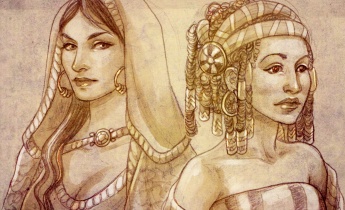 One story that has marked my life as a feminist is that of Sarah and Hagar. This is a story of pain and enmity among women under patriarchy that despite its age, is still relevant to illustrate the negative effects of the androcentric socialization. But it can also hold an inspirational feminist reading that leads us towards a reflection on the amazing possibilities of a shift in the way we women look at each other.
Feminism is a political practice, an ethics for living based in an option for women. It is not or should not be a Diploma, a chair where to work from 9:00am to 5:00pm, or an excuse to act from our own privileges against other women. In private and in public, in academia or in the street, in sexual, cultural, intellectual and religious affairs, a feminist is a feminist, without excuses or regrets.
This year I was part of the anthology “Jesus, Muhammad and The Goddess” with an essay called “The Wounded Goddess: The History of Sarah and Hagar From a Feminist Outlook” from which I want to share some excerpts with you, as follows: Continue reading “Feministing Sarah and Hagar by Vanessa Rivera de la Fuente”
What Dorothee Soelle Taught Me about Creativity by Elise M. Edwards
 I’m currently developing a book that considers how theological and ethical considerations in architectural design can define good architecture. My book discusses five virtues related to the architectural design process that promote human participation in bringing out God’s intention of flourishing for humanity and creation. Those five virtues (or values) are: empathy, creativity, discernment, beauty, and sustainability. In the book, I’ll explain how these virtues orient design tasks to the social and ethical aims of architecture.
In this virtual space, I want to have a discussion about what these virtues mean from a feminist standpoint. In my writing, I draw from theological ethics, architectural theory, and feminist theory to emphasize community discernment and participation. It’s fitting, then, to claim opportunities in my work to acknowledge the feminists who have influenced me while also opening up the dialogue to the feminists in this community who continue to inspire and guide me to do my best work. Continue reading “What Dorothee Soelle Taught Me about Creativity by Elise M. Edwards”
If Jesus Ran for President by Gina Messina
 If Jesus ran for president, what would his campaign look like? Where would he stand on social policy? Who would be his running mate? Who would (not) vote for him? With our current political dialogue dominated by supposed Christian views and a nation that overwhelmingly claims the teachings of Jesus as the basis for its morality, what would the response be if we came face to face with the (unintentional) founder of the tradition? How would we really respond to Jesus’ teachings in contemporary society? And maybe more frightening, how would Jesus respond to us?
Imagine that Jesus was in the US today and launched his bid for the Whitehouse. Don’t imagine him announcing on the deck of an Aircraft Carrier, he’s more of a Homeless Shelter guy. Would he be the conservative “Christian” he is often labeled by the right? Would he be a Democrat as so many book titles have claimed? A libertarian? Green party? How do his teachings measure up with the various political parties and would there be room for Jesus at any of their tables?
What would Jesus think of our current and past presidents, nearly all whom have invoked the Lord’s name during their time in office. What would he think of both Jimmy Carter and George W. Bush claiming that God wanted them to run for POTUS? What about Bush’s (and Ronald Reagan’s) claim that God guided all of his policy making decisions while in office? And what about Barack Obama’s statement that when it comes to his politics, at the end of the day, “God is in control”?
Although not bringing God into the conversation would be career suicide for any politician and a large population of voters in the US claim a Christian identity, few would actually vote for Jesus if he ran for president. Many of the values and ideologies associated with Christian views are in direct contrast to the teachings of Jesus. For one, Jesus was anti-materialistic and we are living in one of the most gluttonous nations in the world. Let me say upfront, I am guilty. I have an unhealthy obsession with handbags and little makes me happier than a good sale at Nordstrom. I own it. But that doesn’t change who Jesus was or his teachings. Even if he was alive today I don’t think Jesus would be swayed by Nordstrom—-although I have seen amazing sandals there.
We have adopted Jesus as an American Icon, and in doing so, have twisted his words and teachings to support our own ideas. It’s enough to make one think those WWJD bumper stickers stand for “What Wouldn’t Jesus Do?” And so, if Jesus did run for President, it is impossible to imagine, in a country that has adopted him as its icon and claims a “Christian” identity, that Jesus would ever be elected. His understanding, loving approach would probably bar him from even getting a reality show—which appears to be key for a presidential resume these days.
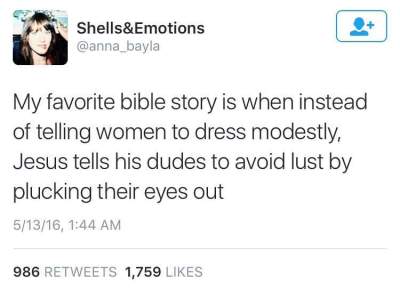
That’s right. Likely no Christian would vote for Jesus and most would attack him for his teachings and politics – yes, Jesus was highly political. Some might like his message, but the media would label him unelectable and the GOP would go after him for being a left-wing, pro-union, welfare supporting, Obamacare enthusiast and democrats would argue that Jesus is a nice guy but doesn’t know a thing about running a country. If it came down to it, and the country was under threat, Jesus would never push the red button. Both would rather him be a mascot for their campaigns – “Jesus the carpenter” – AKA the new “Joe the Plumber.”
While Jesus the American Icon might have a chance in a presidential election, Jesus the Jewish carpenter of the Gospels would be laughed off the ballot.
This article is an excerpt from If Jesus Ran for President coming from the Far Press in Fall, 2016 and was co-written with Steven Mazan.
Gina Messina, Ph.D. is Assistant Professor of Religion and Gender Studies at Ursuline College and Co-founder of Feminism and Religion. She writes for The Huffington Post, has authored multiple publications and is the co-editor of the highly acclaimed Faithfully Feminist: Jewish, Christian, and Muslim Feminists on Why We Stay. Messina is a widely sought after speaker and has presented across the US at universities, organizations, conferences and on national platforms including appearances on MSNBC, Tavis Smiley, NPR and the TEDx stage. She has also spoken at the Commission on the Status of Women at the United Nations to discuss matters impacting the lives women around the world. Messina is active in movements to end violence against women and explores opportunities for spiritual healing. Connect with her on Twitter @FemTheologian, Facebook, and her website ginamessinadysert.com.
Mixing Work and Faith: Redefining my Relationship with the United Methodist Church by Katey Zeh
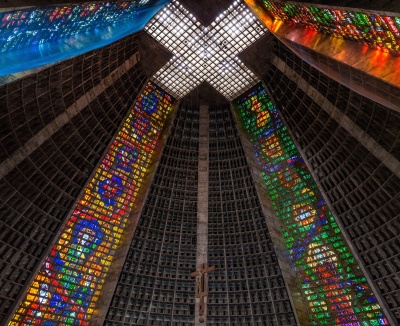
The United Methodist Church (UMC) General Conference, the denomination’s legislative body that meets every four years, is currently underway in Portland, Oregon. For self-avowed “MethoNerds” this is a highly anticipated event akin to watching the Olympics. Meanwhile I’m doing my best to keep my distance from the happenings there.
For six years I worked in the public policy and advocacy office of the UMC, the church into which I had been baptized as a teenager. My position was one coveted by many and for good reason. I got to write, speak, and travel the country, connecting with congregations and training people of faith in advocacy for women and girls. But I was also required to witness the political infighting of General Conference in 2012, which left me in tears and with little hope for a more just, compassionate church.
After that experience my work in the church began to lose its luster. The daily grind of halfheartedly upholding an institution that didn’t align with my theological values, especially around LGBTQ inclusion and abortion care, took its toll. And my life circumstances changed dramatically: I moved from DC to North Carolina, got married, and had my daughter (without any paid time off, which is another matter needing attention.) As a breastfeeding mom of a newborn, many of the aspects of the work that once appealed to me—constant travel, trainings, speaking engagements—were now logistical nightmares. I decided it was time to move on. Continue reading “Mixing Work and Faith: Redefining my Relationship with the United Methodist Church by Katey Zeh”
Interpretations, Interpretations, Interpretation by Carol P. Christ
 The Pope’s call for a new study of the possibility of ordaining women as deacons in the Roman Catholic Church and the impasse in the United Methodist Church over homosexuality and abortion, once again ask us to recognize that theories about interpretation and interpretations underlie each of these hotly contested issues. It is not only that individual texts and traditions are subject to conflicting interpretations about their meaning in their own times or in ours. The decision to cite a particular text or tradition, is itself based on an interpretation about which texts and traditions are important or reliable enough to be cited.
The Pope may be convinced that Jesus chose only twelve male disciples, and he may cite certain texts in the Bible, centuries of tradition, and recent church decisions. But others would counter that there is evidence that Jesus had many more than twelve disciples, and that Mary Magdalene was among them. Those arguing that United Methodists should not ordain homosexuals as clergy or permit the sanctifying of homosexual marriage may feel they are on firm ground when they cite Leviticus 18:22 in support of their view that the practice of homosexuality is contrary to Christian teaching. But those on the other side ask why this particular passage is held to be binding on today’s Christian communities, while (for example) the many others affirming a man’s right to have more than one wife are not.
When traditionalists cite the Bible or traditional church teachings as definitive, others may counter that their alternative reading is the “true” interpretation of these same texts or traditions. What is often lost is the fact that all interpretations of texts and traditions are situated. Although it may not be easy to convince traditionalists that the widely accepted theory of situated interpretation is true, at minimum, we should not forget it as feminists.
Thus, if we hope to change inherited traditions, feminists have two tasks. One is to bring forward texts, traditions, and interpretations that have been ignored by those who support traditional (male dominant, anti-homosexual, anti-abortion) positions. But, in doing so, we should not succumb to the temptation to conclude that our new interpretations are unequivocally “true.”
To do so would be to ignore the feminist “first principle” that all interpretations of texts and traditions are situated. If we wish to argue that traditional teachings on the priesthood, abortion, and homosexuality are situated in standpoints we might call “patriarchal” or “anti-queer,” then we must also acknowledge the relativity of our own positions as well.
When this is recognized the ground beneath us shifts. We are no longer arguing about the “true” meaning of inherited traditions. We are no longer asking: “What does the Bible say?” or “What does God say?” Instead we are asking a more nuanced question that begins with the recognition that there is not only more than one interpretation of the meaning of a text, but also more than one interpretation of which texts should be considered central to the meaning of a particular tradition. It is in recognition of the principle that every interpretation is situated that Biblical scholar Elisabeth Schüssler Fiorenza always insists that the idea that Mary Magdalene was among the disciples of Jesus is true from the perspective of women (or wo/men) seeking liberation.
When we recognize the relativity of all standpoints including our own, we recognize that the right question is not “what God has revealed,” but rather, what kind of communities we wish to create and transmit to future generations. It is our responsibility, individually, and as communities, to answer this question. If we wish to create communities that are more inclusive than those we have inherited, then we can choose as “true from our perspective” and even as “divinely inspired in our experience and understanding” those interpretations of texts and traditions that support the kinds of inclusive communities we believe Goddess or God calls us to create.
As feminists, we must present new interpretations of texts and traditions. But this is the beginning not the end of the task before us. We must also insist loudly and clearly that all interpretations are situated. The interpretations we advocate are not any more “objectively true” than the interpretations of our adversaries. We cannot avoid naming and examining our standpoints and justifying our interpretations in relation to them.
Recognizing that all interpretations are situated does not mean that all interpretations are equal. We can and must justify our interpretations on linguistic and historical and other grounds. We can and must reflect upon our standpoints, asking what kind of communities and worlds are justified and envisioned from the perspectives of our own standpoints and those of others. And we can and must discuss contested questions about the meaning of traditions and the nature of divinity.
Though I have been speaking about interpretations of Christian tradition, the principles discussed here apply to every religion, including those newly discovered or created. Recently I have been noticing a tendency among some contemporary Neo-pagans to assume that mythic traditions are “true” and to make definitive statements that begin with the phrase “our tradition teaches.” But there is no reason to believe that pagan traditions are inevitably true–especially since many of them reflect patriarchal points of view–or that they are not subject to a variety of interpretations. While we can learn from traditions, we inevitably interpret them from our own standpoints. We can and must take responsibility for our standpoints and for our interpretations of every tradition.
Carol P. Christ is author or editor of eight books in Women and Religion and is one of the Foremothers of the Women’s Spirituality Movement. She leads the Goddess Pilgrimage to Crete in Spring and Fall: Sign up now for spring tour and save $100. Follow Carol on Twitter @CarolP.Christ, Facebook Goddess Pilgrimage, and Facebook Carol P. Christ. Carol speaks in depth about the Goddess Pilgrimage to Crete in an illustrated interview with Kaalii Cargill. Photo of Carol by Andrea Sarris.
 A Serpentine Path: Mysteries of the Goddess
 will be published by Far Press in 2016. A journey from despair to the joy of life.
Goddess and God in the World: Conversations in Embodied Theology with Judith Plaskow will be published by Fortress Press in August 2016. Exploring the connections of theology and autobiography and alternatives to the transcendent, omnipotent male God.
Moving Away from Normative Maternal Roles in the Catholic Church by Michele Stopera Freyhauf
 Earlier this week, social media was all abuzz about the Pope’s investigation into restoring women to the diaconate. In the complete transcript of the Pope’s comments, the traditional notion of women’s maternal role in the church is mentioned in relation to the Church. Certainly this is nothing new. Here the Pope describes important “maternal” work such as working with the marginalized, catechesis, and caring for the sick – once again, nothing new.
However, in the next sentence, a very subtle shift is seen when it comes to normative gender roles:
…. there are men who do the same [work as consecrated women], and it is good…..and this is important.
What does this mean – a change in language? a laying of groundwork? or nothing at all?

It is no secret that cultural constructs of women as maternal and how a mother is defined as or even does has radically changed in today’s society; but, the Church continues to remain steadfast in normative roles between the priesthood and the “motherhood” of the Church (and therefore “motherhood” in general).
Holy Women Icons Contemplative Coloring Book by Angela Yarber
 Around the time Microaggressions in Ministry: Confronting the Violence of Everyday Church was published, I was under contract and furiously trying to finish yet another book project, a coloring book of all things. On the heels of such imperative justice work as microaggressions, why on earth was creating a coloring book on my radar? Feminist academic-activists don’t dabble in such seemingly insignificant projects as coloring books, do they? As I wrote about my potential coloring book for the first time with FAR, I realized the time is ripe for such work—a coloring book that fuses feminism, arts, and spirituality—so I graciously took the feedback offered here and shared them with my publisher.
Coloring is a fast growing trend among over-stressed adults. “Soothing coloring pages” is a top Google search item. Amazon.com lists over 3,000 adult coloring books, some even featured on their bestsellers list.
Articles—popular and academic—whose authors range from psychologist to spiritual director purport the power of coloring to calm anxiety, relieve stress, and provide a creative and spiritual outlet. Is this a feminist issue? I’d say so. In fact, part of the problem of microaggressions is the difficulty in coping with the stress, depression, and anxiety caused by them. Hear me clearly, I’m not saying that coloring in my coloring book will rid the world of microaggressions and usher in a utopian paradise where every person is treated equally and justly. What I am saying is that, since studies have proven that coloring is a valid mode of relieving stress and anxiety and microaggressions create stress and anxiety, coloring pages filled with bold, revolutionary women, many of whom are women of color and/or queer, can provide a balm, a method of empowerment, a window into what that utopian world could be. Continue reading “Holy Women Icons Contemplative Coloring Book by Angela Yarber”
The Denied Trans-Childhood of Medusczka by Vanessa Rivera de la Fuente
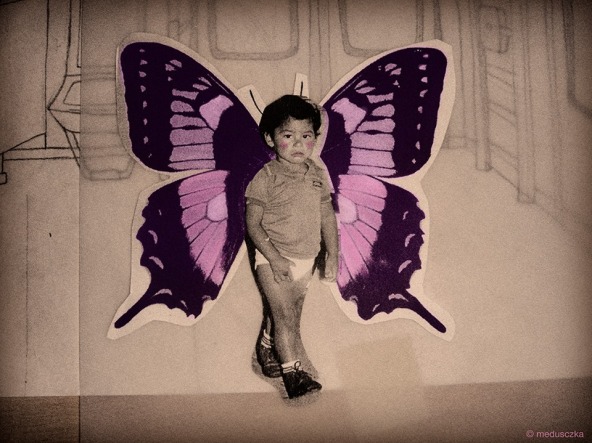
One of my articles in April featured one of the “Niñas Santas Trans”(1). I have been asked often where I came across her and if there are more liken her. Well, she is part of a colorful and provocative project of mexican trans-feminist artivist and illustrator Medusczka Gorgona, who developed a series of images that mix religion Mexican popular culture and trans identities to make visible the non-conforming childhood subjugated by heterosexual discipline.
I have known Meduscka for a while. I am personally fascinated with each one of those beautiful and cheeky “Niñas Santas Trans.” Now is your chance to meet her and her “Niñitas”(2), through this short interview she agreed to have for this site. Continue reading “The Denied Trans-Childhood of Medusczka by Vanessa Rivera de la Fuente”

