 If you’ve read Part 2, then you know we’ve been talking about how the literature demonstrates that there were attempts in the early period to bar women from mosque attendance and even attendance at the prayers for the two `eids. Our hero, Hafsa bint Sirin, seems to have been part of winning women the right in Basra to attend the `eid prayers. She does so by making a legal argument through the transmission of a hadith.
Hadith are typically transmitted with a narrative frame that describes the circumstances that prompted Muhammad’s reported words or actions; sometimes that narrative frame also includes the circumstances for the transmission of the report itself. Hafsa’s hadith is the second kind. Since Hafsa’s hadith can be reliably traced back to her place and time, and since we can triangulate its circumstances with other evidence, I am going to accept that her narrative frame is a reasonable account of her telling of it.
I am going to unpack the frame to give some sense of how she argued for women’s right to attend the `eid prayers. And here is where my imagination comes most into play and I will begin to significantly part ways with careful historical writing. To be sure, my imagination is historically grounded. But I’m going just going to tell it like I think it was. And in later blogs, in the reconstruction of her life story, I’m going to tell it as I would have it be.
I will quote the hadith in full at the beginning, then unpack it in parts showing how the narrative frame tells us something about 1. how these reports were used in legal conversations, 2. Hafsa’s role as a discussant in this particular legal question, and 3. the intellectual and ritual lives of women at the time.
Hafsa said: We used to prohibit our girls from going out [for the `Eid prayer]. But then, I went to visit a woman who had come to stay at the palace of the Bani Khalaf [the governor’s palace]. The woman was telling people about how her brother-in-law fought alongside the Prophet and that her sister [Umm `Atiyya] had nursed the wounded. She reported that her brother-in-law fought alongside the Prophet in twelve battles, and that her sister had been there for six of them. Her sister said, “We used to care for the sick and treat the wounded.”
Once [the sister] asked him directly, “Oh Messenger of God, is there any harm in a woman not going out [to the `Eid prayer] if she has no outer wrap (jilbab)?”
“He replied, ‘Her neighbor should loan her one of her own wraps to wear, so that she may also be present to take part in the good works and the gatherings of the believers.'”
Hafsa added: So when Umm `Atiyya [herself] came, I asked her about what I had heard.
Umm `Atiyya replied, “On my father’s life may he be sacrificed for the Prophet’s sake, peace upon him, yes.” [Hafsa added:] She never mentioned the Prophet without saying, ‘On my father’s life may he sacrificed for the Prophet’s sake, peace upon him’.”
‘The Prophet said, ‘Adolescent girls who are only seen by related men and servants—curtained off [from non-mahram men]–or adolescent girls and those who are curtained off [from non-mahram men], Ayub [the transmitter of Hafsa’s report] was not certain–and menstruating women should go out on the ʿeid. The menstruating women should keep away from the prayer area. But all of them should be present to take part in the good works and the gatherings of the believers.'”
Hafsa said: So I said to Umm `Atiyya, Even those who are menstruating?
Umm `Atiyya replied, “Yes. Are they not also present at `Arafat [during the pilgrimage], and for this [ritual] and for that?'”
Hafsa visited well-known female and male scholars and was a well-respected scholar of hadith and Qur’an who taught male and female students out of her home. Perhaps while sitting in one of these scholarly circles, a discussion arguing for excluding women from attending the mosque was raised and an argument was made for it. Hafsa disagrees. She has heard a Hadith that can be used to argue for the exact opposite. In fact, this report demonstrates that women not only attended the mosque for `eid prayers during the Prophet’s day, but that Muhammad insisted that women attend even if they are menstruating or sexually vulnerable. But Hafsa does not just relay the hadith to her companions and hope for the best, rather using the hadith as a proof-text, she argued brilliantly for women’s right to attend the prayer.
She starts out by rhetorically taking the side of those arguing against women attending ʿEid prayers. It is a disarming ploy. She begins by saying, “We used to prohibit our girls from going out [for the `eid prayer].” “But then!” she adds. The “but then” indicating that something changed her mind. It is as if she is saying, “Really, fellows, I’m on your side!” It is a rhetorical claim that sets the whole story up as her objective discovery of the facts of the matter.
After that move, she establishes her own authority and that of the secondary transmitter of the hadith by pointing out (1) their connections to political elites. (2) Then she points out the unassailable moral authority of the primary transmitter as a woman who went into battle with the Prophet, (3) which also demonstrates the transmitter had the opportunity to hear these words directly from the Prophet thus guaranteeing the accuracy of the tradition itself. In other words, these are women whose opinion should be taken seriously.
Hafsa said: We used to prohibit our girls from going out [for the `Eid prayer]. But then, (1) I went to visit a woman who had come to stay at the palace of the Bani Khalaf [the governor’s palace]. (2) The woman was telling people about how her brother-in-law fought alongside the Prophet and that her sister [Umm `Atiyya] had nursed the wounded. She reported that her brother-in-law fought alongside the Prophet in twelve battles, and that her sister had been there for six of them. Her sister said, “We used to care for the sick and treat the wounded.”
(3) Once [the sister] asked him directly, “Oh Messenger of God, is there any harm in a woman not going out [to the `Eid prayer] if she has no outer wrap (jilbab)?”
Here is where she begins laying out her argument. The Prophet’s response to Umm `Atiyya’s question establishes three points: (1) Umm `Atiyya’s question and Muhammad’s answer begin with the assumption that women had already been attending the ʿeid prayer. After all, the question would make no sense if women were not already attending. So it sets a precedent. (2) Attending `eid benefits women’s moral character. And (3) While acknowledging the need for modesty, it asserts that women are not simply permitted to attend, but Muhammad urged them to attend.
Once she asked him directly, “Oh God’s Messenger, is there any harm in a woman not going out [to the `eid prayer] if she has no outer wrap (jilbab)?”
“He replied, ‘Her neighbor should loan her one of her own wraps to wear, so that she may also be present to take part in the good works and the gatherings of the believers.'”
Now, while any reliable hadith narrator would seek out confirmation of the report, the rhetorical tenor of the opening to her argument–taking the side of the opposing opinion–suggests that she continued to use this device. In this next part, she sounds like she nevertheless remained wary about this permission. She is letting her listeners know that she cannot be swayed from prohibiting women’s mosque attendance so easily!
Hafsa added: So when Umm `Atiyya [herself] came, I asked her about what I had heard.
When she asks Umm ʿAtiyya, Umm `Atiyya confirms the report, swearing on her father’s life, and relays what she heard directly from the Prophet to Hafsa. This direct report from Umm `Atiyya shortens and strengthens the line of transmission making the report even more reliable. The version of the report she hears directly from Umm `Atiyya builds on the argument that the Prophet insisted all women go to the mosque as he insists that even sexually vulnerable women and women who are menstruating should go.
Umm `Atiyya replied, “On my father’s life may he be sacrificed for the Prophet’s sake, peace upon him, yes.” [Hafsa added:] She never mentioned the Prophet without saying, ‘On my father’s life may he sacrificed for the Prophet’s sake, peace upon him’.”
‘The Prophet said, ‘Adolescent girls who are only seen by related men and servants—curtained off [from non-mahram men]–or adolescent girls and those who are curtained off [from non-mahram men], Ayub [the transmitter of Hafsa’s report] was not certain–and menstruating women should go out on the ʿeid. The menstruating women should keep away from the prayer area. But all of them should be present to take part in the good works and the gatherings of the believers.'”
But Hafsa continues to play the part of the skeptic in her transmission!
Hafsa said: So I said to Umm `Atiyya, “Even those who are menstruating?”
In other words, how can it be that menstruating women who cannot even perform the prayer itself should go?!
In the closing words of her case, Hafsa shares Umm ʿAtiyya’s answer to this question sealing her argument with a legal analogy. Umm `Atiyya states with clarity that the attendance of menstruating women is certainly permissible because it is legally analogous to their attendance at other rituals.
Umm `Atiyya replied, “Yes. Are they not also present at `Arafat [during the pilgrimage], and for this [ritual] and for that?'”
The narrative frame of Hafsa’s hadith gives us some insight into scholarly women’s experience in legal discussions of the day. Asma Sayeed writes in some detail about a number of female hadith transmitters whose transmissions demonstrate their active engagement in legal discussions. All evidence points to Hafsa’s close involvement in the scholarly circles in Basra and that her opinion was taken seriously. I believe that Hafsa helped women retain the right to attend the `eid prayers in Basra at least. But the report also indicates the kinds of struggles women were facing in their public ritual lives, and so it gives a sense of the gravity of the efforts to disenfranchise women from the public ritual life of the community at that time.
(To be continued…)
Laury Silvers is a North American Muslim novelist, retired academic and activist. She is a visiting research fellow at the University of Toronto for the Department for the Study of Religion. Her historical mystery, The Lover: A Sufi Mystery, is available on Amazon (and Ingram for bookstores). Her non-fiction work centres on Sufism in Early Islam, as well as women’s religious authority and theological concerns in North American Islam. See her website for more on her fiction and non-fiction work.


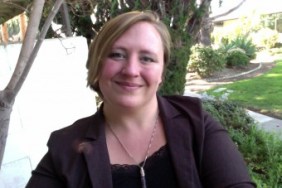 Every year, my husband, sister and I attend the Japanese animation convention Fanimecon in San Jose, CA. We cosplay, watch anime and peruse the various panels designed for fan entertainment and education. This year I was even lucky enough to be interviewed for the student film Unconventional, about cosplay culture, which you can check out following the link above!
 When Merlin Stone’s book,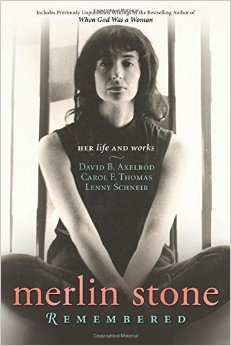


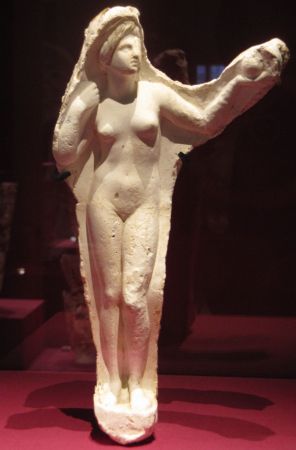 Though it is not known what the motivation originally was for acquiring the Bagram Aphrodite, its presence in Afghanistan arguably evinces an interest in female spirituality–if not in the owner of the storerooms then among some of the people in the market for which she may have been destined. Evidence of such interest among Buddhists is to be found in the
 In 2013, I wrote an
  Most days I am not certain that anyone really cares about what happens to girls. As a mother of a soon-9-year-old daughter, this burns me.
 At this writing, Ireland successfully passed the same-sex marriage referendum which reads, “Marriage may be contracted in accordance with law by two persons without distinction as to their sex.” It has been 22 years since homosexual acts were decriminalized in Ireland. Even more astounding is the rapid two-year process from inception to constitutional law for same-sex marriage in Ireland. This coming from a country where 84% identify as Roman Catholic but less than one-third attend weekly Mass.
 Feminism and Religion