Les Miserables’ Fantine, Women’s Suffering, and Female Migrant Labor by Gina Messina-Dysert

Gina Messina-Dysert profileUpon the recommendation of several friends and colleagues I decided to see the film Les Miserables.  It is rare these days that I make it to the movies.  My life is generally over scheduled and spare time is nonexistent.  So with just a few days left until the start of the semester and with a pile of work on my desk, I decided to throw caution to the wind and head to the theater last-minute to see Victor Hugo’s masterpiece on the big screen.

First, can I say what a brilliant surprise the film itself was?  I wondered if Hollywood could do justice to Hugo; from the moment of the opening scene I was in absolute awe.  I left the theater experiencing a momentary resurrection.

Anne Hathaway / Les Misérables: © Universal Pictures.

While the entire film was amazing, I would have seen it for nothing else but Anne Hathaway’s performance as Fantine.  I felt her suffering in the depths of my soul and wept along with her.  In Fantine we see the suffering of Everywoman.  She represents the thin line between those virtuous and those fallen and mirrors women’s imprisonment within this dichotomy.     Continue reading “Les Miserables’ Fantine, Women’s Suffering, and Female Migrant Labor by Gina Messina-Dysert”

Body Talk by Kelly Brown Douglas

The more I reflect upon the complex and multiple ways in which various bodies are put upon and disregarded, the more I am persuaded that we have a body problem.

Our bodies communicate to us in many ways. They are a valuable source of knowledge in terms of our present realities and they are also valuable storehouses for memories. Long after the memories of the mind fade away, memories of the body linger. The mind may not remember, for instance, the details of a particular event, but the body remembers how it felt.  The memories of sadness, anxiety, hurt and pain as well as happiness, peace, healing and love are grafted upon our bodies. Feelings, sensations and instinctive reactions—things that are hard to explain—are oftentimes our bodies’ ways of communicating memories. These are embodied memories reminding us of what it means to feel torn apart or to feel whole. It is the body giving feedback at any given moment in time. Embodied memories certainly involve what Audre Lorde identifies as “erotic power.” This, Lorde says, is an “internal sense” and a “depth of feeling” “that is a source of  power and information” (Lorde, Sister Outside). Embodied memories are one of the ways in which our bodies speak to us and help us to know the good, right and just thing to do, from within ourselves and through depth of feeling. Continue reading “Body Talk by Kelly Brown Douglas”

Connection to Ancestors in Earth-based Theology by Carol P. Christ

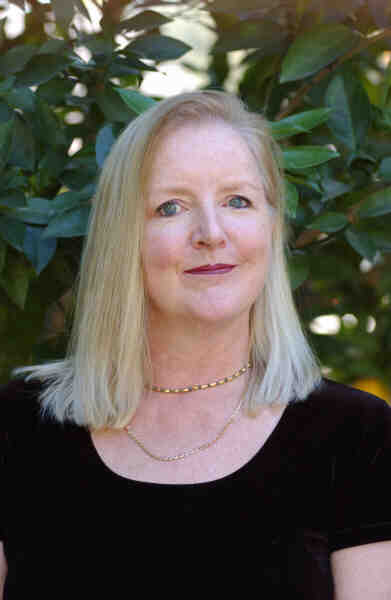
carol p. christ 2002 color“I am Carol Patrice Christ, daughter of Jane Claire Bergman, daughter of Lena Marie Searing, daughter of Dora Sofia Bahlke, daughter of Mary Hundt who came to Michigan from Mecklenburg, Germany in 1854.  I come from a long line of women, known and unknown, stretching back to Africa.”

Like many Americans, my ancestral history was lost and fragmented due to emigration, religious and ethnic intermarriage, and movement within the United States.  Though one of my grandmothers spoke proudly of her Irish Catholic heritage and one of my grandfathers acknowledged his Swedish ancestry, I was raised to think of myself simply as “American,” “Christian” and “middle class.”  Ethnic and religious differences were erased, and few stories were told. 

Over the past two years, I have begun to discover details of my ancestral journey, which began in Africa, continued in the clan of Tara, and was marked by the Indo-European invasions.  In more recent times, my roots are in France, Holland, England, Germany, Ireland, Scotland, and Sweden.  In the United States, my family has lived in tenements in New York City and Brooklyn, in poverty in Kansas City, and on farms in Long Island, Connecticut, upstate New York, Michigan, and Pennsylvania.  My parents and grandparents settled in northern and southern California during the 1930s.  I have lived in southern and northern California, Italy, Connecticut, New York, Boston, and now Greece.

Learning details about family journeys has created a shift in my sense of who I am.  Continue reading “Connection to Ancestors in Earth-based Theology by Carol P. Christ”

On Love, Theodicy and Domestic Violence by Ivy Helman

ivyandminiLast week, I introduced my students to the theological concept theodicy.  Theodicy is a theological explanation of why suffering and evil occur that usually includes some kind of defense of divine attributes.  For example, if G-d is all-knowing (omniscient), ever-present (omnipresent), all-powerful (omnipotent) and all-loving then how do we explain hurricanes, illness, mass murder, airplane crashes and other forms of evil and suffering?  This is quite difficult because, as my students point out after a few minutes of discussion, most explanations are often unfulfilling or inadequate.  The discussion turns quite quickly to two reactions.  Either, G-d isn’t what we thought G-d was or science does a better job explaining these examples of evil and suffering.  Science explains that hurricanes happen because of various environmental factors or a plane crashes because of mechanical problems. Even the concept of humanity’s freewill as the cause of evil often circles back to G-d’s creation of humanity and leaves students unsettled.  If G-d created within humanity the possibility of evil, how, then G-d can be all-loving?

The love/evil dichotomy is often the real conundrum of theodicies in monotheism.  This has been pointed out by numerous theologians throughout the ages.  How do we account for evil when there is only one divine Being?  How can an all-good, all-loving Being clove-1345952464afLreate or even be responsible for evil?  Which leads to the next question, is evil the absence of love?  These are extremely difficult philosophical and theological questions.

To explore then, we should start where it is often suggested that we learn most about love: family, close friends and intimate relationships.  Take this for example.  Continue reading “On Love, Theodicy and Domestic Violence by Ivy Helman”

Painting Fatima by Angela Yarber

 She performs ablutions, prays, and mends shoes for years, only to don her death shroud upon her back and place a symbolic tombstone upon her head.  With death cloaking her compassionate body, she begins to twirl, invoking the name of the Beloved within her heart.  She is a whirling dervish and her name is Fatima.  The daughter-in-law of the esteemed Sufi poet, Rumi, joins with the myriad other Holy Women Icons with a folk feminist twist that I write about each month:  Virginia Woolf , the Shulamite, Mary Daly, Baby Suggs, Pachamama and Gaia, Frida Kahlo, Salome, Guadalupe and Mary.

Fatima is best understood when placed in an historical context.  So, I begin with a very brief history of the whirling dervishes, while also offering glimpses into women’s roles in the Mevlevi Order.  The primary Islamic sect that proclaims that dancing is a way of connecting with the divine—for both men and women—is the Sufi Order.  Over eight hundred years ago, Mevlâna Jalâluddîn Rumi inspired faithful Muslims to whirl in harmony with all things in nature.  The whirling dervishes of Turkey unite the mind, heart, and body, and help to usher peace into the world through their dance by dedicating their lives to service and compassion.  After Rumi’s death on December 17, 1273, his followers responded by whirling.  These followers of Rumi are known as the Mevlevi Order, or more popularly, the whirling dervishes.  Until around the fourteenth century women were included in the practice and leadership of turning.  As Muslims in Turkey became more and more conservative, however, women were forced to the sidelines and not allowed to whirl.  And even with the secularization of the country with the reign of Mustafa Kemal Ataturk, women were still denied access to the turning path because Ataturk essentially made whirling illegal in an attempt to take away as much religion from Turkish life as possible.  Ataturk banned tekkes, or dervish homes, in 1925 as he secularized the state.  By the 1970s the Turkish government allowed turning once again, but only if it was a performance and not a prayer.  There were even reports of an old dervish being arrested because they saw his lips mouthing “Allah” as he turned in a theatre performance for tourists. Continue reading “Painting Fatima by Angela Yarber”

What It’s Like to Be a Woman in the Academy by Linn Marie Tonstad

Linn Marie TonstadLast fall, I was asked to sit in on the women’s pre-doctoral colloquium at the divinity school where I teach. In the course of a wide-ranging lunchtime conversation, the central question to which the students wanted an answer was: “what is it like to be a woman in the academy?” The question took me by surprise at the time – mostly because I’d expected to be asked more nitty-gritty questions about applying to graduate school, writing samples, and personal statements – but it has stayed with me in the weeks since the lunch as I’ve found myself trying out answers from different directions.

The first answer, and perhaps the most obvious one, is this: there is no such thing as being “a [generic] woman” in the academy (or anywhere else). Continue reading “What It’s Like to Be a Woman in the Academy by Linn Marie Tonstad”

Luke 12:51-53: On the Verge of a Paradigm Shift by Elisabeth Schilling

BeachI remember being quite happy when my values about body, faith, and purpose lined up with those of my parents. With the support of my Protestant evangelistic community as well, I was “bold and fearless,” not caring who might judge me or disagree with me because I was not standing on my own. The anxiety of becoming embarrassed or having my world crashing down because of the ideas I expressed did not exist. My beliefs seemed special and right, and I had constant reaffirmation from family and community that they were.

But now I hold perspectives about spirituality and humanity that I can no longer discuss with ease in front of my family–not without my mother crying and feeling as if she did not know or like the person I had become. This may matter to me more than it might to other people since I have, for over a year now, returned to that home to write my dissertation. I am constantly challenged with the task of creating a space where I can honor my desires, needs, and truths. Like Judith Butler says, if I am a person who exists by doing, when I cannot express/speak/give an account of myself, I cannot fully exist. Family is important, but what gets sacrificed by pretending and silence? It is not only the self, but the chance for deeper, more authentic bonds. Continue reading “Luke 12:51-53: On the Verge of a Paradigm Shift by Elisabeth Schilling”

Embody the Sacred – Engaging Through the Senses by Deanne Quarrie

The human body is designed to utilize all senses. We, human beings, have drifted away from our natural state through which, at one time, we engaged with all of life through our natural senses, including the intuitive.  This change has come about through our active, stress filled lives in which we seldom slow down to even appreciate what is around us.  We have ignored much of our sensory ability due to a change-over from right brain functioning, which is more imaginative, creative and intuitive, to left brain functioning, which is linear and analytical. Two of our senses are developed out of proportion to the others.  Many people grow up in an environment lacking in exposure to the natural world.  With television, computers and video games we have become residents of an indoor and often sedentary world.

In early civilization, humans and all other animals depended on finely tuned sensory awareness for survival.  We walked the Earth, using those senses for protection, to find food and to move around.  We did not just see and hear our way around but we felt, touched, tasted and smelled in order to survive. Continue reading “Embody the Sacred – Engaging Through the Senses by Deanne Quarrie”

One Thing I Like About Christianity by Erin Lane

Erin LaneI never have good dreams. They always fall into the weird, creepy, or just plain terrifying category. Last night was no exception. I’ll save you the diary entry but after sharing the short saga with my husband this morning (who I’m sure dreams of lollipops, if he could only remember), he looked at me and said, “Geez, Erin. You really care that people like you.”

It was a neighborhood prank gone wrong. In the dream, I had been running through people’s lawns and hiding in bushes with my husband and two other guy friends. We were armed with squirt guns, except that they weren’t squirt guns; they were household cleaners. I don’t know what we thought we were doing exactly – take that organic tomatoes! and that you meddling cat! –  but we soon got caught and I proceeded to be excluded, shamed, and taunted. First by a group of wives who snickered at me from a safe distance in their convertible and whispered, “She’s always trying to be one of the guys.” Then by a work colleague standing nearby who asked me, “How would Jesus feel about your actions?” and then let his wife hose me down with a sprinkler, which in retrospect was very un-Jesus like. And lastly by one of my guy friends in crime who called me “snotty” for hamming it up for a photo opp when the press arrived. Continue reading “One Thing I Like About Christianity by Erin Lane”

WATER January 16 Teleconference with Carol P. Christ

carol p. christ 2002 colorWATER TELECONFERENCE WITH CAROL CHRIST: “WHAT IS THE NATURE OF DIVINE POWER?”  January 16, 2013, 1-2 PM (EST)

Carol will speak about the book she and Judith Plaskow are writing together, tentatively titled Goddess and God after Feminism: Body, Nature, and Power. Judith and Carol explore their changing views of God in light of their feminist commitments to transform religion.

Carol’s feminism led her to reject a God imaged as a dominating male other. Her commitments to peace and justice led her to reject a God whose power is imaged in the Exodus, the prophets, and much of Christian tradition as the power of a warrior to destroy his enemies. Continue reading “WATER January 16 Teleconference with Carol P. Christ”