Finding my Voice through the Vagina Monologues By Anonymous

This post is written in conjunction with the Feminist Ethics Course Dialogue project sponsored by Claremont School of Theology in the Claremont Lincoln University Consortium,  Claremont Graduate University, and directed by Grace Yia-Hei Kao.

“Are you going to the Vagina Monologues try-outs tonight?” my friend asked me last year after class.

“I hadn’t planned on it,” I replied cautiously. Truth be told, the word ‘vagina’ made me uncomfortable. There were yearly productions of the Vagina Monologues at my undergraduate institution, but I never went. I thought it was a time when women gathered and performed monologues they had written, and I thought it demeaning to have these monologues named metonymically. I did not want to be associated with the Monologues: I was in favor of women’s equality, but I did not want to claim my sexuality in so visceral a manner. In my mind, the ‘Vagina’ of Vagina Monologues just referred to the actresses, not the content.

How wrong I was.  Continue reading “Finding my Voice through the Vagina Monologues By Anonymous”

Sexual Ethics and Southern Belles By Amanda Pumphrey

This post is written in conjunction with the Feminist Ethics Course Dialogue project sponsored by Claremont School of Theology in the Claremont Lincoln University Consortium,  Claremont Graduate University, and directed by Grace Yia-Hei Kao.

Amanda Pumphrey is a first year Ph.D. student in women’s studies in religion at Claremont Graduate University. She received her MA in religion from Claremont School of Theology and her BA in religious studies from Valdosta State University in Valdosta, Georgia. Amanda enjoys studying Christian sexual ethics and feminist and queer theologies. 

It’s 8th grade. I’m in the girls’ bathroom during lunch time and I ask my friend in the stall next to me if she has a tampon that I can use. “Amanda Brookins, I didn’t know you wasn’t a virgin nomore!” screams another friend who is waiting on me. I was confused by her comment, but I later learned that her mother had explained to her that girls could not wear tampons unless they had had sex. Which translated into only married women should be utilizing tampons. This is the context in which I grew up: South Georgia where there is virtually no comprehensive sex education in the public school systems. In this small southern town, I learned about sex through my youth group at a country, Pentecostal church. What I learned was that sex was sinful and it was not something that I should even think about until I was married. Christianity and southern culture go hand in hand within my hometown, so as a born again Christian and a girl I was expected to “save myself for marriage” and my future husband, and to uphold my status as a polite and proper southern belle. The norms were already established: sex is for marriage which is a Christian institution between one man and one woman.  Continue reading “Sexual Ethics and Southern Belles By Amanda Pumphrey”

Undermining Our Own Authority by Grace Yia-Hei Kao

“I’ll be the first to admit that it can be difficult, if not exhausting, for women professionals to discern how to be strong and assertive (and thus be taken seriously) without coming across as arrogant or b*tchy. But there is indeed room for play between over-deference and cockiness, and the ability to code-switch while in formal settings would be a good step in the right direction for many of us.”

Whatever your take is on Madonna’s feminist bona fides, she was definitely on to something in her 2001 hit “What it Feels Like For a Girl.”  Madonna sang about the tremendous pressures females of all ages face to conform to gendered norms of physical appearance and demeanor. I want to use her lyrics to discuss some ways I have seen young women in academe subtly undermine their own authority.

Continue reading “Undermining Our Own Authority by Grace Yia-Hei Kao”

Occupying Feminism/Religion: Letting Community Consciousness Roam Free By Amy Levin

Becoming involved in the women’s movement means moving from isolation as a woman to community. Through telling my story, I reach out to other women. Through their hearing, which both affirms my story and makes it possible, they reach out to me. I am able to move, gradually, from defensiveness to openness, from fear of questioning to a deep and radical questioning of the premises from which I have lived my life. I experience relief; my anger has been heard, and I am not alone. But I am also frightened; I am undermining my own foundations. The walls come tumbling down. – Judith Plaskow, The Coming of Lilith

Lately, I’ve been thinking about this blog – what it does – in relation to my life, as it promotes the intersection between scholarship, activism, and community. I notice these three elements in most, if not all of the FAR posts, but I’ve been wondering what exactly it means to really embody a life that allows scholarship, activism, and community to mutually mix and inform each other.

Becoming involved in the women’s movement means moving from isolation as a woman to community. Through telling my story, I reach out to other women. Through their hearing, which both affirms my story and makes it possible, they reach out to me. I am able to move, gradually, from defensiveness to openness, from fear of questioning to a deep and radical questioning of the premises from which I have lived my life. I experience relief; my anger has been heard, and I am not alone. But I am also frightened; I am undermining my own foundations. The walls come tumbling down. – Judith Plaskow, The Coming of Lilith

Lately, I’ve been thinking about this blog – what it does – in relation to my life, as it promotes the intersection between scholarship, activism, and community. I notice these three elements in most, if not all of the FAR posts, but I’ve been wondering what exactly it means to really embody a life that allows scholarship, activism, and community to mutually mix and inform each other. Continue reading “Occupying Feminism/Religion: Letting Community Consciousness Roam Free By Amy Levin”

Sister Wives, The Terrible Taboo, and Agency by Xochitl Alvizo

A couple of weeks ago I watched a handful of Sister Wives episodes; it was the start of the new season and the network was having a marathon. I was absolutely fascinated. It was my first time watching the show, and interestingly,  I had actually seen the family in person in Boston before I ever saw them on TV. They had been in town in September for a panel discussion that one of my friends was hosting and all I knew about the Sister Wives show was that it was about a polygamist family with three wives and one husband. I never imagined myself intrigued. But seeing the women sitting there, hearing them talk about their lifestyle and how much they love their sister wives, getting to witness their family dynamics and their different personalities, I found that my first reaction to them was not  judgment. Instead I found myself increasingly curious, particularly about the sister wives’ relationship with one another.  Continue reading “Sister Wives, The Terrible Taboo, and Agency by Xochitl Alvizo”

Does Christianity Open a New Space for Cambodian Women? By Katie Schubert

The following is a guest post written by Katie Schubert, a Ph.D. student in the Theology, Ethics, and Culture program at Claremont Graduate University.  Her academic interests include feminist ethics, postcolonial feminism, human rights and religion, and Southeast Asian Studies focusing on Cambodia.  Her work explores Cambodian women’s experience of empowerment through religion. 

Christianity has often been blasted (and understandably so) for its patriarchal character, for justifying violence, and for its instrumental use of power throughout its long history.  In transnational feminist literature the work of missionaries is often referred to as the epitome of problematic transnational work, automatically assumed to be evil, likely because of the history of missionaries’ collusion with violent invasion and attempted erasure of previously existing systems.

But can Christianity also be freeing, a vehicle for change, even a vehicle for feminism? Continue reading “Does Christianity Open a New Space for Cambodian Women? By Katie Schubert”

What Is This Virgin Birth Business All About? By Marguerite Rigoglioso

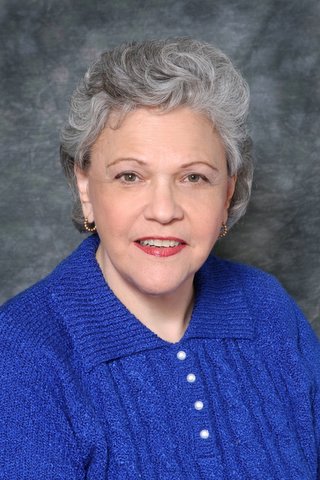
Photo by Irene Young

Marguerite Rigoglioso, Ph.D., is the author of The Cult of Divine Birth in Ancient Greece and Virgin Mother Goddesses of Antiquity (Palgrave Macmillan 2009, 2010). She teaches pioneering courses in women and religion at Dominican University of California, the California Institute of Integral Studies (CIIS), and the Institute of Transpersonal Psychology. Marguerite delivered the James C. Loeb Classical Lecture on her research on divine birth at Harvard University in October 2009. She holds a doctorate in humanities and a master’s in philosophy and religion from CIIS, as well as a bachelor’s degree from Vassar College, with high honors. For more information about her work, including podcast interviews and video presentations on her research, visit http://cultofdivinebirth.com.

Mary was not alone in her work to bring an avatar to the planet, nor was she a passive vehicle for this process. That is my scholarly conclusion after devoting my dissertation and first two books to an exploration of the concept of divine birth in Western antiquity.

But the story does not begin or end with Mary. Continue reading “What Is This Virgin Birth Business All About? By Marguerite Rigoglioso”

Georgia and The Virginity Institute By Katrina Myers

This post is written in conjunction with the Feminist Ethics Course Dialogue project sponsored by Claremont School of Theology in the Claremont Lincoln University Consortium,  Claremont Graduate University, and directed by Grace Yia-Hei Kao.

Katrina Myers is a MA student at Claremont School of Theology and is participating in the Feminist Ethics Course Dialogue project.

During the past two years, I had the opportunity to serve as a Peace Corps volunteer in the country of Georgia, which is located in Eastern Europe.  There I worked as a schoolteacher and lived in a tiny, homogenous, Georgian village in the Kakheti region.

I quickly learned the encompassing influence of the Georgian Orthodox Church, which upholds an ideal hierarchy: God, Jesus, Patriarch, Man, Woman.  The church champions traditional gender roles; men are to be strong leaders and heads of the community and their households, while women are expected to be virginal, modest, obedient and subservient.  In Georgian culture, the influence of the Church and the teachings of Patriarch Ilia II and his predecessors are indisputable. Continue reading “Georgia and The Virginity Institute By Katrina Myers”

Room at the Table: The “Problem” of Men By Lara Helfer

This post is written in conjunction with the Feminist Ethics Course Dialogue project sponsored by Claremont School of Theology in the Claremont Lincoln University Consortium,  Claremont Graduate University, and directed by Grace Yia-Hei Kao.

Lara Helfer is a 3rd year MDiv Student at Claremont School of Theology. She is humbled and excited by the intelligence, passion, and commitment of her classmates and professors, and looks forward their feedback and challenges to her very first blog post. 

As an out lesbian for more than 25 years, I have always struggled with the separatist movements associated with radical feminism. For me, affiliating as a ‘woman loving woman’ means just that, I love women. But wait – I love men too!  Whom I partner with – and yes, as a lesbian my partner is a woman – is but one aspect of me. Being a lesbian is not all of who I am, by far. I can’t, and do not wish to, imagine my life without men as an integral part of it. Continue reading “Room at the Table: The “Problem” of Men By Lara Helfer”

What Does It Mean to Say that All White Feminists Are Racist? (Questions Posed to White Women/Myself about Our Part in the Dialogue with Women of Color) By Carol P. Christ

Carol P. Christ, a founding mother in the study of Women and Religion and Feminist Theo/a/logy, has been active in anti-racist, anti-poverty, anti-war, feminist, pro-gay and lesbian, anti-nuclear, and environmental causes (in that order) for many years.  All of these issues have informed her teaching, her scholarship, and her politics.

The recent posting of Mary Daly’s letter to Audre Lorde on the Feminism and Religion blog is a correction of a piece of feminist history that is important in its own right and because of the way Lorde’s letter has shaped feminist discourse and politics up to the present day.  Knowledge of the existence of Daly’s letter and the facts surrounding Lorde’s distortion of history has been in the public domain since the 2004 publication of Alexis DeVeaux’s Warrior Poet, but when I searched the internet for a copy of “Mary Daly’s letter to Audre Lorde” a few days ago, what came up was Lorde’s letter to Daly — not Daly’s letter to Lorde.

I often hear younger feminists say that “all white feminists” of the older generations “were racist.”  Sometimes Mary Daly is mentioned.  Setting the record straight about Mary Daly is one step in retelling the history of feminism in a more complex way.  Continue reading “What Does It Mean to Say that All White Feminists Are Racist? (Questions Posed to White Women/Myself about Our Part in the Dialogue with Women of Color) By Carol P. Christ”